Table of Contents >> Show >> Hide
- Who Was Henry Kloss, and Why Do Audio People Talk About Him Like a Folk Hero?
- What the Model One Radio Actually Is (and What It Refuses to Pretend to Be)
- Why It Sounds Bigger Than It Looks
- The Secret Sauce: Reception That Feels Like “Real Gear”
- Controls and Connections: Simple Enough to Explain Without a Diagram
- Design: The Wooden Box That Became a Decor Object
- Why Audiophiles Took It Seriously (Yes, Really)
- Using the Model One in a Modern Home
- Buying Guide: What to Know Before You Grab One
- Why the Henry Kloss Model One Radio Still Matters
- Living With the Model One: Real-World Experience (About )
- Conclusion
If you’ve ever fallen down the rabbit hole of “Why does this tiny radio sound so good?” you’ve probably met the same
name again and again: Henry Kloss. In audio circles, he’s basically the patron saint of
“make it sound better, not bigger, pricier, or covered in blinking lights.”
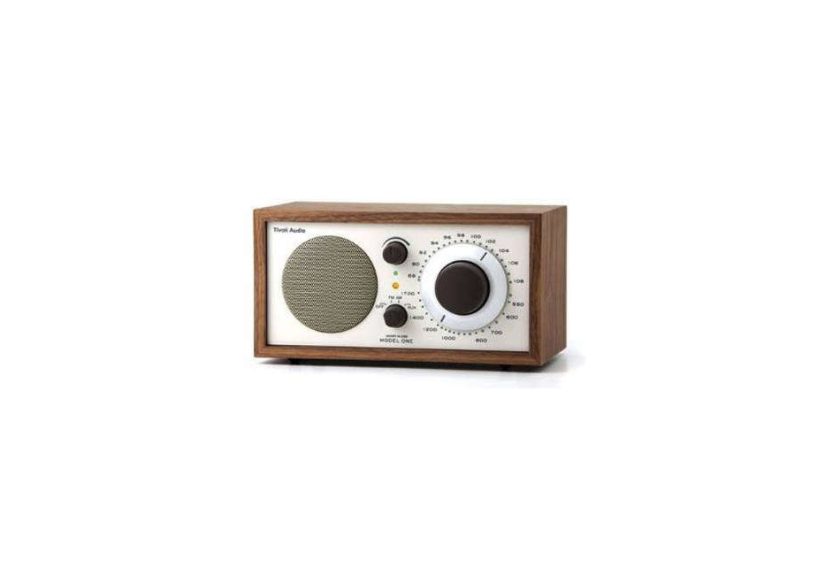
His Model One table radio (released under Tivoli Audio) is a perfect example of that philosophy:
a compact, wooden-box radio with three knobs, a serious tuner, and a sound that feels far more “hi-fi” than “kitchen appliance.”
It’s simple on purposelike a good diner menu. You don’t need 46 options; you need the pancakes to be great.
Who Was Henry Kloss, and Why Do Audio People Talk About Him Like a Folk Hero?
Henry Kloss wasn’t just a designerhe was a builder who helped shape modern home audio.
He’s closely tied to the “Boston sound” era and is credited with major leaps in speaker and radio design across multiple companies.
His career threads through Acoustic Research, KLH, Advent, Cambridge SoundWorks, and finally Tivoli Audioan unusually long streak
of “new company, new idea, new classic.” If that sounds exhausting, it’s because it is. Kloss clearly ran on curiosity and strong coffee.
From woodworking at MIT to changing what “small speakers” could do
Kloss’s early story reads like the origin tale of a certain kind of American tinkerer:
tools, cabinets, and a belief that if you can’t buy the thing you need, you build it. His work helped popularize compact speakers
that could still deliver convincing bass and a smooth balancean approach that pushed back on the old assumption that
“real bass requires a refrigerator-sized box.” That obsession with big sound from small enclosures
becomes a direct through-line to the Model One radio decades later.
He also made radios “selective” when the dial got crowded
FM radio became more valuable as more stations competed for space. Kloss cared about a tuner’s ability to
lock onto the station you want instead of drifting into static or neighboring signals.
Earlier Kloss-era radios became known for high selectivity and strong receptiontraits that show up again in the Model One,
which earned a reputation for pulling in stations other tabletop radios simply missed.
What the Model One Radio Actually Is (and What It Refuses to Pretend to Be)
The Henry Kloss Model One Radio is a compact AM/FM table radio built around three core ideas:
great reception, honest sound, and simplicity that feels premium.
It’s self-contained, easy to operate, and designed to fit where people actually listen: kitchens, offices, bedrooms,
workshopsanywhere you want music or talk without turning your living space into a tech showroom.
What it isn’t: a “smart speaker,” a home theater system, or a multiroom streaming hub disguised as a radio.
The Model One is closer to a well-made wristwatch: it does one job exceptionally well, and it looks good while doing it.
Why It Sounds Bigger Than It Looks
The Model One’s sound is the result of classic Kloss logic: don’t chase gimmicks, chase fundamentals.
A compact, acoustically stable cabinet helps the speaker behave predictably. Thoughtful voicing helps voices sound human,
not hollow or nasal. And a simple design reduces the chance that some “feature” (read: a menu) will get between you and the audio.
The radio’s reputation has always been less about shaking the walls and more about clarity and
balanceespecially for the stuff people actually play on table radios: news, jazz, classical, acoustic music,
and the soothing sound of a radio host who’s clearly had fewer emails than you have.
Mono, on purpose
A lot of people see “mono” and assume “cheap.” Kloss treated mono as a design advantage: a single speaker can deliver
a coherent, focused presentation without odd stereo imaging when you’re listening off-axis while chopping onions.
When the goal is enjoyable, room-filling sound from a small box, a strong mono design can be the smartest choice.
The Secret Sauce: Reception That Feels Like “Real Gear”
Here’s where the Model One earned its legend: it wasn’t just pretty and pleasantit was a station-grabbing machine.
Reviewers noted how well it could lock onto tightly spaced signals and even pull in lower-power stations.
In other words, the Model One didn’t just play the hits; it found the weird college station that plays 1970s Nigerian funk at 2 a.m.
(and somehow makes it sound like a life decision, not an accident).
Part of that reputation came from the tuning technology: the Model One was widely described as using
ultra-sensitive reception derived from cellphone-related electronics, which helped it outperform typical
tabletop radios in crowded FM environments. It’s a very Kloss moveborrow the best of modern engineering,
then hide it behind a friendly analog dial.
The joy of the analog dial (and why it still matters)
The Model One’s large tuning knob isn’t just for looks. The tactile experience is part of the product:
you tune, you feel the resistance, you land on the station, and you stop. No scrolling. No menus. No “Updating…”
in the middle of your morning.
That hands-on tuning experience is also tied to performancefine control makes it easier to dial in stations precisely,
especially where signals are close together. It’s the audio equivalent of a good kitchen knife:
you don’t need 30 knives; you need one that makes the job easier every single time you pick it up.
Controls and Connections: Simple Enough to Explain Without a Diagram
The Model One is famously the “three-knob” radio. That isn’t marketing fluffit’s the whole point.
You get the essentials, laid out clearly, so you can operate it at 6:30 a.m. without negotiating with your own brain.
What you typically get (the practical checklist)
- AM/FM radio with a high-performance tuner designed to improve reception
- Auxiliary input for connecting an external audio device (phone, portable player, etc.)
- Headphone jack for private listening
- Record output so it can function as a quality outboard tuner in a larger system
- External antenna options to improve reception when your building or location is tough on radio signals
That last point matters more than people think. Radios don’t only compete with other radiosthey compete with your house.
Modern homes can be brutal for RF. The Model One’s design acknowledges reality: if you need help, you can add an antenna.
Design: The Wooden Box That Became a Decor Object
A lot of audio products try to disappear into the room. The Model One does something sneakier:
it belongs in the room. The proportions are deliberate. The materials feel warm and furniture-like.
It’s a radio that looks at home next to cookbooks, plants, or a stack of “I’ll read these someday” magazines.
The real trick is that the Model One isn’t styled as “retro” in a costume-y way. It’s closer to a timeless industrial design:
a clean face, a readable dial, and a cabinet that feels like it could have existed in multiple decades without looking out of place.
It’s not screaming for attentionbut it’s also not apologizing for existing.
Why Audiophiles Took It Seriously (Yes, Really)
The Model One did something unusual: it charmed regular listeners and still got nods from the hi-fi crowd.
In the early 2000s, it even landed recognition in serious audio circles as a standout “analog source” runner-upright next to
wildly more expensive components. That kind of respect doesn’t happen because a radio is cute.
It happens because it performs.
A big part of the audiophile fascination was its tuner quality. Some enthusiasts reportedly used it as a budget-friendly tuner in a
larger audio rack, routing its output into full systems. That’s the ultimate compliment: the product wasn’t treated like a toy.
It was treated like a capable component.
Using the Model One in a Modern Home
The Model One’s job hasn’t changed, but the way people listen has. Today, a tabletop radio isn’t just for FM morning shows.
It’s also a “small speaker with personality,” and the Model One plays that role well.
Three modern use cases that make the Model One feel current
-
The “kitchen companion”: FM for news, jazz, or local programming; aux input for playlists while you cook.
(Bonus: fewer fingerprints than a touchscreen.) -
The “office sanity device”: low-volume background sound with clear speech, plus a headphone option when you
need focus and your coworker is practicing their “conference call voice.” -
The “secondary system hero”: as a tuner source feeding another amp or speakers, especially if you’re into
local stations, talk radio, or niche broadcasts.
There’s also a nice psychological benefit: radio feels alive. It’s not you curating the universe. It’s the universe coming to you
with a mix of music, voices, and the occasional perfectly-timed weirdness that algorithms would never dare recommend.
Buying Guide: What to Know Before You Grab One
The Model One has been around long enough that you’ll see multiple variations and price points, plus used units in the wild.
Here’s how to think about it without turning your purchase into a graduate thesis.
New vs. used
- New gets you warranty coverage and predictable performance.
- Used can be a great value, but check knobs, tuning smoothness, noise, and whether all inputs/outputs work.
Which “Model One” is it?
Over the years, the concept expanded into related models (Bluetooth variants, digital/streaming successors, etc.).
If your goal is the classic Kloss ideaAM/FM, analog dial, simplicitymake sure you’re buying the version that matches that brief.
The name “Model One” has become a family resemblance, so it’s worth confirming the feature set.
Reception reality check
Even a great tuner can’t defeat physics forever. If you live in a dense area with lots of interference, or in a building that blocks
signals, plan on experimenting with placement andif neededusing an external antenna connection. The Model One gives you that option,
which is part of why it’s beloved.
Why the Henry Kloss Model One Radio Still Matters
Plenty of modern audio products are impressive. Fewer are comfortable. The Model One is comfortable.
It’s built for daily life, not for showroom demonstrations. It turns on, tunes in, and sounds goodwithout asking you to create an account,
accept a firmware update, or remember a password you made during a full moon in 2019.
That simplicity isn’t nostalgia. It’s design discipline. Kloss spent a lifetime proving that “affordable” and “serious” don’t have to be enemies.
The Model One is a final, practical reminder of that ideaone that still feels refreshing in a world where everything wants to be “smart.”
Living With the Model One: Real-World Experience (About )
Owning a Model One feels less like owning a gadget and more like adding a tiny piece of furniture that happens to play audio.
You set it down, step back, and it immediately looks like it belongs. The wooden cabinet makes the radio feel warm and grounded
in a way plastic boxes rarely do. It’s the kind of object you absentmindedly dust because you want it to look nicelike a picture frame,
not like an appliance.
Day-to-day, the experience starts with the knobs. There’s something oddly satisfying about a radio that doesn’t ask you questions.
It doesn’t offer a tutorial. It doesn’t request permission to access your contacts, your calendar, and your soul. You turn it on.
You choose AM, FM, or aux. Then you tune. That’s it. The learning curve is basically a gentle slope you could walk up while half-asleep.
The tuning experience is where people tend to “get it.” You can creep up on a station, land it cleanly, and stop where you want.
In many homes, that control becomes a small daily rituallike grinding coffee or flipping a record. And because the Model One has a reputation
for strong reception, it’s often better at finding usable stations than the random clock radio you’ve been ignoring since college.
It’s not magic; it’s just a tuner designed with seriousness instead of shrugging.
Sound-wise, the Model One’s sweet spot is the kind of listening that makes up most real life: news, talk, podcasts through aux,
jazz stations, classical broadcasts, and background music while you do literally everything else. Voices come through clearly, and music has enough
body to feel enjoyable rather than thin. At modest volumes, it can be surprisingly richespecially for something that doesn’t dominate your countertop.
Turn it up and you’ll still be reminded it’s a compact mono speaker, but it holds together better than you’d expect if your baseline is “tiny radio.”
The aux input is the modern cheat code. Plug in your phone or a small streamer and the Model One becomes a simple powered speaker with character.
It won’t replace a full stereo system, but that’s not the job. The job is: make the room nicer. Make the audio easy. Make the day feel a little less
like a spreadsheet.
You also learn the radio’s quirks the same way you learn any good tool’s quirks. Placement matters. If your kitchen has a lot of metal,
you may find one corner gets better reception than another. You’ll naturally rotate it an inch or two, then smile when the signal snaps in.
The radio quietly teaches you that good design doesn’t remove realityit helps you work with it.
In a world packed with screens, the Model One’s “experience” is almost rebellious: it asks you to listen instead of tap.
It doesn’t try to become your whole lifestyle. It just shows up, does its job, and makes the room feel more human.
That’s a very Henry Kloss ending to a very Henry Kloss story.
Conclusion
The Henry Kloss Model One radio isn’t famous because it’s trendy. It’s famous because it’s useful and
well made in the ways people actually notice: strong reception, clear sound, and controls that make sense immediately.
Kloss spent a lifetime proving that serious audio can be approachable, and the Model One is one of the cleanest expressions of that belief.
If you want a radio that feels like a classic componentwithout turning your home into a complicated tech labthe Model One still earns its spot.