Table of Contents >> Show >> Hide
- What “Foraging for Food” Really Means
- Before You Pick Anything: The 3 Pillars of Safe Foraging
- Foraging Safety Rules That Save You From Regret
- Common Foods People Forage in the U.S. (Beginner-Friendly + Realistic)
- How to Harvest Ethically (So Your Favorite Patch Comes Back)
- Avoiding Contamination: The “Invisible Ingredient” Problem
- Simple Prep and Storage (Because “Pocket Salad” Has Limits)
- Gear Checklist for Beginner Foragers
- A Beginner’s Foraging Plan (First Month, No Panic)
- Quick FAQ
- of “Foraging Experiences” (What It Feels Like in Real Life)
- Conclusion
Foraging is basically grocery shopping where the aisles are made of trees and the checkout line is a squirrel judging your life choices. Done right, it can be delicious, budget-friendly, and weirdly empowering (“I gathered this salad with my own two hands” hits different). Done wrong, it can be… a very expensive lesson in toxicology.
This guide walks you through smart, beginner-friendly foraging: how to start safely, what common foods people forage across the U.S., how to avoid contamination and poisonous look-alikes, and how to harvest ethically so you’re not the reason a patch disappears next year.
What “Foraging for Food” Really Means
Foraging is collecting edible plants, fruits, nuts, fungi, and sometimes sea vegetables from the wild (or semi-wild places like yards, trails, and park edges). It can be as simple as picking blackberries or as advanced as identifying mushrooms that require training and careful verification.
The goal isn’t to “survive off the land” (unless that’s your hobby). For most people, it’s about adding seasonal ingredientsgreens, berries, teas, garnishes, syrups, and nutsto regular cooking while spending more time outside and less time scrolling.
Before You Pick Anything: The 3 Pillars of Safe Foraging
1) Identification: 100% Certain or 0% Eating
The number one safety rule is brutally simple: only eat something if you are completely confident in what it is and how it should be prepared. Many edible species have toxic look-alikes, and “pretty sure” is not a food group.
- Use multiple references (field guides, extension resources, reputable courses).
- Learn the plant’s key features (leaf shape, stem texture, smell, habitat, growth pattern).
- Don’t rely on a single photo or a single app resultespecially for mushrooms.
- When possible, learn in person from a qualified guide, local plant group, or mycology club.
2) Location: Clean Ground, Clean Food
Wild food can pick up whatever is in its environment. That means the “where” matters as much as the “what.” Avoid harvesting from places that may be contaminated by vehicle exhaust, heavy metals, pesticides, herbicides, industrial runoff, railroad ballast, treated lawns, golf courses, or flood-prone drainage areas.
3) Legality: Public Land Rules Are Not Universal
Foraging rules vary widely by location and land type. Some public lands allow small personal-use harvesting of certain items; others prohibit collecting plants, fruits, or mushrooms. Private land requires permission. If you’re not sure, assume you need to check.
Foraging Safety Rules That Save You From Regret
- Start with “low-drama” foods: common berries (where legal), easy greens, and well-known invasives.
- Avoid risky categories at first: mushrooms and anything that has notorious poisonous look-alikes.
- Watch for kid/pet risk: many poisonings happen when children or pets grab something quickly.
- Try a small taste first: even safe foods can cause reactions in some people. Introduce new wild foods gradually.
- Cook when appropriate: some wild foods require cooking to be safe or digestible (and to taste good).
- Don’t “DIY-medicate”: wild plants are not harmless because they’re natural. Treat them like food, not pharmaceuticals.
- When in doubt, leave it out: the wild will still be there tomorrow. Your liver would like to be there too.
Common Foods People Forage in the U.S. (Beginner-Friendly + Realistic)
Availability depends on region, season, and local rules. These are common, widely encountered optionsbut remember: you still need correct identification and a safe harvest location.
Leafy Greens and “Edible Weeds”
- Dandelion greens (Taraxacum officinale): Young leaves are less bitter and work in salads, sautés, or pesto. Avoid lawns that may be treated with herbicides or exposed to pet waste.
- Chickweed: Mild, tender greens that can be used like spinach in salads or quick sautés (again, only if properly identified).
- Purslane (Portulaca oleracea): Crunchy, slightly tangy, and popular in salads. It has a classic toxic look-alike: prostrate spurge, which can irritate skin and cause illness if eaten. Learn the difference before harvesting.
- Stinging nettles: Nutritious when cooked, but they sting when raw. Gloves are your friend; a quick blanch tames the sting and makes them great for soups or sautéed greens.
- Violet leaves and flowers: Often used as gentle salad greens or garnish where they grow abundantly. (Treat garnish like food: wash well and harvest from clean areas.)
Berries and Fruit
- Blackberries and raspberries (Rubus species): Common, easy, and usually a great starter forageif you’re away from roads and sprayed areas. Bring a container and accept that the thorns will try to negotiate a better deal.
- Mulberries: Seasonal, sweet, and messy (the good kind of messy). Watch for urban contamination; wash well.
- Wild grapes: Edibility depends on species and location; also check for look-alikes. Use reputable local guides.
- Elderberries: Very popular for syrups and preserves, but they should be cooked before consuming. Leaves, stems, and unripe parts aren’t for eating, and raw consumption can cause significant GI upset.
Nuts and Seeds
- Acorns: Edible with proper processing. Many acorns contain bitter tannins and typically require leaching (cold-water or hot-water methods) before turning them into flour or adding to recipes. Skip any acorns with mold, off smells, or heavy insect damage.
- Walnuts, hickory nuts, pecans (where found): Often easier than acorns because they don’t require extensive leachingthough they do require some patience and a strong relationship with your nutcracker.
- Sunflower seeds (wild stands): In some regions, wild sunflowers can be harvestedif local rules allow and the patch is away from treated roadsides.
Mushrooms (A Loving but Firm Safety Lecture)
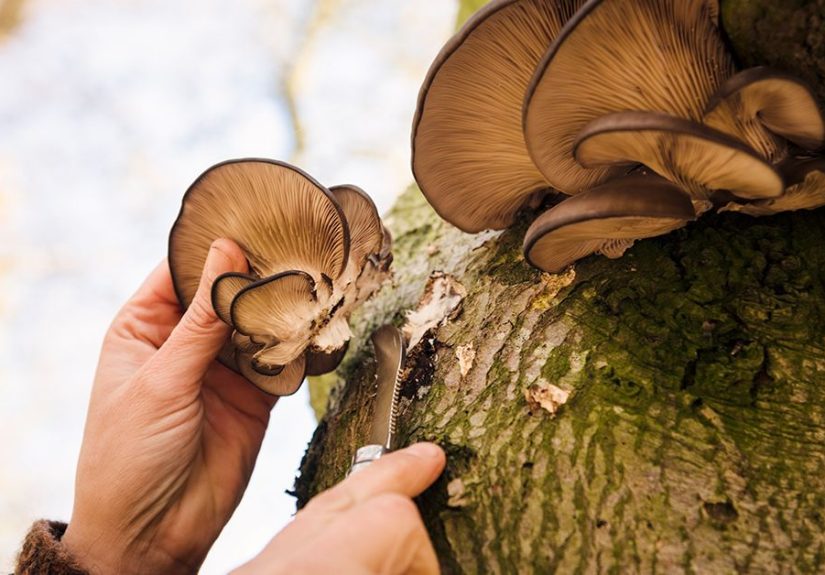
Mushrooms deserve their own section because they’re both amazing and famously unforgiving. Many toxic species look similar to edible ones, and some toxins are not destroyed by cooking, drying, or freezing. Public health agencies and poison experts regularly warn against eating wild mushrooms unless they’ve been identified by an expert.
- Beginner rule: Don’t eat foraged mushrooms unless you learned them in person and verified them confidently.
- Don’t assume cooking makes it safe: it doesn’t for many toxic species.
- Don’t rely on AI or an app alone: use it for note-taking, not as a safety stamp.
- Join a local mycological society: it’s the fastest way to learn safely, because you get feedback in real time.
If you do pursue mushroom hunting later, follow local land rules (many forests and parks have specific limits and harvesting requirements) and learn the dangerous “big names” in your regionlike death caps and other amatoxin-containing speciesso you understand why caution isn’t optional.
Invasive Edibles (A “Do Your Part” Bonus Category)
In some areas, edible invasive plants are abundant. Harvesting invasives can be a win-winwhen done responsibly and without spreading seeds. Garlic mustard is a well-known example in parts of the U.S.: people sometimes eat young leaves for pesto-like uses, but removal guidance varies by region and improper handling can spread it. Follow your local invasive-species recommendations.
How to Harvest Ethically (So Your Favorite Patch Comes Back)
Ethical foraging is basically being a good neighborto the land, wildlife, and the next human who comes by. A few principles will keep you from becoming a cautionary tale in a neighborhood Facebook group.
- Take less than you think: harvest modestly, especially from slow-growing plants.
- Harvest from abundance: if it’s rare, struggling, or clearly a small population, don’t take it.
- Don’t uproot sensitive plants: for some species, taking leaves instead of bulbs/roots is far more sustainable.
- Leave no trace: stay on durable surfaces when possible, don’t trample patches, and pack out all waste.
- Respect wildlife: berries and nuts are food for birds and mammals; take what you’ll actually use.
Avoiding Contamination: The “Invisible Ingredient” Problem
If you only remember one thing from this section, make it this: a clean-looking plant can still be “seasoned” with exhaust residue, herbicides, heavy metals, or industrial pollutants. To reduce risk:
- Avoid roadsides, medians, parking lot edges, railroad tracks, and industrial corridors.
- Be cautious in older urban soils that may have a history of lead or other contamination.
- Skip areas that are likely sprayed (lawns, golf courses, rights-of-way, some park landscaping).
- Wash hands after harvesting; wash plants thoroughly at home.
- Consider cooking when appropriate; it can reduce microbes (but it does not neutralize all toxins).
Simple Prep and Storage (Because “Pocket Salad” Has Limits)
Cleaning
- Shake off debris outdoors; remove damaged parts.
- Rinse in cool water and dry well (salad spinner, clean towel).
- For leafy greens, a soak-and-swish can help remove grit.
Cooking and Preserving
- Greens: sauté, blanch, or add to soups.
- Berries: freeze, dehydrate, or cook into jam/syrup (follow tested canning guidance for shelf-stable products).
- Acorns: leach tannins before using; then dry and grind into flour for baking.
- Elderberries: cook before consumption; use in syrups, jams, and juices rather than eating raw.
Gear Checklist for Beginner Foragers
- A small knife or scissors (clean and sharp)
- Reusable containers or paper bags (paper is great for mushroomslater, with training)
- Gloves (especially for nettles or prickly/bristly plants)
- Water and hand sanitizer (snacking happens; be ready)
- A reputable field guide for your region (or a printed reference)
- A phone/camera for photos (habitat shots + close-ups)
- A notebook to record date, place, and notes (your future self will thank you)
A Beginner’s Foraging Plan (First Month, No Panic)
- Week 1: Pick one easy target (like blackberries or dandelions). Learn it thoroughlylook-alikes, habitat, season.
- Week 2: Practice ID without harvesting. Take photos, compare references, confirm with a knowledgeable person/group.
- Week 3: Harvest a small amount from a clean area you’re confident about. Prepare simply (sauté greens, rinse berries).
- Week 4: Add one new species and repeat the process. Keep it slow. Confidence beats speed every time.
Quick FAQ
Is urban foraging safe?
It can beif you choose locations carefully and avoid contaminated or treated areas. The biggest urban risks are pollution and unknown chemical use. When in doubt, skip that spot.
What’s the safest thing to forage as a beginner?
Common berries (in season, away from roads), and well-known greens with clear identification featuresafter you confirm them with multiple reliable references.
Should beginners forage mushrooms?
Beginners should learn mushrooms with experts and avoid eating wild mushrooms until they can confidently identify species in their region. This is one area where “I watched a video” is not a certification.
of “Foraging Experiences” (What It Feels Like in Real Life)
Most people imagine foraging as a cinematic moment: you stroll through a sun-dappled forest, pluck a perfect ingredient, and suddenly you’re the main character in a cozy cooking show. The real experience is… still lovely, but with more crouching, more dirt, and the occasional internal monologue of “Is this leaf shaped like a lance or am I just hungry?”
A common beginner story starts in the least glamorous place possible: the edge of a sidewalk. Someone spots a patch of dandelions and thinks, “I have been paying money for bitter greens at the store. What am I doing with my life?” Then comes the first reality checklawns get sprayed, dogs have opinions, and the best-looking greens are often the ones you should politely leave alone. Beginners quickly learn to scout “clean zones” like their own untreated yard, a friend’s garden corner, or a permitted area they can verify.
The next classic experience is the “look-alike awakening.” You read about purslane and get exciteduntil you learn there’s a toxic plant that can masquerade as it. Suddenly foraging feels less like shopping and more like a game show where the host whispers, “Choose wisely.” This is also where people discover the joy of slowing down: taking photos, checking multiple guides, and (best of all) joining a local walk with someone who can explain the tiny details you’d never notice alone. After one guided outing, many beginners go from “random green stuff” to “oh wow, that’s a key stem feature” in a single afternoon.
Then there’s the emotional arc of the first harvest. You bring home a small bag of greens, wash them like they’re auditioning for a hygiene commercial, and cook them with something simpleolive oil, garlic, salt, maybe eggs. The taste isn’t always magical. Sometimes it’s “pleasant and earthy,” and sometimes it’s “I accidentally made a salad that tastes like my lawn’s autobiography.” Either way, it’s a win: you learned, you didn’t overharvest, and you didn’t eat anything questionable out of pure optimism.
The biggest “aha” moment for many foragers is realizing that the hobby isn’t about maximizing free food; it’s about attention. You start noticing seasons like they’re personal announcements: spring greens, summer berries, fall nuts. You notice what grows near water, what thrives in disturbance, and what returns year after year when treated gently. And eventually, you develop a forager’s superpower: the ability to walk past a tempting plant, shrug, and say, “Not today.” That’s not boringthat’s wisdom. (Also, it’s how you keep your weekend plans free of urgent phone calls to Poison Control.)
Conclusion
Foraging for food can be fun, delicious, and surprisingly groundingif you keep safety and ethics at the center. Start small, learn deeply, harvest lightly, and choose clean locations. Build confidence one species at a time, and treat mushrooms with the respect they demand. The wild pantry is generous, but it rewards patience more than bravado.