Table of Contents >> Show >> Hide
- What happened in the Lisbon funicular crash
- The toddler rescue and the “he’s gone” moment that wasn’t true
- How a funicular derailment can turn catastrophic so quickly
- Maintenance, inspections, and the challenges of heritage transit
- What authorities did next: mourning, investigation, and a safety reset
- What travelers can learn without turning every vacation into a safety lecture
- Family survival stories: why this one hit so hard
- Conclusion: hope, accountability, and the unglamorous power of backups
- Real-world experiences related to the Lisbon crash (extra)
There are two kinds of travel stories people tell when they get home: the “we ate something that was definitely alive five minutes ago” story,
and the “we’re just grateful to be here” story. Lisbon’s historic hillside funicularbeloved by tourists, relied on by locals, and Instagrammed
roughly once every 0.7 secondsbecame the setting for the second kind on September 3, 2025.
A deadly derailment on the Elevador da Glória (also called the Ascensor da Glória) left multiple families grieving. In the middle of the tragedy,
one detail cut through the darkness: a toddler pulled alive from wreckage, and a father initially believed dead later found alive in a hospital.
It’s the kind of twist nobody wants to needbut everyone wants to hear.
What happened in the Lisbon funicular crash
The Elevador da Glória is a steep-slope funicular line connecting the area near Restauradores Square with Bairro Alto. Funiculars are built for hills:
two cars counterbalance one another, linked by a cable, moving in opposite directions. It’s a clever setup that’s been moving people up and down
cities and mountains for well over a century.
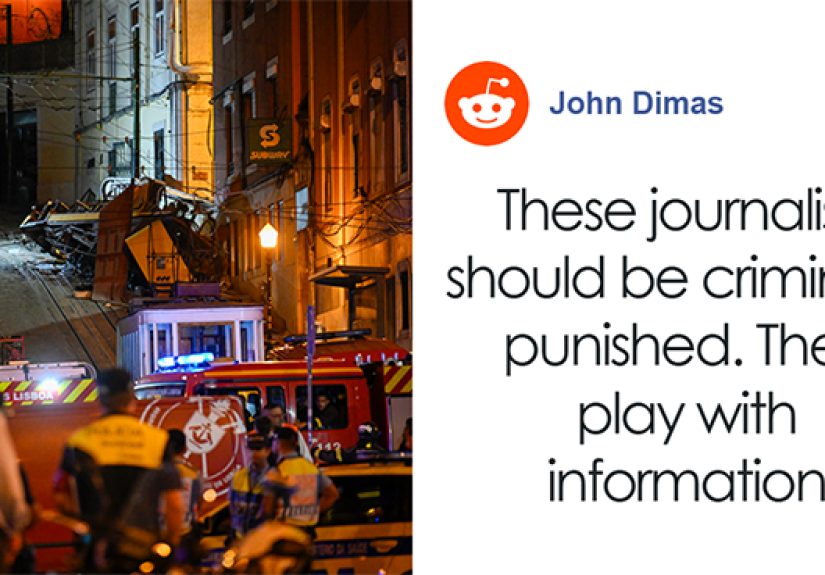
On the early evening of September 3, 2025, that system failed. Reports from Portuguese authorities and early investigative findings indicated a critical
problem with the cable system. With the counterbalance compromised, the upper car accelerated downhill. Witness accounts described a frighteningly fast
descentfollowed by a derailment at a bend and a violent collision with the street and a nearby building.
The numbers were grim: 16 people died and more than 20 were injured. Officials later emphasized how quickly the sequence unfoldedmeasured in seconds,
not minutesleaving little time for anyone to process what was happening, much less react.
The toddler rescue and the “he’s gone” moment that wasn’t true
Among the injured was a German family traveling with a three-year-old child. In the chaotic aftermath, the child was rescued from the wreckage and
survived with comparatively minor injuries. The mother suffered serious injuries. Early reports suggested the father had died.
Then came the correction that felt almost unreal: Portuguese police later said a German citizen presumed dead was, in fact, alive in a Lisbon hospital.
The fatherinitially counted among the deadhad survived and was receiving treatment. To the outside world, it looked like a miracle. To the family,
it was whiplash: the emotional equivalent of being hit by a bus, then handed a life raft.
It’s hard to describe how a situation like that even happens without sounding like you’re accusing someone of being careless. The truth is more complicated.
In mass-casualty incidentsespecially ones involving crushing injuries, multiple hospitals, foreign visitors, and intense time pressureinformation moves fast,
and it moves imperfectly.
Why “presumed dead” errors can happen after a major crash
When dozens of responders are trying to rescue survivors, triage the injured, secure a dangerous scene, and inform families, the first hours can be a blur.
A person who is unconscious, unidentified, moved between facilities, or admitted under partial details can be mistakenly recorded as missingor worse.
Early casualty totals may shift as hospitals update outcomes, as duplicate reports are corrected, and as identities are confirmed.
In other words: no one wants a mistake like this, but the conditions for confusion are built into the chaos of a disaster. That doesn’t make it painless.
It just makes it painfully human.
How a funicular derailment can turn catastrophic so quickly
Funiculars look quaintlike a charming postcard that decided to become public transportation. But mechanically, they are serious systems:
heavy cars, steep grades, cables under enormous tension, and braking mechanisms that must perform under worst-case conditions.
Preliminary findings described a cable failure that disrupted the counterbalancing force between the two cabins. Once that balance is lost on a steep slope,
gravity stops being a background character and becomes the main villain.
Cable failure, braking limits, and the redundancy question
Early technical summaries described brakes being appliedpneumatic and manualyet still not having enough capacity to stop the accelerating car.
This is where redundancy matters. In safety engineering, redundancy means you don’t rely on a single component, or even a single category of components,
to prevent disaster. If one layer fails, another catches it.
Investigative reporting after the crash discussed the lack of an additional redundant safety system capable of arresting the car’s motion after the cable failure.
That’s the kind of detail that sounds boring until you realize “redundant” is just a polite synonym for “the backup plan that saves lives.”
Maintenance, inspections, and the challenges of heritage transit
After any deadly transit accident, the same questions pop upoften before the emergency lights even turn off:
Was maintenance done? Were inspections adequate? Did someone ignore a warning?
The operator said maintenance protocols and inspections were performed, including routine checks. Meanwhile, union voices and public concern highlighted the
reality that mechanical systems can show symptomslike cable tension issues or braking difficultywithout it being immediately clear whether those symptoms
caused the final failure.
Heritage transportation adds another wrinkle. Older systems are often updated over decades: parts replaced, components retrofitted, standards evolving.
Keeping a historic funicular operating safely can be donebut it requires strict engineering discipline, careful documentation, and, sometimes,
uncomfortable upgrades that make purists sigh and safety experts nod vigorously.
What “wire rope” safety teaches us (even outside Lisbon)
Modern safety culture around cables and wire rope emphasizes inspection for broken wires, corrosion, wear, distortion, and fatigueespecially at attachment points
where forces concentrate. Those principles show up across industries, from construction cranes to passenger systems, because steel under repeated load cycles can fail
in ways that look sudden but were developing over time.
That doesn’t mean the Lisbon crash is “explained” by a single universal lesson. It means the investigation will likely focus on questions that come up
in cable systems everywhere: material condition, inspection methods, maintenance intervals, attachment design, braking performance, and whether
a redundant arresting system could have changed the outcome.
What authorities did next: mourning, investigation, and a safety reset
Portugal observed national mourning, and Lisbon declared additional days of municipal mourning. Public attention turned to the victimsmany of whom were foreign
nationalsand to the broader question of safety on vintage tourist infrastructure that still functions as real daily transport.
Investigations began on multiple tracks: technical cause, operational history, and whether any criminal negligence was involved. Beyond the investigation itself,
Lisbon’s city leadership tasked experts with designing a new safety mechanism and gave them authority to decide when the line could safely reopen.
In plain English: it stays closed until smart people with calculators say it’s safe.
What travelers can learn without turning every vacation into a safety lecture
No one wants to plan a trip like they’re preparing for a spacewalk. And statistically, most rides on public transporteven historic transportare uneventful.
Still, a few practical habits can reduce risk and help you respond well if something goes wrong.
Smart, low-effort travel safety habits
- Choose stability when you can: If there’s a choice, stand or sit where you have something solid to hold, and avoid leaning near doors or edges.
- Mind the center of gravity: On steep lines, keep your stance wide and one hand on a railespecially if the car jolts.
- Keep toddlers close and anchored: Hold hands, use stroller brakes when stopped, and avoid placing children where they could be thrown forward.
- Carry ID and emergency details: A passport photo on your phone, emergency contacts, and basic medical info can help if you’re separated or unconscious.
- In a crisis, follow responders: The best time to freelance is at karaoke, not at a crash scene.
These aren’t magic shields. But they can reduce the “I didn’t think that mattered” factor when seconds count.
Family survival stories: why this one hit so hard
The toddler-and-father storyline gripped people for a reason that’s both simple and slightly embarrassing: our brains are wired to latch onto a single,
human-sized thread in a tragedy too large to hold all at once. A three-year-old rescued from wreckage is a thread. A father found alive after being presumed dead
is a thread. Together, they form a rare moment of reliefwithout erasing the grief surrounding it.
And it also highlights something rescue workers and trauma specialists often note: children can survive physically and still need care emotionally.
A toddler may not have the words for what happened, but may show it through sleep changes, clinginess, irritability, or fear of loud sounds.
The most effective early support is usually boring and consistent: routine, reassurance, and calm adults who don’t force a child to “talk it out”
before they’re ready.
Conclusion: hope, accountability, and the unglamorous power of backups
The Lisbon funicular crash was, above all, a tragedyone that unfolded in seconds and reshaped lives permanently. Yet inside it was a small, stubborn piece
of hope: a toddler rescued alive, and a father later found alive after the world briefly believed he was gone.
The coming months and years will matter. Investigations aren’t just paperworkthey’re the path to understanding what failed, what could have prevented it,
and how a historic system can be made worthy of public trust again. If there’s one practical takeaway that applies almost everywhere, it’s this:
safety is rarely a single hero component. It’s layers. It’s redundancy. It’s the unsexy backup that works when everything else doesn’t.
Real-world experiences related to the Lisbon crash (extra)
When people talk about transport disasters afterward, their memories often don’t line up with what you’d expect from movies. Survivors rarely say,
“I saw my life flash before my eyes” with dramatic background music. Instead, they talk about tiny sensory details: the sudden weight shift under their feet,
the odd quiet right before noise, the way time turned into molasses. Many describe a split-second moment of disbeliefbecause the brain prefers
“this can’t be happening” over “this is happening” when the alternative is panic.
First responders often describe a different kind of memory: the mental checklist. Not heroic monologuesjust tasks. Secure the scene. Silence the hazards.
Find the living. Triage. Reassure. Repeat. In chaotic incidents with tourists from multiple countries, responders also juggle language barriers and identification
problems. Someone who can’t speak, who has no documents on them, or who is moved quickly from scene to ambulance to hospital can become “unknown male”
in one system and “missing person” in another. That’s one reason early information can be tragically messy.
Families caught in that mess live a special kind of hell: waiting rooms, phone calls, lists, and uncertainty that feels physically heavy.
People who have endured missing-person confusion after disasters often say the hardest part wasn’t the travel or the paperworkit was the way hope
kept changing shape. One moment, you’re bracing for the worst. The next, you’re chasing a rumor that maybe someone was transferred. Then you feel guilty
for hoping too hard, because what if that hope is wrong? It’s emotional whiplash with no seatbelt.
Parents traveling with toddlers frequently report a strangely practical fear after public incidents: not “what if a cable snaps,” but “what if we get separated?”
That’s why experienced family travelers often keep one recent family photo handy, teach even very young kids a parent’s first name, and use simple rules like
“if you can’t see me, freeze.” It sounds basic, but in crowded tourist areas it can prevent the kind of frantic search that turns dangerous when an emergency
is already unfolding.
Another common experience after major accidents is the “second shock”: reading headlines later and realizing how wrong early reports can be.
In the Lisbon case, the world learned of a father presumed dead later found alive. Survivors of other mass-casualty events often recognize that pattern:
the first count is provisional, the first story incomplete, the first narrative too neat. They learn to wait for confirmation, even when waiting is unbearable.
That lesson is brutalbut it’s also protective, because it prevents people from cementing rumors into reality.
Finally, there’s the experience of returning to normalsomething outsiders assume happens quickly once injuries heal. In reality, normal comes back in pieces.
A child might be fine on a sunny day and melt down when they hear a metallic screech. An adult might feel okay until they step onto a steep street
and their body remembers before their mind does. Families often say the most helpful support wasn’t someone demanding detailsit was someone offering
steadiness: meals, childcare, quiet companionship, and permission to feel whatever showed up.
Those experiences don’t solve what happened in Lisbon. But they do explain why this story resonated worldwide: it wasn’t just a crash.
It was a reminder that survival can be real, confusion can be real, and hope can show up in the least expected placesometimes wearing toddler sneakers.