Table of Contents >> Show >> Hide
- Why “Da Vinci Hidden Painting” Is Such a Big Deal
- The Mona Lisa and the Hidden Layers Everyone Talks About
- Virgin of the Rocks and the Buried Composition Beneath the Masterpiece
- The Battle of Anghiari and the Ultimate Hidden Painting Mystery
- How Experts Actually See a Hidden Painting Beneath the Surface
- Why Hidden Da Vinci Paintings Matter Today
- Experience-Based Perspectives on the “Da Vinci Hidden Painting” Phenomenon
- Conclusion
Few phrases in art history generate more instant drama than “Da Vinci hidden painting.” It sounds like a movie trailer: secret chambers, mysterious pigments, scientists in dark rooms, and one very famous Renaissance genius quietly changing his mind. The truth is even better. In many cases, the “hidden painting” isn’t a conspiracy at allit’s a window into Leonardo da Vinci’s creative process. And in a few cases, the mystery is still very much alive.
Over the last two decades, researchers have used multispectral imaging, infrared reflectography, and X-ray fluorescence to look beneath the visible surfaces of Leonardo’s works. These tools have revealed underdrawings, altered poses, shifted hands, moved faces, and in some cases, entire abandoned compositions. That means we’re not just admiring finished masterpieces anymorewe’re peeking into Leonardo’s studio brain while the paint was still drying (or, in Leonardo’s case, while he was probably changing it again).
In this guide, we’ll unpack what people mean when they search for “Da Vinci hidden painting,” explore the most famous examples, explain the science in plain English, and show why these discoveries matter for art lovers, historians, and curious readers alike.
Why “Da Vinci Hidden Painting” Is Such a Big Deal
Leonardo was not a “paint it once and call it a day” kind of artist. He revised, refined, and experimented constantly. Art historians often describe this as a process of evolution in the painting rather than a clean set of separate versions. That matters because many hidden features found under a Leonardo are not necessarily a completely different artworkthey may be earlier stages of the same masterpiece.
Still, the phrase “hidden painting” keeps trending because some discoveries really do feel dramatic. A side-facing woman beneath the Mona Lisa? An entirely different layout beneath Virgin of the Rocks? A possibly lost battle mural in Florence that may or may not have ever been finished? Yes, yes, and “pass the espresso, this gets complicated.”
The key idea is this: hidden layers can reveal both Leonardo’s method and the limits of interpretation. Technology can show us what’s there; historians still debate what it means.
The Mona Lisa and the Hidden Layers Everyone Talks About
The 2015 “Hidden Woman” Claim
One of the biggest bursts of attention around a Da Vinci hidden painting came from French scientist Pascal Cotte, who spent years analyzing the Mona Lisa using a technique called Layer Amplification Method (LAM). His interpretation suggested multiple phases beneath the visible surface, including a version of a woman facing more to the side and lacking the famous smile.
That claim made headlines fast. It fed the idea that the painting we know today might be layered over a different portraitpossibly even a different identity than the commonly accepted Lisa Gherardini. It was an irresistible story: the world’s most famous face hiding another face.
But many scholars pushed back. Art historians and museum experts noted that painters routinely revise portraits, and Leonardo especially was known for reworking compositions. In other words, hidden features do not automatically equal a separate, finished portrait. They can simply reflect the normal (or in Leonardo’s case, gloriously obsessive) process of artistic revision.
The 2020 Breakthrough: A Hidden Underdrawing, Not a Hollywood Twist
In 2020, a peer-reviewed study in the Journal of Cultural Heritage gave the Mona Lisa story a more technical and widely useful update. The study reported evidence of spolvero beneath the paintingtiny dotted transfer marks used to move a preparatory drawing from paper to panel. This was important because it offered first-time evidence that Leonardo used a preparatory transfer drawing for the Mona Lisa.
That finding doesn’t prove there is a fully separate “other Mona Lisa” hidden below. What it does prove is arguably more fascinating: Leonardo’s process was more structured than many people assumed, and advanced imaging can now recover traces of that process with remarkable precision. Researchers also identified hidden details such as marks in the forehead and hand areas and features that may relate to earlier compositional decisions.
This is the modern pattern of Da Vinci hidden painting news in a nutshell: a dramatic headline gets people in the door, and then conservation science gives us the richer story. Instead of “secret painting discovered,” the more accurate headline is often “Leonardo’s working method becomes visible.” Less clickbait, more genius.
Virgin of the Rocks and the Buried Composition Beneath the Masterpiece
A Hidden Painting Under a Leonardo? This One Is Real
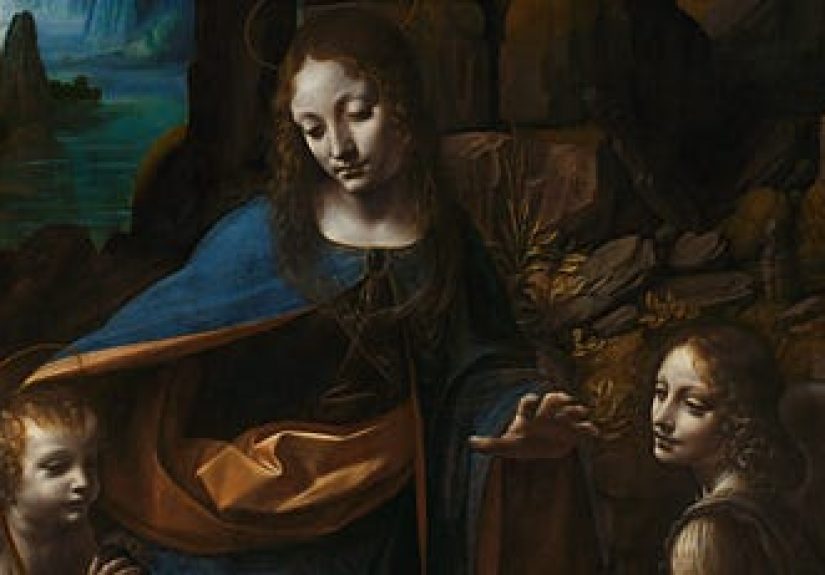
If you want a cleaner example of a Da Vinci hidden painting, Virgin of the Rocks is the star of the show. Researchers studying the London version of the painting found evidence of an earlier, significantly different composition beneath the final image. Earlier imaging revealed traces of a buried design, and later high-resolution work made it much clearer.
The hidden composition shows figures positioned differently from the visible painting. In the earlier design, Mary and the angel appear in a more rotated arrangement, and the overall scene differs from what Leonardo ultimately chose. This was not just a tiny adjustment to a fingertip or veil. It was a serious rethinking of the composition.
How Scientists Revealed It
Researchers combined multiple imaging methods to uncover the underpainting in detail:
- Infrared reflectography to detect hidden lines and features beneath upper paint layers.
- X-ray fluorescence (XRF) to map elements in the hidden materials, including zinc in earlier layers.
- Hyperspectral / shortwave infrared imaging to capture details across wavelengths that normal photography cannot see.
Think of it like using different flashlight modes in a very dark room. One reveals outlines, another highlights materials, and another finds details that only show up in certain bands of light. When the data is combined, the hidden version becomes much easier to interpret.
The result is a powerful reminder that a “finished” Leonardo is often the visible endpoint of a much more complex design journey. The hidden image beneath Virgin of the Rocks doesn’t make the final version less important. It makes it more interesting, because we can see the moment Leonardo changed his mind and steered the painting in a new direction.
The Battle of Anghiari and the Ultimate Hidden Painting Mystery
The Legend: Is a Lost Leonardo Hiding Behind a Wall?
No discussion of “Da Vinci hidden painting” is complete without The Battle of Anghiari, Leonardo’s famous lost mural associated with Florence’s Palazzo Vecchio. For years, a popular theory claimed that Leonardo’s work survived behind a later wall or fresco by Giorgio Vasari.
The idea became one of art history’s great detective stories. Researchers led by Maurizio Seracini used noninvasive investigations and, later, controversial sampling methods to search behind Vasari’s wall. Reports highlighted clues such as a gap behind the later fresco and dark pigment samples that some argued could be consistent with materials linked to Leonardo’s practice.
If that sounds thrilling, it was. It also became deeply controversial. Conservators objected to drilling into Vasari’s fresco, even in limited ways, and the project drew intense debate over preservation ethics and the strength of the evidence.
Why Scholars Still Disagree
More recent scholarship has complicated the hidden-masterpiece narrative. Some historians argue Leonardo may have completed preparatory cartoons and wall preparation but never successfully finished a mural painting on the surface. In that reading, the “hidden Battle of Anghiari” may not be a hidden painting at allit may be a hidden story of an unfinished project.
This disagreement is exactly why the topic remains so compelling. One camp emphasizes the physical clues and the possibility that something survives. Another points to historical records and technique problems that suggest the mural never fully existed as a finished wall painting. Both sides use evidence. Both sides invoke science. And both sides remind us that art history is not a frozen museum labelit’s an ongoing investigation.
How Experts Actually See a Hidden Painting Beneath the Surface
Infrared Reflectography
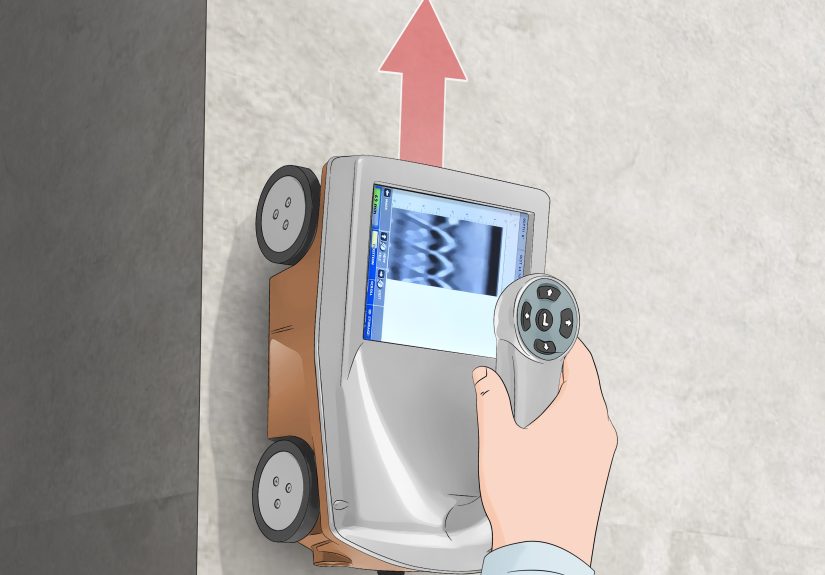
Infrared reflectography is one of the most important tools in technical art history. In simple terms, infrared light can sometimes pass through upper paint layers and reveal underdrawings or earlier paint structures that are invisible in normal light. It’s especially useful when artists used carbon-based drawing materials.
For Leonardo studies, this is a game-changer. It helps scholars identify underdrawings, changes in hand position, shifts in facial alignment, and the famous “pentimenti” (artist changes) that prove the work evolved during painting.
X-Ray Fluorescence and Multispectral Imaging
X-ray fluorescence (XRF) does something different: it detects the chemical elements in pigments and grounds. That means scientists can map where specific materials are locatedeven when those materials are buried. If a hidden layer contains a zinc-rich material, for example, XRF can help visualize where that layer sits beneath the final image.
Multispectral imaging expands the toolkit further by capturing a painting across many wavelengths, from visible light into infrared. With the right processing methods, researchers can amplify faint signals and reconstruct details that would otherwise be lost in the noise. This is how the Mona Lisa’s underdrawing evidence became much clearer in recent technical work.
Why Technology Doesn’t End the Debate
Here’s the important part: imaging reveals data, not final verdicts. Science can show hidden lines, buried figures, and altered pigments. But deciding whether those hidden features represent an abandoned version, a revised composition, or a separate portrait is still an interpretive question.
So when you see headlines about a Da Vinci hidden painting, it helps to ask two questions:
- What did the imaging actually reveal? (lines, pigments, shapes, underdrawing)
- What is the interpretation? (a revision, a separate portrait, or an unfinished idea)
That distinction will save you from a lot of overhyped art headlinesand also make you the smartest person in the room at brunch.
Why Hidden Da Vinci Paintings Matter Today
The fascination isn’t just about mystery. Hidden layers change how we understand creativity. Leonardo is often presented as a superhuman genius who simply produced masterpieces. The hidden evidence tells a better story: he experimented, revised, doubted, tested, and changed course. In other words, he worked like a great artistand also like a great scientist.
These discoveries also matter for conservation. Museums can make better decisions about restoration and preservation when they understand what lies beneath the visible paint. Technical imaging helps protect fragile works by reducing the need for invasive testing, which is especially important when a painting is as culturally significant as the Mona Lisa or as structurally complex as a Leonardo panel.
Finally, hidden-painting discoveries keep classical art alive for modern audiences. They connect Renaissance painting to data science, optics, chemistry, and digital imaging. That crossover pulls in new readers who might never have searched for “art conservation” but absolutely will click on “Da Vinci hidden painting.” And honestly, fair. It’s a great search term.
Experience-Based Perspectives on the “Da Vinci Hidden Painting” Phenomenon
One of the most memorable experiences related to the Da Vinci hidden painting topic happens before anyone sees a scan or a lab image: it happens in front of the painting itself. People stand in a crowded gallery, often expecting a single “wow” moment, and then learn that the real wow is layered. The visible image is only part of the story. Once visitors hear about underdrawings, shifted poses, and hidden compositions, they start looking more slowly. They notice hand placement, eye direction, and subtle transitions in the paint. The experience changes from “I saw a famous painting” to “I watched a masterpiece being built in reverse.”
In museum education settings, this topic is incredibly effective because it turns art history into a detective exercise. Students can compare a visible painting with imaging results and ask practical questions: Which lines belong to the first idea? Which features were moved later? Why would an artist rotate a figure or redraw a hand? Instead of memorizing dates, they begin reading evidence. That kind of learning sticks, because it feels active and surprising.
Conservation labs offer another powerful experience, even when the public only sees photos or demonstrations online. When conservators explain how infrared reflectography or XRF works, the painting suddenly becomes more than an object on a wallit becomes a layered physical record. People who usually think of art as purely emotional discover the technical side: wood panels, ground layers, pigments, signal capture, wavelength ranges, and image processing. The result is a rare blend of science and humanities that feels genuinely modern.
There’s also a very human experience built into these discoveries: uncertainty. Many readers arrive expecting a definitive answer“Was there really another Mona Lisa under there or not?”and leave with a more mature view of evidence. They learn that some questions stay open for good reasons. Scholars can agree on what a scan reveals and still disagree on what it means. That doesn’t weaken the story; it strengthens it. It shows how real research works.
Digital access has made this experience even broader. People now encounter Da Vinci hidden painting stories through zoomable museum images, science news coverage, and conservation visualizations. A reader in one country can compare a visible painting and an underdrawing map from a laptop in a few minutes. That kind of access creates a new kind of museum experienceless about physical proximity and more about layered interpretation.
For many art fans, the lasting impact is emotional as much as intellectual. Hidden layers make Leonardo feel less like a distant icon and more like a working artist in motion: trying, revising, pausing, and trying again. It is oddly comforting. Even the most celebrated painter in Western art history made changes midstream. So if your own project has version 12, version 19, and “final_FINAL_really_this_time,” congratulationsyou are participating in a proud creative tradition.
Conclusion
The phrase “Da Vinci hidden painting” captures a real and fascinating intersection of art, science, and mystery. In some works, like Virgin of the Rocks, imaging clearly reveals a substantially different buried composition. In others, like the Mona Lisa, the most solid recent evidence points to underdrawings and evolving design decisions rather than a neatly separate secret portrait. And in the case of The Battle of Anghiari, the debate continuesbecause the evidence is compelling, incomplete, and deeply contested.
The best takeaway is not that Leonardo hid paintings for us to “discover” centuries later. It’s that modern imaging now lets us see how a genius thought through paint, line, and revision. Hidden layers don’t reduce the magic of Leonardo’s art. They multiply it.