Table of Contents >> Show >> Hide
- Why Connection Matters More Than Perfect Conversation
- Before You Get Creative, Start With These Ground Rules
- 15 Creative Ways to Connect to Someone With Alzheimer’s
- 1. Build a “music time machine”
- 2. Turn photo albums into story prompts, not memory tests
- 3. Create a memory box full of familiar objects
- 4. Cook together in miniature
- 5. Use scent as a bridge
- 6. Read aloud things that sound like home
- 7. Walk side by side instead of face to face
- 8. Offer two good choices
- 9. Try “yes, and” instead of “no, actually”
- 10. Connect through hands, not just words
- 11. Use old TV shows, sports, or radio as conversation anchors
- 12. Let humor stay in the room
- 13. Invite spiritual rituals if they matter to the person
- 14. Build a simple “favorite things” routine
- 15. Bring in animals, plants, or nature
- What Not to Do When You’re Trying to Connect
- When Words Start to Fade, Connection Can Still Grow
- Real-World Experiences: What Connection Often Looks Like in Daily Life
- Conclusion
- SEO Tags
Connecting with someone who has Alzheimer’s can feel a little like trying to tune an old radio. One day the signal is clear. The next day it’s static, jazz, weather updates, and possibly a memory from 1963. But here’s the good news: connection is still possible, still meaningful, and still worth every ounce of creativity you can bring to it.
Alzheimer’s changes memory, language, attention, and behavior, but it does not erase personhood. The person you love is still there. They may communicate differently. They may process more slowly. They may not remember your name, yet still remember your kindness, your tone, your patience, and the feeling of being safe with you. That is where the real magic lives.
This guide shares practical, creative ways to connect to someone with Alzheimer’s without turning every interaction into a quiz show. No pop quiz on what year it is. No debate club over whether Aunt Carol is still alive. Just thoughtful, human ways to create comfort, spark emotion, and make everyday moments feel less clinical and more connected.
Why Connection Matters More Than Perfect Conversation
When people think about Alzheimer’s, they often focus on memory loss. Fair enough. It is kind of the headliner. But connection is not built on memory alone. It is built on emotion, rhythm, familiarity, trust, and the tiny signals people send each other every day. A smile. A gentle touch on the hand. A favorite song. A warm cup of tea placed in the same beloved mug.
In other words, success does not mean having a long, logical conversation about current events. Success may simply mean the person relaxes, laughs, hums along to music, or looks relieved because someone finally stopped correcting them and started joining them.
That shift matters. When you focus less on getting facts right and more on helping the person feel seen, interactions usually become smoother for both of you. You are no longer trying to win the conversation. You are trying to preserve dignity, reduce stress, and create moments of joy.
Before You Get Creative, Start With These Ground Rules
1. Set the stage
Connection goes better in a calm environment. Turn off the blaring TV. Lower background noise. Sit at eye level. Say the person’s name before you launch into a question marathon. A quiet room can do more for communication than the world’s best motivational speech.
2. Keep language simple, not childish
Use short sentences and one idea at a time, but always speak like you are talking to an adult. No baby talk. No sing-song voice unless that is genuinely how you talk to every adult in your life, which would be… a choice.
3. Give extra time
People with Alzheimer’s may need more time to process words and respond. Ask one question, then pause. Really pause. Not the fake kind where you wait half a second and answer for them.
4. Don’t argue with their reality
If the person says they need to pick up their children from school, correcting them may only increase distress. Instead of saying, “Your children are grown,” try, “You’re worried about them. Tell me about your kids.” This kind of validation often opens the door to calmer, more meaningful conversation.
5. Watch behavior like it is a language
Agitation, pacing, repeated questions, and frustration may be communication. The person may be scared, tired, bored, overstimulated, hungry, uncomfortable, or simply unable to find the right words. Sometimes the message is not hidden. It is just not being spoken in a way we expect.
15 Creative Ways to Connect to Someone With Alzheimer’s
1. Build a “music time machine”
Music is one of the most powerful connection tools around. Create a playlist of songs from the person’s teens, twenties, or early adulthood. Think wedding songs, church hymns, military band tunes, Motown, classic country, old jazz standards, or whatever made them tap the dashboard back in the day.
Do not just play the music. Use it. Sing together. Clap. Sway in chairs. Ask, “Did you ever dance to this?” Even if they cannot answer clearly, their face, posture, and mood may tell you plenty.
2. Turn photo albums into story prompts, not memory tests
Photos can be wonderful, but only if you use them gently. Do not hold up a picture and demand, “Who is this?” That can feel like an exam with no study guide. Instead, say, “This looks like a fun day,” or “I love this smile,” or “Tell me anything this picture makes you think of.”
The goal is not accuracy. The goal is engagement.
3. Create a memory box full of familiar objects
A small box or basket filled with meaningful items can invite conversation without pressure. Add things like an old recipe card, a favorite scarf, costume jewelry, postcards, a baseball cap, gardening gloves, a measuring tape, or fabric from a hobby they loved. Texture and familiarity can unlock emotion even when words are scarce.
4. Cook together in miniature
You do not need to host Thanksgiving to make food part of connection. Invite the person to wash strawberries, stir batter, snap green beans, butter toast, sort cookies, or smell cinnamon and vanilla. These tiny kitchen moments can feel deeply familiar and comforting.
Food has memory, ritual, and sensory power. It says home before anyone says a word.
5. Use scent as a bridge
Smell can be surprisingly emotional. Lavender, coffee, lemon, peppermint, apple pie, shaving cream, hand lotion, or a favorite perfume may spark calm or recognition. This is not about turning the house into a candle superstore. It is about using one familiar scent at the right moment to create comfort.
6. Read aloud things that sound like home
Try poems, prayers, old letters, newspaper comics, baseball box scores, Scripture, nursery rhymes, or passages from a book the person used to love. Rhythm and familiarity matter. Even if the person cannot follow every word, the sound of a steady voice can be soothing.
7. Walk side by side instead of face to face
Some people do better when conversation happens during a slow walk rather than across a table. A hallway stroll, a lap around the garden, or even a few minutes on the porch can lower pressure. Moving the body often helps settle the mind.
8. Offer two good choices
Open-ended questions can feel overwhelming. “What do you want to do?” might be too much. Try, “Would you like tea or juice?” “Music or a short walk?” “Blue sweater or green sweater?” Small choices preserve dignity and reduce frustration.
9. Try “yes, and” instead of “no, actually”
Borrow a trick from improv. If the person says something inaccurate but harmless, do not slam on the brakes. Join the emotion behind it. “I need to go to work.” You might say, “You always worked hard. What kind of job did you have?” That response keeps the person engaged instead of embarrassed.
10. Connect through hands, not just words
Fold towels together. Water plants. Brush a pet. Sort buttons. Roll yarn. Shell peas. Touch and movement can reduce the pressure to “perform” in conversation. Sometimes people open up more when their hands are busy and their nervous system feels anchored.
11. Use old TV shows, sports, or radio as conversation anchors
A familiar sitcom, radio announcer, big band station, or classic baseball game can create a shared moment with very little effort. You are not looking for intense plot analysis. You are looking for mood, familiarity, and something you can enjoy together without demanding much.
12. Let humor stay in the room
Alzheimer’s is serious. Every moment does not need to be. Gentle humor, playful observations, and light joking can help when it feels natural and respectful. If your loved one has always been funny, do not act like the diagnosis turned them into a museum exhibit. A warm laugh is still connection.
13. Invite spiritual rituals if they matter to the person
Prayer, hymns, candles, blessings before meals, or reading familiar religious passages can be grounding. Spiritual routines often remain meaningful long after other types of conversation become difficult. For many families, this is less about religion as a topic and more about ritual as comfort.
14. Build a simple “favorite things” routine
Create a repeating pattern around things the person enjoys: the same chair by the window, the same playlist after lunch, tea at 3 p.m., lotion on the hands before bed, a short walk at sunset. Familiar structure can reduce anxiety and make connection easier because the moment already feels safe.
15. Bring in animals, plants, or nature
Many people with Alzheimer’s respond beautifully to gentle sensory experiences. A calm dog, birds outside the window, fresh flowers, a small herb garden, or sunshine on the porch can soften agitation and open the door to conversation. Sometimes “Look at that bird” works better than a hundred questions.
What Not to Do When You’re Trying to Connect
Even well-meaning people can accidentally turn an interaction into a stress test. Avoid these common mistakes:
- Do not argue about facts unless safety truly depends on it.
- Do not ask rapid-fire questions.
- Do not correct every mistake in speech or memory.
- Do not talk about the person as if they are not in the room.
- Do not assume silence means nothing is getting through.
- Do not overload the environment with noise, clutter, or too many people.
If something is not working, change the approach rather than pushing harder. In Alzheimer’s care, force is rarely the hero of the story.
When Words Start to Fade, Connection Can Still Grow
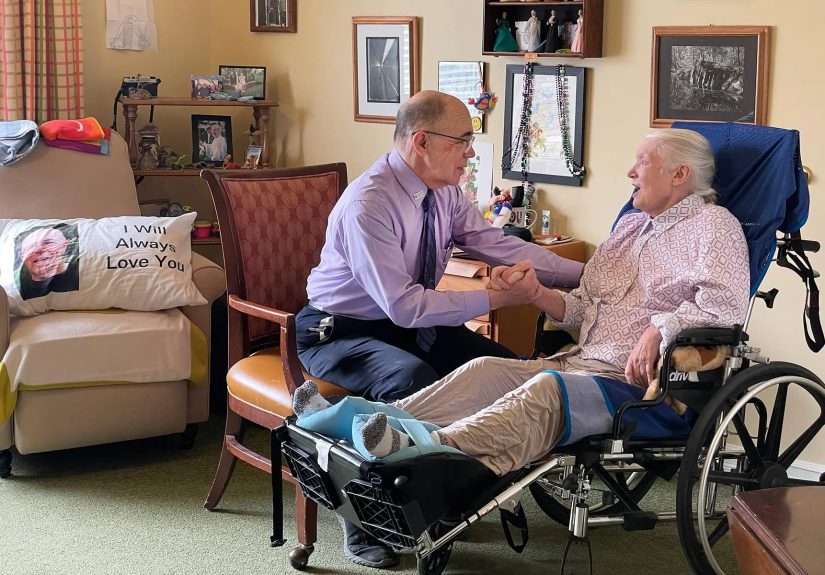
Late-stage Alzheimer’s can limit speech, but it does not end the possibility of connection. At that stage, tone, pace, expression, and touch often matter more than content. Sitting quietly together. Brushing hair. Holding hands. Applying lotion. Humming a song. Looking at sunlight through the window. These are not “small” things. They are the conversation.
Think of connection as emotional communication, not just verbal communication. A person may not remember what you said, but they may remember how your presence felt in their body: calm instead of rushed, kind instead of correcting, warm instead of impatient.
Real-World Experiences: What Connection Often Looks Like in Daily Life
Caregivers often say the hardest part of Alzheimer’s is not the forgetting. It is the constant need to adjust. What worked last week may fail spectacularly today. A daughter may bring a photo album expecting a cheerful stroll down memory lane, only to watch her mother become anxious because she cannot name everyone in the pictures. The next day, that same daughter switches tactics. She puts on an old Nat King Cole song, sits beside her mother instead of across from her, and says, “This one feels familiar.” Her mother starts humming. No names, no dates, no pressure. Just a tune and a softer face. That counts as success.
Spouses describe similar moments. One husband may try to explain, logically and carefully, why they do not need to “go home” because they are already home. Meanwhile, his wife grows more upset by the minute. Later, he learns to answer the feeling instead of the facts. When she says she wants to go home, he says, “You want to feel comfortable and safe.” Then he offers tea, a blanket, and music from church. The crisis that once stretched into an exhausting hour now sometimes shrinks into ten manageable minutes. Not because he found the perfect words, but because he stopped treating distress like a debate to win.
Adult children also talk about discovering that everyday chores can become little bridges. A son who cannot maintain a full conversation with his father may still get a wonderful response by inviting him to polish old tools in the garage. A granddaughter may find that brushing Grandma’s hair before dinner leads to more smiles than asking, “Do you remember me?” Families often learn, sometimes the hard way, that the body remembers routines and pleasures even when the mind cannot organize them into language.
Many caregivers notice that their own mood changes everything. If they enter the room rushed, irritated, and determined to keep the person “on track,” the interaction tends to go sideways. If they slow down, soften their voice, and lower their expectations, the whole atmosphere changes. It is humbling. It is also empowering. You may not be able to control Alzheimer’s, but you can often influence the emotional temperature of the moment.
There are difficult days too, of course. Days when the person refuses to talk, becomes suspicious, asks the same question twenty times, or seems unreachable. On those days, experienced caregivers often remind each other not to measure connection by conversation alone. Maybe the win is a relaxed hand during lotion time. Maybe it is one minute of eye contact. Maybe it is sitting together on the porch while the person watches the trees move. These moments can look ordinary from the outside, but to families living with Alzheimer’s, they are often the moments that keep love visible.
The biggest lesson many people learn is this: connection becomes easier when you stop chasing the person they used to be every minute of the day and start meeting the person who is here right now. That shift is not giving up. It is loving more skillfully.
Conclusion
Creative ways to connect to someone with Alzheimer’s are rarely flashy. They are simple, intentional, and deeply human. A song. A slower pace. Two gentle choices. A memory box. A walk. A laugh. A hand held without rushing. The point is not to force the person back into your version of normal. The point is to build a bridge from where they are to where comfort, dignity, and connection can still happen.
And when that bridge feels wobbly, remember this: you do not need a perfect conversation to create a meaningful moment. Sometimes love sounds like music. Sometimes it looks like folding towels together. Sometimes it is just the decision to stop correcting and start listening. That is not small. That is the work. And it matters.