Table of Contents >> Show >> Hide
- What Makes This Cavallini Puzzle Stand Out?
- Why Cacti and Succulents Are Such a Smart Puzzle Theme
- A Puzzle That Feels More Like a Gift Than a Time Filler
- How the Build Experience Compares to Generic 1,000-Piece Puzzles
- Who Will Love the Cacti + Succulents Puzzle Most?
- The Decor Factor Is Real
- A Few Honest Things to Know Before You Buy
- Why This Puzzle Fits the Moment So Well
- Final Verdict: Is the Cacti + Succulents Puzzle Worth It?
- Experience: What It Feels Like to Live With This Puzzle for a While
- SEO Tags
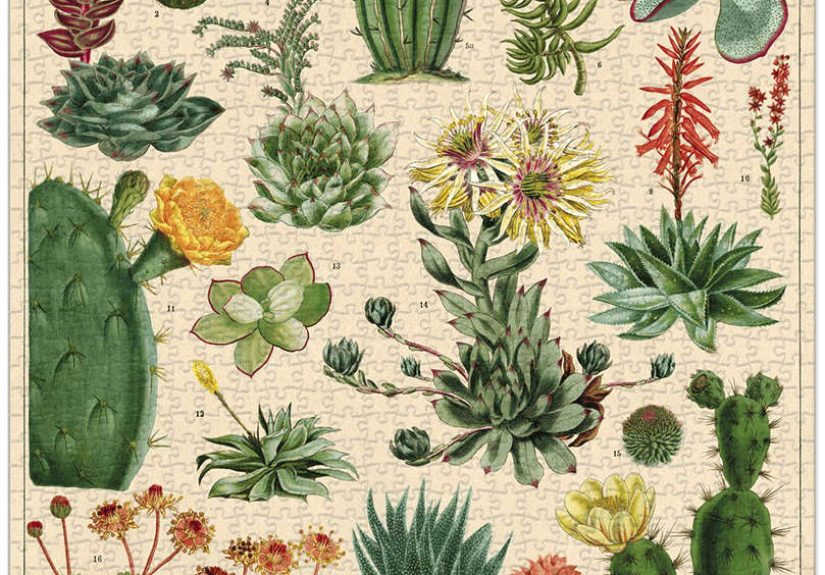
If your idea of a good time involves strong coffee, a clear table, and 1,000 tiny cardboard decisions, Cavallini & Co.'s Vintage Themed Puzzles – Cacti + Succulents might be your kind of chaos. This is not the kind of jigsaw puzzle that screams at you with neon colors or throws cartoon animals into a confetti storm. Instead, it strolls in wearing museum-shop confidence, carrying a tube instead of a standard box, and quietly announces, “I have botanical labels, old-world charm, and absolutely no interest in being tacky.”
That is the magic of this vintage-themed puzzle. It blends the soothing beauty of cacti and succulents with the visual richness of antique botanical illustration. The result feels part game, part decor, part love letter to people who own too many plants and still say things like, “No, this one is different.” And honestly, they are right. This one is different.
For puzzle fans, plant lovers, gift hunters, and anyone trying to spend less time doom-scrolling and more time doing something that does not require a charger, this puzzle hits a sweet spot. It looks beautiful, feels giftable, and turns an ordinary evening into something slower and more satisfying. It is a puzzle with personality, which is not something you can say about every landscape covered in identical blue sky.
What Makes This Cavallini Puzzle Stand Out?
The first thing that separates this Cavallini puzzle from the pack is its design pedigree. Cavallini & Co. has built its reputation around vintage imagery pulled from a deep archive of botanical plates, maps, charts, and old paper ephemera. That heritage matters here. The Cacti + Succulents puzzle does not look like a random plant collage tossed together by an intern at 4:57 p.m. on a Friday. It feels curated, balanced, and visually coherent.
The imagery leans into the charm of old botanical reference art: carefully illustrated plant forms, classic labeling, and a layout that feels both scientific and decorative. That combination is exactly why the puzzle works so well. It gives you enough visual structure to stay engaged, but enough variation in shape, color, and detail to keep the build interesting.
Then there is the packaging, which deserves a little applause. Cavallini puzzles are known for arriving in a decorative storage tube with a muslin bag for the pieces and a guide poster tucked inside. That instantly makes the whole thing feel more collectible than disposable. It is the kind of packaging that says, “Please do not shove me under the couch with the batteries and expired coupons.” Bonus points for the plastic-free approach, which makes the presentation feel a little more thoughtful and a little less landfill-adjacent.
Why Cacti and Succulents Are Such a Smart Puzzle Theme
They are visually dramatic without being visually exhausting
One reason cacti and succulents puzzle designs work so well is that these plants are naturally sculptural. They come with stripes, spines, rosettes, ridges, paddles, and wildly satisfying geometry. In puzzle terms, that means more visual anchors and fewer monotonous zones. You are not stuck sorting 200 pieces of nearly identical blue ocean while your will to live leaves the room.
Succulents also offer color in a restrained, elegant way. Expect greens, dusty blues, sage tones, muted pinks, warm golds, and earthy accents instead of retina-searing rainbow overload. The palette is calming but not boring. It gives the finished image the kind of quiet beauty that looks just as good on a dining table mid-build as it does fully assembled.
The vintage botanical look adds story
There is a reason botanical illustration has lasted for centuries: it sits at the crossroads of science and art. A good botanical image is informative, but it is also gorgeous. That is exactly the lane this puzzle drives in. It feels educational without becoming homework. You notice the names, the forms, the quirky silhouettes, and suddenly you are the type of person casually saying, “That one looks like a Mammillaria,” as though you host a plant podcast.
The theme also taps into a bigger design trend. People still love desert plants, drought-tolerant gardening, greenhouse aesthetics, and vintage nature prints. So this puzzle feels current without trying too hard. It has what can only be described as “stylish aunt energy,” and that is a compliment.
A Puzzle That Feels More Like a Gift Than a Time Filler
Plenty of puzzles are fun. Fewer feel gift-worthy before anyone even opens them. This one does. The tube packaging gives it instant shelf appeal, and the artwork makes it a natural fit for birthdays, housewarmings, holidays, hostess gifts, or “I saw this and it screamed your name because you own twelve pots of echeveria” moments.
That makes it especially appealing for shoppers looking for a gift for plant lovers that is not another watering can, ceramic pot, or mystery cutting from someone’s kitchen windowsill. It is charming without being cheesy, practical without being boring, and decorative without becoming clutter.
It also helps that Cavallini as a brand has a strong museum-store vibe. You can see why its puzzles show up in garden shops, specialty retailers, and curated gift stores. The whole line is designed to feel a little elevated. Not snobby. Just polished. Like the puzzle equivalent of saying, “I browse bookstores for fun” instead of “I panic-buy gum at the checkout counter.”
How the Build Experience Compares to Generic 1,000-Piece Puzzles
Not all 1000-piece jigsaw puzzles are created equal. Some are satisfying. Some are chaotic. Some seem engineered by a villain who hates joy. The appeal of the Cavallini & Co. vintage puzzle style is that the artwork gives you multiple ways in. You can sort by plant type, by label areas, by color families, by background tones, or by especially recognizable shapes. That flexibility matters.
With a photo-based puzzle, you often rely heavily on gradients and edge clues. Here, the vintage illustration layout offers more distinct landmarks. That makes the puzzle feel approachable for experienced puzzlers and still enjoyable for casual solvers who do not want their leisure activity to feel like a standardized test.
At the same time, it is not baby mode. The repeating botanical textures, similar green tones, and clusters of illustrated detail mean there is still a genuine challenge. It is the good kind of difficult: absorbing, occasionally humbling, but never so frustrating that you start accusing innocent puzzle pieces of personal betrayal.
Who Will Love the Cacti + Succulents Puzzle Most?
This puzzle has a fairly obvious target audience, but it is broader than it first appears. It is a strong match for:
- Plant lovers who appreciate botanical art and vintage garden style.
- Puzzle fans who want a design-driven alternative to generic landscapes.
- Gift shoppers looking for something tasteful, useful, and memorable.
- Home decor enthusiasts who want a puzzle that looks attractive even while unfinished.
- People craving a calmer hobby that pulls them away from screens without making them feel deprived.
It is also a sneaky good option for couples, roommates, or families who want something collaborative. Because the image has clear zones and mini landmarks, multiple people can work on different areas without immediately entering a territorial border dispute over the corner pieces.
The Decor Factor Is Real
Some puzzles are fun while you are doing them and instantly forgettable once you finish. This is not one of those. The vintage botanical puzzle aesthetic gives the completed image real decorative value. It has the look of an old educational poster, the kind of piece you could imagine framed in a kitchen, studio, reading nook, or sunroom.
That matters more than people think. A puzzle with strong visual payoff has a longer emotional life. Even before it is completed, it becomes part of the room. It invites conversation. It creates atmosphere. It says, “Someone here has taste,” which is especially useful if the rest of the room currently says, “Laundry chair in active service.”
And because the imagery is timeless rather than trendy, it avoids the fate of novelty puzzles that feel dated the minute the meme cycle moves on. Cacti, succulents, and botanical illustration have staying power. They looked good a century ago, they look good now, and they will probably still look good when your newest houseplant finally forgives you for overwatering it.
A Few Honest Things to Know Before You Buy
For all its charm, this puzzle is not automatically perfect for every puzzler on Earth. If you prefer bright pop culture imagery, oversized piece cuts, or cartoon-style scenes with lots of dramatic contrast, the Cavallini look may feel a little more refined than playful. It is beautiful, but it leans elegant rather than loud.
Also, the botanical theme means you will spend time working through clusters of similar greens and repeated textures. That is part of the appeal for some people, but it can feel a little tricky if you are a beginner who wants quick wins every five seconds. This is a sit-down, settle-in, enjoy-the-process kind of puzzle. It rewards patience more than speed.
And while the tube packaging is charming, people accustomed to traditional square puzzle boxes may need a second to adjust. The tube is wonderful for gifting and storage, but it has a slightly different ritual. Less “open game box,” more “unroll tiny art project.” Personally, that feels like a perk, not a problem.
Why This Puzzle Fits the Moment So Well
There is a bigger reason puzzles like this are having a strong cultural moment: people want hobbies that feel grounding. A good jigsaw puzzle is quiet, tactile, focused, and refreshingly offline. You are not swiping, refreshing, or trying to outsmart an algorithm. You are just looking for shape, color, and pattern with your own brain and your own hands. Revolutionary stuff, apparently.
That makes Cavallini & Co.'s Vintage Themed Puzzles – Cacti + Succulents more than just a pretty product. It becomes a small ritual. You can do ten minutes before bed, an hour on a Sunday afternoon, or a full “do not text me unless the house is on fire” session while music plays in the background. Either way, it slows the room down in the best possible way.
The plant theme helps too. Cacti and succulents already carry a certain emotional tone: resilient, sculptural, low-drama, pleasantly weird. Put that into a vintage illustration format, and the puzzle starts to feel like visual aromatherapy without the candle. Calm, but interesting. Quiet, but never dull.
Final Verdict: Is the Cacti + Succulents Puzzle Worth It?
Yes, especially if you value design as much as difficulty. Cavallini & Co.'s Cacti + Succulents puzzle stands out because it does several things at once. It delivers a satisfying 1,000-piece challenge, offers gorgeous vintage botanical art, arrives in packaging that feels special, and doubles as a smart gift for plant people, puzzle lovers, and anyone trying to reclaim their attention span from the internet.
It is stylish without being fussy, educational without being preachy, and charming without trying to force whimsy down your throat. In a market full of puzzles that feel mass-produced and forgettable, this one has character. It knows what it is. It is here to look lovely on your table, mildly humble your sorting strategy, and make you weirdly attached to illustrated succulents by the end of the week.
If that sounds like your kind of fun, this puzzle is not just worth considering. It is worth clearing the table for.
Experience: What It Feels Like to Live With This Puzzle for a While
One of the best things about a puzzle like this is that the experience begins before a single piece clicks into place. You pull the tube off the shelf and it already feels different from a standard puzzle box. There is a little ceremony to it. You slide the lid, shake out the muslin bag, unfold the guide, and suddenly your kitchen table has turned into a tiny vintage botany studio. That shift matters. It makes the activity feel intentional, not accidental.
The first ten minutes are usually all optimism and false confidence. You spread out the pieces and think, “This will be relaxing.” Then you notice that nature, while beautiful, has a suspicious number of similar greens. But instead of becoming annoying, the image gradually teaches you how to see it. One cactus has a more ribbed shape. Another succulent has a powdery blue cast. A cluster of labels becomes an anchor point. Slowly, the puzzle changes from a pile of cardboard into a map your eyes actually understand.
That is where the pleasure really kicks in. The puzzle rewards attention. It asks you to notice details you would normally ignore: the difference between a soft curve and a jagged edge, the way a label balances an image, the rhythm created by repeated plant forms. It is a deeply tactile experience, but it is also visual in a richer way than many modern puzzles. You are not just matching color. You are reading illustration, composition, and texture all at once.
It also changes the mood of a room. Leave this puzzle out overnight and it does not look like clutter. It looks like a project. A stylish one, even. Guests are more likely to lean in and say, “Wait, this is gorgeous,” than “So… are you planning to clean this up?” That makes it easier to keep returning to. It earns its space.
There is something especially satisfying about working on it in small sessions. A few pieces with morning coffee. A longer stretch on a rainy Saturday. Ten minutes at the end of a workday when your brain is fried and scrolling would only make everything worse. The puzzle meets you where you are. Some days it feels meditative. Some days it feels social. Some days it feels like a tiny personal victory because you finally found the one absurdly specific curved piece that has been haunting you since Tuesday.
By the time the image comes together, you realize the experience was never just about finishing. It was about paying attention, slowing down, and getting oddly attached to a parade of illustrated desert plants. And when the last piece goes in, the reaction is not dramatic triumph. It is usually a quieter satisfaction: a little grin, a longer look, maybe even a moment of hesitation before taking it apart. That is how you know the puzzle worked. It did not just keep you busy. It gave your attention somewhere lovely to go.