Table of Contents >> Show >> Hide
- A Small Stone Head With a Big Personality
- Where Was the Smiling Ancient Face Found?
- Why the Stone Itself Matters
- A Smile From the Medieval World
- Why Archaeologists Are Excited
- Orkney: A Place Where the Ground Keeps Secrets
- Could the Smiling Face Have Come From a Church?
- The Mystery of the Missing Nose
- Why Faces in Archaeology Feel So Powerful
- What the Discovery Teaches Us About Medieval Orkney
- How Archaeologists Study a Find Like This
- Why This Smiling Face Matters Today
- Experiences Related to the Smiling Ancient Face
- Conclusion
Every so often, archaeology gives the modern world a tiny reminder that the past was not always solemn, dusty, and allergic to personality. Sometimes it hands us a sword. Sometimes a tomb. Sometimes a clay tablet full of taxes, because apparently paperwork is older than everyone’s patience. And sometimes, wonderfully, it gives us a face that seems to be smiling back.
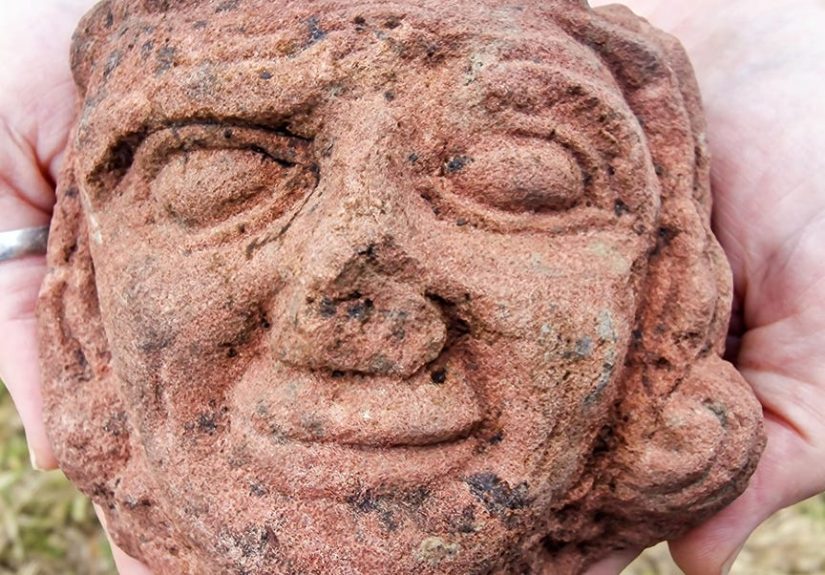
That is exactly what happened at Skaill Farm on the island of Rousay in Orkney, Scotland, where archaeologists and students uncovered a small carved stone head with closed eyes, carved hair, uneven eyebrows, and a subtle smile. The discovery quickly caught public attention because it feels oddly intimate. It is not a massive monument or glittering royal treasure. It is a human face, shaped by hand, buried in the ground, waiting centuries to rejoin the conversation.
The carved head is believed to be medieval, possibly more than 900 years old, and its presence at a farm site has raised a surprisingly big question: why was such refined stonework there in the first place? The answer may connect a remote farmstead to churches, Norse power, high-status buildings, and Orkney’s extraordinary habit of hiding world-class archaeology beneath ordinary-looking soil.
A Small Stone Head With a Big Personality
The smiling ancient face was found during excavations at Skaill Farm, a long-studied site on Rousay, one of the Orkney Islands north of mainland Scotland. The object is carved from rich red sandstone with yellowish inclusions, a material associated with fine medieval stonework in the region. Although it is small enough to be held in two hands, it has the kind of presence that makes people stop scrolling.
The face has closed or lowered eyes, delicately carved locks of hair, a damaged nose, and a slight smile. Its eyebrows are not perfectly symmetrical, which makes the expression feel more alive. In modern terms, it has “main character energy,” though the medieval mason responsible would probably not appreciate that phrase. Still, the point stands: this is not just a generic face. It has character.
Undergraduate archaeology student Katie Joss reportedly found the piece while working near a trench wall. As the stone emerged, the face became visible, creating one of those cinematic excavation moments that every archaeology student dreams about and every dusty field notebook quietly envies. Most archaeology involves careful scraping, labeling, measuring, and patience. Then suddenly, a face rolls out of the earth as if it has been waiting for its dramatic entrance.
Where Was the Smiling Ancient Face Found?
Skaill Farm sits in Westness on Rousay, a place with layers of history stacked like a very old sandwich. The current farmstead dates mainly to the 18th and 19th centuries, but the name “Skaill” comes from the Old Norse word skáli, meaning “hall.” That linguistic clue matters because excavations at the site have also revealed evidence of a large Norse hall, suggesting that the area once held a high-status settlement rather than a modest rural outpost.
Westness is also linked to the medieval Orkneyinga Saga, which describes powerful Norse families and political drama in Orkney. If you think medieval island politics were calm and full of knitting, the sagas would like a word. They include feasts, rivalries, alliances, betrayals, and enough ambition to power a modern streaming series.
The smiling stone head was not discovered in a cathedral or palace, which is part of what makes it so intriguing. Archaeologists have noted that the craftsmanship seems unusually refined for a farm context. That does not mean farmers lacked taste. It means the object may originally have belonged to a more prestigious building nearby before being reused, moved, discarded, or buried in later rubble.
Why the Stone Itself Matters
In archaeology, material is never just material. Stone has a biography. It can tell researchers where it came from, how far it traveled, who had access to it, and what kind of building it once decorated.
The Skaill head is carved from red sandstone, a material that appears in other medieval architectural fragments found around the site. Similar stone is associated with St Mary’s old parish church nearby and with Orkney’s broader tradition of high-quality ecclesiastical stonework. Some experts have suggested that the head could have come from a church building or an important religious structure rather than from the farm itself.
That idea becomes even more interesting when compared with St Magnus Cathedral in Kirkwall, one of Orkney’s most famous medieval buildings. Founded in 1137, St Magnus Cathedral is known for its red and yellow sandstone, Romanesque architecture, and carved decorative details. The Skaill head is not being claimed as a missing piece of that cathedral, but comparing it with similar medieval carved faces helps researchers understand its style, possible date, and function.
A Smile From the Medieval World
When people hear “ancient face,” they often imagine something from Egypt, Mesopotamia, or the Stone Age. In this case, “ancient” is being used in the popular sense: very old, mysterious, and definitely not ordered from a garden center last Tuesday. The carved head is more accurately described as medieval, possibly Viking-era or post-Viking Norse in cultural context.
That does not make it less fascinating. If anything, the medieval date gives the object a richer social setting. Orkney was a crossroads of Norse, Scottish, Christian, and local island traditions. A carved face could have been part of a church, a decorative architectural feature, a symbolic marker, or a fragment from a building that once carried religious or social meaning.
Its expression also matters. The closed eyes and slight smile could suggest serenity, contemplation, or simply a mason’s creative touch. We should be careful not to overread emotion into stone. The head is not literally happy to be found, though the internet understandably disagreed. But the carving does show that medieval artisans were capable of subtle facial expression. This was not just functional building decoration. It was art with personality.
Why Archaeologists Are Excited
Archaeologists do not get excited only because something looks cool, although looking cool certainly does not hurt. The Skaill head matters because it changes how researchers think about the site. If high-quality carved stone was present at or near Skaill, then the area may have included a building of unusual status. That could mean a church, elite hall, or important structure connected to Norse power and medieval religious life.
The head also fits into a larger pattern. Excavations at Skaill have produced carved red sandstone fragments before, including molded architectural pieces. However, a human face is different. It brings iconography into the picture. It suggests not just construction, but representation. Someone wanted a face to be seen.
That “someone” could have been a mason, patron, church authority, landholder, or community. The exact answer remains unknown, which is not a failure. Archaeology often works by turning one mystery into a better, more specific mystery. Before the discovery, researchers knew Skaill was important. After the discovery, they had a new reason to ask what kind of importance it held.
Orkney: A Place Where the Ground Keeps Secrets
To understand why this discovery attracted attention, it helps to understand Orkney itself. The islands are famous for their archaeological richness. The Heart of Neolithic Orkney, a UNESCO World Heritage Site, includes Skara Brae, Maeshowe, the Stones of Stenness, and the Ring of Brodgar. These sites date back around 5,000 years and show that Orkney was a major center of prehistoric building, ritual, and community life.
Skara Brae, in particular, is one of Europe’s best-preserved Neolithic settlements. Its stone houses, hearths, beds, and storage spaces make prehistoric life feel startlingly close. You can look at the rooms and imagine people cooking, sleeping, repairing tools, and perhaps complaining that someone left wet sandals by the doorway again. Human nature has range, but shared domestic irritation is probably eternal.
Orkney’s later history is just as layered. Norse settlement, medieval churches, farmsteads, coastal communities, and post-medieval estates all left traces. That is why a farm can sit above a Norse hall, near a medieval church, within a landscape already famous for prehistoric monuments. In Orkney, “just a field” is often archaeology wearing a green sweater.
Could the Smiling Face Have Come From a Church?
One strong possibility is that the carved head came from an ecclesiastical building, perhaps connected to St Mary’s old parish church near Skaill. Churches in medieval Orkney could include carved stones, decorative heads, symbolic faces, and architectural details designed to communicate status, belief, and beauty.
The head’s refined carving supports that idea. Its hair is carefully shaped, and the face was designed to be seen from the front at a slight angle. That suggests it may have been part of a visible architectural setting rather than a random stone doodle. It might have decorated a doorway, window, arch, column, or interior feature.
Yet archaeologists are cautious, as they should be. The object was found in a later deposit, not in its original position. That means it may have been moved long after it was carved. Stones were often reused in later buildings, walls, repairs, and rubble layers. A sacred or decorative object could become construction material once its original building fell out of use. History can be poetic, but it can also be extremely practical.
The Mystery of the Missing Nose
The Skaill head’s nose is damaged, but the rest of the face is remarkably clear. That kind of preservation can be important. If a carved stone had been exposed outdoors for centuries, weather might have softened the details. The visible chisel marks and crisp features suggest it may have spent a long time protected, perhaps indoors or buried in conditions that helped preserve it.
The missing nose may have broken before burial, during movement, or as part of the collapse or demolition of a structure. It is tempting to build a dramatic story around it, but responsible archaeology avoids turning every crack into a crime scene. Sometimes a broken nose is evidence of iconoclasm or deliberate damage. Sometimes it is evidence of gravity being rude.
Even damaged, the face remains expressive. In fact, the broken nose may make the smile feel more noticeable. The eyes, brows, cheeks, and mouth carry the expression. It is a reminder that ancient and medieval art does not need perfection to feel alive.
Why Faces in Archaeology Feel So Powerful
Humans are face-reading machines. We see faces in clouds, electrical outlets, tree bark, burnt toast, and sometimes in the front of cars. This tendency, called pareidolia, explains why we are so quick to connect with facial forms. But the Skaill head is not accidental. It is a deliberately carved human face, and that makes the connection stronger.
Unlike a wall foundation or pottery rim, a face creates immediate emotional contact. It collapses time. You are not just looking at evidence of a building; you are looking at the result of a person shaping another person-like image. The mason’s hands are gone. The patron’s name may be lost. The building may no longer stand. But the face remains, wearing a tiny smile that somehow survived centuries of weather, soil, and historical chaos.
This is why the discovery spread so widely. People enjoy spectacular treasures, but they often remember intimate objects: a child’s shoe, a comb, a carved toy, a fingerprint in clay, or a face in stone. These objects remind us that the past was inhabited by individuals, not just “cultures” in textbook chapters.
What the Discovery Teaches Us About Medieval Orkney
The smiling ancient face adds texture to the story of medieval Orkney. It suggests artistic skill, access to quality stone, and the possibility of a significant building near Skaill. It also reinforces the idea that Rousay was not isolated from wider cultural and religious developments. The island participated in networks of power, belief, craftsmanship, and trade.
Medieval Orkney was shaped by Norse earls, Christian institutions, maritime routes, and local communities. Churches and elite halls were not just buildings. They were statements. They told visitors who held authority, who controlled resources, and what spiritual world the community inhabited. A carved head might have been a small detail in that larger visual language.
The discovery also reminds us that archaeology depends on context. A stone head in a museum case is beautiful. A stone head found at Skaill Farm, near known Norse and medieval activity, alongside other red sandstone fragments, is evidence. Its location gives it a story. Its material gives it connections. Its style gives researchers clues. Its smile gives everyone else a reason to click.
How Archaeologists Study a Find Like This
After discovery, an artifact like the Skaill head is carefully cleaned, recorded, photographed, measured, and compared with other known examples. Researchers study the stone type, tool marks, weathering, breakage, and archaeological layer where it was found. They also compare the carving with architectural sculpture from nearby churches and medieval sites.
Because the object was found away from its original setting, dating it is not as simple as reading a label. Archaeologists may rely on stylistic comparison, the date of surrounding deposits, the history of nearby buildings, and the broader sequence of the site. This is less glamorous than announcing “Case closed!” but much more reliable.
Future research may clarify whether the head came from St Mary’s, another ecclesiastical structure, or an elite building connected to Skaill’s Norse history. It may also reveal whether similar fragments are still waiting underground. Archaeology is rarely one big answer. It is usually a series of careful questions, each brushed clean with a trowel.
Why This Smiling Face Matters Today
The discovery matters because it makes the past feel personal. A 900-year-old carved face can do what a thousand dates cannot: it makes people curious. It invites them to ask who made it, what it meant, where it stood, and why it ended up buried at a farm.
It also shows why archaeological landscapes need protection. Many important finds are not discovered in famous monuments but in working landscapes, old farms, coastal zones, and places that seem ordinary until the ground says otherwise. Orkney’s archaeology is especially vulnerable to weather, erosion, development, and climate change. Every careful excavation helps recover information before it disappears.
Finally, the smiling ancient face reminds us that history is not only about kings, battles, and big stone circles. It is also about craft, humor, beauty, reuse, accident, and survival. Somewhere in medieval Orkney, a mason carved a face with enough charm to make people grin nearly a millennium later. That is not a bad legacy.
Experiences Related to the Smiling Ancient Face
Imagine standing at a windswept excavation site in Orkney, where the air smells of grass, sea salt, damp soil, and the quiet suspense of people trying very hard not to step in the wrong trench. The landscape does not shout its secrets. It simply waits. A low wall, a scatter of stones, a patch of darker earthnothing looks dramatic at first. Then someone kneels, brushes gently, lifts a slab, and suddenly the past has a face.
That is the experience that makes this discovery so powerful. You do not need to be an archaeologist to understand the thrill of recognition. A carved face creates an instant connection. It is not abstract like a date range or technical drawing. It looks back. The slight smile feels almost mischievous, as if the stone has been holding a private joke since the Middle Ages and has finally found an audience.
For students, a find like this can be life-changing. Archaeology training often begins with slow, repetitive tasks: cleaning surfaces, sorting fragments, filling forms, checking measurements, and learning how to be patient when the most exciting object of the day is a pebble with ambition. But every careful task matters because discovery rewards discipline. The smiling head did not appear because someone charged into the trench like an adventure movie hero. It appeared because trained people worked carefully, layer by layer.
For visitors and readers, the experience is different but still meaningful. We see the photograph, hear the story, and feel that strange warmth that comes from meeting an old human trace. The face reminds us that people in the past had style, faith, skill, and perhaps a sense of humor. They decorated buildings. They chose materials. They shaped stone into something expressive. They lived in a world that was different from ours but not emotionally unreachable.
There is also a lesson in humility. The stone head was not found in a royal treasure vault. It was found at a farm site. That means extraordinary history can survive in places that look ordinary. A field may hold a hall. A wall may hide a church fragment. A broken stone may preserve the hand of a medieval craftsperson. The ground is not empty just because it is quiet.
And perhaps that is why the smiling ancient face feels so memorable. It does not demand awe in the way a pyramid or cathedral does. It simply offers a small expression across centuries. It says, in its silent stone way, that the past is not gone completely. Some of it is still here, waiting under grass, behind walls, and inside ordinary daysoccasionally smiling when we finally notice.
Conclusion
The smiling ancient face from Skaill Farm is more than a charming archaeological headline. It is a clue to medieval craftsmanship, Norse-era settlement, church architecture, and the layered history of Orkney. Its carved hair, closed eyes, damaged nose, and subtle smile turn a small stone object into a doorway to bigger questions: Who made it? Where did it stand? Why was it moved? What kind of building once deserved such careful decoration?
For now, the face remains a mystery with excellent facial expression. But that is part of its appeal. Archaeology does not always hand us complete answers. Sometimes it gives us a smile, a handful of clues, and a reason to keep digging.