Table of Contents >> Show >> Hide
Filter coffee is one of life’s great little miracles. You take roasted beans, hot water, a humble filter, and somehow end up with a cup that can make a Monday feel slightly less criminal. Better yet, filter coffee is wonderfully flexible. You can make it with a trusty automatic drip machine, go full barista with a pour-over cone, or lean into a richer, fuller style with a French press and its built-in metal filter.
If you have ever wondered why one cup tastes bright and clean while another tastes deep and cozy, the answer usually comes down to brew method, grind size, water temperature, contact time, and ratio. The good news is that none of this requires a coffee PhD. You just need a few solid starting points and a willingness to tweak things until your mug makes you smile instead of squint.
In this guide, you will learn three reliable ways to prepare filter coffee at home, what each method does best, and how to avoid the classic mistakes that turn a beautiful brew into hot brown regret.
Start Here: The Rules That Improve Every Cup
1. Use fresh coffee
Old coffee is like stale chips: technically still there, emotionally disappointing. Buy whole beans when possible and grind them just before brewing. Freshly ground coffee keeps more of its aroma, sweetness, and complexity.
2. Watch your coffee-to-water ratio
A good starting range for filter coffee is about 1:15 to 1:18, depending on the method and how strong you like your cup. Want bolder coffee? Use a little more coffee, not a longer brew time. Brewing longer can push the flavor into bitterness.
3. Use the right water temperature
For most filter coffee, hot water in the neighborhood of 195°F to 205°F works beautifully. Water that is too cool can leave the coffee weak and sour. Water that is too hot can push harsh flavors forward.
4. Match the grind to the method
Think of grind size as the speed limit for extraction. Medium grind works well for most drip machines and pour-over brewers. Coarse grind is usually better for French press. If the coffee tastes bitter, the grind may be too fine. If it tastes thin or underwhelming, the grind may be too coarse.
5. Rinse paper filters
If you are using paper filters, rinse them with hot water first. This helps remove papery taste and warms the brewer or carafe. It is a tiny step with surprisingly big benefits.
6. Clean your equipment
Coffee oils love to cling to brewers and quietly sabotage your next cup. A quick rinse after each brew and regular deep cleaning will keep flavors cleaner, brighter, and far less “mystery diner pot at 4 p.m.”
Way 1: Automatic Drip Coffee Maker
If convenience had a mascot, it would probably be the automatic drip machine. This is the easiest method for busy mornings, larger batches, and people who want coffee before they are emotionally ready to perform delicate spiral pours.
Why it works
An automatic drip machine sends hot water over grounds in a filter basket and lets gravity do the rest. When the machine heats water properly and the ratio is right, you get a clean, balanced cup with very little fuss. It is not flashy, but it is dependable, and dependable is a beautiful thing before 8 a.m.
What you need
- Automatic drip coffee maker
- Paper filter or reusable filter
- Fresh coffee
- Grinder, ideally burr
- Scale or measuring spoon
- Filtered water
Best starting ratio
Use about 1 to 2 tablespoons of ground coffee for every 6 ounces of water, or roughly a 1:16 to 1:17 ratio if you are weighing ingredients.
How to make it
- Fill the reservoir: Add fresh, cold, filtered water to the machine.
- Prep the filter: Place the filter in the basket. If it is paper, rinse it first if your setup allows.
- Grind the coffee: Use a medium grind, something around the texture of kosher salt.
- Add the grounds: Level them gently in the filter basket so the water hits them evenly.
- Start the brew: If your machine has a bloom or pre-infusion setting, use it.
- Serve promptly: Do not leave the coffee cooking on a hot plate for ages unless you enjoy flavors resembling toasted sadness.
Flavor profile
Automatic drip coffee tends to be clean, approachable, and consistent. It is excellent for everyday drinking and especially good when you want to brew multiple cups without hovering over a kettle like a caffeinated wizard.
Common mistakes to avoid
- Using stale pre-ground coffee
- Overfilling the basket
- Choosing a grind that is too fine, which can cause bitterness
- Leaving brewed coffee on the burner too long
- Skipping regular cleaning and descaling
Way 2: Pour-Over Coffee
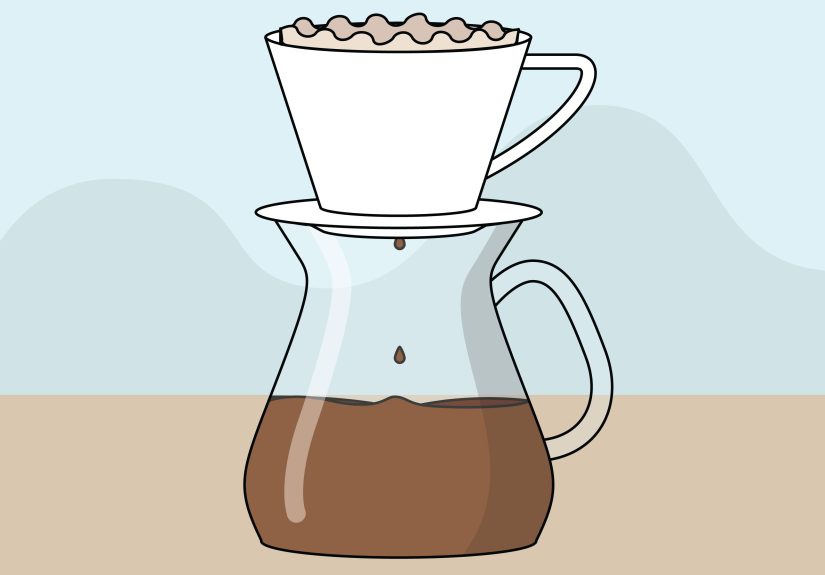
Pour-over is for people who enjoy control, clarity, and the pleasant illusion that they absolutely have their life together. With a dripper like a V60, Kalita Wave, or Chemex-style setup, you manually pour hot water over coffee grounds in stages. It takes more attention than an automatic machine, but it rewards you with a cup that often tastes brighter, more detailed, and more expressive.
Why it works
Pour-over brewing gives you direct control over water flow, saturation, and brew time. That means you can highlight sweetness, balance, and subtle flavor notes that may get buried in less controlled methods. When done well, pour-over coffee can taste incredibly clean and layered.
What you need
- Pour-over dripper
- Paper filter
- Gooseneck kettle if possible
- Fresh coffee
- Scale and timer
- Mug or carafe
Best starting ratio
A great starting point is 1:15 or 1:16. For example, 20 grams of coffee to 300 to 320 grams of water works nicely for a single mug.
How to make it
- Heat the water: Aim for around 195°F to 205°F.
- Rinse the filter: Place the filter in the dripper, rinse it thoroughly with hot water, and discard the rinse water.
- Grind the coffee: Use a medium grind. Not powder, not pebbles, just that friendly middle ground.
- Add and level the grounds: Give the dripper a gentle shake so the coffee bed sits flat.
- Bloom the coffee: Pour about twice the coffee’s weight in water over the grounds. For 20 grams of coffee, use about 40 grams of water. Wait 30 to 45 seconds.
- Continue pouring: Pour slowly in controlled circles, starting near the center and spiraling outward, then back in if needed. Add water in stages until you reach your target weight.
- Let it finish dripping: Total brew time is often around 2 to 4 minutes depending on your brewer and grind.
Flavor profile
Pour-over coffee is usually clean, bright, and aromatic. It often shows off fruit, floral, citrus, or cocoa notes especially well. If automatic drip is the reliable sedan, pour-over is the small sports car that asks for more skill but makes the ride more exciting.
Common mistakes to avoid
- Pouring too aggressively and disturbing the coffee bed
- Skipping the bloom
- Using uneven grind size
- Letting water channel through one side of the bed
- Obsessing so hard that the coffee gets cold before you drink it
Way 3: French Press Filter Coffee
Yes, French press counts here because it uses a metal mesh filter. Unlike paper-filter methods, it allows more oils and fine particles into the cup, which creates a fuller body and a richer mouthfeel. If pour-over is crisp and polished, French press is cozy, sturdy, and wearing a flannel shirt.
Why it works
French press is an immersion method. The grounds sit directly in hot water for several minutes before you press the filter down. Because the coffee stays in contact with the water longer, you get a deeper, heavier cup with more texture.
What you need
- French press
- Fresh coffee
- Grinder
- Kettle
- Scale or measuring spoon
- Timer
Best starting ratio
Try a ratio around 1:14 to 1:16. French press is forgiving, so you can lean slightly stronger if you prefer a richer cup.
How to make it
- Heat the water: Bring it near the usual brew range, around 195°F to 205°F.
- Grind the coffee: Use a coarse grind, something like rough sea salt or breadcrumbs.
- Add coffee to the press: Place the grounds in the empty carafe.
- Pour in the water: Saturate all the grounds evenly.
- Wait for the crust: After about 1 minute, you will see grounds floating at the top.
- Break the crust gently: Stir lightly with a spoon.
- Steep: Put the lid on with the plunger up and let the coffee steep for about 4 minutes total.
- Press and pour: Slowly push the plunger down and serve immediately. If you leave coffee sitting in the press, it keeps extracting and can turn bitter.
Flavor profile
French press coffee is bold, round, and satisfying. It often feels richer than paper-filter coffee because more oils stay in the cup. If you like body and texture, this method is a winner.
Common mistakes to avoid
- Using a fine grind, which can make the cup muddy and bitter
- Pressing too fast
- Letting the coffee sit in the press after brewing
- Failing to clean the mesh thoroughly
Which Filter Coffee Method Is Best?
The honest answer is gloriously annoying: it depends on what you want.
- Choose automatic drip if you want convenience, consistency, and enough coffee to keep a household functional.
- Choose pour-over if you enjoy precision, ritual, and a cleaner cup that highlights flavor details.
- Choose French press if you want a richer body, simple equipment, and a cup with more heft.
If you are new to brewing, start with automatic drip or French press. If you enjoy tinkering with coffee variables the way some people tweak fantasy football lineups, pour-over will be your happy place.
How to Troubleshoot a Bad Cup
If your coffee tastes bitter
Try a coarser grind, slightly cooler water, less contact time, or a lower dose of coffee. Over-extraction is often the culprit.
If your coffee tastes sour or weak
Try a finer grind, slightly hotter water, or a little more contact time. Under-extraction is usually to blame.
If your coffee tastes flat
The beans may be stale, the water quality may be poor, or the brewer may need cleaning. Sometimes the issue is not your technique. Sometimes the beans are just having a bad day.
Real-Life Experiences With Filter Coffee
One of the best things about learning these three ways to prepare filter coffee is that each method changes not only the flavor in your cup, but also the mood of the moment. Automatic drip feels like the practical hero of weekday mornings. You stumble into the kitchen half awake, press a button, and suddenly the house smells like hope. It is the method that gets people through school mornings, early meetings, and those days when your to-do list looks like it was written by a villain. The coffee is ready while you pack lunches, answer messages, or pretend you are not already behind.
Pour-over creates a totally different experience. It slows you down in a good way. You heat the kettle, rinse the filter, weigh the beans, and start pouring in calm little circles like you are conducting a tiny orchestra for one mug. It is hard to rush a pour-over, and that is part of the charm. On a quiet weekend, it can feel less like making coffee and more like building a better morning on purpose. You notice the smell more. You hear the kettle. You watch the grounds bloom and puff up with trapped gas. Suddenly coffee is not just fuel. It is an event, a ritual, and a rather tasty one at that.
French press lands somewhere in the middle. It is simple, but it still feels hands-on. There is something satisfying about stirring the crust, waiting for the steep, and pressing the plunger down slowly. The cup usually tastes fuller and heavier, which makes it especially nice on rainy mornings, cold afternoons, or lazy Sundays when breakfast includes actual plates instead of whatever can be eaten over the sink. French press coffee has a cozy personality. It does not whisper delicate tasting notes as much as it says, “Sit down, stay a while, maybe grab a second slice of toast.”
There is also the joy of trial and error, because nobody gets everything perfect right away. Maybe your first pour-over drains too fast and tastes like warm disappointment. Maybe your French press turns out muddy because the grind was too fine. Maybe your drip machine makes surprisingly decent coffee one day and then tastes dull the next because it desperately needs cleaning. These little mistakes are not failures. They are part of the learning curve, and luckily they are usually fixable. One click coarser on the grinder, a little hotter water, a shorter brew time, a cleaner basket, and suddenly the cup improves.
Over time, you start to connect methods with moments. Drip for busy mornings. Pour-over for slow ones. French press for when you want comfort in a mug. You also start to notice that coffee is not just about caffeine. It is about routine, smell, warmth, memory, and a tiny daily act of care. A good cup can make a rushed day feel more manageable or turn a calm day into something even sweeter. And once you learn how to brew filter coffee well, it becomes dangerously easy to become the person who says things like, “Hang on, this tastes better at 200 degrees,” which is either charming or deeply annoying depending on your audience.
Final Thoughts
If you want one simple takeaway, here it is: great filter coffee is less about fancy gear and more about consistency. Start with fresh beans, use the right grind, keep your water in the proper temperature range, and choose a method that matches your lifestyle. Automatic drip is easy and dependable. Pour-over is precise and elegant. French press is rich and comforting. None of them is the one true coffee religion. They are just three excellent ways to get from bean to bliss.
So pick your brewer, make a small adjustment or two, and enjoy the process. Worst case, you still end up with coffee. And that is a pretty strong safety net.