Table of Contents >> Show >> Hide
If you have ever harvested a beautiful pile of onions in late summer only to watch half of them turn soft, sprouty, or suspiciously moody by fall, welcome to the club. The good news is that the problem is not always your storage shelf. Sometimes it is the onion itself. Not every onion is built for the long haul. Some are sweet, juicy, and fabulous for immediate eating. Others are the marathon runners of the onion world, bred to stay firm and flavorful for months.
That is where storage onions come in. These varieties usually have lower moisture, firmer flesh, tighter necks, and papery skins that cure well. In plain English, they are less likely to fall apart the minute sweater weather arrives. If you want to stock your pantry, root cellar, garage shelf, or cool basement with homegrown onions that can last deep into winter, choosing the right variety matters just as much as curing and storage conditions.
This guide breaks down 15 types of onions that store well, with a focus on real varieties gardeners actually grow. You will also learn what makes an onion a good keeper, how day length affects your success, and how to store your crop so it lasts longer than your holiday leftovers. Let’s get into it, one onion at a time.
What Makes an Onion Good for Storage?
The best onion varieties for storage usually share a few traits. First, they are often more pungent than sweet onions. That stronger flavor usually goes hand in hand with lower water content and better keeping quality. Sweet onions are delicious, but many of them are basically the summer interns of the onion family: charming, useful, and not sticking around for the long term.
Second, good storage onions cure well. A tight neck dries down more completely after harvest, which helps reduce rot. Firm bulbs and durable skins also protect the onion in storage. Third, the variety must match your region. Onions are sensitive to day length, so a long-day onion that performs beautifully in the North may be a flop in the Deep South. Likewise, some intermediate-day onions are excellent choices for warmer regions.
One more thing: even the best storage onion cannot survive bad handling. If you harvest too early, skip curing, or toss bulbs into a stuffy plastic bin, you are basically writing a breakup letter to your onion supply. Variety matters, but so do airflow, dryness, and cool temperatures.
15 Onion Types That Store Well
Most of the onions below are known as storage onions for a reason. A few are classic heirlooms, while others are modern hybrids bred specifically for longer shelf life. If you are choosing seed for your garden, read the day-length description carefully before planting.
1. Patterson
Patterson is one of the most respected yellow storage onions on the market, and for good reason. Gardeners love it for its firmness, uniform bulbs, and dependable long storage life. It is often described as a modern standard for people who want a serious pantry onion rather than a sweet slicer. The flavor is strong enough for cooking, but not so aggressive that it takes over every dish like an overenthusiastic dinner guest.
2. Copra
Copra has long been considered a classic among long-storing yellow onions. Even though newer varieties have entered the scene, Copra still has a loyal following because it set the bar for what a reliable storage onion should be: hard, dry, well-skinned, and capable of lasting for months when cured properly. If you like old-school garden winners, Copra deserves a respectful nod and probably a row in the garden.
3. Stuttgarter
Stuttgarter, sometimes sold as Stuttgarter Riesen, is a flattened yellow onion with a reputation for solid storage performance. It tends to mature early and produces firm bulbs that handle cooking beautifully. It is not the fanciest onion on the seed rack, but it is practical, productive, and dependable. Think of it as the cast-iron skillet of onions: not flashy, but always useful and weirdly comforting.
4. Sweet Sandwich
Sweet Sandwich is interesting because it offers a milder flavor than many classic keepers while still earning praise as a decent storage onion. It is not as sugary and short-lived as many sweet types, which makes it a nice middle ground for gardeners who want a softer flavor without giving up all hope of winter storage. It is a good choice for cooks who want versatility from the same harvest.
5. Red Zeppelin
Red Zeppelin is a standout red onion for storage. That matters because red onions, while beautiful, do not always store as long as top yellow keepers. Red Zeppelin is widely appreciated for having better-than-average shelf life for a red type, along with rich color and good size. If you want a red onion that can make it past the first cold snap without losing its dignity, this is one to watch.
6. Redwing
Redwing is one of the safest bets for gardeners who specifically want a long-storing red onion. It produces deep red bulbs with thick skins and firm texture, which helps it hold up well after curing. The color is gorgeous, the flavor is useful for both raw and cooked dishes, and the storage life is excellent for a red onion. In other words, it brings both beauty and backbone.
7. Red Bull
Red Bull is another red storage onion with a hard, dense bulb and very good keeping ability. It is often praised for its rich color and strong storage performance late into the season. This is not a delicate salad-only onion. It is a sturdy, practical choice for gardeners who want bold color in the pantry and a variety that can keep working long after fresh summer onions are gone.
8. Red Mountain
Red Mountain is a glossy deep red storage onion known for consistent size and good storage quality. It fills a similar niche to other premium red keepers but is especially appealing to growers who want more uniform bulbs. That uniformity may sound boring, but it is actually wonderful when you are cooking and do not want one onion the size of a softball and another the size of a golf ball.
9. Talon
Talon is a yellow storage onion bred for serious holding power. It tends to produce large, blocky bulbs and has a reputation for hanging on well into late spring under proper conditions. That makes it a strong contender for anyone planning a long storage season. It also offers a nice balance of sweetness and tang, so it is not just a shelf-life champion. It actually tastes good, which is helpful.
10. Cartier
Cartier is a dense tan storage onion with thin necks that dry down quickly, a huge advantage for long-term keeping. It is often mentioned as a variety with exceptional storage quality, and that comes down to structure as much as flavor. A bulb that cures cleanly is a bulb that is far less likely to rot in storage. If you like precise, high-performance varieties, Cartier is a smart pick.
11. Oneida
Oneida is a pungent yellow onion valued for both size and strong storage ability. It produces large globes with a firm bite, making it especially useful in the kitchen for soups, roasting, sautéing, and caramelizing. This is the kind of onion that behaves like a pantry staple should. It stores well, cooks well, and does not ask for applause every time it lands in a skillet.
12. Hi-Keeper
Hi-Keeper practically tells you its best feature right in the name. This variety is known for extended shelf life and reliable performance, especially in cool-weather growing systems. It has smooth golden skin, white flesh, and the kind of durability that gardeners love when they are trying to stretch a homegrown onion crop across several months. Sometimes the seed catalog name says it all, and once in a while it is not even exaggerating.
13. New York Early
New York Early is an open-pollinated yellow onion with a long history and a good reputation for storage. It is appealing to gardeners who want a dependable keeper without going full hybrid on every crop. The bulbs are firm, practical, and useful across a range of recipes. If your gardening style leans a little traditional and a little practical, New York Early fits that mood nicely.
14. Southport Red Globe
Southport Red Globe is a classic red onion known as a superior keeper, especially for northern growers. It has the old-fashioned appeal many gardeners love, but it also earns its place through performance. This is not just a pretty heirloom with a romantic name. It is a useful storage onion that can help keep your winter pantry stocked with color and flavor when fresh garden options are running low.
15. Red Wethersfield
Red Wethersfield is a historic red storage onion that has stuck around because it works. It usually forms somewhat flattened purple-red bulbs and can keep well into late winter. The flavor is strong enough for cooking but still pleasant enough for fresh use in the right dishes. If you like heirlooms that pull their weight instead of merely looking photogenic on a seed packet, Red Wethersfield is a solid choice.
How to Store These Onions So They Actually Last
Growing the right onion is only half the job. The rest comes down to curing and storage. Harvest bulbs when the tops have fallen and started to dry. Then cure them in a warm, dry, airy place for a couple of weeks, or until the skins are papery and the necks are fully dry. If the neck still feels thick and juicy, the onion is not ready for long-term storage.
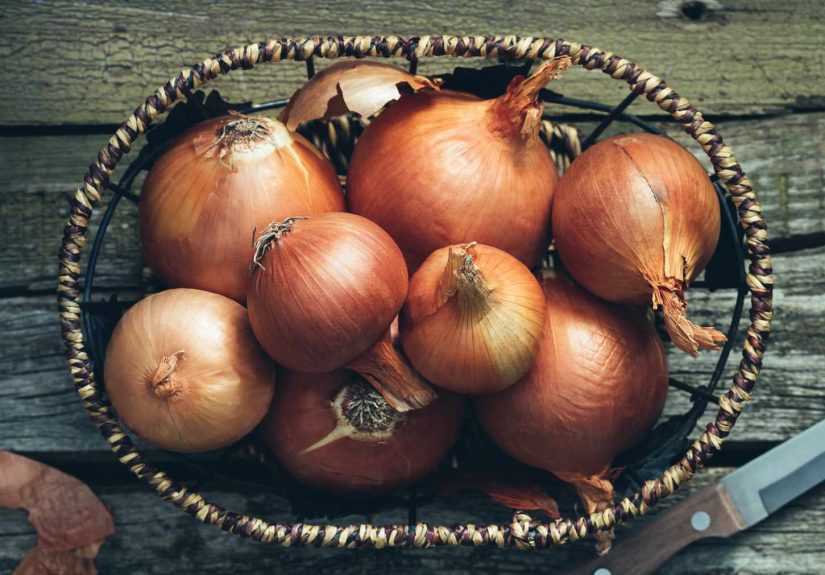
Once cured, trim roots and tops, then store the bulbs in a cool, dry, well-ventilated place. Mesh bags, open crates, wire baskets, or shallow boxes all work better than sealed containers. Ideal storage conditions are chilly and dry, not warm and damp. This is the moment when your onions want to be left alone, not stacked in a plastic tote like they are heading off to summer camp.
Also, sort them before storage. Eat damaged bulbs, thick-necked onions, and softer sweet types first. Save the firmest true storage onions for the long haul. Checking the stash every week or two is smart, because one bad onion can throw a surprisingly dramatic little rot party.
What Growing and Storing These Onions Is Really Like
In real life, storage onions teach patience. A lot of patience. They do not wow you the way the first cherry tomato does, and they are rarely the crop you pose with for social media unless you are extremely into root vegetables. But once you grow a good storage onion and still have sound bulbs in January, February, or even spring, you start to understand the appeal. It feels a little like edible insurance.
One of the first things gardeners notice is that storage onions are usually not the juiciest onions at harvest. They are firmer, drier, and often more pungent. That can make them seem less exciting in August, when sweet onions are stealing the spotlight. Then winter arrives, the sweet onions are long gone, and the storage onions are still sitting there like tiny bronze survivalists. Suddenly they look brilliant.
There is also a learning curve with curing. The first time people grow onions for storage, they often underestimate how dry the bulbs need to be before putting them away. Onions that look fine on the outside can still have thick, damp necks that invite rot later. After one disappointing batch, most gardeners become curing zealots. You start spacing bulbs out carefully in the garage or on racks in a shed, checking skins, pinching necks, and talking about airflow with the intensity of a weather reporter.
In the kitchen, the best storage onions become the workhorses of cold-weather cooking. Yellow keepers like Patterson, Copra, Talon, or Oneida are especially handy because they behave well in soups, stews, roasts, gravies, sautés, and long braises. Red keepers such as Redwing or Southport Red Globe give you color and a little sharper flavor when you want something prettier in salads, sandwiches, or roasted vegetable trays. Having both red and yellow storage onions on hand makes home cooking easier in a very unglamorous but deeply satisfying way.
Another real-world lesson is that not all keepers store equally in every home. A variety described as excellent in one region might be merely good in another, especially if your storage area runs a little warm. That is why many experienced gardeners trial two or three varieties at a time. After one season, they know which onion handled their local weather, harvest timing, and storage conditions best. It is part science, part gardening intuition, and part accepting that onions have opinions.
Perhaps the most rewarding part of growing storage onions is the sense of continuity. You harvest in late summer, cure in early fall, and keep cooking with your own onions months later. That long arc makes the crop feel substantial. It is not just about having onions. It is about having your onions, still usable long after the garden outside has gone quiet.
Final Thoughts
If your goal is a pantry full of bulbs that can last beyond the harvest rush, focus on true storage onion varieties, not just whatever looks nice in the catalog. Patterson, Copra, Stuttgarter, Redwing, Red Zeppelin, Talon, Cartier, Oneida, Hi-Keeper, and the other varieties on this list have all earned attention for their ability to keep better than average when grown and cured properly.
The big takeaway is simple: choose the right day-length type for your region, grow varieties with proven keeping quality, cure them well, and store only the best bulbs. Do that, and you can enjoy homegrown onions for months instead of watching them collapse before winter has even unpacked its boots.