Table of Contents >> Show >> Hide
French desserts have a reputation for being dramatic, delicate, and just a little too pretty for normal people with normal ovens. But here is the happy truth: many classic French desserts are absolutely doable at home. Yes, even if your mixer sounds like it is filing a complaint. From silky custards to crisp pastries and airy cakes, the best authentic French desserts are built on repeatable techniques, not magic. Once you learn a handful of pastry basics, you can make treats that look bakery-worthy and taste like you quietly leveled up your entire kitchen.
If you have been searching for authentic French desserts, easy French desserts to make at home, or classic French pastry recipes, this guide is your sugar-dusted starting line. Below, you will find 17 traditional favorites, what makes each one special, and why each is worth mastering in your own kitchen. Some are weeknight-easy. Some are weekend projects. All of them are delicious enough to make you say “ooh là là” without irony. Or with irony. We are not judging.
Why French Desserts Feel Fancy but Work Beautifully at Home
The genius of French pastry is not that every dessert is complicated. It is that French baking relies on a few foundational techniques that show up again and again. Learn how to make a solid custard, and you can tackle crème brûlée, pots de crème, and crème caramel. Learn pâte à choux, and suddenly éclairs and profiteroles are on the table. Get comfortable with meringue, and macarons, soufflés, and floating islands stop feeling like culinary sorcery.
That is why mastering French desserts at home is so rewarding. You are not just making one recipe. You are building pastry confidence. Also, you are building a very persuasive reason for people to invite themselves over for dinner.
17 Authentic French Desserts You Can Master at Home
1. Madeleines
Madeleines are the little shell-shaped cakes that somehow manage to be elegant, buttery, and adorable all at once. Their delicate crumb and lightly crisp edges make them one of the most approachable classic French desserts for beginners. The trick is not overmixing the batter and using a proper madeleine pan. Resting the batter before baking helps create that signature hump, which is basically the madeleine version of a standing ovation. Serve them plain, dipped in chocolate, or kissed with lemon zest for an easy French dessert that feels polished with very little fuss.
2. Clafoutis
Clafoutis is proof that French desserts do not always need layers, torches, or emotional support. Traditionally made with cherries baked in a custardy batter, clafoutis lands somewhere between a pancake, flan, and cake. In other words, it is the dessert equivalent of being effortlessly cool. It is ideal for home bakers because the batter comes together quickly, seasonal fruit works beautifully, and the rustic look is part of the charm. If it comes out a little uneven, congratulations, it looks even more French.
3. Mousse au Chocolat
Chocolate mousse is one of the most beloved homemade French sweets for a reason: it delivers maximum luxury for relatively low effort. A good mousse au chocolat is rich but airy, deeply chocolatey but not heavy, and dramatic enough to make any dinner feel upgraded. The key is gentle folding so you keep the mixture light and fluffy. Use quality chocolate, chill it well, and do not overthink the presentation. Spoon it into small glasses, add whipped cream if you want, and let everyone pretend they are in a Left Bank bistro instead of standing in socks on kitchen tile.
4. Crème Brûlée
Crème brûlée is the dessert people order at restaurants because cracking that caramelized sugar top feels delightful and slightly powerful. The good news is that it is absolutely possible at home. Under the glassy top is a simple baked custard flavored with vanilla, and the main secret is gentle heat. A water bath helps the custard cook evenly so it stays silky instead of scrambling into regret. Torch the sugar just before serving for the proper shatter. It is one of the best French dessert recipes to master because once you get the texture right, you feel unstoppable.
5. Pots de Crème
Pots de crème are the velvet robe of French custards. Richer and denser than mousse, these little cups of chocolate or vanilla custard deliver serious depth in a very tidy package. They are ideal for make-ahead entertaining because they chill beautifully and look elegant without requiring architectural skills. If you love the creamy side of French pastry recipes, start here. Serve them in ramekins, espresso cups, or whatever small vessel makes you feel fanciest. Dessert does not care if the cup once belonged to a mismatched mug set.
6. Tarte Tatin
Tarte Tatin is the upside-down apple tart that turns caramelized fruit into a full-blown event. Legend links it to the Tatin sisters, and whether you love the story or just love butter, this dessert deserves a spot in your home baking rotation. Apples cook in caramel first, then get covered with pastry and baked until golden. The thrilling part is the flip. The terrifying part is also the flip. But once you do it, you get a glossy, deeply flavored tart that looks far harder than it actually is. Serve warm with cream, and expect dramatic silence at the table.
7. Palmiers
Palmiers are one of the easiest authentic French pastries you can make, especially when store-bought puff pastry is invited to the party. These crisp, caramelized cookies need little more than dough, sugar, and proper folding. The result is buttery layers with crackly edges and a shape that looks suspiciously impressive for something so simple. They are excellent with coffee, tea, or as a tiny reward for surviving your inbox. If you want an easy French dessert that teaches you the joy of puff pastry without requiring an all-day commitment, palmiers are your friend.
8. Profiteroles
Profiteroles begin with pâte à choux, the classic French pastry dough that puffs in the oven thanks to moisture, eggs, and steam. Once baked, the shells can be filled with ice cream, pastry cream, or whipped cream and drizzled with chocolate sauce. In other words, they are hard to mess up conceptually because every filling path leads to happiness. The dough itself is a great skill builder. Once you learn to cook it on the stove and dry it properly, the door opens to a whole world of classic French pastry recipes.
9. Éclairs
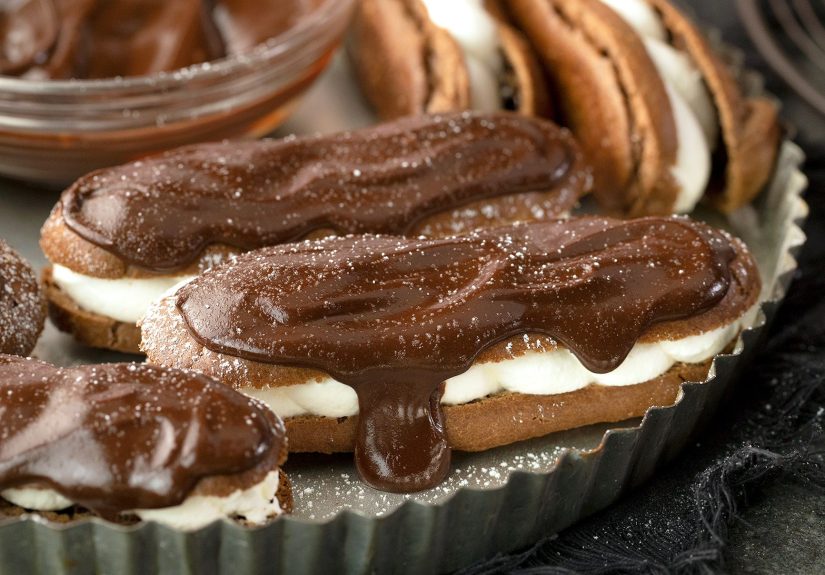
Éclairs are profiteroles’ more streamlined, slightly more glamorous cousins. They use the same choux dough but are piped into logs, baked, filled with pastry cream, and glazed on top. A classic chocolate éclair is still one of the most satisfying things you can make at home because every component is manageable when broken into steps. Bake the shells one day, make the filling the next, and assemble when ready. Suddenly, you are not “trying to make French pastries.” You are just making one excellent thing at a time, which is far less intimidating and much better for your blood pressure.
10. Crêpes Suzette
Crêpes on their own are already a triumph of skill and restraint. Crêpes Suzette takes them further with a buttery orange sauce that tastes bright, rich, and restaurant-worthy. Some versions are flambéed, but you do not need flames to make them delicious. The real magic is learning to cook thin, tender crêpes without panic-flipping yourself into a small personal crisis. Once you get the rhythm, crêpes become one of the most versatile French desserts at home. Fill them, sauce them, fold them, stack them, or eat one standing over the stove as a reward for being brave.
11. Financiers
Financiers are small almond cakes with browned butter and egg whites, which gives them a nutty flavor and a delicate, tender bite. They are less famous than madeleines but every bit as worthy. In fact, they may be the overachievers of the tea-cake world. Because they use almond flour and browned butter, they taste deeply sophisticated even when the ingredient list is straightforward. They also adapt beautifully to fruit, chocolate, or citrus. If you have ever wanted a French dessert that feels refined without requiring a chemistry degree, financiers are a terrific choice.
12. Île Flottante
Île flottante, or floating island, is one of the prettiest classic French desserts you can bring to a table. It features soft meringue floating on chilled crème anglaise, often with caramel or toasted nuts on top. Yes, it sounds fancy. Yes, it also sounds like something only a pastry chef in a spotless jacket would attempt. But it is surprisingly doable if you take it step by step. You make a custard sauce, poach or bake the meringue, and assemble. The texture contrast is the whole point: airy cloud on creamy sea, minus the weather report.
13. Macarons
Macarons are not the easiest dessert on this list, but they are absolutely one you can master at home with patience and repetition. These almond meringue sandwich cookies are famous for their smooth tops, ruffled “feet,” and endless filling options. The process rewards precision, from properly folded batter to resting the shells before baking. The first batch may be imperfect. The second may be weirdly emotional. By the third, you start understanding the rhythm. That is the beauty of French baking: not perfection on command, but improvement with every tray.
14. Canelés de Bordeaux
Canelés are deeply caramelized little pastries with dark, shiny crusts and custardy centers scented with vanilla and rum. They are associated with Bordeaux and are one of the most distinctive French desserts you can make. At home, they require patience more than complexity. The batter often rests overnight, and the high heat is what creates the dramatic contrast between crisp exterior and soft interior. Traditionalists love copper molds, but home bakers can still get great results with more accessible equipment. They are tiny, moody, and absolutely worth it.
15. Mille-Feuille
Mille-feuille literally means “a thousand sheets,” which is a very poetic way of saying “this pastry is flaky enough to end up everywhere.” Layers of puff pastry, pastry cream, and icing turn into one of the most iconic French pastries in the world. At home, the easiest path is using high-quality puff pastry and focusing on clean assembly. Chill between steps, cut with a serrated knife, and accept that crumbs are part of the experience. Mille-feuille teaches a valuable pastry lesson: elegance and chaos can coexist on the same dessert plate.
16. Soufflé au Chocolat
Chocolate soufflé has been framed as the final boss of French desserts, but it is more cooperative than its reputation suggests. A good soufflé depends on a flavorful base, properly whipped egg whites, and careful folding so you keep the mixture airy. Preparing the ramekins correctly matters too, because a well-buttered, sugared dish helps encourage lift. The rise is thrilling, the texture is dreamy, and if it sinks a little after leaving the oven, welcome to reality. It will still taste excellent, which is the kind of emotional support dessert should offer.
17. Gâteau au Yaourt
French yogurt cake is humble, homey, and exactly the kind of dessert that proves authenticity does not require fuss. Traditionally measured with the yogurt container itself, it is often one of the first cakes French children learn to make. That alone should make it feel approachable. The crumb is tender, the flavor is simple, and it takes beautifully to lemon zest, berries, or a light glaze. Not every classic French dessert needs a pastry bag and a dramatic soundtrack. Sometimes a straightforward, reliable cake is the most French move of all.
How to Actually Master French Desserts at Home
If you want better results with homemade French sweets, focus less on chasing perfection and more on understanding technique. Read the recipe all the way through before starting. Measure carefully. Use room-temperature ingredients when the recipe calls for them. Chill dough when it seems annoying to do so, because it is usually annoying for a good reason. French pastry often rewards patience, and the little pauses matter.
Also, choose your projects wisely. Start with clafoutis, mousse, yogurt cake, or palmiers if you are new. Move to crème brûlée, profiteroles, financiers, and tarte Tatin once you feel comfortable. Save macarons, canelés, and soufflés for the days when you are in the mood for a challenge and not already irritated by your email. That is not a baking rule, but it should be.
What It Feels Like to Learn French Desserts at Home
There is a very specific joy that comes from making French desserts in your own kitchen, and it has less to do with impressing people than you might expect. The first time you bake madeleines and see those little humps appear, you feel oddly validated, as if a tiny pastry just nodded respectfully in your direction. The first time a crème brûlée sets with a perfectly smooth center, you stop thinking of custard as “that fragile egg situation” and start thinking of it as a skill you actually own.
French desserts teach patience in a way few other recipes do. American baking often says, “Great, now toss it in the oven and hope for the best.” French pastry, on the other hand, tends to whisper, “Slow down, read the room, and maybe stop opening the oven every five minutes.” That patience changes the experience of baking. You notice texture more. You start caring about how butter smells when it browns, how meringue looks when it is glossy enough, and how batter moves off a spatula when it is finally ready. It is part cooking, part observation, part refusing to let a tray of macarons ruin your afternoon.
There is also something wonderfully grounding about how many of these desserts balance elegance with practicality. Clafoutis is rustic. Yogurt cake is humble. Palmiers are almost suspiciously simple. Even more polished desserts like éclairs or mille-feuille are really just a series of manageable tasks stacked together. That realization is empowering. You stop seeing French pastry as a secret club and start seeing it as a craft. A demanding craft, sure, but one that absolutely lets regular people in.
Then there is the matter of failure, which is not only normal but weirdly helpful. Maybe your first soufflé rises beautifully and collapses in thirty seconds. Maybe your éclairs crack. Maybe your tarte Tatin sticks for one deeply theatrical moment before releasing with a dramatic flop. These are not reasons to quit. They are the tuition you pay for getting better. French desserts are excellent teachers because they make you pay attention. They reward small adjustments. The next batch is usually smarter than the last.
Over time, you start building instincts. You know when choux dough has dried enough in the pan. You know when caramel is amber instead of one second away from becoming a bitter life lesson. You know that resting batter, chilling pastry, and folding gently are not optional suggestions from overly serious bakers. They are the difference between “pretty good” and “wait, I made this?”
And perhaps the best part is what happens at the table. French desserts create a pause. People lean in. They crack the sugar on a crème brûlée more slowly than necessary. They notice the crisp edge of a financier or the dark sheen of a canelé. Even a simple slice of yogurt cake feels intentional, like dessert was not an afterthought but a final little act of care. That is what makes mastering these desserts at home so satisfying. You are not just baking sweets. You are making moments that feel a bit more thoughtful, a bit more beautiful, and a lot more delicious.
Final Thoughts
You do not need a Paris apartment, a copper cookware collection, or a pastry-school diploma to make authentic French desserts at home. You need solid recipes, a little patience, and the willingness to laugh when powdered sugar ends up on your shirt again. Start with the desserts that feel approachable, build your skills one technique at a time, and let your kitchen become the place where classic French baking stops being intimidating and starts being fun.
Master even a handful of these 17 French desserts, and you will have a dessert repertoire that feels timeless, elegant, and genuinely useful. Also, people will assume you are much fancier than you are. That is not the main goal, but it is a lovely side effect.