Table of Contents >> Show >> Hide
- Why Simon Pegg Is So Firm About Shaun of the Dead 2
- The Cornetto Trilogy Was Never Built Like a Franchise
- Shaun of the Dead Worked Because It Had a Human Core
- Why Hot Fuzz and The World’s End Strengthen His Point
- Hollywood Loves Sequels. Simon Pegg Clearly Loves Endings.
- Fans Don’t Really Want Shaun of the Dead II. They Want That Feeling Again.
- The Experience of Letting a Great Trilogy Stay Dead, and Why That Feels Weirdly Personal
- Final Thoughts
Some movie fans treat sequels the way seagulls treat fries: if they see one, they immediately want twelve more. That instinct explains why people keep asking for Shaun of the Dead II, a follow-up to Hot Fuzz, or a shiny new lap around the Cornetto Trilogy. Simon Pegg, however, has responded with the cinematic equivalent of swatting away a hand reaching for the last mozzarella stick. His message is simple: stop asking. He does not believe the world needs a Shaun of the Dead sequel, and the older he gets, the more convinced he seems that nostalgia can turn into a creative trap.
That is not a grumpy anti-fan stance. It is actually the opposite. Pegg’s point is that the trilogy works because it ends. The Three Flavours Cornetto movies are beloved not because they were designed to become an endlessly extendable franchise machine, but because they were made with a point of view, a beginning, a middle, and a finish. In an era where every successful story gets dragged back onto the operating table for one more procedure, Pegg’s refusal feels almost rebellious. Also, frankly, a little refreshing. Sometimes the bravest thing a creator can do is say, “Nope. That cake is baked. Please stop putting it back in the oven.”
Why Simon Pegg Is So Firm About Shaun of the Dead 2
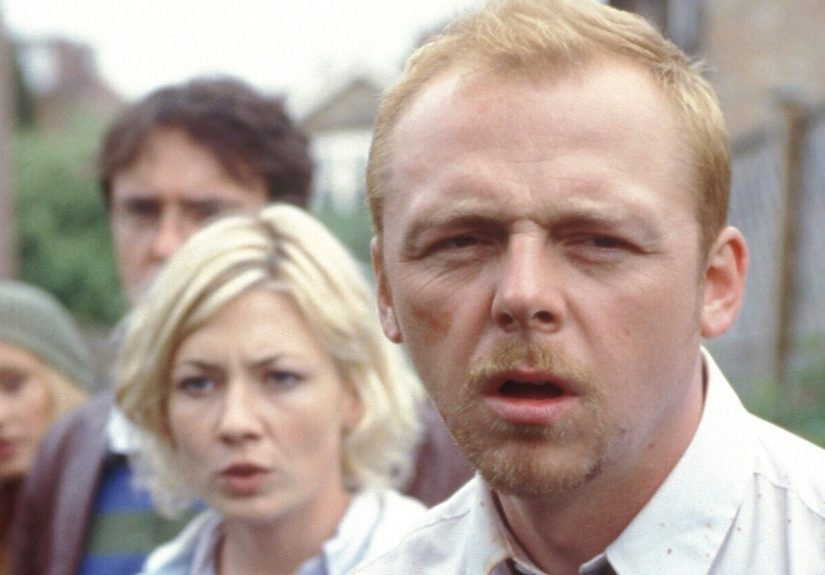
The headline-grabbing version of Pegg’s argument is spicy, but the deeper version is thoughtful. He has made clear that revisiting Shaun of the Dead as a sequel or reboot would miss the entire point of the original story. Shaun starts that movie as a drifting, emotionally stalled guy who cannot manage adulthood, commitment, or even a decent plan for the afternoon. By the end, after all the blood, broken hearts, and pub-based chaos, he has changed. He has completed an arc. That matters.
And that is really the key. A sequel only works when there is another meaningful transformation left to explore. Pegg’s argument is not “sequels are bad.” He has never said that. His argument is more precise: this sequel would be unnecessary because Shaun already arrived where the story needed him to go. If you yank him back into another zombie crisis, you either repeat the same emotional journey or undo the one that made the first film satisfying. That is not expansion. That is creative backpedaling in a fake blood-splattered jacket.
Pegg has also been blunt about the larger culture around nostalgia. He has talked about how audiences often cling to familiar properties instead of wanting something new, and that frustration clearly informs his stance on the Cornetto Trilogy. He is not dismissing the affection people have for those films. He is pushing back on the idea that love must always be expressed through repetition. Sometimes fandom says, “Give us the thing again.” Art occasionally has to answer, “No, the whole reason it mattered is that you only got it once.”
The Cornetto Trilogy Was Never Built Like a Franchise
To understand why Pegg is shutting the door so hard, it helps to remember what the Cornetto Trilogy actually is. It is not a conventional trilogy in the sequel-prequel-spinoff sense. Shaun of the Dead, Hot Fuzz, and The World’s End are not linked by a continuous plot. They are connected by creative DNA: Simon Pegg, Nick Frost, Edgar Wright, genre obsession, visual callbacks, emotional undercurrents, and, yes, the famous Cornetto gag that gave the trio its nickname.
Each movie takes a different genre framework and uses it to explore adult identity. Shaun of the Dead uses zombie horror to talk about drifting through life on autopilot. Hot Fuzz turns buddy-cop action into a story about control, friendship, and community. The World’s End weaponizes science fiction against nostalgia itself, turning the dream of reliving the past into something weird, sad, and ultimately destructive. That last point matters more than ever here, because if there is one movie in the trilogy that explains Pegg’s current attitude, it is not Shaun. It is The World’s End.
That film is basically a darkly funny thesis statement about why living in yesterday can become dangerous. Gary King is not a charming nostalgia machine; he is a warning label in a leather coat. He is funny, yes, but he is also trapped. He wants to force the old magic back into existence, even though life has moved on. Seen through that lens, fan demands for Shaun of the Dead II start to look a little ironic. The trilogy already made its own anti-nostalgia argument. People just keep asking it to ignore itself.
Shaun of the Dead Worked Because It Had a Human Core
One reason the original still holds up is that it was never just a zombie spoof. Pegg and Wright have long framed it as a real zombie movie with comedy running through its bloodstream, not a lazy joke about the genre. That is why it lands. The undead are funny right up until they are not. The laughs are quick, but the emotional stakes are real. Shaun’s relationship with Liz matters. His bond with Ed matters. His family pain matters. That mixture of silliness and sincerity is what gave the movie its staying power.
If you make Shaun of the Dead 2 just because people miss the vibe, you risk copying the surface and losing the soul. You can recreate records being thrown at zombies. You can recreate the pub. You can recreate the shambling extras and the dry jokes and the awkward pauses. What you cannot easily recreate is the specific cultural moment and personal urgency that made the first film feel alive. The movie came from a set of creators channeling their tastes, their age, their anxieties, and their own lives into one weirdly perfect genre cocktail.
That is why Pegg’s resistance feels less like snobbery and more like protection. He knows that audiences often ask for a sequel when what they really want is an emotional rerun of how they felt the first time. But feelings are not photocopies. You cannot simply feed a beloved film into a nostalgia machine and expect another classic to come sliding out, warm and ready for Rotten Tomatoes.
Why Hot Fuzz and The World’s End Strengthen His Point
The best argument against more Cornetto installments may be the trilogy itself. Hot Fuzz did not work because it was “more Shaun.” It worked because it was not. It shifted gears into action movie grammar, built a new world, and let Pegg and Frost remix their chemistry rather than repeat it. The World’s End then got darker, sadder, and more introspective. Across the three films, the team evolved. The movies matured as their makers matured.
That progression is exactly what gets flattened when fans say, “Just make another one.” Another Shaun would not feel like growth. It would feel like retreat. And Pegg has been pretty open about not wanting to rely on what he and Edgar Wright already did. If they collaborate again, the exciting part is not whether they can quote themselves. The exciting part is whether they can surprise people. That was always the engine of their best work.
There is also a craftsmanship issue here. The Cornetto films are packed with setups, payoffs, visual rhymes, genre references, and emotional reversals. They are not random cult comedies held together by catchphrases and fond internet memories. They are tightly built movies. Tightly built movies often suffer when stretched past their natural life span. Add one more chapter just because the audience clapped loudly enough, and suddenly the elegant structure starts wobbling like a supermarket cart with one bad wheel.
Hollywood Loves Sequels. Simon Pegg Clearly Loves Endings.
There is a larger industry context behind all this. Studios like recognizable titles because recognizable titles reduce risk. Audiences like recognizable titles because familiarity feels good, especially when the entertainment landscape gets crowded and exhausting. That combination creates a culture where every decent movie is treated like a seed that must eventually become a content orchard. Pegg’s stance cuts against that logic.
He is effectively arguing for artistic finality in a business that prefers perpetual motion. That does not make him anti-audience. It makes him pro-story. A finished story should be allowed to remain finished. In fact, part of what keeps a movie special is the knowledge that it was not engineered for indefinite expansion. The Cornetto Trilogy feels complete because it is complete. It has shape. It has intention. It knows when to leave the party before becoming the person still trying to start karaoke at 2:13 a.m.
And let’s be honest: there is something oddly comforting about hearing a creator draw a boundary. Not every door needs to be reopened. Not every cult classic needs a second life. Not every fondly remembered title needs to be fitted for a multiverse helmet and shoved back into theaters with a newer font. Pegg’s refusal says that memory can be enough. For fans used to endless recycling, that idea may feel radical. It should not. It should feel normal.
Fans Don’t Really Want Shaun of the Dead II. They Want That Feeling Again.
This is the part where honesty has to barge in and spill a pint. Many fans who say they want Shaun of the Dead II do not literally want a second movie about Shaun’s life after surviving a zombie apocalypse. What they want is the sensation the first film gave them: the thrill of discovering a comedy that was smarter than expected, bloodier than expected, sadder than expected, and somehow warmer than expected too. They want to go back to the moment when the joke, the heartbreak, and the splatter all clicked into place at once.
But movies cannot time-travel us back into our own first viewing experience. That is the sneaky cruelty of nostalgia. It convinces us that the missing thing is a product, when the missing thing is really a moment. Pegg seems to understand that. A sequel would not restore 2004. It would not make anyone younger, more surprised, or more available to that original spark. It would simply exist in the shadow of something people already decided to love.
That is why his “move on” energy, harsh as it sounds, may actually be the healthiest possible advice for fans. Love the trilogy. Rewatch it. Quote it with your friends. Frame a tiny Winchester sign in your office if that is your thing. But let it be what it is: a completed body of work, not a bottomless snack bowl for sequel cravings.
The Experience of Letting a Great Trilogy Stay Dead, and Why That Feels Weirdly Personal
There is a particular experience attached to movies like the Cornetto Trilogy, and it is not just about watching them. It is about when you watched them. Maybe you found Shaun of the Dead in college, when every joke felt like it had been written by the funniest person in your friend group after two slices of pizza and one half-serious conversation about Romero movies. Maybe Hot Fuzz became your comfort rewatch, the movie you threw on when you wanted precision, speed, and the kind of escalating silliness that somehow becomes more impressive every time you notice another setup. Maybe The World’s End hit later, after adulthood stopped being theoretical and started sending bills.
That is why the sequel conversation feels so loaded. These films are not just texts. They are timestamps. People remember who they were when they first saw them, who they quoted them with, which friendships got built around them, and which periods of life they now seem to represent. Asking for another film can feel, emotionally, like asking for another round with an old version of yourself. Another night out. Another chance to stand in that sweet spot where fandom, youth, discovery, and communal laughter all overlap.
And to be fair, that longing is deeply human. Everybody has stories they want one more visit from. Everybody has favorite cultural objects that feel less like entertainment and more like tiny apartments in memory. The trouble begins when that feeling gets mistaken for a creative mandate. A memory is not automatically the blueprint for a sequel. Sometimes the thing that made an experience meaningful was its timing, not its sequel potential.
In that sense, Pegg’s resistance can almost be read as a defense of the audience’s original experience. He is not saying the films do not matter. He is saying they matter too much to be turned into habit. The Cornetto Trilogy earned its place because each movie arrived with intention, had something specific to say, and then got out of the way. That is part of the pleasure. The films trusted viewers to carry them forward without demanding another installment to validate the affection.
There is also something beautifully awkward about how this all lines up with The World’s End. That movie understands the seductive stupidity of trying to replay the past exactly as it was. It knows that nostalgia can make old roads look shinier than they really were. It knows that sometimes the demand to relive a great night is really a refusal to accept time, growth, grief, and change. In other words, the trilogy itself already warned us not to become sequel zombies, wandering around muttering for one more bite of the familiar.
So maybe the healthiest fan experience is not demanding Shaun of the Dead II, but recognizing what the original trilogy already gave us: three movies that grow richer as we do. They play differently at 16, 26, and 36. They shift as our lives shift. That is rarer than a sequel. That is better than a sequel. And it may be exactly why Simon Pegg keeps telling people, in one form or another, to let the thing rest. Not because he hates the movies. Because he knows they are already alive.
Final Thoughts
Simon Pegg saying no to Shaun of the Dead II is not a buzzkill. It is a creative philosophy. He is arguing that the Cornetto Trilogy should be appreciated as a finished work rather than mined for familiar scraps. That stance may frustrate fans who want another pint at the Winchester, but it also preserves what made these films special in the first place: originality, emotional honesty, and a refusal to coast on recycled affection.
In a pop culture climate that often confuses repetition with reward, Pegg’s position is almost heroic. The Cornetto Trilogy does not need a resurrection. It already survived. It already mattered. And sometimes the smartest possible sequel strategy is no sequel at all.