Table of Contents >> Show >> Hide
- What It Is (and Why People Notice It)
- Why Ceramic Matters in a French Press
- How to Brew Great Coffee With the Yield Ceramic French Press
- How It Compares to Other French Press Styles
- Design Details That Matter More Than You’d Think
- Cleaning and Care (a.k.a. The Part Nobody Posts on Instagram)
- Who This French Press Is For
- Common Questions (Answered Without the Eye Roll)
- The Verdict: A Stylish Workhorse With Real Brewing Benefits
- 500-Word Field Notes: What It’s Like Living With the Yield Ceramic French Press (Cream)
Some coffee makers are appliances. Others are tiny, countertop personalities. The Yield Ceramic French Press in Cream
very much belongs to the second category: it brews a bold, full-bodied cup like a traditional press, while also looking like it
moonlights as modern art between pours. If you’ve ever wanted your morning coffee ritual to feel a little more “design magazine”
and a little less “I’m holding a sticky plastic lid together with hope,” you’re in the right place.
This article breaks down what the Cream ceramic model is, why it’s built the way it is, how it performs in real kitchens, and
how to get the best coffee (or tea!) out of itwithout turning your sink into a crime scene of wet grounds. We’ll also be honest
about who should buy it, who should politely back away, and what small habits make it shine.
What It Is (and Why People Notice It)
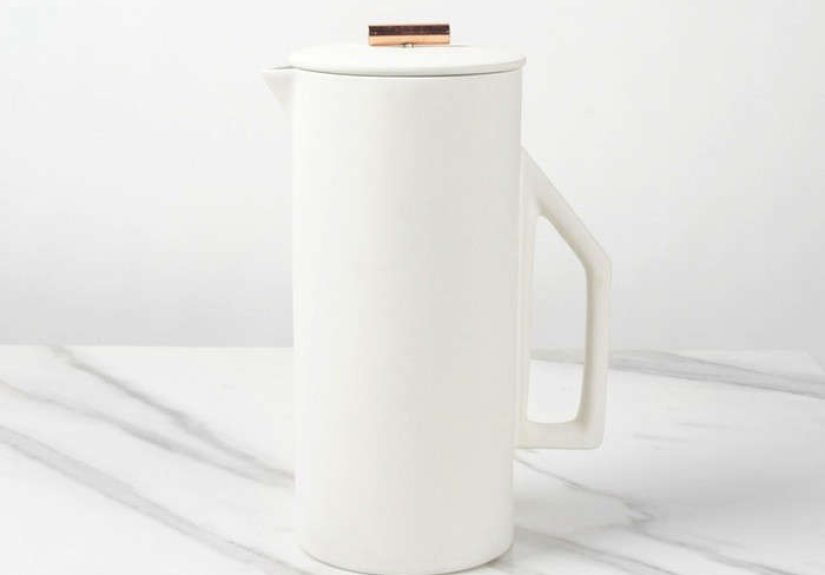
The Yield Ceramic French Press is a classic immersion brewercoffee steeps in hot water, then a mesh filter plunges down to
separate grounds from liquid. The “Yield twist” is material and form: a heavy-walled ceramic body meant to hold
heat steadier during steeping, a fine mesh stainless steel filter that comes apart for cleaning, and a
copper pull that adds just enough shine to make the whole thing feel deliberate.
The Cream colorway is especially popular because it reads warm and soft (think half-and-half, not hospital white),
and it plays well with both minimalist and cozy kitchens. It’s the rare coffee tool that doesn’t need to be hidden when guests come over.
Quick Specs Snapshot
- Capacity: about 850 mL / ~28 oz (a few mugs, depending on how brave your mugs are)
- Materials: ceramic pitcher & lid, stainless steel filter components, copper pull
- Size: roughly 3.5″ D × 5.5″ W × 7.5″ H (varies slightly by listing)
- Care: generally dishwasher safe (many sellers recommend gentle/upper-rack), with hand-wash often suggested for best longevity
Why Ceramic Matters in a French Press
French press brewing lives and dies by two things: time and temperature. Steep too long and your
cup can drift bitter. Let the water cool too quickly and extraction gets uneven (translation: you’ll taste “thin” and “flat” notes,
even if you bought the good beans).
Ceramic helps because it has thermal mass. Once warmed, it resists quick temperature swings better than thin glass.
That doesn’t mean it’s a thermosceramic isn’t vacuum-insulatedbut it does mean your four-minute steep is less likely to turn into a
“three minutes hot + one minute lukewarm” situation. And in daily life, that steadier heat tends to reward medium and darker roasts
with especially plush body.
Cream, Glaze, and the “Cleanability Factor”
One of the sneakily great design moves on this press is the contrast between the exterior feel and interior finish. Many Cream models
are described as having a matte exterior with a high-gloss interior, which isn’t just aesthetic.
Gloss interiors are typically easier to rinse clean, and they’re less likely to hang onto coffee oils that can go stale over time.
How to Brew Great Coffee With the Yield Ceramic French Press
The French press is wonderfully low-tech. But it’s also the kind of low-tech that will absolutely roast you (figuratively) if you ignore
grind size and ratios. Here’s a method that’s reliable, tweakable, and doesn’t require you to earn a minor in “Coffee Internet Arguments.”
What You’ll Need
- Yield Ceramic French Press (Cream)
- Fresh coffee beans (or ground coffee, ideally coarse)
- Kettle (gooseneck optional; swagger optional)
- Scale + timer (highly recommended)
- Spoon or stir stick (wood or silicone is gentler on ceramics)
Step-by-Step Brew Guide (A Great Starting Point)
- Preheat the press. Swirl hot water in the ceramic for 20–30 seconds, then discard. This helps stabilize temperature.
-
Measure coffee and water. Start at a 1:15 ratio (coffee:water by weight).
Example: 30 g coffee to 450 g water for a strong-ish batch, or 33 g to 500 g for a fuller pot. - Grind coarse. Think “sea salt,” not “sand.” Too fine = sludge city and bitter notes.
- Add coffee, then water. Pour water around 195–205°F. Saturate all grounds.
- Stir gently. 2–3 slow stirs is plenty. You’re mixing, not auditioning for a whisk commercial.
- Steep 4 minutes. Put the lid/plunger on top (don’t plunge yet). Let it do its thing.
- Plunge slowly. Steady, gentle pressure. If it fights you, your grind is likely too fine.
- Decant immediately. Pour coffee out after plunging so it doesn’t keep extracting and turning bitter.
Dialing In: Simple Tweaks That Actually Work
- Too bitter? Grind coarser, shorten steep to 3:30, or lower water temp slightly.
- Too weak? Increase dose (more coffee), steep a bit longer, or grind a touch finer (but don’t invite mud).
- Too much sediment? Coarsen grind and plunge slower. Also: let the cup sit 30 seconds before the last sip.
How It Compares to Other French Press Styles
Versus Glass Presses
Glass presses are classic, easy to see through, and often cheaper. They’re also the kind of thing that can shatter if you look at them
the wrong way while holding a slippery sponge. Ceramic trades visibility for a sturdier feel and better temperature stability during steeping.
Versus Stainless Steel (Insulated) Presses
Double-wall stainless presses often win for heat retention after brewing. If your priority is “coffee stays hot forever,” steel may take
the trophy. But ceramic tends to feel nicer in hand, looks more “kitchen decor” than “camping gear,” and avoids the metallic vibe some
people swear they can taste (yes, coffee people are like that).
Versus Double-Filter “Low Sediment” Presses
Some presses are designed to reduce sediment dramatically with dual micro-filters. The Yield’s filter is fine mesh and practical, but
it’s still fundamentally a traditional press. You’ll get the signature body and richness, along with some natural fines depending on grind.
Design Details That Matter More Than You’d Think
The Handle Geometry
Yield’s angular handle shape isn’t just for looks. A broader handle can feel more stable when you’re pouring a full press. This matters
because ceramic is heavier than thin glass, and “oops” is a bad flavor note.
The Copper Pull
The copper pull is the jewelry of the operation. It also becomes your most-touched surface, which means it can develop patina over time.
Some people love that “lived-in brass/copper” look; others prefer to keep it shiny. Either way, gentle cleaning goes a long way.
Parts and Longevity
A frequent frustration with pretty coffee gear is when one part breaks and the whole thing becomes a very expensive paperweight.
The good news: replacement parts for components like lids and filter pieces are commonly offered by the brand and various retailers.
If you’re the type to keep things for years, that’s a big deal.
Cleaning and Care (a.k.a. The Part Nobody Posts on Instagram)
The fastest way to ruin great coffee is to let old oils and grounds residue build up. French presses need real cleaning, not the “I rinsed it
and called it a day” approach.
Daily Cleaning Routine (3 Minutes, No Drama)
- Dump grounds (compost if you can).
- Rinse the pot with warm water right away.
- Disassemble the filter screen every few uses (or daily if you’re picky) and rinse thoroughly.
- Wash with mild soap and a soft sponge; avoid abrasive scrubbers on ceramic finishes.
Dishwasher or Hand Wash?
Many listings describe the press as dishwasher safe, but “safe” and “best” are not always the same thing. If you want to keep the ceramic
looking pristine and the copper pull happy, hand washing is the gentlest move. If you do use a dishwasher, consider upper rack placement and
avoid harsh cycles when possible.
Who This French Press Is For
You’ll probably love it if…
- You like bold, full-bodied coffee with a richer mouthfeel.
- You want a beautiful brewer that can live on the counter proudly.
- You appreciate ceramic’s heat stability during steeping.
- You don’t mind cleaning a filter that actually comes apart (because it should).
You might want a different press if…
- You need coffee to stay hot for a long time after brewing (consider insulated stainless).
- You hate any sediment at all (consider a double-filter press).
- You routinely make one tiny cup at a time and hate leftovers (consider a smaller press size if available).
Common Questions (Answered Without the Eye Roll)
Does ceramic change the taste?
Ceramic is generally neutral and doesn’t impart flavors the way some materials can. The bigger taste differences come from grind,
ratio, water temperature, and how clean the brewer is.
Can I make tea in it?
YesFrench presses are great for loose-leaf tea. Just clean thoroughly afterward so your next coffee doesn’t taste like yesterday’s jasmine.
Can it do cold brew?
Absolutely. Use a coarser grind, a stronger ratio, and steep in the fridge for 12–18 hours, then plunge and decant. The ceramic body is
fine for cold brewing; you’re essentially using it as a steeping vessel with a built-in filter.
The Verdict: A Stylish Workhorse With Real Brewing Benefits
The Yield Ceramic French Press in Cream isn’t trying to be the cheapest press on the internet or the most
engineering-heavy “sediment elimination machine.” It’s a thoughtfully designed ceramic press that leans into what the French press does best:
rich flavor, satisfying body, and a ritual that’s simple enough to do before your brain fully boots up.
If you want a brewer that feels special every time you use itand you’re willing to treat it like a daily tool, not a disposable gadgetthis
press makes a compelling case. It’s functional, handsome, and genuinely good at maintaining brewing temperature through the steep. And in Cream,
it somehow makes even a Tuesday morning feel like you have your life together (or at least your coffee does).
500-Word Field Notes: What It’s Like Living With the Yield Ceramic French Press (Cream)
Living with the Yield Ceramic French Press in Cream feels a little like adopting a very well-dressed pet: it behaves beautifully,
it improves your routine, and it occasionally reminds you that aesthetics come with responsibilities. The first thing most people notice
is that it changes the pace of coffee. Because the ceramic holds heat steadier during the four-minute steep, you can be a bit more
consistent from day to day. That consistency turns into confidencesuddenly you’re adjusting dose and steep time on purpose, not by accident.
You stop “winging it” and start “dialing it in,” which is the same behavior, but sounds cooler when you say it out loud.
The Cream finish, in particular, does something sneaky: it encourages you to leave it out. When a brewer lives on the counter, you use it more.
When you use it more, you get better at it. So the design isn’t just décorit’s habit formation wearing a nice outfit. Morning guests tend to
comment on it, which is convenient because it buys you time to wake up. You can nod politely while your coffee steeps, pretending you’re not
still mentally buffering.
In everyday use, the weight is both comfort and caution. It feels sturdy when you’re plunging, and the handle shape gives a secure grip,
but a full pot is still a full pot. The best “real life” trick is to keep your pour controlled: tilt slowly, and if you notice the lid shifting,
use a thumb on top as a stabilizer. Some owners also learn to pour in two stageshalf into a mug or server, then the restespecially when
serving multiple people. It’s not a flaw so much as learning the personality of your specific unit, like realizing your favorite mug also has
one handle that runs hotter than the other.
Coffee results are classic French press: plush body, deep aromatics, and a little sediment depending on grind. If you’re used to paper filters,
you’ll taste more oils and feel more texture. The press rewards medium-to-dark roasts with chocolatey, nutty notes, but lighter roasts can still
shine if you keep water hot enough and grind coarse-but-even. The key is decanting right after plunging. Leave coffee sitting on grounds while you
answer emails, and it will absolutely punish you with bitterness later. The press is patient; extraction is not.
Cleaning is the price of admission, and it’s worth paying. The mesh filter coming apart is a giftuse it. A quick rinse is fine once,
but a real wash keeps flavors clean and prevents old oils from dulling your cup. Over time, the copper pull may patina, which many people
end up loving because it makes the press look “collected,” not “brand new and afraid.” And that’s the vibe this brewer does best:
thoughtful, lived-in, and reliably good coffeeserved with a side of quiet flex.