Table of Contents >> Show >> Hide
- Why canned tuna deserves a permanent spot in your pantry
- Before you pop the lid: choosing tuna and making it taste great
- Our best easy canned tuna recipes
- 1) Diner-style tuna melt that actually melts
- 2) Everything-bagel tuna salad (no boring desk lunches allowed)
- 3) Lemon-garlic tuna pasta (the 15-minute miracle)
- 4) Creamy tuna pasta salad for meal prep
- 5) White bean and tuna salad (Italian pantry magic)
- 6) Niçoise-ish salad bowls (fancy, but make it Tuesday)
- 7) Crispy tuna patties (a.k.a. tuna cakes for people who hate “patties”)
- 8) Spicy tuna rice bowl with kimchi and cucumbers
- 9) Classic tuna casserole with a crunchy top
- 10) Chickpea-tuna lettuce wraps (fresh, crunchy, and fast)
- Flavor upgrades that take 30 seconds
- Troubleshooting: common canned tuna problems (and easy fixes)
- Neat conclusion
- Bonus: real-life canned tuna experiences (about )
Canned tuna is the pantry superhero: simple, affordable, and ready to turn into dinner in under 20 minutes. These easy canned tuna recipesmelts, salads, casseroles, and quick pastamake the most of one humble can (with zero boring vibes).
Why canned tuna deserves a permanent spot in your pantry
Canned tuna is already cooked, high in protein, and happy to mingle with pasta, rice, beans, and greens. It also takes on flavor fast, so lemon + olive oil + something crunchy can turn “plain tuna” into a real meal.
- Fast: No thawing, no fuss.
- Flexible: Sandwich, salad, pasta, casserole.
- Great for lunches: Several recipes keep well.
Before you pop the lid: choosing tuna and making it taste great
Chunk light vs. albacore (aka “white tuna”)
Most grocery-store canned tuna falls into two camps: chunk light (often skipjack) and albacore (white tuna). Chunk light is usually milder and is commonly recommended as the lower-mercury option; albacore is firmer and richer, but many health guidelines suggest limiting it more oftenespecially for people who are pregnant, breastfeeding, or serving young kids.
Oil-packed vs. water-packed
Oil-packed tuna tends to taste richer (great for salads and pasta). Water-packed tuna is lighter and convenient for classic mayo-based mixes. Either works in most recipes, but if tuna is the star, oil-packed can feel like turning the lights on.
Sustainability quick check (no marine biology degree required)
If you care about ocean impact, look for cans labeled pole-and-line or troll-caught, or brands that clearly disclose sourcing.
The two moves that fix “sad tuna”
- Drain well: Press the lid against the tuna and tip out liquid slowly. Less soggy, more tasty.
- Flake and smash: Use a fork to break tuna into small pieces. For melts and creamy salads, a quick smash makes the mixture fluffier and spreads evenly.
Food-safety, without the paranoia
Once opened, move leftover tuna (and tuna dishes) to an airtight container and refrigerate promptly. Use within a few days, and toss anything that smells off or looks questionable.
Our best easy canned tuna recipes
Minimal ingredients, maximal payoff. Swap herbs, change the spice level, and make them yours.
1) Diner-style tuna melt that actually melts
Why it works: Crisp bread + creamy tuna + cheese that melts into the filling.
- Time: 15 minutes
- You’ll need: tuna, mayo, bread, sliced cheese, butter; plus celery/onion and relish if you want crunch
- Mix drained tuna with mayo until creamy. Add celery, dill, relish, or lemon if you like.
- Butter the outside of bread. Toast in a skillet until lightly golden.
- Flip, add cheese, pile on tuna, then add another slice of cheese (cheese on both sides = glue).
- Close, press gently with a spatula, and cook on medium-low so the cheese melts before the bread burns.
2) Everything-bagel tuna salad (no boring desk lunches allowed)
Why it works: Everything seasoning adds garlic-onion-sesame crunch in one shake.
- Time: 10 minutes
- You’ll need: tuna, Greek yogurt or mayo, lemon juice, chopped celery, everything-bagel seasoning
Stir tuna with yogurt (or half yogurt, half mayo), celery, lemon, and a generous sprinkle of everything seasoning. Serve in a sandwich, on crackers, or tucked into a pita with cucumbers.
3) Lemon-garlic tuna pasta (the 15-minute miracle)
Why it works: Pasta water + garlic + briny pantry stuff (capers/olives) creates a quick sauce, and tuna adds protein without extra cooking.
- Time: 15–20 minutes
- You’ll need: spaghetti, tuna, olive oil, garlic, red pepper flakes, lemon, parsley, capers or olives
- Boil pasta. Reserve 1 cup pasta water.
- Sauté garlic and red pepper flakes in olive oil until fragrant (not browned).
- Add tuna, capers/olives, lemon zest, and a splash of pasta water. Toss with pasta until glossy.
- Finish with lemon juice, parsley, and black pepper. Optional: Parmesan, because you’re an adult.
4) Creamy tuna pasta salad for meal prep
Why it works: A dressing built from yogurt + mayo + Dijon + lemon tastes bright, not heavy, and the whole thing holds up in the fridge.
- Time: 20 minutes
- You’ll need: small pasta, tuna, peas, celery, red onion, yogurt, mayo, Dijon, lemon
Cook pasta, cool, then toss with tuna, peas, celery, and onion. Stir together yogurt, mayo, Dijon, lemon zest/juice, salt, and pepper; fold in. Chill 30 minutes so it tastes like a plan.
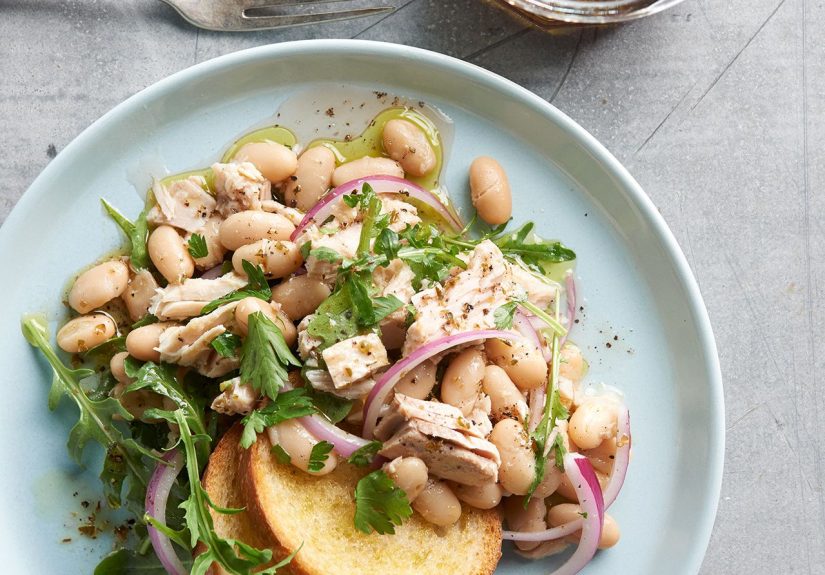
5) White bean and tuna salad (Italian pantry magic)
Why it works: Tuna + cannellini beans is protein on protein, but still light. A punchy vinaigrette keeps it from feeling like gym food.
- Time: 10 minutes
- You’ll need: white beans, tuna, lemon or vinegar, olive oil, red onion, parsley
Toss rinsed beans with olive oil, lemon, salt, pepper, and thin-sliced red onion. Flake tuna on top. Add parsley and whatever else is around (cherry tomatoes, cucumbers, arugula, capers).
6) Niçoise-ish salad bowls (fancy, but make it Tuesday)
Why it works: This is the “I totally meal-prep” bowl: potatoes, green beans, tuna, olives, and a mustardy dressing. It eats like a full dinner, not a side salad pretending to be a meal.
- Time: 25 minutes
- You’ll need: tuna, small potatoes, green beans, olives, Dijon, lemon, olive oil; plus eggs if you want
Boil potatoes until tender; blanch green beans for 2 minutes and chill. Whisk Dijon, lemon, olive oil, salt, and pepper. Assemble bowls with greens, potatoes, beans, tuna, and olives.
7) Crispy tuna patties (a.k.a. tuna cakes for people who hate “patties”)
Why it works: Tuna patties are fast, frugal, and surprisingly satisfyingespecially with lemon and Dijon to brighten everything up.
- Time: 20 minutes
- You’ll need: tuna, egg, breadcrumbs, Dijon, lemon zest, herbs (parsley/dill)
- Mix tuna with egg, breadcrumbs, Dijon, lemon zest, herbs, salt, and pepper.
- Form small patties and pan-fry until browned on both sides.
- Serve with a quick yogurt-lemon sauce or in a bun like a fish burger’s laid-back cousin.
8) Spicy tuna rice bowl with kimchi and cucumbers
Why it works: Creamy-spicy tuna + crunchy cucumber + tangy kimchi is the kind of balance that makes lunch feel like a reward.
- Time: 10 minutes
- You’ll need: tuna, cooked rice, kimchi, cucumber, mayo, sriracha; plus avocado/nori if you’re feeling fancy
Stir tuna with mayo and sriracha. Pile onto warm rice and add kimchi, sliced cucumber, and avocado. Finish with torn nori or sesame seeds.
9) Classic tuna casserole with a crunchy top
Why it works: Creamy noodles + tuna + peas is peak comfort food, and a crunchy topping (chips, crackers, or breadcrumbs) makes it feel special.
- Time: about 30–40 minutes
- You’ll need: egg noodles, tuna, peas, creamy sauce (soup or homemade), shredded cheese, crunchy topping
- Cook noodles until just tender. Mix with tuna, peas, sauce, and cheese.
- Spread into a baking dish, top with crushed chips/crackers, and bake until bubbly.
- Let it rest 5–10 minutes so you don’t burn your mouth. (This is a public service announcement.)
Make-ahead tip: Assemble the casserole the day before, refrigerate, then bake right before dinner. It also freezes well if you wrap it tightly.
10) Chickpea-tuna lettuce wraps (fresh, crunchy, and fast)
Why it works: Chickpeas add bulk and fiber; lettuce keeps it crisp and snackable. It’s basically “tuna salad, but make it a handheld salad bar.”
- Time: 15 minutes
- You’ll need: tuna, chickpeas, yogurt or mayo, lemon, herbs, romaine/butter lettuce
Lightly mash chickpeas, fold in tuna, dressing, lemon, and herbs. Spoon into lettuce leaves and top with diced cucumber, pickles, or a sprinkle of everything seasoning.
Flavor upgrades that take 30 seconds
If your tuna recipe tastes flat, it usually needs one (or two) of these:
- Acid: lemon juice, red wine vinegar, pickle brine
- Crunch: celery, scallions, red onion, diced pickles
- Briny punch: capers, olives, relish
- Fresh herbs: dill, parsley, basil
- Heat: hot sauce, sriracha, chili flakes
- Umami: a tiny splash of fish sauce or a pinch of minced anchovy (it won’t taste fishier; it just tastes more)
Troubleshooting: common canned tuna problems (and easy fixes)
“My tuna salad is dry.”
Add mayo/yogurt one spoon at a time and add something juicy: grated cucumber, lemon juice, or a little olive oil.
“My tuna melt is soggy.”
Toast the bread first and don’t overfill. Cook low and slow so the cheese melts before the bread steams.
“The casserole is bland.”
Salt the pasta water, add Dijon to the sauce, and use a crunchy topping with seasoning (chips, crackers, or buttered breadcrumbs).
Neat conclusion
Canned tuna doesn’t need a glow-upit needs a plan. With a few pantry staples and the right moves (drain, flake, season), you can turn one humble can into fast pasta, crispy patties, bright salads, or the kind of tuna melt that makes people quiet for a second because they’re too busy enjoying it.
Pick two recipes to try this week, stock up on a few add-ins (lemon, pickles, Dijon, herbs), and you’ll have a whole rotation of easy canned tuna meals ready for busy nights and even busier lunches.
Bonus: real-life canned tuna experiences (about )
If canned tuna has ever saved your day, you already know the vibe: it’s not glamorous, but it’s reliableand reliability is kind of the hottest personality trait a pantry item can have.
There’s the “I forgot to thaw anything” moment. The fridge is full of good intentions (a bag of spinach, a lonely lemon, a container labeled “soup?”), but no actual dinner plan. Then you spot the tuna. Suddenly, you’re sautéing garlic, tossing pasta, and telling yourself you’re basically running a small Italian trattoria out of your kitchen. The entire operation takes the same amount of time as scrolling for takeout.
Then there’s the work-from-home lunch spiral, when you realize you’ve eaten three granola bars and a handful of crackers and it’s… somehow 2:17 p.m. A tuna rice bowl fixes that in minutes. It’s warm, filling, and you can add kimchi or cucumbers to feel like you made a “balanced meal” instead of a “desk snack situation.” Bonus points if you add nori and pretend it’s sushi. Nobody has to know.
For families, canned tuna is often the quiet hero of the “everyone likes something different” problem. One bowl of tuna salad can become a sandwich for one person, a lettuce wrap for another, and a cracker dip for the kid who refuses bread “because it’s too bready.” A tuna casserole can be comfort food for grownups and a “mac and cheese adjacent” win for picky eatersespecially if the topping is crunchy enough to be its own personality.
There’s also the grocery-store strategy experience: you start noticing that not all tuna is labeled the same. Some cans brag about the fishing method; others are mysteriously vague. Once you start choosing brands that clearly state where and how the fish was caught, you feel like you leveled up as an adult human. It’s a small thing, but it’s satisfyinglike switching from “random battery pack” to “the one that actually charges your phone.”
And if you’ve ever brought tuna salad to a gathering, you’ve met the two characters of the potluck universe: the person who says, “Oh, I love tuna salad!” and the person who says, “Interesting,” with the cautious expression of someone defusing a bomb. The trick is to keep it bright: lemon, herbs, crunch, and just enough mayo that it’s creamynot swampy. Put it on toasted bread and suddenly even the skeptics are asking what you put in it. (Answer: pickles. It’s always pickles.)
My favorite “tuna moment,” though, is the tiny vacation version: road trips, cabins, beach rentals, college apartmentsanywhere you’ve got a can opener, a bowl, and zero desire to shop. Tuna becomes dinner with pasta and lemon, or lunch with beans and whatever vegetables survived the cooler. It’s the rare ingredient that travels well and turns “we have nothing” into “this is actually good.”
Finally, there’s the joy of having a backup plan. Keeping a few cans of tuna means you can turn a random Tuesday into a decent meal without a last-minute grocery run. It’s the culinary version of having an umbrella in your bag: you might not need it every day, but when you do, you feel like a genius. And honestly? That’s the energy we’re bringing to dinner.