Table of Contents >> Show >> Hide
- What “Dry Clean-Only” Actually Means
- Which “Dry Clean-Only” Clothes You Can Usually Wash at Home
- Which Items Should Still Go to the Pros
- How to Wash “Dry Clean-Only” Clothes at Home the Right Way
- Step 1: Read the entire care label
- Step 2: Do a quick colorfastness test
- Step 3: Pretreat stains gently
- Step 4: Pick the right washing method
- Step 5: Hand-wash with cool water and a gentle detergent
- Step 6: Or use the washer only if the garment can take it
- Step 7: Remove water the gentle way
- Step 8: Dry it correctly
- What About At-Home Dry-Cleaning Kits?
- Smart Refreshing Tricks That Are Not Full Washes
- Big Mistakes That Secretly Wreck Delicate Clothes
- When It’s Worth Ignoring Your Inner DIY Hero
- Real-World Experience: What People Learn the Hard Way
- Final Takeaway
- SEO Tags
Let’s start with a tiny truth bomb: some “dry clean-only” clothes really do belong at the dry cleaner. Others? They’re wearing that label like a dramatic coworker wears a “do not disturb” signtechnically serious, but not always impossible to work around. The trick is knowing the difference before your favorite silk blouse turns into doll clothes.
If you’ve ever stared at a care tag and thought, Surely there is a cheaper way, you are not alone. Professional dry cleaning is convenient, but it’s not exactly budget-friendly, and not every garment needs the full spa treatment. Many soft, unstructured pieces can handle careful at-home washing just fine. The catch is that you need to slow down, read the label like it holds family secrets, and stop treating delicate clothing like gym socks.
In this guide, you’ll learn how to decode care labels, figure out which garments can survive home laundering, and wash delicate pieces without committing laundry-related crimes. We’ll also cover the common mistakes that quietly wreck clothes, plus real-world experiences that show why technique matters more than confidence. Because in laundry, confidence is nice. But cool water is better.
What “Dry Clean-Only” Actually Means
Not all labels are created equal, and this is where many people get tripped up. If a garment says “dry clean” or “dry clean recommended”, that usually means professional cleaning is the safest or easiest option, but careful home cleaning may still be possible. If it says “dry clean only”, that is a stronger warning. In plain English: the manufacturer believes washing can damage the fabric, finish, dye, shape, or construction.
That doesn’t mean every “dry clean-only” tag is a guaranteed disaster if water touches it. It does mean you are stepping outside the manufacturer’s safest recommendation. So if you choose to wash it at home, do it with eyes open, expectations realistic, and the dryer nowhere in sight.
There’s also “spot clean only”, which is the garment equivalent of a doctor saying, “Please do not improvise.” Those items should not be soaked or fully washed. Formalwear, heavily embellished pieces, and some specialty fabrics often fall into this category for a reason.
Which “Dry Clean-Only” Clothes You Can Usually Wash at Home
Now for the hopeful part. Some garments that get lumped into the dry-clean-only category can often be washed at home with great results, especially when they are soft, simple, and unstructured.
Usually safer bets
These are the items most likely to handle careful home washing:
- Soft wool or cashmere sweaters without lining
- Simple silk tops or scarves without beads, sequins, or heavy tailoring
- Lightweight cotton, polyester, or synthetic-blend garments labeled “dry clean”
- Fine-knit cardigans, wraps, and delicate loungewear
- Small accessories made from washable fibers, like certain scarves or knit hats
In general, home washing works best when the garment is made from one main fabric, doesn’t rely on internal structure to hold its shape, and doesn’t have fancy extras that hate water. If it looks floppy on the hanger, that’s usually a better sign than if it looks like it could chair a board meeting.
Which Items Should Still Go to the Pros
Some pieces should not be your laundry experiment. This is where people get overconfident, and then suddenly they own a blazer shaped like a shrug.
Do not play games with these
- Suits, blazers, tuxedos, and tailored jackets
- Coats with lining or shoulder structure
- Dresses, skirts, or pants with lining
- Anything with beads, sequins, feathers, or glued trims
- Pleated garments that rely on heat-set shape
- Leather, suede, velvet, acetate, and taffeta
- Formal gowns, vintage clothing, and heirloom pieces
Why the hard no? Because water doesn’t just clean a garment. It changes things. It can shrink wool, distort lining, loosen glue, flatten texture, warp pleats, and make dyes bleed. Structured garments are especially risky because the outer fabric and inner construction do not always react the same way. That’s how you end up with a jacket that technically still exists, but emotionally has given up.
How to Wash “Dry Clean-Only” Clothes at Home the Right Way
If you’ve decided your garment is a good candidate for home care, don’t just toss it in with towels and hope for divine intervention. Use a method that respects the fabric.
Step 1: Read the entire care label
Check the fiber content as well as the care instruction. A silk shell with a polyester lining is different from 100% silk. A wool sweater is different from a lined wool dress. The more complex the garment, the more cautious you should be.
Step 2: Do a quick colorfastness test
This step is boring, which means many people skip it, which means many people regret it. Dampen a hidden seam with cool water and a tiny bit of mild detergent. Blot with a white cloth or cotton swab. If dye transfers, stop right there. That item is not a great candidate for home washing.
Step 3: Pretreat stains gently
Blot, don’t scrub. Use cold water and a small amount of delicate detergent or a stain treatment safe for the fabric. Work from the outside of the stain inward. Rubbing aggressively may rough up fibers, spread dye, or leave a lovely memory in the form of a faded patch.
Step 4: Pick the right washing method
You generally have three practical options:
Hand-washing: Best for silk, cashmere, soft wool, and most delicate pieces you truly care about.
Gentle machine wash: Best only for sturdier “dry clean” garments, not fragile or highly delicate items.
At-home refresh methods: Best when the item isn’t dirty so much as a little musty, wrinkled, or lightly worn.
Step 5: Hand-wash with cool water and a gentle detergent
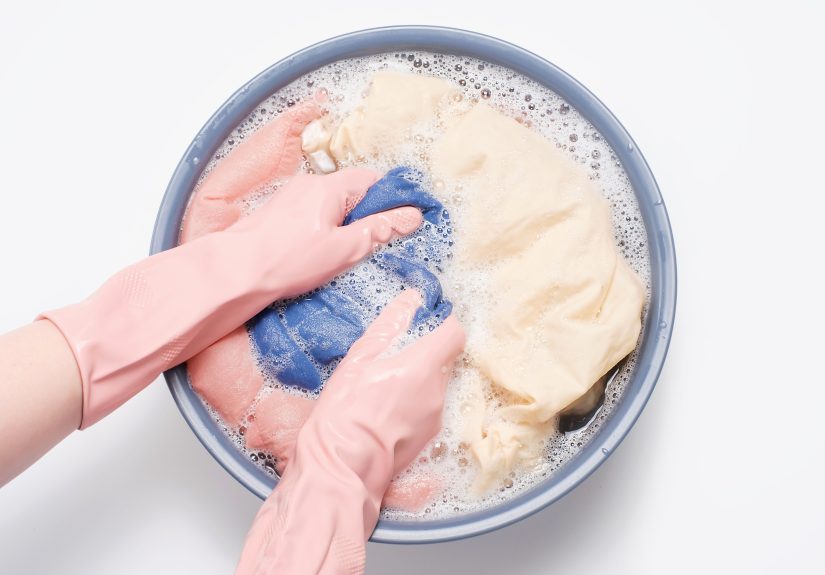
Fill a clean sink or basin with cool water. Add a small amount of mild detergent designed for delicates. Swish the water first so detergent disperses evenly. Then submerge the garment and gently move it through the water. No twisting, stretching, wringing, or dramatic churning. Think “spa day,” not “car wash.”
Let the garment soak briefly if needed, usually just a few minutes for delicate fibers. Rinse in cool water until the water runs clear.
Step 6: Or use the washer only if the garment can take it
If the item is a sturdier washable candidate, turn it inside out, place it in a mesh laundry bag, and run it on the most delicate setting your machine offers. Use cool water and just a small amount of liquid detergent. Avoid hot water, avoid heavy spin, and absolutely avoid washing it with jeans, towels, or anything that behaves like a jealous ex.
Step 7: Remove water the gentle way
After washing, never wring delicate clothing. Instead, press out excess water with your hands, then lay the garment flat on a clean towel. Roll the towel up like a burrito and press gently. This helps remove moisture without stretching the fabric into a new and unwanted personality.
Step 8: Dry it correctly
Drying is where people undo all their careful work. Knits should usually be dried flat to keep them from stretching. Woven garments can often be placed on a shaped hanger or drying rack. Keep delicate pieces away from direct sunlight, high heat, radiators, and clothes dryers.
When the garment is dry, use a steamer to relax wrinkles if needed. Be careful with silk and wool: steam is helpful, but dripping-hot contact can cause trouble. Hover the steamer rather than pressing it into the fabric like you’re trying to win an argument.
What About At-Home Dry-Cleaning Kits?
They can be helpful, but let’s manage expectations. At-home dry-cleaning kits are usually best for lightly soiled items, odor refreshes, and touch-up care between professional cleanings. They are not magical portals to luxury garment restoration.
If your blouse smells like dinner, has light body odor, or just needs de-wrinkling, a home kit can be a practical shortcut. If your dress has set-in stains, makeup marks, lining issues, or formal structure, a kit will not save the day. It may freshen the fabric, but it won’t replace the finish and pressing you get from professional care.
Smart Refreshing Tricks That Are Not Full Washes
Sometimes the best move is not washing at all. Overwashing can wear out fine clothes faster than occasional careful use.
Spot cleaning
If the issue is one tiny stain, treat the spot instead of laundering the whole garment.
Airing out
Hanging a garment in fresh air can help with minor odors and that “I wore this to dinner and now it smells vaguely like garlic bread” situation.
Steaming
Steam can relax wrinkles, freshen fabric, and make a garment look cleaner than it technically is. Which, if we’re honest, is sometimes enough.
Odor refresh spray
Some home-care routines use a very light vodka-and-water mist for odor refresh on non-washable pieces. If you try that, test first on a hidden area and keep the mist light. This is a refresh trick, not a substitute for real cleaning.
Big Mistakes That Secretly Wreck Delicate Clothes
If you remember nothing else from this article, remember this section. These are the mistakes that turn a manageable home wash into a tiny textile tragedy.
- Using hot water: Heat increases the chance of shrinkage, fading, and distortion.
- Using too much detergent: More soap does not mean more clean. It means more residue.
- Choosing regular detergent for wool or silk: Delicate fibers need delicate formulas.
- Scrubbing stains aggressively: That can damage fibers and spread color.
- Wringing the garment: Great for washcloths, terrible for silk.
- Using the dryer: High heat is the fastest route to shrinkage and heartbreak.
- Ignoring lining and trim: One washable fabric does not make the whole garment washable.
- Washing too often: Frequent laundering can age delicate clothes faster than careful wear.
When It’s Worth Ignoring Your Inner DIY Hero
Here’s a good rule: the more expensive, sentimental, structured, or complicated the garment is, the less adventurous you should be. If you would cry, sue your own decision-making, or bring up the loss at future family gatherings, take it to a professional.
The same goes for first-time experiments. Don’t begin your at-home garment-care journey with your wedding guest dress, your best wool coat, or the blazer you need for tomorrow morning. Start with a lower-stakes piece, learn how your fabrics behave, and build confidence one sweater at a time.
Real-World Experience: What People Learn the Hard Way
The most useful lessons about washing “dry clean-only” clothes at home usually come from experience, and experience is a polite word for “the thing that happens right after overconfidence.” Almost everyone who gets good at delicate laundry has a backstory. Usually it begins with a sweater, ends with regret, and includes the phrase, “I thought it would be fine.”
A common success story is the soft cashmere sweater. Someone buys one, sees the scary label, postpones cleaning for weeks, then finally hand-washes it in cool water with a gentle detergent. They press it in a towel, dry it flat, and discover the sweater actually comes out softer, fresher, and perfectly wearable. That experience teaches an important lesson: some delicate clothes respond beautifully when they are treated gently and dried properly. The washing itself was not the problem. Rough handling would have been.
Then there is the silk blouse lesson, and this one tends to humble people fast. A simple, solid-colored silk shell may hand-wash beautifully. A printed silk blouse with bold color contrast? That can be a different story. People often find that what looked like a washable garment becomes a watercolor painting after a rushed wash. This is where colorfastness testing stops being “extra” and starts looking very smart. The hidden-seam test takes two minutes. Fixing dye bleed takes approximately forever.
Another classic case is the lined skirt or dress. It may look soft and harmless, but once washed, the outer fabric and lining can shrink differently. The result is puckering, twisting, or a hemline that suddenly seems to have developed strong opinions. Many people only learn this after trying to save money on one dry-cleaning trip and accidentally creating a garment that no longer hangs straight. That experience teaches the difference between fabric washable and garment washable. A wool shell might survive water. A lined wool dress may not.
There are also people who discover that not every item needs a full wash in the first place. A blazer that smells slightly stale often doesn’t need immersion, detergent, and drama. It may only need airing out, careful spot treatment, and a pass with a steamer. Once you learn this, your whole laundry routine changes. You stop laundering fine clothes out of habit and start caring for them according to what they actually need.
Home dry-cleaning kits create another kind of lesson. Many first-time users expect them to erase stains, restore shape, and perform miracles worthy of a standing ovation. What they really do best is refresh lightly worn garments. Once people understand that, they stop being disappointed and start using the kits for what they are: maintenance tools, not rescue missions.
Probably the biggest experience-based lesson of all is that patience matters more than force. The people who ruin delicate clothes tend to move too fast: hot water, too much detergent, too much scrubbing, too much heat, too much confidence. The people who get good results are usually the ones who slow down, test first, handle lightly, and let garments air-dry in peace.
So yes, you can wash some “dry clean-only” clothes at home. But the success stories almost always have the same ingredients: low agitation, cool water, the right detergent, gentle drying, and a healthy respect for the fact that clothing is sometimes sneakier than it looks.
Final Takeaway
If you’ve read this far, you now know the secret: washing “dry clean-only” clothes at home is less about bravery and more about judgment. Some garments can absolutely be cleaned at home with careful hand-washing or a delicate machine cycle. Others should remain firmly in professional hands, no matter how rebellious you feel on laundry day.
When in doubt, trust the garment’s construction, not just the fiber. Soft, simple, and unlined usually means you have options. Structured, embellished, pleated, or lined usually means don’t test fate. Respect the label, test for colorfastness, use cool water, keep agitation low, skip the dryer, and finish with proper drying and steaming. That’s how you save money without sacrificing your wardrobe.
In other words: yes, you can wash some “dry clean-only” clothes at home. Just don’t let that sentence talk you into machine-washing a beaded evening gown at midnight. Laundry confidence is admirable. Laundry restraint is legendary.