Table of Contents >> Show >> Hide
- Why Famous Actors Love Playing Vampires
- 1. Tom Cruise as Lestat in Interview with the Vampire
- 2. Brad Pitt as Louis in Interview with the Vampire
- 3. Kirsten Dunst as Claudia in Interview with the Vampire
- 4. Gary Oldman as Dracula in Bram Stoker’s Dracula
- 5. David Bowie as John Blaylock in The Hunger
- 6. Catherine Deneuve as Miriam in The Hunger
- 7. Salma Hayek as Santanico Pandemonium in From Dusk Till Dawn
- 8. Eddie Murphy as Maximillian in Vampire in Brooklyn
- 9. Willem Dafoe as Max Schreck in Shadow of the Vampire
- 10. Johnny Depp as Barnabas Collins in Dark Shadows
- 11. Nicolas Cage as Dracula in Renfield
- 12. Colin Farrell as Jerry Dandridge in Fright Night
- 13. Mark Hamill as Jim the Vampire in What We Do in the Shadows
- 14. Paul Reubens as Amilyn in Buffy the Vampire Slayer
- 15. Aaliyah as Queen Akasha in Queen of the Damned
- 16. Luke Evans as Vlad in Dracula Untold
- 17. Bill Nighy as Viktor in Underworld
- What These Vampire Roles Reveal About Hollywood
- Personal Viewing Experiences: Rediscovering Famous Actors as Vampires
- Conclusion
- SEO Tags
Some actors are so closely tied to one famous role that our brains refuse to accept they ever wore fangs. Tom Cruise? Action hero. Brad Pitt? Hollywood heartthrob with excellent hair genetics. Eddie Murphy? Comedy legend. Nicolas Cage? A one-man weather system of cinema. Yet all of them, at one point, stepped into the shadows and played vampires.
Vampire roles are strange little career mirrors. They can make an actor look elegant, terrifying, tragic, ridiculous, or somehow all four before the second act. The best vampire performances are not just about capes, castles, and dramatic lighting. They are about hunger, loneliness, ego, charm, immortality, and the awkward reality of being hundreds of years old but still having relationship problems. In other words, vampires are just celebrities with worse sleep schedules.
This list explores famous actors we didn’t know played vampires, including major movie stars, cult favorites, musicians, comedians, and performers who slipped into the undead world before or after becoming household names. Some roles are iconic. Others are hidden in cult films, horror comedies, or one unforgettable guest appearance. Either way, these actors prove that in Hollywood, everybody gets a cape eventually.
Why Famous Actors Love Playing Vampires
Vampires give actors something irresistible: permission to be dramatic without apologizing. A vampire can whisper, glare, glide through a room, deliver philosophical monologues, and wear clothing that would make a normal person look like they got lost on the way to a theater rehearsal. For actors, that is not a burden. That is lunch.
There is also the matter of transformation. Vampire characters often live between beauty and danger, comedy and horror, romance and tragedy. That range gives performers a chance to stretch. A charming actor can become threatening. A comedian can become sinister. A serious actor can suddenly camp it up like the rent is due at midnight.
That is why vampire movies have attracted Oscar winners, pop stars, action heroes, indie icons, and comedy legends. The genre may be old, but the roles never really die. Convenient, considering the subject.
1. Tom Cruise as Lestat in Interview with the Vampire
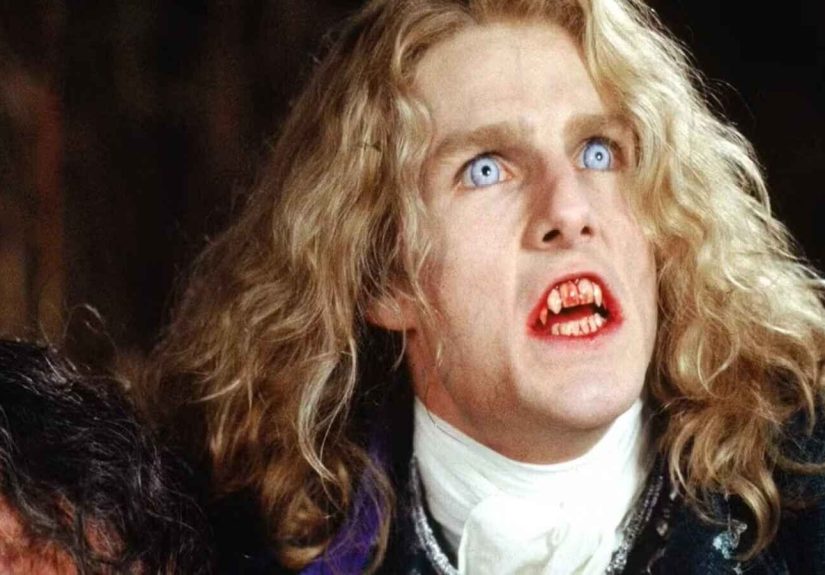
Today, Tom Cruise is almost inseparable from impossible stunts, high-speed running, and the Mission: Impossible franchise. But in 1994, he played Lestat de Lioncourt in Interview with the Vampire, based on Anne Rice’s famous novel. It was a casting choice that surprised plenty of people at the time, partly because Cruise was known more for charisma and movie-star sparkle than gothic menace.
That is exactly what made the performance memorable. Cruise’s Lestat is theatrical, spoiled, elegant, cruel, and oddly funny. He does not just enter a room; he behaves as if the room has been waiting centuries for him. The role allowed Cruise to turn his charm into something sharper. Instead of playing the hero who saves the day, he became the immortal troublemaker who makes everyone else’s afterlife more complicated.
2. Brad Pitt as Louis in Interview with the Vampire
Brad Pitt also joined the undead club in Interview with the Vampire, playing Louis de Pointe du Lac. Unlike Lestat, Louis is not thrilled about eternal life. He is emotional, conflicted, and deeply tired in a way that says, “I have lived for centuries and still have not figured out my skincare routine.”
Pitt’s performance is quieter than Cruise’s, built around sadness and restraint. For viewers who know Pitt from Fight Club, Ocean’s Eleven, or Once Upon a Time in Hollywood, it can be surprising to revisit him as a mournful vampire reflecting on memory, guilt, and immortality. It is not the loudest vampire performance, but it fits the character’s haunted soul.
3. Kirsten Dunst as Claudia in Interview with the Vampire
Before she became widely known for Bring It On, Spider-Man, and later prestige dramas, Kirsten Dunst delivered a standout performance as Claudia in Interview with the Vampire. Claudia is one of the most unusual vampire roles in mainstream cinema: a character trapped in a young appearance while gaining the mind and anger of someone far older.
Dunst’s performance helped make Claudia unforgettable. She brought intelligence, frustration, and sharp emotional energy to the role. It is one of those early performances that makes viewers say, “Oh, so she was always that good.” Yes. Yes, she was.
4. Gary Oldman as Dracula in Bram Stoker’s Dracula
Gary Oldman is famous for disappearing into roles, and Francis Ford Coppola’s Bram Stoker’s Dracula gave him one of cinema’s grandest transformation opportunities. Oldman’s Dracula is not just a monster. He is a warrior, a grieving romantic, an ancient nobleman, and a theatrical nightmare wrapped in elaborate costumes.
This performance is famous among horror fans, but casual viewers may forget just how fully Oldman committed to the role. He plays Dracula across different ages, forms, and moods, shifting from tragic to terrifying with ease. It is the type of performance that proves vampires are not just horror creatures; they are acting marathons with fangs.
5. David Bowie as John Blaylock in The Hunger
David Bowie playing a vampire sounds obvious in hindsight. Honestly, it almost feels like cinema simply admitted what the universe had been hinting at for decades. In Tony Scott’s 1983 film The Hunger, Bowie played John Blaylock, a stylish immortal whose glamorous existence begins to collapse.
The film pairs Bowie with Catherine Deneuve and Susan Sarandon, creating one of the most visually stylish vampire movies of the 1980s. Bowie’s otherworldly presence made him a natural fit for the role. He did not need to overplay the mystery; he arrived with it pre-installed.
6. Catherine Deneuve as Miriam in The Hunger
Catherine Deneuve’s Miriam in The Hunger is elegant, icy, and unforgettable. She is not the messy, cape-flapping kind of vampire. She is the kind who looks like she could ruin your life and then recommend a very tasteful art gallery.
What makes Deneuve’s vampire performance so compelling is its stillness. Miriam is ancient, polished, and emotionally unreadable. Instead of making vampirism look wild, Deneuve makes it look controlled. The result is a vampire who feels less like a monster and more like a secret society with perfect lighting.
7. Salma Hayek as Santanico Pandemonium in From Dusk Till Dawn
Many people remember From Dusk Till Dawn as the movie that begins like a crime thriller and suddenly swerves into vampire chaos. Salma Hayek’s role as Santanico Pandemonium is one of the film’s most recognizable surprises. She appears as a commanding club performer before the movie reveals its supernatural madness.
Hayek’s screen presence is magnetic. The role is not huge in terms of minutes, but it has lived rent-free in pop culture for decades. It is a perfect example of how a short vampire performance can become more memorable than entire movies with bigger budgets and less personality.
8. Eddie Murphy as Maximillian in Vampire in Brooklyn
Eddie Murphy is best known for comedy classics such as Beverly Hills Cop, Coming to America, and The Nutty Professor. But in 1995, he starred as Maximillian in Wes Craven’s Vampire in Brooklyn. Yes, Eddie Murphy played a vampire. No, that is not a typo caused by moonlight.
The film blends horror, romance, and comedy, with Murphy playing a smooth Caribbean vampire searching for a woman connected to his bloodline. The movie has become a cult curiosity because it combines Murphy’s comic energy with Craven’s horror background. It may not be the first title people mention when discussing Murphy’s career, but it is one of his strangest and most interesting detours.
9. Willem Dafoe as Max Schreck in Shadow of the Vampire
Willem Dafoe did not exactly play a traditional vampire in Shadow of the Vampire; he played Max Schreck, the actor from Nosferatu, reimagined as if he might actually be a vampire. That clever premise turns film history into horror mythology.
Dafoe’s performance is eerie, funny, and deeply committed. He does not make the character sleek or glamorous. He makes him strange, hungry, and unsettling. The role earned major awards attention and remains one of the best examples of an actor using vampire imagery to create something both monstrous and weirdly human.
10. Johnny Depp as Barnabas Collins in Dark Shadows
Johnny Depp has played pirates, detectives, chocolate makers, authors, and more eccentric characters than a Halloween store inventory system. In Tim Burton’s Dark Shadows, he became Barnabas Collins, a vampire from the 18th century who wakes up in the 1970s and has to deal with modern life.
The role is classic Depp-Burton: pale makeup, odd manners, gothic visuals, and dry comedy. Barnabas is not terrifying in the traditional sense. He is more like an antique trying to understand television, cars, and changing social rules. The movie leans into camp, making Depp’s vampire one of the more comedic entries in modern vampire cinema.
11. Nicolas Cage as Dracula in Renfield
Nicolas Cage as Dracula feels less like casting and more like destiny finally answering its phone. In Renfield, Cage plays the world’s most famous vampire as a demanding, narcissistic boss whose loyal servant is exhausted by centuries of service.
Cage brings theatrical energy to Dracula without pretending the character is subtle. His performance is big, playful, strange, and exactly the kind of chaos a modern horror-comedy needs. For viewers who associate Cage with intense dramas, action films, or internet-famous movie moments, seeing him as Dracula is both surprising and somehow completely logical.
12. Colin Farrell as Jerry Dandridge in Fright Night
In the 2011 remake of Fright Night, Colin Farrell plays Jerry Dandridge, a charming neighbor who turns out to be a vampire. The role works because Farrell can make Jerry seem friendly and dangerous at the same time. He is not wearing a giant sign that says “Definitely Undead,” although honestly, that would have saved everyone some trouble.
Farrell’s vampire is modern, confident, and predatory without needing old-fashioned Dracula theatrics. He brings a grounded menace to the movie, proving that vampires do not always need castles. Sometimes they just need a nice house next door and suspiciously good night vision.
13. Mark Hamill as Jim the Vampire in What We Do in the Shadows
Mark Hamill will forever be associated with Luke Skywalker, but his career is packed with voice work, comedy, and delightfully odd guest roles. One of the funniest is Jim the Vampire in the TV series What We Do in the Shadows.
Jim is not a galaxy-saving hero. He is a grumpy vampire with a personal complaint and a flair for dramatic confrontation. Hamill’s appearance is a treat because it plays against audience expectations. Instead of noble Jedi wisdom, we get undead pettiness. Frankly, it is beautiful.
14. Paul Reubens as Amilyn in Buffy the Vampire Slayer
Before the famous TV series, there was the 1992 Buffy the Vampire Slayer movie, and Paul Reubens appeared as Amilyn, a vampire henchman. Reubens was best known for Pee-wee Herman, which makes his vampire role feel wonderfully unexpected.
Amilyn is memorable because Reubens turns even a small villain role into comedy gold. His performance shows how vampire stories can survive on tone as much as terror. Sometimes the best undead character is not the scariest one, but the one who refuses to leave the scene quietly.
15. Aaliyah as Queen Akasha in Queen of the Damned
Aaliyah played Queen Akasha in Queen of the Damned, another film based on Anne Rice’s vampire world. Known primarily as a beloved singer and performer, Aaliyah brought a regal, cool presence to the role of an ancient vampire queen.
The film has a mixed reputation, but Aaliyah’s performance remains one of its most talked-about elements. She gave Akasha a striking visual identity and a quiet authority that stood apart from the louder style of early-2000s horror fantasy. For many fans, the role remains a bittersweet reminder of how much more she could have done on screen.
16. Luke Evans as Vlad in Dracula Untold
Luke Evans played Vlad in Dracula Untold, a film that reimagines the Dracula story as a dark superhero-style origin tale. Instead of beginning with the Count already established as a monster, the movie presents him as a ruler making a dangerous choice to protect his people.
Evans brings a heroic quality to the role, which makes his transformation into Dracula feel more tragic than purely evil. The film may divide vampire fans, but it is an interesting example of how Hollywood keeps reshaping Dracula for new audiences. Sometimes he is a monster. Sometimes he is a romantic. Sometimes he is basically Batman with bats that take the assignment very literally.
17. Bill Nighy as Viktor in Underworld
Bill Nighy is beloved for his dry wit, distinctive voice, and scene-stealing roles in films such as Love Actually and Pirates of the Caribbean. But in Underworld, he played Viktor, an ancient vampire elder with icy authority and a complicated family history.
Nighy gives Viktor a cold, aristocratic presence. He is not a charming young vampire. He is the type of immortal ruler who makes every room feel like a court hearing. His performance adds weight to the film’s mythology and proves that vampire elders are basically board chairmen with sharper teeth.
What These Vampire Roles Reveal About Hollywood
The fun of discovering famous actors who played vampires is not just trivia. It shows how flexible vampire stories can be. The same creature can support gothic tragedy, action horror, slapstick comedy, romantic fantasy, cult cinema, and prestige performance. A vampire can be a lonely philosopher, a nightclub villain, a cranky neighbor, a cosmic queen, or a boss so exhausting that even immortality needs a human resources department.
These roles also remind us that actors often become famous for only one slice of their work. Tom Cruise is more than stunts. Eddie Murphy is more than comedy. Mark Hamill is more than a Jedi. Aaliyah was more than a music icon. When they enter vampire stories, they reveal different textures in their screen personas.
That is why vampire casting remains so entertaining. The genre invites both elegance and exaggeration. It rewards actors who can be beautiful, strange, funny, frightening, or emotionally wounded. And because vampires are immortal, the performances age in unusual ways. Some become classics. Some become camp favorites. Some become “Wait, that was them?” discoveries during a late-night streaming scroll.
Personal Viewing Experiences: Rediscovering Famous Actors as Vampires
One of the best experiences related to this topic is rewatching an older vampire movie after years of knowing an actor from something completely different. It feels like opening a dusty coffin and finding a celebrity cameo wearing excellent eyeliner. The surprise is half the fun. You start a movie thinking, “I know this person from action films,” and then suddenly they are brooding under candlelight, discussing eternity like they missed breakfast and the 18th century.
For example, watching Interview with the Vampire today feels different from watching it when you only know Tom Cruise as an action lead. In a modern context, Cruise’s Lestat becomes even more fascinating because it is so theatrical compared with his later screen image. He is not jumping off buildings or flying aircraft. He is manipulating emotions, speaking in grand dramatic rhythms, and behaving like the most dangerous guest at a very expensive dinner party.
Brad Pitt’s Louis creates a different kind of viewing experience. He is not the swaggering figure many viewers expect from his later roles. He is quiet, regretful, and emotionally worn down. Watching him in that mode can make the film feel less like a horror spectacle and more like a supernatural confession. It is the kind of performance that sneaks up on you after the credits, especially when you realize the vampire genre is often about memory as much as monsters.
Then there are the “how did I not know this existed?” discoveries. Eddie Murphy in Vampire in Brooklyn is a perfect example. The movie sits at a strange crossroads: horror fans know Wes Craven, comedy fans know Murphy, but not everyone expects those two worlds to collide. The result is not a standard vampire film, and that makes it interesting. It feels like a movie from a timeline where Hollywood took bigger swings, even when the swings were odd.
Another fun experience is realizing how well musicians fit into vampire roles. David Bowie in The Hunger and Aaliyah in Queen of the Damned both make sense because great performers already understand mystery, image, and presence. They do not need to explain why they belong in a supernatural world. They simply appear, and the movie adjusts around them.
Comedy vampires are their own joy. Mark Hamill as Jim the Vampire in What We Do in the Shadows works because the show understands that immortality would probably make people petty, not wise. After hundreds of years, a vampire might still care deeply about a small personal insult. That is hilarious because it feels oddly believable. Being undead would not magically fix anyone’s personality. It might just give them unlimited time to be dramatic about it.
Rewatching these performances also reveals how vampire movies preserve actors in unusual ways. The makeup, costumes, accents, and stylized lighting can make a role feel outside normal time. Gary Oldman’s Dracula, Johnny Depp’s Barnabas Collins, and Nicolas Cage’s Dracula all live in completely different tonal universes, yet they are connected by the same myth. Each one answers the question: what happens when this specific actor becomes immortal?
The answer is different every time. Sometimes the result is tragic. Sometimes it is hilarious. Sometimes it is stylish enough to make your living room feel underdressed. That is the magic of famous actors playing vampires. The role may be undead, but the performance is very much alive.
Conclusion
Vampire roles have a funny way of hiding in plain sight. Some are famous performances we forgot belonged to major stars. Others are cult appearances that become more entertaining once the actor becomes iconic elsewhere. From Tom Cruise and Brad Pitt in Interview with the Vampire to Eddie Murphy in Vampire in Brooklyn, Nicolas Cage in Renfield, and Mark Hamill in What We Do in the Shadows, the vampire genre has welcomed an impressive range of talent.
The lesson is simple: never underestimate a famous actor’s ability to suddenly grow fangs. Hollywood loves reinvention, and vampires are the ultimate reinvention machine. They are stylish, strange, emotional, and endlessly adaptable. Also, they never age, which is useful in an industry that keeps rebooting everything anyway.