Table of Contents >> Show >> Hide
- The Short Answer Nobody Wanted, but Everyone Needed
- Why Dana Carvey’s Absence Felt So Big
- Was There Any Drama Behind It?
- The Lost Gift: A Planned Wayne’s World Sketch
- Why Carvey Still Matters to the SNL Machine
- How SNL50 Worked Without Him
- The Fan Experience: What Watching SNL50 Without Dana Carvey Felt Like
- Final Verdict
When Saturday Night Live threw itself a 50th-anniversary party, the guest list looked less like a TV special and more like a comedy census. Legends, hosts, musical icons, surprise cameos, old cast members, newer cast members, and enough nostalgia to power Rockefeller Center for a week all showed up for SNL50: The Anniversary Special. So when one very familiar face was nowhere to be found, viewers noticed fast. And not in a casual, “Huh, that’s odd” way. More in a “Wait, hold on, where is Dana Carvey?” way.
That question spread quickly because Dana Carvey is not some obscure former cast member buried in the show’s deep archives. He is one of the defining comic weapons in SNL history: the man behind the Church Lady, Garth Algar, a razor-sharp George H.W. Bush, and more recently, a buzzy return to the show during Season 50. If SNL is a museum of American sketch comedy, Carvey has several rooms.
So where in the world was Dana Carvey for SNL50? The real answer turned out to be a lot less dramatic than the internet probably hoped. No secret feud. No glamorous getaway. No mysterious boycott in a velvet robe somewhere in the Alps. Dana Carvey missed the special because he was sick with a bad flu and was too under the weather to travel. In other words, the biggest mystery of the night was solved not by gossip, but by the least Hollywood explanation imaginable: he felt awful.
The Short Answer Nobody Wanted, but Everyone Needed
After the anniversary special aired, reporting from multiple entertainment outlets landed on the same explanation: Dana Carvey had a bad flu and could not travel to attend the show. Carvey later addressed the absence himself, saying he was simply too weak to make the trip. That takes the story out of the conspiracy category and drops it squarely into the medicine-cabinet category.
It is almost funny in its plainness. Fans were out here mentally building theories like amateur detectives in blazers, while the truth was basically, “The man had the flu.” That is show business for you. One minute you are imagining backstage politics, the next minute the answer is cough, fever, and whatever soup was available within arm’s reach.
Still, the simplicity of the reason did not make his absence feel any less noticeable. If anything, it made the whole thing a little more bittersweet. Carvey was not absent because he did not care. He missed it because he physically could not make it.
Why Dana Carvey’s Absence Felt So Big
He is one of the faces of classic SNL
Dana Carvey was a cast member from 1986 to 1993, and during that stretch he became one of the most important performers of his era. He was the kind of sketch player who could dominate a scene with a weird voice, a raised eyebrow, or a pause that somehow got funnier the longer it lasted. He was precise without feeling mechanical, absurd without losing control, and versatile enough to jump between character comedy and celebrity impressions without making it look like cardio.
That matters at an anniversary special. These events are not just about who was famous. They are about who helped define the show’s identity. Carvey did that repeatedly. Remove him from a 50th-anniversary celebration and fans do not just notice a missing person. They feel a missing energy.
He had just returned to SNL during Season 50
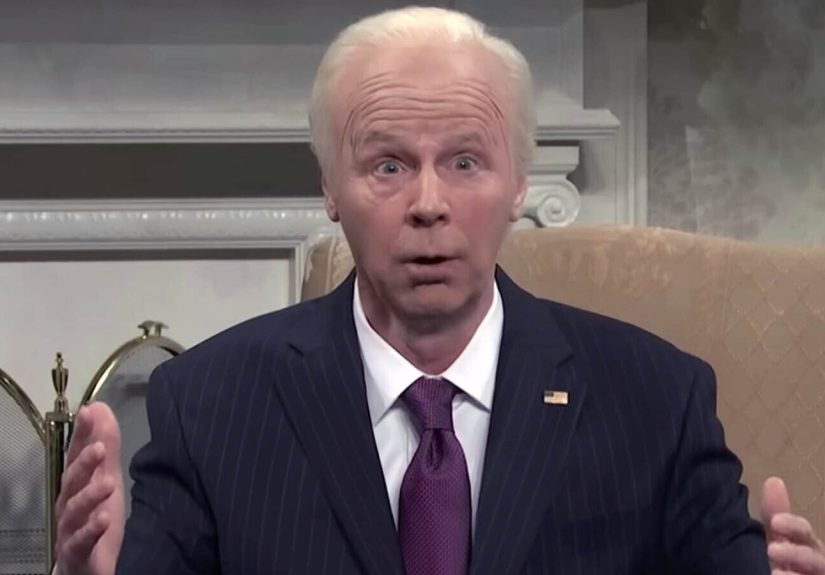
Part of the surprise came from timing. Carvey was not some distant alum who had been away forever. He had already returned during Season 50, popping up as Joe Biden in the season premiere and later reviving the Church Lady in a December cold open. That recent visibility made it feel even more likely that he would be part of the giant anniversary show. He was back in the building, back in the rhythm, back in the public imagination.
So viewers naturally assumed he would appear during the biggest nostalgia event of the season. That assumption was not irrational. It was almost common sense. When a beloved veteran has already re-entered the SNL orbit, fans expect him to stay in the picture for the grand finale. Instead, his absence created one of the special’s strangest empty spaces.
His characters are anniversary-special gold
An anniversary show thrives on instantly recognizable characters and voices. Dana Carvey practically industrialized that concept. The Church Lady alone could have walked into the special, judged everyone in the room, and left with one of the night’s biggest laughs. Garth from Wayne’s World would have triggered a standing ovation before the first “Schwing!” even had time to stretch its legs. And if producers wanted political nostalgia, Carvey’s George H.W. Bush remains one of the gold standards of presidential parody on the show.
That is why his absence felt larger than a missing seat in the crowd. Fans were not just missing Dana Carvey the person. They were missing several comic institutions at once.
Was There Any Drama Behind It?
Not according to the credible reporting that emerged afterward. The evidence points to illness, not tension. In celebrity culture, people often assume there must be a secret second story behind every visible absence. Sometimes that instinct is right. Other times, the most boring explanation is also the true one. This looks like one of those times.
And honestly, that is refreshing. Not every entertainment mystery needs to hatch into a prestige-series scandal. Sometimes the truth is not “backstage warfare.” Sometimes the truth is “Please do not make me get on a plane; I am barely vertical.”
That also fits with how Carvey has continued to engage with SNL in recent years. His return appearances, his podcast conversations about the show, and his general willingness to revisit his history with it all suggest a performer who remains connected to the legacy rather than detached from it. Nothing about the public record around SNL50 suggests a dramatic split. Everything suggests bad timing and bad flu.
The Lost Gift: A Planned Wayne’s World Sketch
If you needed one detail to turn Carvey’s absence from mildly disappointing into genuinely tragic for comedy fans, here it is: he later said that he and Mike Myers were supposed to perform a Wayne’s World sketch for the special.
Yes. That Wayne’s World. One of the most beloved sketch franchises in SNL history. One of the few sketch concepts that exploded into movies, catchphrases, and a permanent spot in pop-culture memory. And apparently, it was on the table for SNL50.
That revelation instantly reframed Carvey’s absence. This was not just a matter of “it would have been nice to see him.” This was a case of a potentially major nostalgia centerpiece disappearing before airtime. For viewers who already felt the special was missing one obvious ingredient, the idea of a lost Wayne’s World segment only deepened that feeling.
You can almost picture it, which is part of the torture. Wayne and Garth at older ages, still weirdly enthusiastic, still operating at that perfect frequency between clueless and iconic, still acting like basement cable access somehow outranks network television. It would have fit the night beautifully. Instead, it became one of the event’s most tantalizing almost-happened stories.
Why Carvey Still Matters to the SNL Machine
He represents an era when precision and silliness worked together
One reason Dana Carvey remains so important to SNL is that he embodied a particularly powerful combination: technical skill and comic nonsense. He could do pinpoint impressions, but he never felt trapped by accuracy. He used detail as a launchpad for something funnier, stranger, and more alive. That is why so many of his performances still hold up. They are not wax-museum imitations. They are comic interpretations with voltage.
The Church Lady is a great example. The character is broad, theatrical, and ridiculous, but the rhythm is exact. Every purse of the lips, every sanctimonious pause, every “Well, isn’t that special?” lands because Carvey knows exactly how to shape it. He turns control into chaos, which is harder than it looks.
He helped define what a utility superstar looks like
Every strong SNL era needs a few performers who can do everything. Dana Carvey was one of those people. He could anchor a recurring character, save a cold open, play weird supporting roles, or hijack a sketch with a single perfectly calibrated choice. That kind of range is rare. That kind of range becomes legendary.
It is also exactly the kind of talent anniversary specials rely on. These shows move fast, call back decades of material, and depend on performers who can drop into a bit and make the room instantly feel familiar. Carvey is built for that format. His absence therefore did not just remove one performer. It removed a very useful piece of comedy architecture.
His Season 50 return reminded people what he can still do
Recent audiences did not have to rely only on old clips to remember why Carvey matters. His Season 50 appearances reminded viewers that he still has the snap, the timing, and the vocal elasticity that made him essential in the first place. His Joe Biden impression arrived with a veteran’s confidence, and the return of the Church Lady felt less like a dusty museum piece and more like an old assassin coming out of retirement for one more mission.
That context made SNL50 feel like the perfect place for one more signature moment. And because he was sidelined, that moment never came.
How SNL50 Worked Without Him
To be fair, the anniversary special was still enormous. It had the size, scale, and celebrity density of an event that knew exactly how big it was. The show drew huge viewership, packed the room with stars, and delivered the kind of sprawling, self-aware celebration that only SNL could pull off. This was not some wounded production limping to the finish line. It was a major television event.
But successful specials can still have missing pieces. That is the trick of a show built on memory: the audience is always comparing what happened with what could have happened. Dana Carvey sat firmly in that second category. The special had plenty of laughs, but it lacked one of its most natural nostalgia detonators.
No Church Lady. No Garth. No presidential callback from one of the show’s best political impressionists. No Wayne’s World reunion. For a program designed to celebrate 50 years of shared comic memory, those absences mattered. Not enough to ruin the night, but enough to leave a noticeable outline.
The Fan Experience: What Watching SNL50 Without Dana Carvey Felt Like
For many viewers, watching SNL50 without Dana Carvey was a little like going to a giant family reunion and realizing halfway through dinner that one of the loudest, funniest relatives never made it. The event still happens. The food is still on the table. Stories are still being told. But there is a tiny mental interruption every now and then, a recurring thought that says, “This is great, but something is missing.”
That is especially true with a performer like Carvey because he is tied to such immediate audience recognition. You do not need a title card to understand what he means to the show. The second someone says “Dana Carvey,” your brain starts flipping through a highlight reel: the Church Lady, Garth, George H.W. Bush, restless facial expressions, hyper-specific vocal choices, and the general feeling that he can turn a sketch sideways with one good idea. He is one of those performers whose absence is strangely visible, even when nobody onstage says his name.
There is also a uniquely SNL kind of expectation involved. Anniversary specials train audiences to think in entrances. Every few minutes, viewers start predicting who might walk in next. That expectation becomes part of the fun. A famous music cue hits, a set appears, a familiar costume enters frame, and the audience gets the dopamine rush of recognition. Carvey is exactly the kind of performer people expect to see pop out of nowhere and send the room into happy chaos. When that pop never comes, the absence lands harder.
And then there is the emotional side of nostalgia. SNL50 was not just another episode. It was a giant tribute to the weird endurance of a show that has somehow managed to keep reinventing itself for decades while carrying its own history around like a costume trunk. Seeing Carvey there would have connected several eras at once. Older fans would have gotten a direct hit of memory. Younger viewers who knew him mainly through clips or recent cameos would have seen why he remains such a revered name. He could have served as a bridge, and anniversary specials love bridges.
What made the experience even stranger was knowing he had already re-entered the show’s orbit during Season 50. That gave fans reason to expect not just a cameo, but a meaningful one. He was not being imagined into the special by pure wishful thinking. He had been right there, recently, doing what he does. So the empty spot felt less theoretical and more like a real-time near miss.
In that sense, Carvey’s absence became part of the viewing experience itself. It gave fans something to discuss, debate, and imagine around the edges of the special. Oddly enough, that says a lot about his place in SNL history. Even by not being there, he became one of the night’s talking points. Only a major figure can create that kind of offstage presence. That is the Dana Carvey effect: even absence arrives with timing.
Final Verdict
So, where in the world was Dana Carvey for SNL50? Not in Studio 8H, and not because of some juicy behind-the-scenes blowup. He missed the show because he had a bad flu, felt too weak to travel, and had to sit out one of the biggest SNL celebrations ever.
That is the real story. But the bigger takeaway is why people cared so much in the first place. Carvey’s absence mattered because he still matters. He remains one of the essential comic architects of Saturday Night Live, a performer whose characters and impressions are woven into the show’s DNA. When he is not in the room, fans can feel it.
And the fact that a Wayne’s World sketch was reportedly planned only adds one final layer of bittersweet comedy heartbreak. SNL50 was still a massive event. Still funny. Still historic. Still packed with legends. But for a lot of viewers, it also came with one lingering thought: man, Dana Carvey really would have killed.