Table of Contents >> Show >> Hide
- What Is Tianducheng, China’s Famous Fake Paris?
- Why the Side-By-Side Pictures Went Viral
- Copycat Architecture or Clever Urban Branding?
- The Eiffel Tower Replica: Symbol, Shortcut, and Skyline Trick
- The Ghost Town Reputation: Fair or Outdated?
- Why People Find Fake Paris So Funny
- Is It Really a “Rip Off”?
- What the Photos Reveal About Paris Itself
- Why Tianducheng Still Matters
- Experiences and Reflections: Visiting a Place That Looks Like Paris but Isn’t
- Conclusion
- SEO Tags
Note: This article uses the phrase “Chinese rip offs” because it appears in the requested title, but the story itself looks at architecture, real estate branding, photography, and cultural imitation without stereotyping Chinese people or Chinese culture.
Imagine booking a dreamy stroll through Paris, expecting croissants, café chairs, stone balconies, and the Eiffel Tower winking at you from the skyline. Now imagine discovering that the “Paris” in question is not in France at all, but on the outskirts of Hangzhou, China. No passport stamp from Charles de Gaulle. No Seine. No waiter pretending not to understand your high school French. Just an entire neighborhood designed to make your brain whisper, “Wait… haven’t I seen this movie before?”
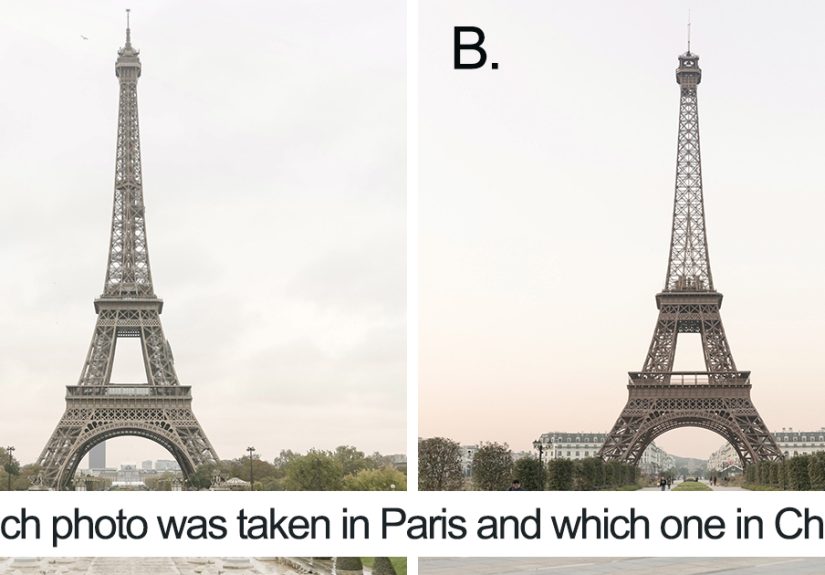
That is the strange charm of Tianducheng, often nicknamed the “Paris of the East,” a real residential development famous for its scaled Eiffel Tower replica, French-style facades, neoclassical statues, wide boulevards, manicured gardens, and architectural references that look like they escaped from a Paris postcard and started a new life in Zhejiang province. The place became especially famous when French photographer François Prost created “Paris Syndrome,” a photo project comparing real Paris scenes with eerily similar Chinese versions. The side-by-side effect is funny, unsettling, and fascinating all at oncelike seeing your favorite landmark wearing a fake mustache and insisting it is totally original.
What Is Tianducheng, China’s Famous Fake Paris?
Tianducheng is not a movie set, a temporary theme park, or a prank created by architecture students after too much espresso. It is a housing estate near Hangzhou, developed as a luxury residential area with strong Parisian inspiration. The development began around 2007, during a period when themed towns and replica architecture were becoming a visible part of China’s rapid urban expansion.
Its most recognizable feature is a 108-meter, or 354-foot, replica of the Eiffel Tower. That makes it roughly one-third the height of the real Eiffel Tower in Paris, which now stands 1,083 feet with its antenna. Around the tower, visitors can find Paris-inspired apartment blocks, formal gardens, fountains, statues, broad avenues, and public spaces designed to evoke a European atmosphere. There are references to the Champs-Élysées, Versailles-style landscaping, the Arc de Triomphe, and the elegant geometry associated with Haussmann-era Paris.
The result is not a perfect copy, and that is part of what makes it so memorable. Tianducheng looks like Paris after being translated through real estate brochures, wedding photography, and suburban planning. It has the ingredients of Paris, but not the exact recipe. The buildings may suggest France, but the roads, apartment towers, local shops, laundry, scooters, and daily routines make it unmistakably its own place.
Why the Side-By-Side Pictures Went Viral
The reason Tianducheng captured global attention is simple: comparison photos are irresistible. When a photographer places a Paris street beside a nearly matching street in China, the viewer instantly becomes a detective. Is that France or Hangzhou? Is that the real Eiffel Tower or the replica? Why does this balcony look like it ordered a French accent online?
François Prost’s “Paris Syndrome” series leaned into that visual confusion. Instead of mocking the place with lazy jokes, the project made viewers pause. At first, the images feel like a game of “spot the difference.” Then they become something deeper: a study of how cities borrow identity, how architecture sells dreams, and how imitation can become its own cultural artifact.
The 40 side-by-side pictures associated with the topic show why Tianducheng fascinates people. Some pairings are almost comically close: Eiffel Tower versus Eiffel Tower, formal gardens versus formal gardens, statues versus statues, stone facades versus stone facades. Other comparisons reveal the seams. The Paris original carries centuries of history, traffic, tourism, politics, art, grime, romance, and daily chaos. The Chinese version carries planned nostalgia, real estate ambition, and the unusual calm of a city built to resemble somewhere else.
Copycat Architecture or Clever Urban Branding?
It is easy to call Tianducheng a “knockoff,” laugh, and move on. But replica architecture in China is more complicated than a giant “copy-paste” button. Scholars and architecture writers often use the term “duplitecture” to describe Chinese developments that reproduce or heavily imitate famous Western landmarks, towns, and styles. These projects have included not only Paris-inspired areas, but also English villages, Alpine towns, Venetian canals, and American-style neighborhoods.
Why build a mini-Paris near Hangzhou? Part of the answer is marketing. Paris is one of the world’s strongest place-brands. It suggests luxury, romance, fashion, art, elegance, and old-world status. For a developer selling homes, those associations are useful. A buyer may not be purchasing France, exactly, but they are buying into the feeling of Franceminus the long-haul flight and, presumably, the terrifying cost of a tiny Paris apartment with “charming” plumbing.
Another part of the answer is aspiration. In many fast-growing cities, architecture can become a shortcut for identity. A themed community tells buyers, “This is not just housing. This is a lifestyle.” Tianducheng’s French styling was not merely decorative; it was part of the sales pitch. The development promised a version of European sophistication transplanted into a Chinese suburb.
The Eiffel Tower Replica: Symbol, Shortcut, and Skyline Trick
The Eiffel Tower is one of the most recognizable structures on Earth. The original was built for the 1889 Exposition Universelle and became a symbol of Paris, even though it was once criticized by some artists and writers. Today, it is almost impossible to separate Paris from that iron lattice silhouette. Put a tower shaped like that anywhere, and the human brain immediately yells, “Paris!”
That is why Tianducheng’s Eiffel Tower replica works so efficiently. It does not need to explain itself. It instantly gives the development a recognizable identity. From a distance, the tower offers the same visual shorthand as the original: romance, elegance, sightseeing, and “someone please take my picture right here.”
But the replica also creates an odd emotional split. It is impressive because it is large and detailed enough to dominate the local skyline. It is also strange because it lacks the history that gives the original its weight. Paris’s Eiffel Tower has survived world fairs, wars, protests, tourism waves, repaintings, and more than a century of cultural meaning. Tianducheng’s tower has a shorter story: it was built as a centerpiece for a planned community. That does not make it worthless. It just makes it different.
The Ghost Town Reputation: Fair or Outdated?
For years, Tianducheng was described in international media as a “ghost town.” Early reports noted that the development was designed to house thousands of residents but seemed quiet, under-occupied, and isolated. The image of an empty Paris replica rising from farmland was too surreal for editors to resist. It sounded like a dystopian fairy tale: once upon a time, someone built Paris, but nobody came.
However, the “ghost town” label can be misleading if treated as permanent truth. Like many large real estate projects, Tianducheng evolved over time. Reports in later years described population growth, more residents, and signs of ordinary community life. This is an important reminder: cities are not frozen in the moment a photographer visits them. A neighborhood that feels empty in the morning may be lively at night. A development that looks failed in its early years may become more active once transport improves and surrounding areas grow.
The better question is not simply whether Tianducheng failed or succeeded. The better question is what it reveals about the risks of building identity before building community. Architecture can create atmosphere, but people create cities. A replica tower may attract cameras, but daily life depends on schools, shops, transit, jobs, parks, and neighbors who actually want to be there.
Why People Find Fake Paris So Funny
Part of the humor comes from scale. A single Eiffel Tower replica would already be amusing. A whole Paris-inspired neighborhood takes the joke into cinematic territory. It is like ordering a French dessert and receiving the entire bakery, staff included, but slightly rearranged.
There is also humor in the seriousness of it all. Tianducheng was not built as a tiny novelty attraction. It was created as a real place for real residents. That makes the imitation more ambitious and, frankly, more bizarre. A souvenir Eiffel Tower on your desk is cute. A residential district with a giant one-third-scale tower outside your window is a lifestyle choice.
The side-by-side photos sharpen the comedy. They show how carefully certain visual cues were reproduced: the symmetry, the statues, the balconies, the tower, the formal landscaping. Then a small detail breaks the illusion. A different street sign. A quiet road. A scooter. A modern apartment block. A patch of farmland. Suddenly the viewer realizes the copy is not hiding its difference; it is practically waving from behind the curtain.
Is It Really a “Rip Off”?
The word “rip off” is catchy, but it can flatten a more interesting story. Tianducheng is clearly derivative. It borrows heavily from Paris, and nobody looking at that tower would think the inspiration came from a mysterious dream about triangles. But architecture has always borrowed. Roman arches, Greek columns, Gothic revival churches, Venetian hotels, Las Vegas landmarks, theme parks, shopping malls, and suburban developments have all reused visual languages from elsewhere.
The difference is that Tianducheng’s borrowing is unusually literal and unusually large. It is not a building with French influence. It is an urban environment built around the fantasy of France. That is why it can feel like imitation pushed to the extreme.
Still, calling it only a rip off misses the cultural and economic context. Tianducheng reflects China’s rapid urbanization, the rise of aspirational middle-class housing, the global power of European luxury imagery, and the way cities compete through spectacle. It is both a copy and a creation. It is fake Paris, yes, but it is also real Tianducheng.
What the Photos Reveal About Paris Itself
Oddly enough, Tianducheng helps us see Paris more clearly. When Parisian details are copied and transplanted, we notice which elements make Paris feel like Paris. It is not only the Eiffel Tower. It is the rhythm of facades, the balance of streets, the formal gardens, the monuments placed at the end of long perspectives, the pale stone, the ornamental railings, and the theatrical confidence of public space.
But the copy also shows what cannot be easily reproduced. You can copy a tower, but not the sound of a Paris street at rush hour. You can copy a boulevard, but not the layers of politics, literature, fashion, protest, memory, and ordinary living that shaped it. You can build a French-style fountain, but you cannot instantly manufacture centuries of meaning. History is stubborn that way. It refuses to be installed like a kitchen appliance.
Why Tianducheng Still Matters
Tianducheng matters because it sits at the intersection of travel, photography, architecture, globalization, and internet culture. It asks questions that are bigger than one fake Eiffel Tower. What makes a place authentic? Can imitation become meaningful over time? When does homage become copying? Does a city need original architecture to have a real identity?
For some viewers, Tianducheng is ridiculous. For others, it is beautiful in a strange way. For residents, it may simply be home. That last point is easy to forget. Internet audiences tend to treat unusual places like memes, but people live among these buildings, walk under this tower, buy groceries nearby, take wedding photos, raise children, and complain about parking like humans everywhere.
The most interesting version of Tianducheng is not the empty “fake Paris” of viral headlines. It is the living neighborhood that exists after the joke fades. Once the camera leaves, the replica becomes background scenery for ordinary life. That may be the strangest twist of all: a place created to imitate one of the world’s most iconic cities eventually becomes normal to the people who live there.
Experiences and Reflections: Visiting a Place That Looks Like Paris but Isn’t
Walking through a Paris-inspired town in China would probably feel like stepping into a travel dream with the subtitles slightly out of sync. At first, your eyes would chase the familiar signs: the tower, the formal gardens, the European facades, the dramatic statues, the broad streets designed for elegance rather than pure efficiency. You might laugh, because the comparison is unavoidable. Then, after a few minutes, the laughter would turn into curiosity.
The experience would likely be less about “finding Paris” and more about noticing what happens when a famous city becomes an idea that can be exported. Paris, in this setting, is not a specific place with specific weather, traffic, neighborhoods, and history. It is a mood board. It is romance, symmetry, luxury, and photo opportunities. Tianducheng turns those associations into buildings. That makes it feel both artificial and oddly sincere.
A visitor might start by taking the obvious photo under the Eiffel Tower replica. Everyone would. Let’s be honest: even the most serious architecture critic would eventually crack and pose with one hand pretending to hold the tower from the top. After that first joke, though, the details would become more interesting. The streets might look European, but the daily life around them would be Chinese. People might ride scooters past French-style balconies. Apartment laundry might hang near ornamental facades. Local families might use the grand scenery as a casual evening backdrop. Wedding photographers might treat the entire district as an open-air studio.
That contrast is where the place becomes memorable. The copy does not erase local life. Instead, local life interrupts the copy, softens it, and makes it less like a replica and more like a hybrid. The result may not satisfy purists, but it creates something more human than a perfect imitation. A flawless fake Paris would be creepy. A fake Paris with snack shops, kids, traffic, residents, and ordinary routines becomes a real neighborhood wearing a very dramatic costume.
For travelers, Tianducheng also offers a useful lesson about expectations. Many people visit famous places expecting them to match the image in their head. Real Paris can disappoint tourists who expect constant romance and instead encounter crowds, noise, expensive coffee, and the occasional trash bag with main-character energy. Fake Paris flips the disappointment in the opposite direction. You know it is not the real thing, yet parts of it may look surprisingly convincing. The mind keeps switching between admiration and disbelief.
The best way to experience a place like Tianducheng would be with humor and patience. It is easy to arrive, take photos, call it weird, and leave. But spending more time there would reveal the bigger story: how global images travel, how cities sell fantasy, how residents adapt to themed environments, and how copies can take on lives of their own. Tianducheng may have started as an imitation of Paris, but the more people live in it, photograph it, mock it, defend it, and reinterpret it, the more it becomes something no original can fully claim.
In the end, the side-by-side pictures are not just evidence that one city copied another. They are proof that architecture is a language people keep translating, sometimes beautifully, sometimes awkwardly, and sometimes with a giant metal tower that makes everyone stop scrolling.
Conclusion
Tianducheng, China’s famous Paris-inspired development, is more than a punchline about copycat architecture. It is a surreal, ambitious, and strangely thoughtful example of how cities borrow symbols to sell dreams. Its Eiffel Tower replica, Paris-style streets, and Versailles-inspired spaces make it easy to laugh, but the story becomes richer when viewed through real estate, photography, globalization, and everyday life.
The 40 side-by-side pictures comparing Paris and its Chinese lookalike work because they create instant visual tension. They show what can be copied and what cannot. A skyline can be borrowed. A fountain can be rebuilt. A boulevard can be imitated. But the soul of a city takes time, memory, conflict, community, and countless ordinary days. Tianducheng may look like Paris from the right angle, but its real identity is found in the gap between the copy and the life growing inside it.