Table of Contents >> Show >> Hide
- The Origin Story: A Glamour Magazine Legend That Refuses to Die (In a Good Way)
- So What Is Engagement Chicken, Exactly?
- Why This Dish Feels Like a Proposal Waiting to Happen
- Does Engagement Chicken Work? Let’s Define “Work.”
- Engagement Chicken’s Messy Cousin: “Marry Me Chicken” and the Internet’s Romance-Flavored Recipes
- The Double Meaning: Engagement Chicken as a Social Media Strategy (Yes, Really)
- If You Want It to “Work,” Here’s the Non-Chicken Part That Actually Matters
- Common Mistakes That Kill the Mood (and the Chicken)
- So… Should You Make Engagement Chicken?
- Real-World “Engagement Chicken” Experiences (The Kind You Can Actually Expect)
- SEO Tags
If you’ve spent any time on food TikTok, recipe blogs, or the part of the internet where people name dinner like it’s a rom-com, you’ve probably seen it: Engagement Chicken. A roast chicken with a legend attached so persistent it deserves its own IMDb page. The promise is deliciously ridiculous: cook this bird, serve it to your partner, andpoofromance escalates into a ring.
Is it real? Yes, in the sense that it is absolutely a real chicken. Is it real, in the sense that poultry has magical proposal powers? Let’s just say: if roast chicken could guarantee an engagement, the grocery-store rotisserie would come with a complimentary diamond sizing kit. Still, the story has staying power for a reasonand the “why” is more interesting than the myth.
The Origin Story: A Glamour Magazine Legend That Refuses to Die (In a Good Way)
Engagement Chicken traces back to Glamour lore: a roast chicken recipe circulated among staffers, followed by a suspiciously tidy streak of proposals. The recipe eventually got published and the nickname stuck. Over the years, readers wrote in with their own “it worked!” stories, and the legend went from office anecdote to pop-culture shorthand for “a meal so good it feels like commitment.”
Even the original story tends to include an important wink: the proposal probably happened because the relationship was already heading there, not because lemon juice is Cupid’s cologne. But heyhumans love a neat narrative. Especially when it smells like roasting chicken and optimism.
So What Is Engagement Chicken, Exactly?
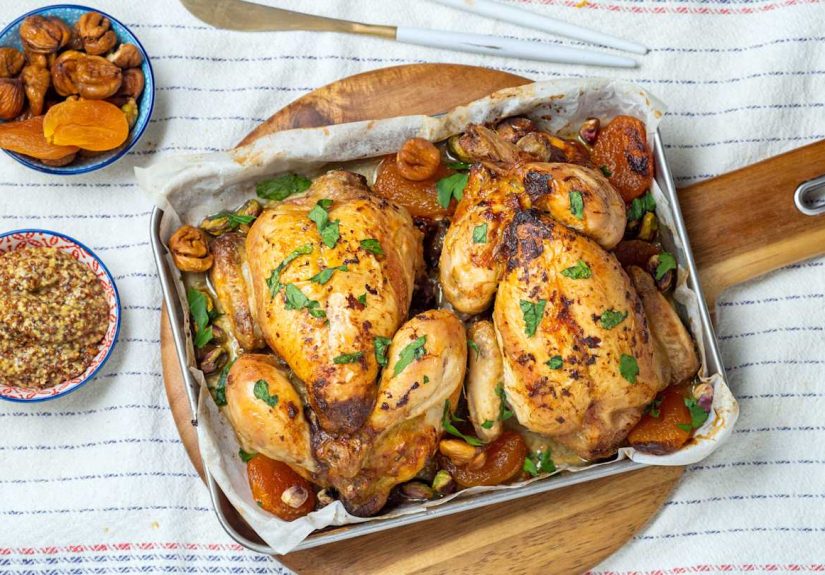
In its classic form, Engagement Chicken is a lemon-and-herb roast chickensimple, fragrant, and very “I have my life together” in the most flattering way. The signature moves usually look like this:
- Whole chicken roasted until the skin is deeply golden
- Lemon (often lots of it): juice over the bird and/or whole lemons tucked inside
- Salt, pepper, and aromatics (herbs, garlic, oniondepending on the version)
- Pan juices spooned over sliced chicken like a glossy, savory love letter
It’s not fussy. It’s not trendy foam-on-a-rock. It’s a classic roast chicken with enough brightness to feel special and enough comfort to feel safe. Which, honestly, is a pretty solid description of a good relationship too.
The Ina Garten Effect: “Engagement Roast Chicken” Goes Mainstream
The legend leveled up when famous cooks embraced the conceptmost notably Ina Garten, whose “Engagement Roast Chicken” helped turn the idea into a modern dinner-party staple. That version leans into onions, lemon, garlic, and a pan sauce built from wine and stockaka “I made you dinner” plus “I also made a sauce because I respect joy.”
Why This Dish Feels Like a Proposal Waiting to Happen
Engagement Chicken isn’t special because it’s complicated. It’s special because it signals something people crave in serious relationships: care, effort, and a little ceremony.
1) Effort You Can Taste (Without Stress You Can Smell)
Roast chicken hits a sweet spot: it feels like a “real” mealsomething you’d serve to someone importantbut it doesn’t scream, “I haven’t blinked since 9 a.m. and my kitchen is now a crime scene.” It’s approachable competence, and competence is attractive.
2) The Comfort-Food Halo Effect
Smell is memory’s best friend. Roasting chicken perfumes the whole house in a way that quietly announces: “Something good is happening here.” That sensory warmth can nudge people into a more affectionate, open, generous mood not because chicken is magic, but because comfort is persuasive.
3) Ritual Without Pressure
A home-cooked “special dinner” is a ritual, and rituals create connection. The trick is that this ritual can be playful. You’re not forcing a “Where is this going?” interrogation under fluorescent restaurant lighting. You’re sharing a table, laughing, eating, and letting the moment do what moments do.
Does Engagement Chicken Work? Let’s Define “Work.”
If “work” means: guarantee a proposal within 30 days, no. Food is powerful, but it is not a legally binding contract. If it were, my freezer burritos would have gotten me a mortgage approval.
If “work” means: create a romantic, connective evening that makes commitment feel more appealing, then yessometimes. Not because the recipe has supernatural engagement properties, but because it creates the conditions where people think, “I like this life with you.”
The Real Mechanism: Timing + Feeling + Meaning
Proposals tend to happen when a relationship already has momentum: shared values, future planning, emotional safety, and practical readiness. A great dinner can act like a spotlight. It doesn’t build the stage, but it can make someone notice the stage has been there all along.
Why “It Worked!” Stories Happen (Without the Magic)
- Confirmation bias: When something big happens after the chicken, your brain connects the dots with a Sharpie.
- Peak moments: People remember emotional highs. A cozy, delicious night at home can become a “peak.”
- Reciprocity: Feeling cared for makes many people want to give backemotionally, practically, romantically.
- Shared identity: Cooking together (or being cooked for) can reinforce a “we” story.
Notice what’s missing from that list: sorcery.
Engagement Chicken’s Messy Cousin: “Marry Me Chicken” and the Internet’s Romance-Flavored Recipes
Engagement Chicken didn’t stay lonely for long. The internet created a whole genre of dishes with commitment-coded names: “Marry Me Chicken,” “The One-Pan Proposal Pasta,” and whatever is currently trending with “you’ll get the ring” in the caption.
“Marry Me Chicken,” popularized by food outlets and turbocharged by social media, leans creamy, sun-dried tomato, and skillet-dramain a good way. It’s the kind of dish that makes someone say, “I love you,” with their mouth full. Not formal, but spiritually accurate.
Food writers have also pointed out the cultural side-eye of it all: why is “marriage” treated as the highest compliment a recipe can receive? (Fair question.) But as internet shorthand, the names work because they compress a whole vibe into two words: “This is special. This feels like commitment.”
The Double Meaning: Engagement Chicken as a Social Media Strategy (Yes, Really)
Here’s where it gets funny: “engagement” also means likes, comments, shares. And chicken contentespecially romantic chicken content tends to perform well online because it’s warm, relatable, and easy to react to.
But platforms have also gotten stricter about obvious “engagement bait” (posts that beg for likes or comments just to juice reach). If you’re posting your Engagement Chicken for content, the best play is to make it genuinely useful or entertaining: show your technique, your mistakes, your family reactions, your side-dish debateanything real.
How to Get Social Engagement Without Getting “Engagement-Bait” Energy
- Tell a story: “I made this because…” beats “COMMENT YES FOR THE RECIPE” every time.
- Teach one thing: How to get crispy skin. How to salt properly. How to rest the bird.
- Ask a real question: “What’s your go-to roast chicken side?” is different from “LIKE if you breathe oxygen.”
- Show receipts: A carved plate, pan juices, and a happy table are the best call-to-action.
If You Want It to “Work,” Here’s the Non-Chicken Part That Actually Matters
If the goal is to make the night feel like a step toward commitment, treat the meal like part of a bigger message: “I want to build a life that feels good with you in it.”
Make the evening feel intentional
- Choose the right day: Not after a fight. Not during a work crisis. Not when someone’s battling the flu.
- Reduce chaos: Tidy-ish space, phones down, music on. “Cozy” beats “production.”
- Add a tiny personal touch: Their favorite dessert. A candle. A playlist. A side dish from a meaningful trip.
Cook together (if that’s your vibe)
Cooking together can turn dinner into a shared project: you’re collaborating, negotiating, laughing, tasting, adjusting. That’s relationship practice, just with more garlic. If one of you hates the kitchen, no problemmake it a “hosted” experience instead, and let the care be the headline.
Talk like two adults who like each other
If you want clarity about the future, you don’t need a chicken spellyou need a conversation. A great dinner can soften the entry point: “I love nights like this. I’ve been thinking about what we want long-term…” is a lot more effective than staring at a ring size chart like it’s a PowerPoint slide.
Common Mistakes That Kill the Mood (and the Chicken)
1) Expecting the chicken to do your emotional labor
Engagement Chicken is a meal, not a substitute for aligned values, mutual readiness, and honest communication. If the relationship is shaky, a roast bird won’t patch the foundationno matter how crispy the skin gets.
2) Overcooking it
Dry chicken is the culinary version of “we should talk.” Use a thermometer. Let it rest. Juicy meat improves all outcomes, including the odds of someone saying, “Wow.”
3) Turning it into a test
“If you don’t propose after this, I’m leaving” is not a romantic garnish. If you’re feeling anxious about commitment, address the anxiety directly. The chicken can be dinner. Your feelings deserve daylight.
So… Should You Make Engagement Chicken?
Yesbecause it’s a genuinely great roast chicken concept that feels special without being complicated. Make it because you want a cozy, delicious night. If a proposal happens, amazing. If it doesn’t, you still get roast chicken and pan juices, which is not exactly a tragedy.
The most realistic outcome is also the best one: you create a moment that makes your relationship feel good, secure, and worth investing in. That’s the kind of “work” that actually matters.
Real-World “Engagement Chicken” Experiences (The Kind You Can Actually Expect)
The internet is full of Engagement Chicken testimonials, and they tend to fall into a few recognizable categories. Here’s what people commonly report when they try itpulled from editor anecdotes, reader letters, comment sections, and the broader “romance recipe” universe.
1) “We were already headed there… and this night felt like the moment.”
This is the most believable (and most common) version of “it worked.” Couples who are already serious often describe the dinner as a snapshot of the life they want: a calm night at home, something comforting in the oven, laughter over a slightly chaotic carving job, and that soft post-dinner feeling where everything seems a little clearer. When someone proposes soon after, the chicken becomes a symbol: not the cause, but the memory anchor. It’s easier to say, “This was the night,” than “We had months of aligned conversations about the future.”
2) “The chicken was incredible… but the ring did not materialize out of thin air.”
Plenty of people openly admit they made a “proposal chicken” recipe and nothing dramatic happenedexcept that dinner was fantastic. That’s not failure; that’s just reality. A great meal can raise the emotional temperature, but it can’t override someone’s timeline, financial readiness, or personal fears. The good news: the best versions of these stories end with, “We talked about it,” not, “I guess I’ll date the chicken now.”
3) “Something went wrong… and somehow it became even more romantic.”
One of the funniest patterns in Engagement Chicken lore is the “disaster twist”: someone drops the chicken, overbrowns the skin, forgets to buy the herbs, or produces a roast that looks like it survived a small meteor. And yet the evening turns sweet because it’s human. When a partner responds with kindnesslaughing, helping, improvising sides, making comfort the prioritythat moment can be more intimate than a perfect plate. In other words: the romance isn’t the chicken. It’s how you treat each other when the chicken tries to ruin your plans.
4) “We made it together, and it felt like teamwork.”
Couples who cook together often describe the best part as the collaboration: one person seasons, the other preps sides, someone plays music, someone inevitably steals crispy skin “for quality control.” You end up practicing the micro-skills of long-term partnershipsharing tasks, staying patient, problem-solvingwhile building a shared win. Even if the relationship isn’t at proposal stage, the night can still feel like progress because it reinforces “we’re good together.”
5) “The story mattered as much as the food.”
A surprising number of people report that simply naming the dish “Engagement Chicken” makes the evening more playful and memorable. It gives you an easy, low-pressure way to flirt with the idea of commitment without making it a confrontation. You can joke, “Careful, it’s engagement chicken,” and see how your partner responds. Sometimes that’s enough to open a real conversation later: “Okay, jokes asidehow do you feel about our timeline?” The chicken becomes a gentle door, not a trap.
Bottom line: if you make Engagement Chicken, expect a delicious roast chicken and a warm night. If the relationship is already ready, the dinner can feel like a meaningful moment. If it isn’t, you still get the best consolation prize in the history of myths: leftovers.