Table of Contents >> Show >> Hide
- What “scanning your body” typically looks like
- What it can mean: 7 common interpretations (with real-world clues)
- 1) He’s attracted to you (and his eyes got curious before his manners did)
- 2) He’s clocking your outfit, style, or “whole vibe”
- 3) He’s comparing (social comparison is real, and sometimes awkward)
- 4) He’s trying to remember where he knows you from
- 5) He’s communicating dominance or testing boundaries
- 6) It’s objectifying (he’s focused on parts, not personhood)
- 7) He’s anxious, socially clumsy, or neurodivergent (and his eyes don’t know what to do)
- The “science-y” explanation (without the lab coat)
- Green flags vs. red flags
- What to do in the moment (options from polite to firm)
- If it’s a date or someone you might like: how to talk about it without making it weird
- When body scanning crosses the line
- Real-life experiences people relate to
- Conclusion
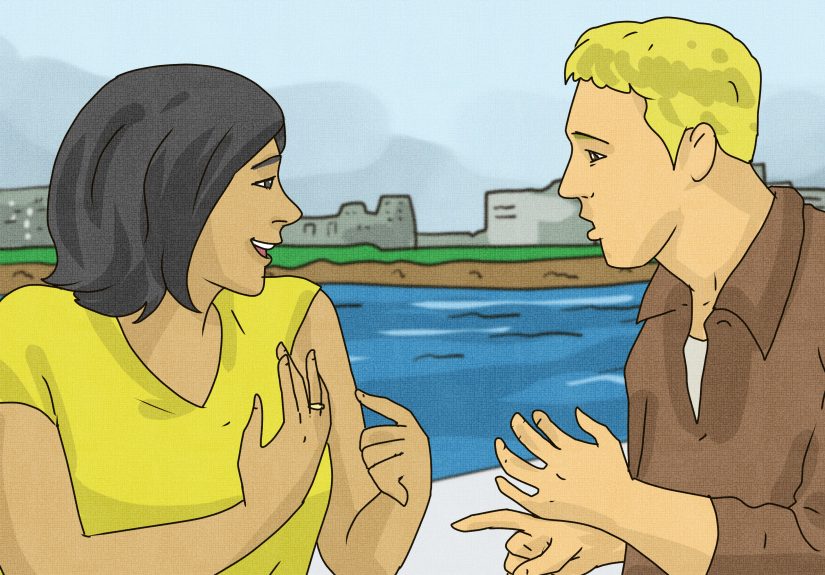
You know the move: you’re mid-conversation (or mid-existing), and his eyes do a quick elevator rideface, shoulders, torso, legsthen back up like he’s reviewing a résumé you didn’t submit. Suddenly you’re wondering: Was that flirting? Judging? A weird human software update?
“Scanning” (also called “looking you up and down” or “checking you out”) is a real, common nonverbal behavior. The tricky part is that it can mean a bunch of different things depending on context, timing, facial expression, and what happens right after the scan. Let’s decode it without turning your love life into a forensic investigation.
What “scanning your body” typically looks like
A body scan is usually a noticeable gaze shift that travels beyond your faceoften down to your chest, waist, hips, legs, shoes, then back up. Sometimes it’s fast (a “blink and you missed it” sweep). Sometimes it’s slow (the kind that makes you want to invoice him for the audition).
The key detail: scanning isn’t just “looking.” It’s evaluative lookingthe eyes move like they’re collecting information rather than simply making normal conversational eye contact.
What it can mean: 7 common interpretations (with real-world clues)
1) He’s attracted to you (and his eyes got curious before his manners did)
Attraction is the most common reason people “check out” someone’s body. If the scan is quick and he returns to warm, normal eye contactespecially with a genuine smile, relaxed posture, and engaged conversationthere’s a decent chance it’s simple interest.
Clues that lean “attraction”:
- It happens once or twice, not on a loop.
- He quickly resets to respectful eye contact.
- His expression is friendly (not smirky, not predatory).
- He seems nervous in a “crush” way: fidgeting, blushing, or over-laughing.
Example: You’re at a friend’s party. He scans quickly, then asks your name and actually listens to the answer. That’s not a guaranteebut it’s more “I’m into you” than “I’m appraising cattle.”
2) He’s clocking your outfit, style, or “whole vibe”
Sometimes a scan isn’t about your body so much as your presentation: shoes, bag, jewelry, logo on your shirt, or that coat that looks like it cost more than his car payment.
Clues that lean “style check”:
- The gaze lands on accessories (shoes, watch, bag) more than body parts.
- He compliments something specific: “Those boots are awesome,” not “You’re hot.”
- It happens when you first arrive, like he’s taking in the scene.
Example: He glances down, notices your band tee, and immediately says, “Waitdo you like that band too?” That’s not a body scan; that’s a merch-based conversation starter.
3) He’s comparing (social comparison is real, and sometimes awkward)
Humans constantly compareconsciously or not. A scan can be an unconscious “Where do I fit next to this person?” moment: attractiveness, confidence, status, or even “Do I look okay standing here?”
Clues that lean “comparison”:
- His face looks neutral or thoughtful, not flirtatious.
- He adjusts his clothing right after (fixes collar, checks posture).
- He scans others toonot just you.
4) He’s trying to remember where he knows you from
This one sounds random, but it happens: people scan for recognizable cuestattoos, a unique hairstyle, a uniform, a name badge, a lanyard, the “I ran a marathon” shirtanything that triggers memory.
Clues that lean “recognition search”:
- He squints slightly or tilts his head (the classic “brain buffering” face).
- His eyes linger on identifiers (badge, tattoo, jacket logo).
- He asks, “Have we met before?” within a minute.
5) He’s communicating dominance or testing boundaries
Not every scan is about attraction. Sometimes it’s power: a slow, deliberate look can be a nonverbal “I can look as long as I want.” In workplaces or social groups, that can overlap with intimidation.
Clues that lean “dominance/boundary test”:
- It’s slow and repeated, like he’s doing inventory.
- He holds eye contact afterward in a confrontational way.
- He stands too close, blocks your path, or ignores your discomfort.
- He does it more when others are watching.
Example: He scans you, smirks, then keeps talking over you. That’s not flirting; that’s a behavior pattern with bad vibes.
6) It’s objectifying (he’s focused on parts, not personhood)
Here’s the blunt version: sometimes a scan is sexual objectificationattention aimed at body parts, with little regard for you as a full human in the moment. Research on the “objectifying gaze” often describes attention shifting away from faces and toward bodies, especially when appearance is the focus.
Clues that lean “objectifying”:
- He looks at your chest/hips repeatedly and avoids your face.
- His expression is hungry, smirky, or entitled.
- He makes comments that reduce you to appearance (“Damn,” “Nice,” “You’re dangerous”).
- He keeps doing it after you show discomfort.
Attraction can be respectful. Objectification usually isn’tbecause it treats your body like the main event and your boundaries like a suggestion.
7) He’s anxious, socially clumsy, or neurodivergent (and his eyes don’t know what to do)
Some people struggle with eye contact or don’t have smooth “social gaze” habits. Their eyes dart. They look down to think. They scan a room to self-regulate. It can still feel uncomfortable, but the intent may not be sexual or judgmental.
Clues that lean “awkward, not creepy”:
- He avoids eye contact with everyone, not just you.
- He looks away while speaking, then back when listening.
- His tone is respectful; the vibe is nervous, not predatory.
The difference-maker is what happens next: does he treat you with respect, or does he escalate into comments/behavior that ignore your comfort?
The “science-y” explanation (without the lab coat)
Eye gaze is one of our strongest social signals. It can show attention, interest, intimacy, dominance, or evaluationsometimes all at once. Studies using eye-tracking have documented patterns where people look more at bodies (and less at faces) when evaluating appearance, and these patterns are linked to how “human” or competent the target is perceived to be in certain contexts.
Translation: when someone’s attention is stuck on your body, it can subtly shift how they treat youespecially if they’re already in a mindset of judging appearance. That’s why “He was just looking” can still feel gross: gaze isn’t only vision; it’s communication.
Also important: body language is probabilistic, not prophetic. A scan alone doesn’t prove intent. But repeated scanning plus disrespectful behavior? That’s not “mixed signals.” That’s a pattern.
Green flags vs. red flags
Green flags (possible interest, handled with basic human decency)
- A quick glance, then normal eye contact and engaged conversation.
- Compliments that are specific and appropriate (style, energy, smilewithout getting sexual).
- He responds well to your cues (if you step back, he gives space).
- He treats you like a person first, not a screen saver.
Red flags (the “nope playlist”)
- Slow, repeated scanningespecially focused on chest/hips/legs.
- Smirking, licking lips, or “performative” staring meant to be seen.
- Comments that sexualize you immediately or ignore context.
- He keeps doing it after you look uncomfortable or move away.
- He pairs it with boundary pushing: standing too close, touching, blocking, following.
What to do in the moment (options from polite to firm)
Your comfort matters. You don’t owe anyone “cool girl” points for tolerating behavior that makes your skin crawl. Here are practical responses you can keep in your back pocket.
If you want to stay polite (but clear)
- Redirect with eye contact: hold a steady gaze and say, “Heywhat’s up?”
- Name the vibe lightly: “You looked like you were checking somethingdid I spill something?” (This gives them a graceful exit.)
- Shift the frame: “So anyway…” and steer the conversation back to something normal.
If you want to set a firm boundary
- “Please don’t look me up and down like that.”
- “I’m not comfortable with that. Stop.”
- “Keep it respectful.”
If it feels unsafe or escalates
- Move toward other people or staff, change locations, and trust your gut.
- If you’re at work, document what happened (date/time/witnesses) and follow your reporting options.
- If you feel threatened, prioritize leaving and getting help over “winning” the interaction.
If it’s a date or someone you might like: how to talk about it without making it weird
Sometimes the person is into you and just… not great at being a civilized mammal. If you want to keep the connection but improve the behavior, try a direct, low-drama line:
- “When you look me up and down like that, I feel judged. If you’re interested, talk to medon’t scan me.”
- “Compliments are fine. Staring makes me uncomfortable.”
A decent guy will adjust quickly. A guy who argues, mocks, or doubles down is telling you something valuablefree of charge.
When body scanning crosses the line
A single glance isn’t automatically harassment. But persistent unwanted attentionespecially combined with sexual comments, intimidation, or workplace power dynamicscan cross into harassment territory. In professional settings, “unwelcome” is the key word: if it’s not wanted and it creates a hostile or uncomfortable environment, you have every right to take it seriously.
Bottom line: intent matters, but impact matters too. If it makes you uncomfortable, you’re allowed to respond like an adult who respects themselves.
Real-life experiences people relate to
Sometimes the hardest part isn’t the scanit’s the mental spiral afterward. People describe it as a sudden shift from “I’m here living my life” to “Apparently I’m being evaluated like produce.” Here are a few common scenarios and what tends to help.
Experience #1: The bar scan that felt like a spotlight
You’re waiting for your friend, checking your phone, and a guy’s eyes do the full head-to-toe sweep. Not oncetwice. You feel your shoulders tighten, like your body is trying to fold itself into invisibility. In situations like this, what many people find grounding is a simple reality check: his behavior is information about him, not a verdict about you. If you want to shut it down fast, a steady look back with a calm “Can I help you?” often flips the power dynamic. If he’s just socially clumsy, he’ll apologize or look away. If he’s boundary testing, he’ll escalateat which point you’ve got clarity and can move closer to staff or your group.
Experience #2: The coworker scan that made meetings feel gross
This one lingers because it’s repetitive. You notice his gaze drop during conversations, and it happens most when you’re presenting or when you’re the only woman in the room. People often describe feeling distractedlike they’re trying to do math while someone is tapping a pencil on the desk. The most effective response tends to be boring and consistent: document patterns, loop in a manager or HR if needed, and use crisp language if you address it directly (“I’ve noticed you looking me up and down during meetings. Stop.”). The goal isn’t to create drama; it’s to reclaim your ability to exist at work without being visually audited.
Experience #3: The gym scan that felt half-flirting, half-judging
Gyms are complicated because people look aroundform checks, equipment checks, mirror checks, “Is that machine free?” checks. But there’s a difference between “eyes wandered” and “eyes parked.” If someone’s scan keeps returning to your body and not your face, and it doesn’t stop after you move away or put headphones in, many people find it helpful to change the environment: relocate near staff, switch areas, or ask an employee to walk by. If you feel comfortable, a short boundary statement works: “Don’t stare at me.” It’s not rudeit’s efficient.
Experience #4: The date scan that made you question everything
On a date, a scan can feel like a complimentor like you’re being rated. The difference is usually in the follow-up. If he scans and then says something respectful (“You look great tonight”), maintains normal eye contact, and treats you like a person with a brain, it may just be attraction. But if he scans and immediately sexualizes you (“You’re gonna be trouble”) or keeps doing it throughout dinner, people often report feeling more like an object than a partner. A useful litmus test is a simple call-in: “Hey, I’m more comfortable when we keep eye contact. Can we do that?” A good match will try. A bad match will argue, mock, or keep scanningsaving you time and future headaches.
Across all these experiences, one pattern repeats: the most empowering move is trusting your reaction. Discomfort is not “overthinking.” It’s your nervous system collecting data. You’re allowed to set boundaries, change environments, and choose who gets access to youvisually, verbally, emotionally, all of it.
Conclusion
When a guy scans your body, it can mean attraction, curiosity, style appreciation, social comparison, awkwardness, dominance, or objectification. The scan itself is only one cluewhat matters is the combo: frequency, facial expression, context, and whether he respects your comfort once you signal it.
If it feels flattering and respectful, you can treat it like mild interest and see what happens. If it feels creepy, dismissive, or repeated, you’re not “too sensitive”you’re perceiving a boundary issue in real time. And the best part? You don’t need a translation app for your own discomfort. You can respond, move away, or shut it down. That’s called self-respect. It’s very in right now.