Table of Contents >> Show >> Hide
- Why Pottery Marks Matter (and Why They’re Not the Whole Story)
- The “Big Four” Types of Pottery Marks
- How to Read Pottery Marks Like a Pro (Without Needing a Museum Internship)
- What Makes a Pottery Mark “Valuable”?
- Valuable American Pottery Marks to Know (With Practical ID Tips)
- Rookwood: The Flame Mark That Basically Comes with a Built-In Calendar
- Roseville: Script Marks, Shape Numbers, and the Great Label Era
- Weller: Incised Names, Stamps, and Lots of Variation
- Grueby: The Lotus Logo That Collectors Will Fight Over (Politely, at Auctions)
- Van Briggle: The “AA” Mark and Date-Friendly Bases
- Hull: Wreaths, “H” Marks, and Mold/Size Numbers
- McCoy: The Mark Everyone Knowsand That’s the Problem
- Frankoma: Clay Color and Mold Numbers as Dating Clues
- Fiesta / Homer Laughlin: Backstamp Codes That Translate to Real Dates
- Newcomb College: The “NC” Cipher and Artist Initials
- Fulper: Ink Stamps, Impressed Logos, and the Joy of “Racetrack” Marks
- Spotting Fakes: When a Mark Is a Costume, Not an Identity
- Quick “Do This, Not That” Checklist
- Conclusion
- Collector Field Notes: Real-World Experiences You’ll Run Into (and How to Handle Them)
- 1) The “Invisible Mark” That Magically Appears Under Side Light
- 2) The “Two Marks” Mystery (Factory + Decorator)
- 3) The Label Ghost: When the Sticker Is Gone but the Clue Remains
- 4) The Too-Perfect “Antique” That Has One Job: Fool You
- 5) The McCoy Moment: When a Famous Name Creates False Confidence
- 6) The Number Soup: Shape Codes, Size Codes, and “What Does 933-6 Mean?”
- 7) The Happy Ending: When Multiple Clues Line Up
Pottery marks are the breadcrumbs of the ceramic world. They can tell you who made a piece, where it was born, and sometimes even exactly when it rolled out of the kiln. And other times? They lie to your face with the confidence of a toddler holding a cookie.
This guide walks you through the pottery marks that matter most when you’re trying to identify antique and vintage ceramicsespecially American makersplus how to read those marks like a detective (the kind who carries a loupe instead of a badge). We’ll cover what makes a mark “valuable,” the sneaky ways marks get faked, and specific examples of well-known marks collectors often chase.
Why Pottery Marks Matter (and Why They’re Not the Whole Story)
Pottery marksalso called maker’s marks, backstamps, signatures, or trademarksare usually found on the bottom of a piece. They exist for practical reasons (branding, quality control, production tracking), but collectors love them because marks can reveal:
- Maker/Factory: The company, studio, or artist.
- Timeframe: Many companies changed marks over the years.
- Place of origin: Sometimes the city, state, or country appears.
- Line, shape, or mold number: Useful for matching patterns and forms.
- Decorator or artist initials: Big deal in art pottery.
But here’s the twist: marks can be missing, worn, inconsistent, copied, or straight-up forged. So the most valuable skill isn’t memorizing logosit’s learning to cross-check the mark against the piece’s clay body, glaze, form, construction, and known production history.
The “Big Four” Types of Pottery Marks
1) Incised & Impressed Marks (Carved or Stamped into Clay)
These are made in the clay before firingcut in with a tool (incised) or pressed with a stamp (impressed). They often feel slightly recessed and can be very reliable because they’re physically part of the ceramic body.
2) Molded / Raised Marks (Built into the Mold)
These appear as raised lettering or symbolscommon on mass-produced pottery. Helpful, but also easy for reproductions to mimic if someone makes a convincing mold.
3) Painted / Printed Marks (Overglaze or Underglaze)
Printed marks can look crisp and uniform; hand-painted marks usually vary a bit. Pay attention to whether the mark sits under the glaze (more durable) or over the glaze (can wear away with time and dishwater misadventures).
4) Labels (Paper, Foil, Decals)
Labels can be incredibly valuable for dating… and incredibly rare in the wild because paper and time are not best friends. If you find an old label intact, treat it gentlyno “let me just scrape this grime off” heroics.
How to Read Pottery Marks Like a Pro (Without Needing a Museum Internship)
Step 1: Photograph the Mark (Yes, Even If You Think You Can “Remember It”)
Take a clear photo straight on, then one at an angle with raking light (light from the side). Raking light is magic for faint impressed marks. Bonus points for using a ruler in the photo.
Step 2: Note What’s Around the Mark
Look for:
- Shape numbers (often separated by a dash or space)
- Size numbers (common on certain makers)
- Initials (artist/decorator)
- Words like “USA” or a city/state (not always present)
- Kiln/stilt marks (tiny scars from firing supports)
Step 3: Match the Mark to a Timeline (Not Just a Logo)
Many collectors get stuck at “I found the logo!” and stop there. But the real value is in knowing which version of a logo was used when. Small changeslettering style, added words, different layoutscan swing the date range by decades.
Step 4: Cross-Check the “Feel” of the Piece
Marks are one clue. The piece itself is the whole mystery novel. Check:
- Clay color: White, buff, red, tan, or darker bodies can indicate region/material changes.
- Glaze: Matte vs glossy, crazing patterns, pooling, brushwork, and thickness.
- Weight & construction: Clean modern bases can be a warning sign if the style suggests older production.
- Wear patterns: Honest age usually shows up in tiny ways (base wear, soft edges, label ghosts).
What Makes a Pottery Mark “Valuable”?
A “valuable mark” doesn’t always mean the pottery is expensivebut it often means the mark can unlock a higher-confidence identification and a stronger value range. The most valuable marks tend to be:
- Date-specific: Marks that encode production year (or change frequently).
- Short-lived: Used only for a few years.
- Artist-linked: Initials or signatures tied to known decorators/potters.
- Hard to fake convincingly: For example, deep impressed marks under heavy glaze can be tricky to reproduce authentically.
- Provenance-friendly: Marks that align with documented catalogs, auction records, and collector references.
Valuable American Pottery Marks to Know (With Practical ID Tips)
Rookwood: The Flame Mark That Basically Comes with a Built-In Calendar
If American art pottery had a celebrity red carpet, Rookwood would arrive first and somehow still look understated. One reason collectors love it: many pieces can be dated by examining the mark system used over time.
- RP monogram: The conjoined letters are key.
- Flames: Early pieces used a flame system that increments over years.
- Roman numerals: Later pieces often include Roman numerals for easier dating.
Collector tip: Rookwood frequently includes additional numbers/letters (shape numbers, artist marks). A “good” Rookwood ID uses the mark and the piece’s glaze and form.
Roseville: Script Marks, Shape Numbers, and the Great Label Era
Roseville pottery is a collector favorite because the lines are distinctive and the market is active. The valuable part isn’t just “Roseville” on the baseit’s which kind of Roseville marking.
- Label-only period: Certain years relied heavily on paper or foil labels (which often didn’t survive).
- Die-impressed “Roseville” script marks: Common on later production.
- Shape numbers: Often appear near the name and help match the pattern and form.
Collector tip: If you’re holding a Roseville-shaped piece with no embossed mark, don’t panic. Check for a label “shadow” (a slightly different sheen where a label once lived) and confirm the form against known shapes.
Weller: Incised Names, Stamps, and Lots of Variation
Weller marks are a perfect example of why you should think in timelines. Weller used multiple marks and formats over decades, including hand-incised and stamped marks.
- Incised “Weller” in block letters: A notable mark style used during a defined period.
- Line-specific stamps: Some Weller pieces include marks tied to particular lines or formats.
Collector tip: Weller is widely collected, which means it’s also widely “borrowed” by fakers. If the mark looks perfect but the glaze looks wrong, trust the glaze.
Grueby: The Lotus Logo That Collectors Will Fight Over (Politely, at Auctions)
Grueby is famous for rich matte glazes and Arts & Crafts appeal. Marks are often impressed and can be partially obscured by thick glazeannoying, but also a good authenticity clue when it matches the expected look.
- Lotus motif: A major identifying element.
- Wording variants: Early pieces may show different surrounding text.
- Paper labels: Some pieces were labeled as well.
Collector tip: Heavy glaze that partially fills the impressed mark can be consistent with authentic production. A “too clean” mark on a “matte glaze” piece can be a red flag.
Van Briggle: The “AA” Mark and Date-Friendly Bases
Van Briggle is another maker where marks can be wonderfully informative. Many early pieces include distinctive elements that help narrow the date range.
- “AA” mark: Common on pieces made before a certain period (and it can look like a tiny igloo at first glance).
- Dates and Roman numerals: Early production is often marked with helpful date information.
Collector tip: When you see a date on the base, confirm the style matches the period. A modern-looking form with an “early” date is a “pause and research” moment, not a “congratulations” moment.
Hull: Wreaths, “H” Marks, and Mold/Size Numbers
Hull pottery ranges from utilitarian stoneware to art lines. The valuable clue is often the combination of mark style and numbers.
- Early utilitarian marks: Some early pieces include a wreath with a number indicating capacity.
- “H” inside shapes: Certain early stoneware pieces used an “H” incised in a circle or diamond.
- Mold/size numbers: Useful for narrowing patterns and forms.
Collector tip: Don’t ignore the numbers. With Hull, a number can be the difference between “nice vase” and “identified line + correct shape + better comps.”
McCoy: The Mark Everyone Knowsand That’s the Problem
If you’ve ever shopped a flea market, you’ve met “McCoy.” Sometimes it’s real. Sometimes it’s… marketing.
McCoy markings can be incised, embossed, or stamped, but collectors repeatedly warn that “McCoy” by itself is not a guarantee of authenticity. Reproductions often use convincing-looking marks, so verification matters.
- Use shape confirmation: Compare the form to known reference examples.
- Check construction details: Seam lines, glaze texture, and base wear can reveal modern production.
- Be skeptical of “too perfect”: Especially on pieces that are supposed to be older.
Collector tip: If a piece is marked “McCoy” but you can’t match the exact form in reputable references, treat it as “unconfirmed” until proven otherwise.
Frankoma: Clay Color and Mold Numbers as Dating Clues
Frankoma is beloved for its regional character and earthy glazes. A key identification clue is the clay body itself, which changed over time, and many pieces carry mold numbers or identifiable markings.
- Clay color shift: Some eras used different clay sources that are visible on the base and unglazed areas.
- Mold numbers: Helpful for matching forms through collector indexes.
Collector tip: If you’re trying to date Frankoma, don’t just stare at the stamplook at the clay like it’s telling you secrets. Because it is.
Fiesta / Homer Laughlin: Backstamp Codes That Translate to Real Dates
For collectors of Fiesta and other Homer Laughlin production, backstamp coding systems can help pinpoint manufacturing yearand sometimes even the quarter. That’s the kind of dating precision that makes collectors grin like they just found the last donut.
Collector tip: Codes matter most when they line up with glaze/color history and the known timeline for the specific product line. Use the code as a strong clue, not a solo verdict.
Newcomb College: The “NC” Cipher and Artist Initials
Newcomb College art pottery is prized because it often includes a mix of identifiers: the Newcomb cipher, date information, and decorator/potter marks. That trio can turn a pretty vase into a properly documented piece of art pottery history.
- “NC” marking system: Often central to identification.
- Date notations: Can appear in abbreviated formats.
- Decorator/potter identifiers: Initials or symbols that link to specific makers.
Collector tip: Newcomb is a great example of why two pieces with similar shapes can have very different valueartist attribution and date can change everything.
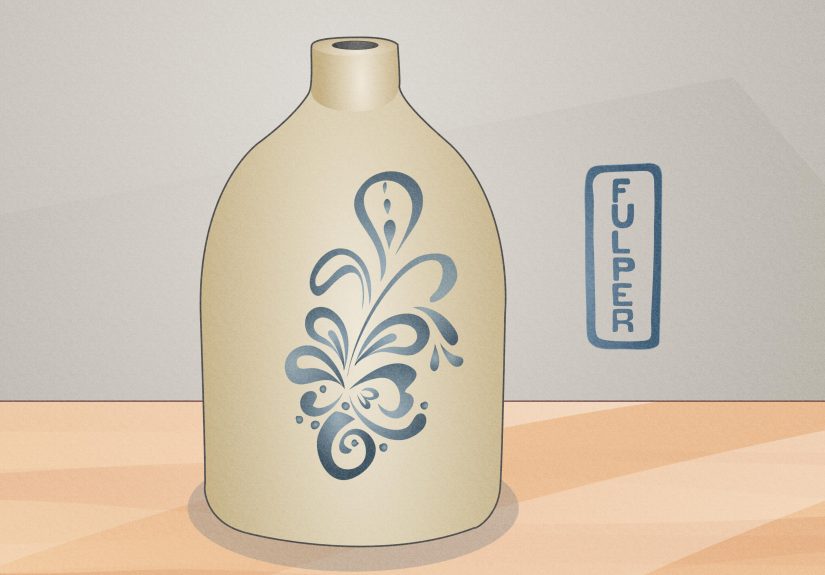
Fulper: Ink Stamps, Impressed Logos, and the Joy of “Racetrack” Marks
Fulper pottery is collected heavily, and the company used a variety of marksink stamps, impressed marks, in-mold logos, and labels. Certain mark styles are especially helpful because they cluster around narrower time windows.
Collector tip: With ink stamps, condition matters. A partially worn stamp isn’t bad news; it can be consistent with age. The goal is to match stamp style and placement to known examples.
Spotting Fakes: When a Mark Is a Costume, Not an Identity
Reproductions thrive where prices are strong and buyers are optimistic. Here are common red flags that show up across many collectible potteries:
- Suspiciously crisp marks on supposedly old pieces (no wear, no soft edges, no base rubbing).
- Incorrect glaze “feel” (too glassy, too uniform, wrong color behavior).
- Modern manufacturing tells (seams, drilling, sanding patterns that don’t match era).
- Marks that exist, but the form doesn’t (the logo is real; the shape is not).
If you’re planning to buy, sell, or insure a piece, the safest path is to use multiple verification points: mark + form + glaze + reliable reference images + sales records.
Quick “Do This, Not That” Checklist
- Do: Use raking light, magnification, and photos.
- Do: Note clay color, glaze texture, and base wear.
- Do: Search by shape number + maker when available.
- Don’t: Assume a single word mark guarantees authenticity.
- Don’t: “Clean” labels or patina off a base before documenting it.
- Don’t: Pay “premium price” until the form matches reputable references.
Conclusion
Pottery marks are powerful because they turn guesswork into research. The most valuable marksdate systems like Rookwood’s, label eras like Roseville’s, ciphers like Newcomb’s, and coded backstamps like Homer Laughlin’scan shrink your identification timeline dramatically. But the smartest collectors treat marks like a strong lead, not a final verdict.
If you want the best results, build a habit: document the mark, confirm the form, and cross-check the materials. That’s how you go from “random thrift-store vase” to “identified vintage piece with credible value comps”and how you avoid adopting a modern reproduction that only pretends it’s a century old.
Collector Field Notes: Real-World Experiences You’ll Run Into (and How to Handle Them)
The fastest way to get good at pottery marks is to live through the same situations collectors talk about again and again. Below are common experiencespractical, occasionally hilarious, and absolutely normalwhen you’re hunting antique and vintage ceramics.
1) The “Invisible Mark” That Magically Appears Under Side Light
You pick up a vase, flip it over, and see… nothing. Then you angle it near a window or shine a flashlight across the base, and suddenly the mark appears like it’s being summoned by wizardry. This is especially common with impressed marks that are shallow, partially glazed over, or softened by wear. The lesson: never declare a piece “unmarked” until you try raking light.
2) The “Two Marks” Mystery (Factory + Decorator)
Sometimes you’ll find a big, obvious backstamp plus a smaller symbol, initials, or secondary stamp nearby. Many collectors assume one is fake, but it can be completely legitimatesome ceramics involved multiple hands or multiple facilities. The practical move is to photograph both marks and research them together. The lesson: two marks can mean “more information,” not “more trouble.”
3) The Label Ghost: When the Sticker Is Gone but the Clue Remains
Paper labels often don’t survive, but they can leave behind subtle evidence: a slightly different sheen, a faint outline, or cleaner clay where the adhesive protected the surface. Collectors often learn to look for these “ghosts,” especially on makers known for label-heavy periods. The lesson: absence of a label isn’t proof it never existed.
4) The Too-Perfect “Antique” That Has One Job: Fool You
Some reproductions are easy because they look new. The sneaky ones look convincingly “vintage” but still have tells: an unnaturally crisp molded mark, a base that looks freshly sanded, or a glaze that’s uniform in a way older production often isn’t. Collectors regularly describe the same emotional arc: excitement, confidence, and then the slow realization that something feels off. The lesson: when your gut whispers “hmm,” your brain should start researching.
5) The McCoy Moment: When a Famous Name Creates False Confidence
Many collectors have a story about seeing “McCoy” and assuming instant valuebecause the name is so well known. It’s a rite of passage to learn that some common marks are also commonly copied. The best response isn’t fear; it’s method. Match the form to known reference examples, examine the glaze and construction, and treat the mark as just one data point. The lesson: famous marks attract famous fakes.
6) The Number Soup: Shape Codes, Size Codes, and “What Does 933-6 Mean?”
Collectors often describe the first time they realize the random-looking numbers are actually the key. A shape number can connect your piece to a catalog line, verify authenticity, and let you find comparable sales faster. Once you start searching “maker + shape number,” you’ll wonder how you ever lived without it. The lesson: numbers are not clutterthey’re coordinates.
7) The Happy Ending: When Multiple Clues Line Up
The most satisfying experience in ceramics hunting is when everything agrees: the mark matches a known timeline, the clay color fits the maker, the glaze behaves exactly like documented examples, and the shape number aligns with the correct pattern. That’s the moment you’re no longer “guessing”you’re identifying. The lesson: confidence comes from convergence, not one lucky logo.
These experiences are common because collecting is a skill built from repetition. Every base you photograph, every mark you compare, every “close call” you walk away fromthose are the reps that make you faster, sharper, and harder to fool.