Table of Contents >> Show >> Hide
- Why Country House Gardens Feel So Current
- 1. Start with Structure, Then Let It Relax
- 2. Make the Path Part of the Story
- 3. Plant in Layers, Not Lines
- 4. Use Fences and Hedges as Beauty, Not Just Boundaries
- 5. Bring in Water, Stone, and One Good Focal Point
- 6. Don’t Be Afraid of Edible Ornamentals
- 7. Keep the Mood Loose, Even When the Layout Is Formal
- 8. Make Small Spaces Feel Like Big Ones
- What to Steal First if You Want the Look Fast
- A Longer Take: What Country House Gardens Teach Us in Real Life
- Conclusion
Country house gardens have a talent for making the rest of us feel slightly underdressed. They are generous, romantic, and just formal enough to look intentional without ever seeming fussy. That balance is exactly why they keep showing up in design conversations: the look combines structure, softness, and a sense of discovery that works whether you have ten acres or a narrow side yard. Gardenista’s garden coverage has long leaned into this same mix of beauty and practicality, with plenty of attention to hardscape, borders, fences, and plant-led design that feels lived in rather than staged.
The good news is that you do not need a manor house, a staff of 14, or a perfectly weathered stone wall to borrow the best ideas. You mainly need a few strong bones, a relaxed planting style, and the courage to let things look a little bit abundant. The country house garden is less about perfection and more about atmosphere. It says, “Come in, wander around, and maybe take a peach on the way out.”
Why Country House Gardens Feel So Current
The modern garden conversation has shifted away from overly polished, high-gloss landscaping and toward spaces that feel more organic, layered, and human. Recent garden coverage from Martha Stewart, Better Homes & Gardens, Southern Living, and Architectural Digest all points to the same themes: natural materials, richer textures, softer planting, and designs that feel useful as well as beautiful. Gardenista’s own trend pages echo that appetite for gardens with personality, from estate-inspired ideas to compact city spaces that still feel rich and tailored.
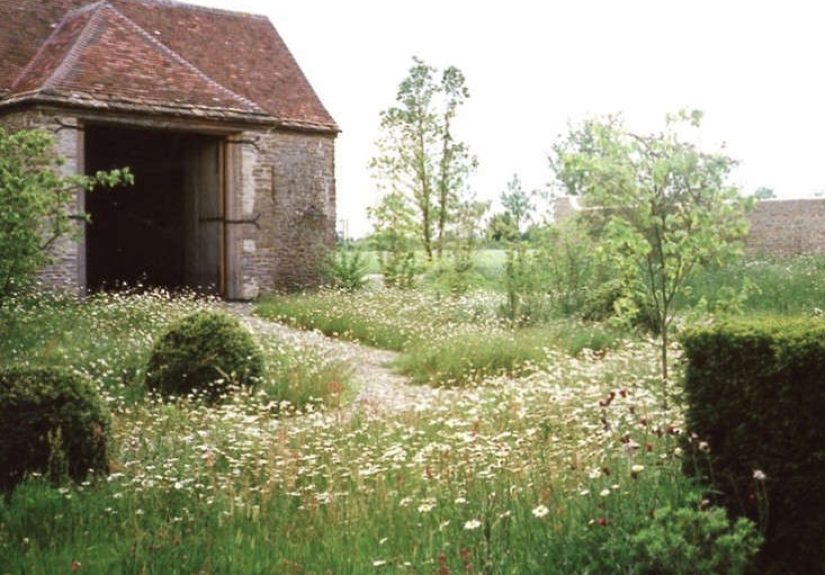
Part of the appeal is emotional. Country house gardens feel restorative because they are designed for strolling, pausing, and noticing details. A clipped hedge frames a view. A gravel path slows the pace. A loose border gives the eye somewhere to wander. It is less “look at me” and more “stay awhile.” That kind of charm is hard to fake, but very easy to borrow.
1. Start with Structure, Then Let It Relax
The smartest country house gardens are built on a quiet framework. Think hedges, low walls, picket fences, arbors, gates, and defined paths. Once that structure is in place, the planting is allowed to loosen up. Garden Design describes English garden style as a balance of formal hedging and hardscaping with less formal borders, while Better Homes & Gardens repeatedly recommends using layouts, frames, and repeating forms to make even small spaces feel composed.
This is one of the easiest ideas to steal. If your garden currently feels like a chaotic plant collection with no internal logic, add one or two strong lines. A path of brick or gravel. A short hedge. A fence line softened by climbers. Even four square beds can make a patch of soil look instantly more serious. Structure is the secret sauce; romance is just the garnish.
Try this at home
Use a simple repeating shape: a row of boxwood, a line of pots, or a pair of matching urns at an entry. Then layer in more relaxed planting around it. Architectural Digest’s garden design coverage specifically notes that repeating decorative elements helps the eye travel through a garden at a measured pace, while timeless focal points like boxwood hedges keep the design grounded.
2. Make the Path Part of the Story
In a country house garden, the path is not just a route. It is a mood setter. Curving walks invite exploration; straight walks create ceremony; gravel walks add that soft crunch that makes every step feel more cinematic. Garden Design recommends curving pathways in cottage-style gardens, and Martha Stewart highlights brick, stone, paver, and gravel walkways as one of the simplest ways to upgrade a yard.
If your garden has been organized around the shortest possible distance between the door and the grill, consider giving the route a little more dignity. Let the path pass a border. Let it widen near a bench. Let it end at a view, a gate, or a pot full of something ridiculous and beautiful.
That sense of movement is part of what makes country house gardens feel larger than they are. The garden reveals itself in chapters instead of one quick glance. It is the landscaping version of a good novel.
3. Plant in Layers, Not Lines
Country house gardens thrive on depth. You see it in mixed borders, overlapping textures, and plants that seem to lean into one another with complete confidence. Better Homes & Gardens recently emphasized layered color schemes, leaf textures, and self-sowing plants for cottage-style charm, while Martha Stewart’s cottage garden coverage highlights the same blend of roses, peonies, flowering herbs, and perennials that create an abundant, slightly wild look.
Layering does two important jobs at once. It creates visual richness, and it helps the garden look good for more of the year. Taller plants stand behind mid-height shrubs, which stand behind spilling groundcovers or self-seeders. That means there is always something doing the work, even when one crop of blooms finishes early.
Gardenista’s cottage garden ideas also point to the practical side of this style: close planting, rich soil, herbs mixed with ornamentals, and borders that feel full instead of sparse. In other words, the best country house garden does not fear generosity. It welcomes it.
Best plants to borrow from the look
Think roses, peonies, hydrangeas, lilacs, foxgloves, hollyhocks, wisteria, and herbs like rosemary, sage, parsley, and chives. Garden Design and Martha Stewart both point to these classic cottage and English-garden plants because they deliver fragrance, texture, and a relaxed old-world feel that never really goes out of style.
4. Use Fences and Hedges as Beauty, Not Just Boundaries
Country house gardens are very good at making boundaries look intentional. A picket fence can be charming. A rustic fence can be grounding. A clipped hedge can feel formal without becoming severe. Martha Stewart notes that fences and trellises are not just practical, but architectural features that add shape and privacy. Better Homes & Gardens likewise recommends natural-looking boulders, rustic fencing, and hardscape to frame a cottage-style garden in a way that feels balanced rather than busy.
This matters because many gardens fail at the edges. They stop instead of ending. A border that fades into a lawn can make a space feel unfinished. A fence with climbers or a hedge with an opening gives the garden a destination and a sense of enclosure. That enclosed feeling is part of the country-house magic.
Gardenista’s issue coverage on country-house style emphasizes this same outdoor-room feeling: a place where fencing, paths, and structure work together so the garden feels like a series of connected moments rather than one large blank field.
5. Bring in Water, Stone, and One Good Focal Point
Country house gardens rarely rely on planting alone. They often include a basin, a fountain, a stone urn, a bench, or some other object that quietly anchors the scene. Architectural Digest’s historic and estate garden coverage shows how powerful these focal points can be, whether it is a stone basin, a boxwood sphere, or a formal centerpiece that holds the eye and gives the garden a sense of calm.
Stone and water work especially well because they add permanence. Flowers come and go. A basin, wall, or bench stays and makes the whole garden feel rooted. Even in a small yard, one weatherproof object can carry a lot of visual weight. The trick is not to crowd it. Let it breathe.
Gardenista’s estate-garden inspiration is full of these kinds of ideas: refined but not cold, practical but not dull, and always designed so the garden still feels welcoming enough to use, not merely admire.
6. Don’t Be Afraid of Edible Ornamentals
One of the most charming things about country house gardens is how often they blur the line between beautiful and useful. Herbs spill through borders. Fruit trees anchor a view. Edible flowers join the party. Garden Design notes that classic cottage gardens include herbs and edible flowers such as chives, oregano, parsley, rosemary, and violets, while Martha Stewart points out that cottage-style planting is wonderfully adaptable for colorful, fragrant, productive spaces.
This is the sort of idea that gives a garden a heartbeat. A bed of lavender can be decorative and practical. A row of thyme can edge a path and smell fantastic when stepped near. A fruit tree can provide structure, shade, and a harvest all at once. Fancy? Yes. Useful? Also yes. That is a very country-house combination.
For homeowners, this is one of the easiest ways to make the garden feel both thoughtful and lived in. A garden that feeds people feels less like a set and more like a place.
7. Keep the Mood Loose, Even When the Layout Is Formal
There is a wonderful contradiction at the heart of country house gardening: the layout may be formal, but the feeling is often relaxed. Better Homes & Gardens, Garden Design, and Martha Stewart all point toward this balance between order and abundance. You can have a clipped edge and still let the perennials roam a little. You can have symmetry and still allow plants to self-seed. You can have structure without sterility.
That looseness is what keeps the style from feeling overworked. Country house gardens do not aim for botanical perfection. They aim for atmosphere, continuity, and the pleasant sense that something interesting is always about to bloom, spill, or scramble over a wall.
And honestly, that is a relief. A garden that looks too edited can feel anxious. A country house garden feels like it has somewhere better to be.
8. Make Small Spaces Feel Like Big Ones
Not every Gardenista-worthy garden stretches across rolling acreage. Some of the best ideas come from compact spaces that use lighting, privacy, planting, and hardscape with precision. Gardenista’s small-garden coverage focuses on just that: making small spaces feel cohesive and private through plant-led solutions and clever layout. Southern Living also shows how window boxes, containers, and layered porch plantings can extend the country-house feeling into much tighter footprints.
That means you can steal the feeling of a country house garden even if your actual garden is more “urban patch behind the garage” than “estate with topiary.” Repeat materials. Use climbing plants. Choose a few durable structural pieces. Add containers near doors and windows so the garden begins before you reach the lawn.
The design lesson is simple: scale the feeling, not the acreage.
What to Steal First if You Want the Look Fast
If you only make three changes, start here. First, define the garden with one strong edge: a hedge, fence, or low wall. Second, give the eye a path to follow, whether that is gravel, brick, or stepping stones. Third, plant in layers so the space feels full, relaxed, and slightly overgrown in the best possible way. Those three moves capture much of the country house garden formula without requiring a full landscape overhaul.
After that, add one object with presence. A bench. A urn. A birdbath. A basin. Something that says the garden has a point of view. Then let the plants do what plants do best: soften the edges and make the whole thing feel like it has been there for years, even if you just finished planting it last weekend.
A Longer Take: What Country House Gardens Teach Us in Real Life
What I keep coming back to with country house gardens is how forgiving they are. They reward patience, but they do not demand perfection. That is a rare thing in design. A lot of modern outdoor spaces try hard to look finished the minute they are installed. Country house gardens, by contrast, get better as they settle in. The hedge thickens. The border softens. The path weathers. The whole place becomes more interesting because time is allowed to participate.
That is also why this style feels so comforting. It has memory built into it. Even a new garden can borrow that feeling by layering in objects and materials that suggest history: old brick, weathered wood, stone, terracotta, and plants that are known for returning every year or sowing themselves into the gaps. It does not mean the garden has to be old; it just has to be willing to look like it has already lived a little.
Another lesson is that country house gardens are never just about flowers. Yes, the blooms matter. But so do the walks, the gateways, the fencing, the shapes of the beds, and the way one view leads naturally into the next. When all those parts work together, the garden feels calm even when it is full. That is a useful lesson for any homeowner who has ever stood outside and wondered why a yard with lots of plants still somehow feels empty. Often the answer is not more plants. It is better relationships between the plants.
There is also a practical side to this style that people sometimes miss. A well-designed country house garden can be surprisingly efficient. Close planting reduces bare soil. Mixed planting can help fill gaps through the season. Climbers use vertical space. Edible ornamentals pull double duty. Even gravel paths and low-maintenance cottage ideas can reduce the pressure to keep every inch pristine. Better Homes & Gardens and Martha Stewart both highlight design choices like hardscaping, rustic fencing, and long-lasting plant combinations for exactly that reason: beauty works best when it can also be lived with.
And maybe that is the real reason Gardenista-style country house gardens are trending. They feel generous without being wasteful, elegant without being stiff, and romantic without turning into a costume. They invite people in. They make room for messy weather, useful plants, birds, bees, and the occasional untidy sprawl. In a world that often asks gardens to be picture-perfect, the country house look offers something better: a place that feels beautifully, happily in use.
So steal the fence. Steal the path. Steal the layered border. Steal the stone basin, the espaliered fruit tree, the climbing rose, the gravel crunch, and the slightly unruly abundance. That is what the best country house gardens have always done well, and why they still feel so fresh today.
Conclusion
Country house gardens endure because they solve a timeless problem: how to make outdoor space feel both beautiful and lived in. The best ideas to borrow are not complicated. Build a little structure. Add layers of planting. Let paths guide the eye. Use fences, hedges, stone, and focal points to create rhythm. Then allow the garden to soften and mature into itself. That is where the magic lives.