Table of Contents >> Show >> Hide
- Why This Line Resonates With So Many Clinicians
- The Computer Is Not the Villain. Bad Workflow Is.
- What Happens When the Screen Takes Over
- Patient-Centered Care Means the Computer Joins the Conversation, Not Hijacks It
- How Better Systems Can Help Clinicians Be More Present
- The Patient Has a Role Too
- What Healthcare Leaders Must Stop Ignoring
- The Real Standard: Presence Over Performance
- Experiences That Explain the Quote
- Conclusion
- SEO Tags
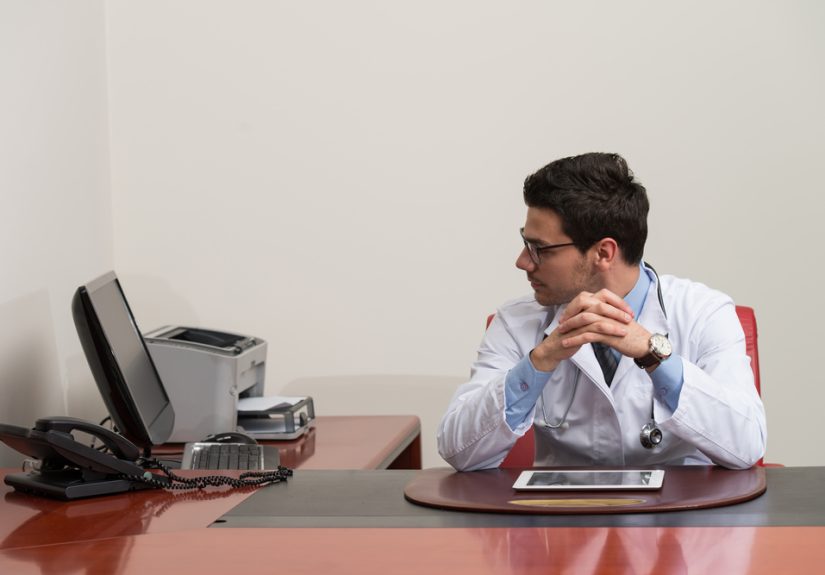
Modern medicine has a strange roommate: the computer. It lives in the exam room, glows in the corner, demands clicks like a needy pet, and somehow always wants attention right when the patient is saying something important. The problem is not that technology exists in medicine. The problem is what happens when the screen becomes the loudest voice in the room.
That is why the statement, “I will not let a computer come between me and my patient,” hits so hard. It sounds like a promise, a boundary, and maybe a small rebellion. It also captures a growing concern across American healthcare: electronic systems can improve access to information, safety, and coordination, but they can also chip away at eye contact, empathy, and presence when they are poorly designed or badly used.
This is not a story about smashing laptops and returning to the age of clipboards. It is a story about putting the machine back in its place. The computer should be a tool. The patient should be the focus. If those two roles get reversed, everyone loses.
Why This Line Resonates With So Many Clinicians
Doctors, nurses, and advanced practice clinicians did not enter medicine because they dreamed of a lifelong romance with dropdown menus. They entered medicine to diagnose, explain, reassure, and help. Yet over the last decade, many clinicians have reported that the electronic health record, or EHR, often pulls their attention away from direct care and into documentation, inboxes, alerts, billing fields, and workflow detours.
That tension has become a defining frustration of modern practice. In many settings, the computer is no longer just storing information. It is directing the rhythm of the visit. It influences where the clinician sits, when the conversation pauses, and whether the patient feels heard or handled. The result is a familiar scene: the patient speaks, the doctor types, and both people wonder whether they are actually meeting each other.
When clinicians say they do not want a computer between them and their patients, they are really saying something bigger. They want medicine to feel human again. They want technology to support clinical judgment instead of interrupting it. They want the chart to reflect the patient’s story, not flatten it into a bureaucratic puzzle made of checkboxes and billing logic.
The Computer Is Not the Villain. Bad Workflow Is.
Let’s be fair for a second. The computer did not sneak into healthcare wearing a fake mustache and villain cape. EHRs brought real benefits. They can improve legibility, preserve records, make test results easier to retrieve, support medication safety, and help teams coordinate care across settings. Patient portals and open notes can also make care more transparent and collaborative.
So why does the relationship still feel rocky? Because many digital systems were built or configured around compliance, coding, reporting, and administrative demands as much as clinical conversation. In other words, the screen often serves the system before it serves the encounter. That design choice has consequences. A clinician may want to listen carefully to a patient’s concern about fatigue, grief, or a strange new symptom, but the EHR may be shouting, “Please reconcile medications, review quality prompts, respond to portal messages, and sign six old notes before lunch.” Very romantic.
The deeper issue is not technology itself. It is the mismatch between how care should flow and how digital work is forced to happen. When the visit becomes a performance for the record instead of a relationship with the person, the computer starts to feel less like a helpful assistant and more like a chaperone nobody invited.
What Happens When the Screen Takes Over
The doctor-patient relationship depends on attention. Not perfect attention. Human attention. The kind that says, “I am here, I am listening, and I am trying to understand what this feels like for you.” Patients notice when that attention slips. They notice when the clinician stares at the monitor too long, goes silent while typing, or turns the visit into a data-entry relay race.
Research on EHR use and patient-centered communication has repeatedly pointed to the same concern: heavier computer gaze and longer silences can make communication feel less effective. That matters because communication is not a decorative feature of care. It shapes trust, adherence, accuracy, and patient confidence. If the patient leaves with the right prescription but the wrong impression, the visit was not as successful as it looked on paper.
Clinicians feel the strain too. Many describe a split attention problem. Their ears are on the patient, their eyes are on the screen, and their brain is trying to satisfy both. That cognitive juggling act is exhausting. It can also make clinicians feel as though they are practicing “desktop medicine,” where documentation is happening in the foreground and healing is happening somewhere off to the side, waving politely.
Patient-Centered Care Means the Computer Joins the Conversation, Not Hijacks It
The best response is not to pretend the computer does not exist. Patients can see it. They know it matters. The smarter move is to make the technology visible, collaborative, and secondary to the human exchange.
1. Narrate what you are doing
One of the simplest communication tricks is to tell the patient why you are turning to the screen. A short sentence such as, “I’m pulling up your lab trend,” or “I want to make sure I record that exactly right,” changes the mood immediately. Silence feels dismissive. Narration feels respectful. It reminds the patient that the computer is being used for the visit, not instead of it.
2. Share the screen
When possible, let the patient see what you see. Screen sharing can turn the monitor from a wall into a window. Instead of hiding the record, clinicians can use it to explain blood pressure trends, compare imaging dates, review medication lists, or walk through a care plan. AHRQ-backed work on exam room design suggests that room layout and repositionable screens can increase screen sharing and make the computer less disruptive to patient-centered interaction. That is not just a design tweak. It is a philosophy shift.
3. Keep your body turned toward the patient
Body language still matters, even in a wired exam room. A clinician who faces the patient, pauses typing during emotional moments, and returns eye contact after entering data sends a clear message: “You are not competing with my keyboard.” A monitor in a bad position can quietly sabotage that effort, which is why exam room design deserves more attention than it usually gets.
4. Protect the story
Patients rarely tell their stories in neat billable fragments. They circle back, hesitate, remember something late, or reveal the important detail only after a pause. Good clinicians know that the story is often the diagnosis trying to introduce itself. If the computer interrupts that story too aggressively, care suffers. The note still needs to be completed, but it should not crush the narrative that makes the note meaningful.
How Better Systems Can Help Clinicians Be More Present
Not every solution has to rely on individual heroics. Telling clinicians to “just be more human” while burying them in cluttered workflows is a little like telling someone to enjoy a picnic during a hailstorm. Presence is easier when the system makes room for it.
Team-based documentation
One practical answer is to distribute the work. Medical assistants, nurses, and other team members can help with pre-visit planning, medication review, preventive care gaps, and parts of documentation that do not require the physician’s direct input. This reduces the number of tasks piled onto one person during the live encounter and protects time for listening and decision-making.
Scribes and documentation support
Studies and systematic reviews suggest that scribes can reduce documentation burden for many clinicians and may improve both satisfaction and the sense of connection during visits. Patients in some settings have also reported feeling that the clinician was more attentive when a scribe handled part of the note. Scribes are not magic, and they come with costs, training needs, and workflow considerations, but the broader lesson is clear: when the clerical load drops, the relational load becomes easier to carry.
Smarter EHR training and optimization
Another overlooked fix is helping clinicians use the tools they already have more efficiently. Templates can be simplified. inbox rules can be redesigned. Duplicate work can be removed. Organizations can standardize useful shortcuts instead of letting every clinician reinvent survival strategies alone. This is less glamorous than talking about artificial intelligence, but in many practices it may be the difference between ending the day with energy and ending it with a thousand-yard stare aimed at the parking lot.
Ambient AI, with caution and common sense
New ambient AI tools are attracting attention because they promise to listen during the visit and draft notes automatically. In theory, that lets clinicians maintain better eye contact and reduces after-hours charting. In practice, these tools need close review, clear consent processes, privacy protections, and strong clinical judgment. They should assist the visit, not silently rewrite it. Still, the appeal is obvious: if technology can finally take notes without demanding that the doctor become a part-time court reporter, that could be a meaningful shift.
The Patient Has a Role Too
Patient-centered digital care is not only about what clinicians do. Patients can also be invited into the record in constructive ways. Open notes, patient portals, pre-visit questionnaires, and shared review of medication lists can improve understanding, catch mistakes, and strengthen trust. That is the ideal version of technology in medicine: not a barrier, but a bridge.
Imagine the difference between these two visits. In the first, the doctor types for most of the appointment, prints a summary, and leaves. In the second, the doctor says, “Let’s look at your last three A1C results together,” explains the trend on screen, confirms the medication list, and tells the patient to review the visit note later in the portal for accuracy. Same computer. Very different experience.
Patients are generally not offended by technology itself. They are offended by feeling ignored. If the screen helps them understand their care, they often welcome it. If it steals the conversation, they resent it. That difference matters.
What Healthcare Leaders Must Stop Ignoring
The burden of keeping computers from coming between clinicians and patients cannot rest entirely on individual bedside manners. Organizations have a responsibility to fix the conditions that create the problem. That includes reducing unnecessary documentation, improving usability, trimming inbox chaos, supporting team-based care, and evaluating whether digital demands are truly improving care or just generating more digital demands.
Professional groups and policy leaders in the United States have been making this argument for years: administrative burden, poor usability, and excessive documentation drain time and attention away from patient care. Many of the most useful fixes are not futuristic. They are operational. Remove duplicate fields. Simplify templates. Reassign tasks. Improve room layout. Train people well. Stop rewarding busywork just because it leaves an electronic footprint.
In other words, if healthcare leaders say they value empathy, they need to build workflows that leave some time for it.
The Real Standard: Presence Over Performance
The quote “I will not let a computer come between me and my patient” should not be read as anti-technology. It should be read as pro-presence. It is a reminder that the best visit is not the one with the most elegant template or the fastest click path. It is the one in which the patient feels seen, the clinician feels able to think clearly, and the record supports the work instead of overshadowing it.
Medicine has always involved tools: stethoscopes, blood pressure cuffs, ultrasound probes, scanners, lab systems. The EHR is just one more tool, but it is unusual because it competes for attention in real time. That competition has to be managed intentionally. Otherwise, the patient gets the leftovers of the clinician’s focus, and that is not good enough.
So yes, keep the technology. Improve it, redesign it, automate the worst parts of it, and invite patients into it where that helps. But never forget the central rule. The computer is there to serve the relationship, not replace it. If it starts acting like the main character, it is time for a rewrite.
Experiences That Explain the Quote
The following composite experiences are based on widely reported themes in U.S. clinical practice and patient communication. They are written to reflect the real emotional texture of the issue.
A family physician walks into a room already running ten minutes late. The patient is a middle-aged man who says he is “just tired,” which in medicine can mean anything from stress to heart failure to a life unraveling quietly at the edges. The physician sits down, asks a few questions, and then the EHR starts calling. A refill request flashes. A drug interaction alert pops up. A box needs to be checked to close a quality measure. For two straight minutes, the room fills with tapping. The patient stops talking. He assumes the doctor has moved on. Only later does the physician realize the patient had been trying to describe that the fatigue began after his wife died. That was the real story. The computer did not create the grief, of course, but it interrupted the doorway into it.
In another clinic, the opposite happens. The physician greets an older woman with diabetes, swivels the screen toward her, and says, “Let’s look at your blood sugar trend together.” Suddenly the monitor is not a barrier. It is a teaching tool. They review the graph, compare it with meal timing, and spot a pattern connected to missed lunches. The patient laughs and says, “So the computer is snitching on me.” The doctor laughs too. That small shared moment builds trust. The technology stayed in the room, but it stopped standing between them.
Then there is the specialist using an ambient documentation tool for the first time. He is skeptical. He worries the software will misunderstand terminology or turn a nuanced conversation into alphabet soup with billing codes. But during the visit, he notices something surprising: he is no longer splitting his gaze between the keyboard and the patient every thirty seconds. He listens more fully. He asks a better follow-up question. He still reviews and edits the note after the visit because good medicine requires judgment, not blind automation, but he leaves with less clerical residue stuck to the day. For him, the experience is not about replacing skill. It is about reclaiming attention.
Patients feel these differences more than clinicians sometimes realize. Many do not care whether notes are typed, dictated, or drafted by a robot with excellent punctuation. They care whether the clinician seems interested, prepared, and present. They care whether pauses feel thoughtful or awkward. They care whether the doctor responds to emotion with eye contact or with the sound of furious clicking. In that sense, the quote is not just a professional slogan. It is a promise patients can feel.
That is why this issue lingers in so many exam rooms. It is not really about hardware. It is about attention, dignity, and trust. A patient can forgive a late appointment, a clunky portal, or a printer that seems spiritually opposed to medicine. What is harder to forgive is the feeling of becoming secondary to the documentation of your own illness. The most memorable clinicians understand this instinctively. They use the computer when needed, move it aside when possible, and keep returning their full attention to the person in front of them. That is what the line means in practice. Not a rejection of innovation, but a refusal to let efficiency outrank humanity.
Conclusion
The future of medicine does not depend on whether computers remain in exam rooms. They will. The real question is whether healthcare will keep allowing technology to dominate human encounters or finally design systems that protect them. The answer should be obvious. A screen can store information, generate prompts, and summarize speech. It cannot replace presence, compassion, or clinical wisdom. Those still belong to people.
So the statement stands as both a personal ethic and a system challenge: I will not let a computer come between me and my patient. It is the right promise for clinicians, the right expectation for patients, and the right standard for the next generation of healthcare technology.