Table of Contents >> Show >> Hide
- Why the Work Is Not Over After You Pay
- 1. Save Proof of Payment Like It Is Concert Tickets in 2004
- 2. Check All Three Credit Reports for Accuracy
- 3. Dispute Errors and Start Rebuilding on Purpose
- A Simple Example
- Mistakes to Avoid After Paying a Collection
- Final Thoughts
- Real-Life Experiences After Paying a Debt Collection
- SEO Tags
Paying off a debt collection can feel like finishing a marathon in flip-flops: you are relieved, slightly annoyed, and pretty sure nobody handed you the right medal. The good news is that paying a collection is a real step forward. The less-fun news is that your job is not completely done the second the payment clears.
If you stop at “Well, I paid it,” you risk leaving money, documentation, and credit-report accuracy on the table. A collector could still contact you by mistake. A credit bureau could still show the wrong balance. An old collection account could sit there looking messy long after it should have been updated. That is why smart borrowers treat payment as the middle of the process, not the finish line.
This guide breaks down the three most important things to do after you pay a debt collection. These steps can help you protect yourself, clean up your records, and put your credit recovery on firmer ground without spiraling into a late-night internet rabbit hole titled “Why is my paid collection still here?”
Quick answer: after you pay a debt collection, save airtight proof of payment, check all three credit reports for correct updates, and dispute any error immediately. Then keep rebuilding your credit with boring, beautiful consistency.
Why the Work Is Not Over After You Pay
A lot of people assume that once a collection is paid, it disappears like a magician’s rabbit. It usually does not. In many cases, the account can still remain on your credit report for years, even though it should now show an updated status such as paid, settled, or a zero balance, depending on the agreement and how the furnisher reports it.
That distinction matters. A paid collection is generally better than an unpaid one, but it is not the same as an account that was deleted entirely. And if you settled for less than the full amount, you want your paperwork to make crystal clear that the agreed payment satisfied the debt in full. Otherwise, the account may come back later like a movie villain who refuses to stay in the sequel-free zone.
So let’s get practical.
1. Save Proof of Payment Like It Is Concert Tickets in 2004
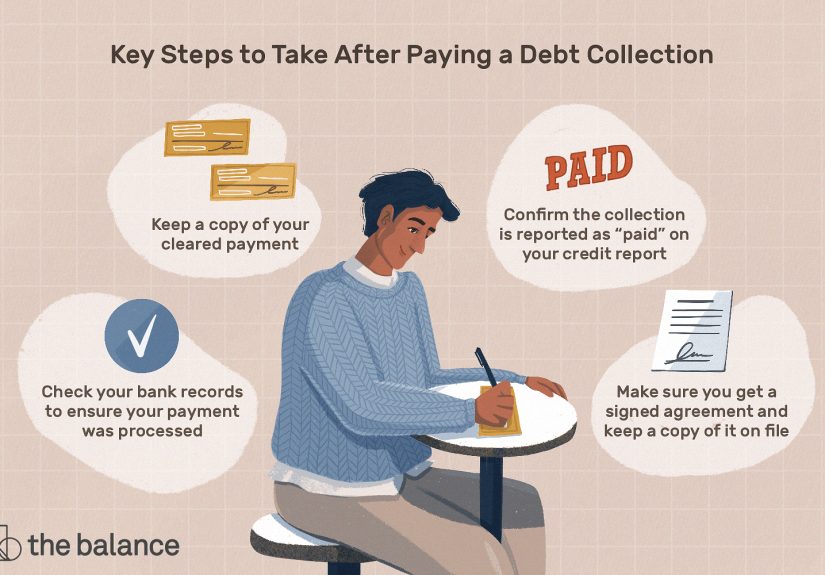
The first thing to do after paying a debt collection is create a clean paper trail. Do not trust your memory, a random screenshot, or the emotional power of saying, “But I know I paid that.” What you need is documentation that would make a future dispute quick, boring, and winnable.
What to keep in your file
Create a folder, either digital or physical, and keep these items together:
– The original collection notice or account reference number
– The settlement agreement or payment agreement
– A receipt showing the payment date and amount
– Bank or card confirmation proving the transaction cleared
– Any letter or email stating the debt is paid in full or settled in full
– Notes from phone calls, including dates, names, and what was said
If you settled the debt for less than the full balance, the wording matters a lot. You want written confirmation that the agreed amount satisfies the account and that you no longer owe the remaining balance. This is not the place for vague promises or “Don’t worry, our system shows it.” Systems are wonderful right up until they are not.
Why this step matters
Collectors and servicers change hands. Data gets reported incorrectly. Account numbers get mangled. Human beings type things. When a paid collection still shows unpaid, or when a collector contacts you again, your records become your shield. They can also help if you need to file a dispute with a credit bureau, send a follow-up letter to the collector, or prove your case to a lender reviewing your file manually.
This is especially important if the debt was older, had been sold more than once, or involved a settlement instead of a full payoff. In those situations, clean records are not optional. They are the difference between a two-email fix and a month of financial whack-a-mole.
What to do if the collector keeps contacting you
If a debt collector continues to call, email, or write after you have already paid according to the agreement, do not panic and do not pay twice. Pull out your file. Then respond in writing with copies of your proof of payment and request that the collector correct its records. If needed, tell the collector to stop contacting you about the paid account.
Keep your tone professional. This is not the moment for an all-caps masterpiece. Calm documentation tends to win faster than righteous fury, even when righteous fury is deeply deserved.
2. Check All Three Credit Reports for Accuracy
The second thing to do after paying a debt collection is review your credit reports from Equifax, Experian, and TransUnion. Not one report. All three. Credit data does not always update the same way, on the same day, or with the same level of accuracy across all bureaus.
What you are looking for
When you pull your reports, look for these details:
– Is the collection account still listed?
– If it is listed, does it now show paid or settled?
– Is the balance reported correctly as zero, if that matches your agreement?
– Is the original creditor account also reporting accurately?
– Are there duplicate collection entries for the same debt?
– Is the date information consistent and believable?
A paid collection can still appear on your report, but it should not keep pretending to be unpaid if you already handled it. That is the difference between a legitimate negative mark and an inaccurate one. One is unpleasant. The other is fixable.
Do not expect an overnight credit-score fireworks show
This part surprises people: paying a collection is financially responsible, but your score may not jump instantly. In some scoring models, a paid collection still counts. In newer scoring models, paid collections may be treated more favorably or ignored altogether. Translation: your mileage may vary, and your score may act like it needs a snack and a nap before cooperating.
That is why it is better to focus first on accuracy, then on rebuilding. If the account is being reported correctly, you have done what you can on that specific item. From there, your future payment history, credit utilization, and overall file health start doing more of the heavy lifting.
How long should you wait before checking?
Give the account a little time to update, then check your reports. A practical approach is to review your reports within a few weeks after payment and again later if the first update looks incomplete. Keep your expectations realistic. Reporting systems are not famous for their speed. They are more “municipal paperwork” than “same-day delivery.”
Still, do not wait forever. The longer inaccurate reporting sits there, the more it can interfere with lending, renting, insurance pricing, or your own peace of mind.
3. Dispute Errors and Start Rebuilding on Purpose
The third thing to do after you pay a debt collection is take action if the reporting is wrong, and then immediately shift into credit-rebuilding mode. This is the point where many people stall out. They feel so relieved the debt is paid that they avoid the follow-through. That is understandable. It is also how messy credit files stay messy.
When to dispute
Dispute the account if any of the following shows up on your credit reports:
– The balance is wrong
– The account still shows unpaid after your payment posted
– The same debt appears multiple times incorrectly
– The account does not belong to you
– The reporting dates appear inaccurate
– A collector is reporting information that conflicts with your written settlement terms
You can dispute inaccurate information with the credit bureau, the company that furnished the information, or both. Include copies of your supporting documents and explain exactly what is wrong. Be specific. “Please fix this” is emotionally valid, but “Account ending in 4821 was settled on June 5 and should reflect a zero balance” is far more useful.
Can you ask for deletion after payment?
Yes, you can ask. No, there is no guarantee.
After a collection is paid, some consumers request a goodwill deletion. This is basically a polite appeal asking the collector to remove the account as a courtesy. Sometimes it works. Often it does not. A pay-for-delete arrangement is usually something people try to negotiate before paying, not after. Once the collector already has the money, its motivation tends to become less heroic.
Still, a respectful goodwill request can be worth trying, especially if the debt was a one-time hardship, the account is already satisfied, and you are otherwise on a strong path. Just treat it as a bonus move, not your main strategy.
What rebuilding really looks like
Once the paid collection is accurate, the next chapter is less dramatic but far more powerful:
– Pay every bill on time
– Keep credit card balances low relative to limits
– Avoid applying for a bunch of new credit at once
– Monitor your reports regularly
– Keep older good accounts in good standing
This is the part nobody wants to hear because it is not glamorous. There is no magic “debt collection recovery” button. There is just consistency. But consistency works. Lenders love a comeback story, especially one told through twelve straight months of on-time payments instead of twelve straight paragraphs of explanation.
A Simple Example
Imagine Lauren paid a $1,250 collection related to an old credit card. She received an email receipt and figured that was enough. Two months later, she applied for an apartment and learned the collection still showed unpaid on one of her reports.
If Lauren kept only the email and nothing else, the fix might be slower and more stressful. But if she saved the settlement terms, payment confirmation, bank statement, and follow-up correspondence, she could dispute the error clearly and fast. That is the difference between “I paid this, trust me” and “Here are the documents showing exactly what happened.”
The moral of the story is simple: the debt may be gone, but the administrative aftercare still matters.
Mistakes to Avoid After Paying a Collection
Assuming the account will disappear automatically
Sometimes people think payment equals deletion. Usually it equals an updated status, not a disappearing act.
Throwing away paperwork too soon
Keep your records longer than feels necessary. Future-you will be grateful and slightly smug.
Checking only one bureau
If one bureau is accurate and another is wrong, you still have a problem.
Ignoring the original creditor entry
The collection account is not always the only negative line involved. The original account may still show missed payments or a charge-off, and that can remain relevant.
Waiting too long to dispute
Inaccurate information rarely improves because you wished really hard. Address it directly.
Final Thoughts
Paying a debt collection is not nothing. It is a meaningful financial move, and for many people it comes after stress, embarrassment, hard budgeting, and a lot of mental noise. Give yourself credit for taking care of it.
Then do the three smart next steps: keep proof, verify your credit reports, and dispute anything inaccurate while you rebuild. Those actions turn a payment into progress. They help protect you from repeat collection attempts, reduce the odds of bad reporting, and give your credit profile a fairer shot at recovery.
In other words, do not just pay the debt. Close the loop. That is how grown-up financial wins really happen: less confetti, more documentation.
Real-Life Experiences After Paying a Debt Collection
For many people, paying a debt collection brings a weird mix of relief and suspicion. Relief, because the account is finally handled. Suspicion, because nobody fully trusts a collection account to stay handled without supervision. That feeling is more common than you might think.
One common experience is the “I thought this would feel better” moment. A person makes the payment, sees the money leave the account, and expects instant emotional peace. Instead, they feel anxious for the next few weeks, checking email and bank notifications like they are waiting for lab results. That is normal. Financial stress does not always leave the room the same day your payment does.
Another experience is frustration with timing. Someone pays a collector because they want to clean up their credit before applying for a car loan or apartment. Then they pull a report and the collection still appears. Panic sets in. But in many cases, the issue is not that the payment failed. It is that reporting updates take time, and sometimes one bureau updates before the others. This lag makes people feel like nothing changed, even when something did.
There is also the paperwork lesson almost everyone learns once: verbal promises are flimsy. People often remember a collector sounding friendly and reassuring on the phone, but later discover that the only thing that matters is what was written down. Consumers who keep receipts, settlement letters, and screenshots usually describe the aftermath as annoying but manageable. Consumers who do not keep records often describe it as a maddening scavenger hunt.
Some people are surprised that paying a collection does not instantly rescue their credit score. That can feel unfair. They did the responsible thing. They paid real money. They faced the mess head-on. But credit recovery usually works more like physical therapy than a movie makeover. Improvement comes from repeated healthy behavior after the crisis, not just from one good decision in the middle of the chaos.
And then there is the confidence boost. Once someone has dealt with a collection the right way, they tend to become much more organized with money. They check statements faster. They question suspicious notices earlier. They keep better records. Oddly enough, one resolved collection account can become the event that turns a person from “I hope this works out” into “I document everything now.” Financially speaking, that is not a bad origin story.