Table of Contents >> Show >> Hide
- Why Closing Your Bedroom Door Matters More Than Most People Realize
- The Best Fire Safety Tip Still Needs Working Smoke Alarms
- Your Fire Escape Plan Should Be Boringly Clear
- The Real Fire Risks Usually Start With Everyday Habits
- Why This Tip Is So Effective in Modern Homes
- Make the Tip Part of a Real Nighttime Routine
- Common Fire Safety Mistakes That Undo Good Intentions
- Experience Shows Why This Tip Stays With People
- 500 More Words of Real-World Experience and Reflection
- Conclusion
Note: This article is written for general home safety education and is based on established U.S. fire-safety guidance. It is not a substitute for your local fire code, building requirements, or emergency instructions from first responders.
Some safety advice sounds like it was invented by a committee in a beige room with stale coffee. This is not one of those tips. It is simple, fast, cheap, and surprisingly powerful: close your bedroom door before you go to sleep.
That’s it. No app. No subscription. No futuristic gadget whispering “danger detected” in a soothing robot voice. Just a door. Closed.
Here’s why this fire safety tip is a real lifesaver: in a house fire, a closed door can slow the spread of heat, smoke, and flames. That extra barrier can buy you precious time to wake up, think clearly, and escape. In modern homes filled with fast-burning materials, “a little more time” is not a small thing. It can be the whole game.
Still, a closed bedroom door is not a magic shield. It works best as part of a bigger home fire safety plan that includes working smoke alarms, a practiced escape route, and smart everyday habits around cooking, heating, candles, and electricity. In other words, the door is the hero of this story, but it still needs a supporting cast.
Why Closing Your Bedroom Door Matters More Than Most People Realize
When people picture house fires, they often imagine dramatic flames rolling down a hallway like a movie villain with anger issues. Real fires are often more chaotic and more dangerous because of the smoke, toxic gases, and heat that spread quickly through a home.
A closed door helps slow that spread. It can reduce how much smoke enters your room, limit the flow of oxygen feeding the fire, and keep temperatures lower than they would be in an open room. That means you may have a safer space for longer while your smoke alarm sounds and your family starts moving.
This is especially important at night, when confusion is high, reaction time is slow, and nobody is winning awards for decision-making. If you are asleep, even a short delay in fire spread can make the difference between a calm exit and a terrifying scramble.
Think of a closed bedroom door as a pause button. Not forever. Not enough to ignore the danger. But long enough to matter.
The Best Fire Safety Tip Still Needs Working Smoke Alarms
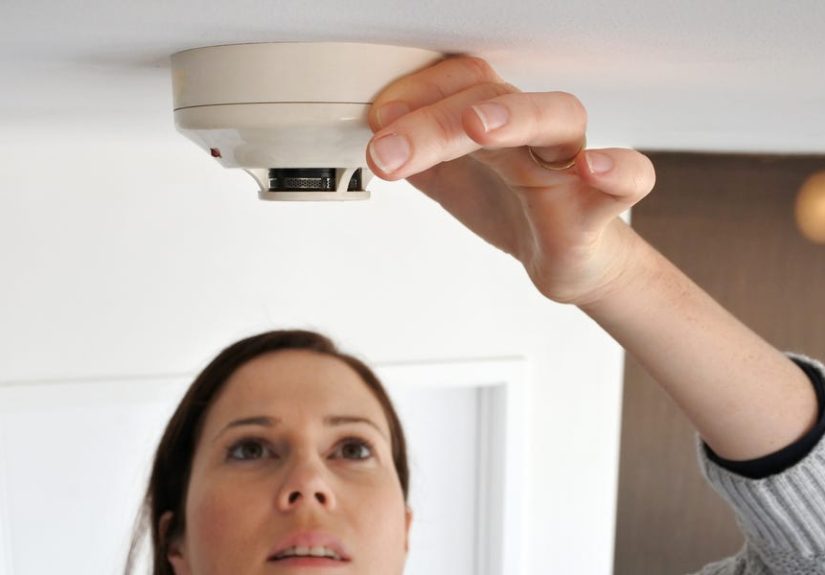
Closing the door before bed is powerful, but it should never replace smoke alarms. The real lifesaving combo is this: closed doors + working smoke alarms + an escape plan.
If your home has smoke alarms that chirp endlessly, have mystery birthdays from the Obama administration, or only “sort of” work when they feel emotionally available, today is a good day to fix that.
Where smoke alarms should go
For strong home fire protection, place smoke alarms:
- Inside every bedroom
- Outside each sleeping area
- On every level of the home, including the basement
Interconnected alarms are even better because when one sounds, they all sound. That matters in larger homes, two-story homes, apartments with long hallways, and households where people sleep with doors closed. If one alarm detects smoke downstairs, everyone should hear it upstairs.
How often to test and replace them
Test smoke alarms monthly. Replace batteries when required by the model, and replace the whole alarm according to the manufacturer’s instructions. Many smoke alarms need full replacement after about 10 years. No, dusting it and wishing it well does not count as maintenance.
Also, never remove batteries because your cooking adventures triggered the alarm. That is the smoke alarm doing its job a little too enthusiastically, not betraying you personally.
Your Fire Escape Plan Should Be Boringly Clear
In a fire, you do not want a family debate. You do not want a hallway conference. You do not want someone asking, “Should we grab the charger?” while smoke fills the room.
You want a plan so clear that even a sleepy, cranky, barefoot version of yourself can follow it.
Every household needs these basics
- Two ways out of every room, if possible
- A designated meeting place outside
- Practice at least twice a year
- Everyone knows that once you are out, you stay out
Draw a simple map of your home. Mark doors and windows. Check that windows open easily and are not blocked by furniture, painted shut, or functioning as decorative optimism.
Pick one outside meeting place, like the mailbox, a tree, or a neighbor’s driveway. Not “somewhere near the front.” In an emergency, vague language becomes chaos with shoes missing.
What to do when a fire happens
If a smoke alarm sounds, move fast. Get low if there is smoke. Feel the door before opening it. If the door is hot, use your second exit. If you can leave safely, go outside, get to your meeting place, and call 911. Do not go back in for pets, phones, wallets, laptops, photo albums, or that one pan you finally seasoned correctly.
If you cannot escape, stay in the room, keep the door closed, block cracks if possible, open a window, and signal for help.
The Real Fire Risks Usually Start With Everyday Habits
Most people do not start a home fire while cackling over a villainous torch. They start one while doing normal things: cooking dinner, using a space heater, lighting a candle, charging devices, or forgetting that the stove is still on.
That is what makes fire safety so sneaky. Danger often shows up wearing sweatpants and doing chores.
Cooking fire safety
Cooking is one of the biggest home fire hazards, especially when it is left unattended. If you are frying, grilling, broiling, or boiling food, stay in the kitchen. If you need to leave, turn off the burner. “I’ll be back in ten seconds” has launched a lot of unnecessary drama.
Keep a lid or baking sheet nearby when cooking on the stove. If a pan catches fire, sliding a lid over it can help smother the flames. Never throw water on a grease fire unless your goal is to make everything worse instantly.
Keep towels, paper packaging, oven mitts, and other flammable items away from the stovetop. Turn pot handles inward so they are less likely to be bumped by kids, pets, or your own elbow during a heroic reach for salt.
Heating safety
Space heaters deserve respect. Keep anything that can burn at least three feet away from heaters, fireplaces, wood stoves, and other heat sources. Turn space heaters off when you leave the room or go to bed. Never use an oven to heat your home. It is a cooking appliance, not a substitute furnace with delusions of grandeur.
If you use fireplaces or fuel-burning equipment, keep up with inspections and maintenance. Chimneys, vents, and heating systems need attention before they become expensive cautionary tales.
Candle safety
Candles are cozy until they become a tiny indoor bonfire with branding. Keep them away from curtains, bedding, books, and anything else that burns. Blow them out before leaving the room or going to sleep. Better yet, use flameless candles if you love the mood but prefer not to flirt with disaster.
And please do not use candles during a power outage if flashlights are available. Romance is lovely. Emergency responders prefer visibility.
Electrical and charging safety
Do not overload outlets. Replace damaged cords. Use extension cords as temporary helpers, not permanent roommates. Give chargers room to breathe, and avoid charging devices under pillows, on bedding, or in places that trap heat.
If a battery, charger, or device gets unusually hot, smells odd, swells, or starts behaving like a tiny science experiment, stop using it immediately and follow the manufacturer’s safety instructions.
Why This Tip Is So Effective in Modern Homes
Older fire safety advice was developed for homes that often burned differently than many homes do today. Modern interiors contain more plastics, synthetic fabrics, foam cushions, laminated furniture, and electronics. Those materials can burn fast, release thick smoke, and create dangerous conditions in a hurry.
That is one reason the “close your bedroom door” tip has gained so much attention. It is simple, but it directly addresses how fast smoke and heat can move through a modern home. In a world full of increasingly complicated problems, this is refreshingly low-tech.
It also costs nothing. You can do it tonight. No waiting for shipping. No instructional seminar. No smart-home integration. Just add “close the bedroom door” to your bedtime routine right after brushing your teeth and before deciding you definitely do not need another episode.
Make the Tip Part of a Real Nighttime Routine
If you want this advice to stick, build it into a short nightly safety check. A consistent routine beats good intentions every time.
A practical 60-second fire safety routine
- Check that the stove and oven are off
- Blow out candles
- Turn off space heaters
- Make sure pathways to exits are clear
- Close bedroom doors before sleep
- Keep your phone nearby in case you need to call 911 after escaping
Families with children should talk through the plan often enough that it feels familiar, not scary. Adults caring for older relatives should think through mobility, hearing, medication, and nighttime assistance needs. Fire safety works best when it matches the people actually living in the home.
Common Fire Safety Mistakes That Undo Good Intentions
Some mistakes seem tiny until they are not. These are the ones worth fixing now:
- Sleeping with the bedroom door open because it “feels better”
- Ignoring a chirping smoke alarm
- Leaving the kitchen while cooking
- Using candles near bedding or curtains
- Running cords under rugs or across busy walkways
- Assuming everyone in the house knows the fire plan when nobody has practiced it
- Going back inside after escaping
None of these choices feel dramatic in the moment. That is exactly why they are dangerous. Fire safety is often won or lost in ordinary, forgettable moments.
Experience Shows Why This Tip Stays With People
Ask people who have dealt with a home fire, and you will hear the same theme again and again: everything happened fast. There was no cinematic warning. No elegant timeline. Just confusion, noise, smoke, and a sudden need to move.
That is why the “close your bedroom door” tip lands so hard with survivors, firefighters, and safety educators. It is one of those rare pieces of advice that sounds almost too simple until you understand what it protects you from.
One family may remember waking to an alarm and realizing the hallway was already filling with smoke, while the bedroom itself was still clear enough to think. Another person may remember touching a hot door, using a second exit, and being grateful they had actually practiced. Someone else may remember that a working smoke alarm gave them enough warning to get an older parent outside. These stories differ in detail, but the lesson is the same: time matters, preparation matters, and barriers matter.
A closed door can buy time. A smoke alarm can give warning. A plan can reduce panic. Put them together, and your odds improve in a very real way.
500 More Words of Real-World Experience and Reflection
Fire safety advice can sound abstract until it brushes up against real life. Then suddenly it becomes unforgettable.
Imagine a parent waking at 2:13 a.m. to a smoke alarm that sounds far away at first, almost like part of a dream. The room is dim. The kids are asleep. There is that awful half-second where the brain tries to make the problem smaller than it is. But the bedroom door is closed, and that matters. The air in the room is still breathable. The parent has enough time to stand up, wake the children, and move with purpose instead of instant panic. That is not just convenience. That is survival space.
Or picture a college student home for the holidays, roasting leftovers, scrolling on a phone, and nearly forgetting the stove. It happens. The smell changes, smoke starts, and the alarm sounds. Embarrassing? Absolutely. Useful? Even more so. That blaring alarm interrupts the moment before the mistake becomes a disaster. Fire safety is not about perfection. It is about systems that save you when you are distracted, tired, overconfident, or human.
Another common experience is the family fire drill that feels a little silly at first. The kids laugh. Someone forgets the meeting spot. Somebody opens the wrong window and discovers it is painted shut. It is not glamorous. It will never trend as luxury content. But later, if there is ever real smoke, that practice becomes priceless. Under stress, people do not rise to the occasion nearly as often as they fall back on what they have rehearsed.
Talk to people who grew up in homes where safety was taken seriously, and they often remember tiny routines more than big lectures. A parent checking the stove before bed. A grandparent saying, “Once we’re out, we stay out.” A sibling testing alarms on the first weekend of the month. Those habits can feel repetitive when nothing bad happens. That is the point. The goal is boring safety, not dramatic heroism.
Even firefighters often emphasize the basics over the flashy stuff. Not because the basics are exciting, but because they work. Close the door. Hear the alarm. Know the exits. Meet outside. Call 911. Repeat until it feels automatic.
The truth is, people rarely regret being overprepared for a fire. They regret the opposite. They regret the alarm they meant to replace. The exit route blocked by storage boxes. The candle left burning “for a minute.” The bedroom door left open out of habit. Fire safety becomes personal in a heartbeat, and when it does, simple choices suddenly look very wise.
That is what makes this tip such a real lifesaver. It is not flashy, expensive, or difficult. It is quiet, ordinary, and easy to do tonight. Sometimes the smartest safety moves are the ones that fit into daily life so naturally that there is no excuse not to do them. Close the bedroom door. Check the alarms. Know your way out. Then go to sleep with a little more peace of mind and a lot more protection.
Conclusion
If you remember only one thing from this article, let it be this: close your bedroom door before you fall asleep. It is one of the simplest home fire safety habits you can adopt, and it works best when paired with smoke alarms, a practiced escape plan, and smart everyday prevention. Fire moves fast. Preparation should move faster.