Table of Contents >> Show >> Hide
- Why Asian Stereotypes Still Matter Today
- 17 Asian Stereotypes That Need To Disappear
- 1. “All Asians Are the Same”
- 2. “Where Are You Really From?”
- 3. “All Asians Are Good at Math”
- 4. “Asian Americans Are the Model Minority”
- 5. “Asian People Are Naturally Quiet and Submissive”
- 6. “Asian Workers Are Great Employees, Not Leaders”
- 7. “Asian Women Are Exotic or Submissive”
- 8. “Asian Men Are Weak or Undesirable”
- 9. “Asian Parents Are All Strict and Emotionless”
- 10. “Asian Food Is Weird or Smelly”
- 11. “Asian People Cannot Speak English Well”
- 12. “Asian Names Are Too Hard”
- 13. “All Asians Are Rich”
- 14. “Asian Students Do Not Need Help”
- 15. “Asian People Are Not Creative”
- 16. “Asian Characters Are Sidekicks, Villains, or Background Decoration”
- 17. “Anti-Asian Racism Is Not a Big Deal”
- How To Challenge Asian Stereotypes in Real Life
- Personal and Everyday Experiences Related to Asian Stereotypes
- Conclusion: Stereotypes Are Small Boxes, and People Are Not Small
Asian stereotypes may seem like dusty old clichés from bad movies, awkward school hallways, or that one uncle who still thinks every “joke” needs a passport. But stereotypes are not harmless background noise. They shape how people are treated at work, at school, online, in health care, in dating, in media, and even while simply walking down the street.
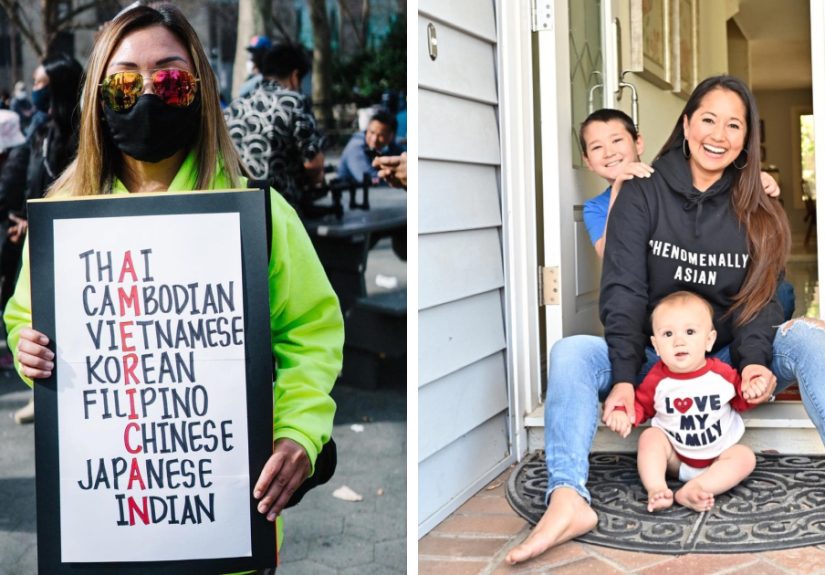
The word “Asian” covers an enormous range of people, cultures, languages, histories, religions, foods, skin tones, migration stories, and identities. East Asian, Southeast Asian, South Asian, Central Asian, Native Hawaiian, Pacific Islander, mixed-race, immigrant, refugee, third-generation American, adopted, multilingual, monolingual, rural, urban, wealthy, working classthe variety is not a footnote. It is the point.
Yet stereotypes flatten all that complexity into lazy labels. Some sound “positive,” like assuming every Asian person is a math genius. Others are openly insulting, such as mocking accents or treating Asian Americans as permanent outsiders. Either way, stereotypes reduce real people into cartoon versions of themselves. And in a modern world that claims to value diversity, inclusion, and common sense, that simply does not fly.
Below are 17 Asian stereotypes that deserve retirement, preferably to a tiny island with no Wi-Fi.
Why Asian Stereotypes Still Matter Today
Stereotypes are not just rude comments. They can influence hiring decisions, school expectations, medical care, dating behavior, media casting, customer service, and personal safety. A stereotype tells people, “I already know who you are,” before the person has even said hello.
For Asian Americans, two patterns appear again and again: being seen as “too foreign” to fully belong and being seen as “too successful” to need support. These ideas may look opposite, but they often work together. One says, “You are not really from here.” The other says, “You are doing fine, so stop talking about discrimination.” Both are wrong. Both are exhausting.
17 Asian Stereotypes That Need To Disappear
1. “All Asians Are the Same”
This stereotype is the buffet plate of bad assumptions: everything piled together with no thought. Asia is the world’s largest continent and includes thousands of ethnic groups, languages, and cultural traditions. A Vietnamese American family, a Korean adoptee, a Pakistani Muslim student, a Cambodian refugee elder, and a Japanese Hawaiian artist may all be connected to “Asian” identity in some way, but their experiences are not interchangeable.
When people say “Asian” but only picture one country, one facial feature, or one food, they erase millions of people. Modern conversations about identity require specificity. Ask, listen, and do not treat one person as a spokesperson for half the planet.
2. “Where Are You Really From?”
The “forever foreigner” stereotype treats Asian Americans as guests in their own country. Someone may be born in Chicago, raised in Texas, and emotionally attached to Costco samples, yet still get asked where they are “really” from.
Curiosity is not the problem. The problem is disbelief. When someone says they are from Seattle, Queens, Atlanta, or San Jose, believe them. Turning identity into an interrogation suggests that Asian faces cannot be fully American, which is both historically false and socially lazy.
3. “All Asians Are Good at Math”
At first glance, this stereotype may sound like a compliment. It is not. It pressures Asian students to perform perfectly, makes teachers overlook students who need help, and boxes Asian people into technical roles even when their talents are creative, athletic, entrepreneurial, emotional, or artistic.
Some Asian people love math. Some avoid spreadsheets like they owe them money. Talent is individual. Assuming otherwise can make a student feel like a disappointment for being normal, which is an absurd burden to place on anyone.
4. “Asian Americans Are the Model Minority”
The model minority myth claims Asian Americans are universally successful, quiet, hardworking, and free from serious barriers. It is dangerous because it sounds flattering while hiding real inequality.
Asian American communities include high-income households and families living in poverty. They include people with advanced degrees and people blocked by language barriers, immigration status, limited access to health care, and underfunded schools. Treating Asian Americans as proof that racism is “over” ignores the very real discrimination many face and unfairly pits communities of color against one another.
5. “Asian People Are Naturally Quiet and Submissive”
This stereotype shows up in classrooms, offices, politics, and relationships. It suggests Asian people are passive, obedient, or unwilling to lead. In reality, communication styles vary widely by personality, culture, language comfort, family background, and context.
Calling someone “quiet” may seem small, but it can affect promotions, classroom participation grades, and leadership opportunities. A person who listens carefully is not automatically passive. A person who avoids performative loudness may simply have excellent meeting survival skills.
6. “Asian Workers Are Great Employees, Not Leaders”
The “bamboo ceiling” describes barriers Asian professionals often face when trying to move into senior leadership. The stereotype says Asian employees are disciplined, technical, and reliablebut not bold, charismatic, or executive enough.
This is not a talent problem. It is a perception problem. Leadership does not have one accent, one volume level, or one personality type. Companies that reward only the loudest person in the room may confuse confidence with competence. Spoiler alert: those are not the same thing.
7. “Asian Women Are Exotic or Submissive”
Asian women have long been stereotyped as delicate, obedient, mysterious, hyperfeminine, or sexually available. These ideas are not romantic; they are racialized sexism dressed up as attraction.
Fetishization reduces women to fantasies instead of seeing them as full human beings with boundaries, ambitions, opinions, humor, anger, intelligence, and agency. Compliments that rely on race-based fantasy are not compliments. They are objectification with better lighting.
8. “Asian Men Are Weak or Undesirable”
Asian men have often been portrayed in Western media as nerdy, sexless, passive, or socially awkward. These stereotypes affect dating, self-image, casting, bullying, and everyday respect.
Masculinity is not owned by one race or culture. Asian men are athletes, fathers, artists, soldiers, teachers, executives, comedians, activists, soft-spoken introverts, loud extroverts, and everything between. The modern world has enough room for more than one version of manhood.
9. “Asian Parents Are All Strict and Emotionless”
The “tiger parent” stereotype turns Asian families into a punchline: piano lessons, perfect grades, no fun, and emotional warmth stored in a secret location no one can find.
Some families are strict. Some are relaxed. Many are loving in ways that may not match mainstream American TV scripts. A parent cutting fruit at midnight can be an entire love language. But no group should be reduced to one parenting style, especially when family dynamics are shaped by class, migration, trauma, culture, religion, and individual personality.
10. “Asian Food Is Weird or Smelly”
Food-based teasing is one of the earliest ways many Asian kids learn that their culture is being judged. A lunchbox can become a battlefield: rice, curry, kimchi, fish sauce, seaweed, pickles, noodles, and spices suddenly treated like a crime scene.
Then, years later, the same foods become trendy, expensive, and served under Edison bulbs. Funny how that works. The issue is not taste preference. People can like or dislike foods. The issue is mocking someone’s home, family, or heritage because it smells different from a ham sandwich.
11. “Asian People Cannot Speak English Well”
Some Asian Americans speak English as a first language. Some are multilingual. Some are learning English. Some speak with an accent because they know more than one language, which is not a flaw; it is a skill.
Mocking accents or assuming poor communication based on appearance is discriminatory. Clear communication matters, but intelligence does not disappear because vowels travel differently. In a global world, multilingual ability should be respected, not ridiculed.
12. “Asian Names Are Too Hard”
Mispronouncing a name once is human. Refusing to learn it is disrespectful. Names carry family history, culture, identity, and personal dignity. If people can pronounce Tchaikovsky, charcuterie, and every complicated fantasy character from streaming television, they can learn an Asian name.
A good rule: ask, repeat, practice, and do not make the person feel guilty for having a name that exists outside your comfort zone.
13. “All Asians Are Rich”
Because some Asian American groups have high median incomes, people often assume all Asian families are financially secure. This hides poverty, housing insecurity, wage gaps, refugee experiences, and major differences between ethnic groups.
Aggregated data can be misleading. When many communities are lumped together, the struggles of smaller or less visible groups can disappear. Policy, education, and health programs work better when data is detailed enough to show who actually needs support.
14. “Asian Students Do Not Need Help”
The model minority myth follows students into classrooms. Teachers may assume Asian students are fine, even when they are struggling academically, socially, emotionally, or financially.
This can make students less likely to receive tutoring, counseling, disability support, or mental health care. A student with good grades may still be anxious, depressed, isolated, or overwhelmed. Achievement should never be used as evidence that someone is okay.
15. “Asian People Are Not Creative”
The stereotype that Asian people are technical but not creative is especially strange considering the global influence of Asian and Asian diasporic artists, designers, filmmakers, musicians, chefs, writers, architects, comedians, and fashion innovators.
Creativity is not limited to painting canvases or writing novels. It lives in engineering, business strategy, food, language, parenting, activism, dance, software, humor, and survival. The idea that Asian people can calculate but not imagine is not just false; it is boring.
16. “Asian Characters Are Sidekicks, Villains, or Background Decoration”
Media representation has improved, but old patterns remain. Asian characters have often been written as martial artists, nerds, villains, exchange students, silent workers, mystical guides, or best friends with no inner life.
Representation matters because media teaches audiences whose stories are normal, romantic, funny, heroic, and worth following. Asian characters deserve full lives on screen: messy, joyful, flawed, ordinary, ambitious, silly, romantic, and human.
17. “Anti-Asian Racism Is Not a Big Deal”
One of the most damaging stereotypes is the idea that anti-Asian racism is rare, mild, or less serious than other forms of discrimination. This belief makes people dismiss harassment, workplace bias, bullying, hate incidents, and everyday exclusion.
Racism does not need to be loud to be harmful. Sometimes it is a slur. Sometimes it is a joke. Sometimes it is being ignored for leadership. Sometimes it is a stranger yelling in a grocery store. Sometimes it is being told to “go back” to a country you have never lived in. None of it belongs in a healthy society.
How To Challenge Asian Stereotypes in Real Life
Listen Without Turning One Person Into a Representative
If an Asian friend, coworker, student, or neighbor shares an experience, listen to that person as an individual. Do not immediately ask them to explain “Asian culture” like they are a walking documentary with snacks.
Stop Laughing at Lazy Jokes
Stereotypes survive because people reward them with laughter. A simple “That is not funny” can interrupt the pattern. You do not need a dramatic speech with background music. Just make the room a little less comfortable for racism.
Use Specific Language
When possible, be specific. “Asian” may be appropriate in broad discussions, but “Filipino American,” “Korean American,” “Indian American,” “Vietnamese refugee community,” or “Hmong students” may be more accurate depending on the context.
Support Better Representation
Read Asian and Asian American authors. Watch films and shows created by Asian storytellers. Support journalists, artists, educators, business owners, and community organizations. Representation is not charity. It is a better mirror of the real world.
Personal and Everyday Experiences Related to Asian Stereotypes
Many experiences with Asian stereotypes do not arrive as dramatic movie scenes. They arrive in small, repetitive moments that stack up over time. A child opens a lunchbox and hears classmates complain about the smell. A teenager gets praised for being “basically white” because they speak English fluently. A college student says they are majoring in theater, and someone replies, “Really? I thought your parents would make you do medicine.” A professional shares an idea in a meeting, receives silence, and then watches someone else repeat it five minutes later to applause. Tiny moments, yesbut enough tiny paper cuts can still leave a mark.
One common experience is the pressure to be excellent without complaint. The model minority stereotype can make Asian students and workers feel trapped in a polished image. They are expected to be smart, calm, productive, grateful, and low-maintenance. If they succeed, people say it was expected. If they struggle, people act surprised, as if anxiety, burnout, financial stress, family conflict, or self-doubt forgot to check their ethnicity first. This pressure can make it harder to ask for help because asking for help feels like breaking character in a play nobody agreed to perform.
Another familiar experience is being treated as foreign in ordinary places. Someone compliments your English even though it is your first language. A stranger asks where you are “really” from. A customer assumes you work at the restaurant because you are Asian. A teacher calls on you to explain a country your family is not from. These moments may not always come from hatred, but they still send a message: you are being seen through a label before you are being seen as a person.
Food memories are especially powerful. Many Asian Americans remember hiding homemade lunches, asking parents for “normal” food, or feeling embarrassed by dishes they later saw celebrated by chefs and influencers. That shift can feel strange. The same flavors once mocked in school become fashionable when served in a restaurant with minimalist branding. For some, reclaiming food becomes a way to reclaim pride. Cooking with family, learning recipes, or bringing traditional dishes to friends can turn old shame into connection.
Workplace experiences also reveal how stereotypes adapt to professional settings. Asian employees may be praised for being hardworking but overlooked for leadership. They may be asked to take notes, handle technical details, or smooth over conflict, while others are described as “visionary” or “executive material.” Asian women may face a double bind: expected to be agreeable, then punished if they are assertive. Asian men may be unfairly seen as less charismatic or less authoritative. These assumptions are not just annoying; they can affect salaries, promotions, confidence, and career paths.
The good news is that many people are pushing back. Younger generations are naming stereotypes more openly. Parents are having different conversations with their children. Writers and filmmakers are creating fuller Asian characters. Teachers are learning to avoid one-size-fits-all assumptions. Workplaces are beginning to examine promotion patterns, not just hiring numbers. Friends are correcting each other. None of this fixes everything overnight, but culture changes when enough people stop treating old stereotypes as harmless.
The most meaningful experience, perhaps, is the moment someone realizes they do not have to shrink themselves to fit someone else’s idea of what Asian identity should look like. They can be loud, quiet, funny, serious, traditional, rebellious, fluent, still learning, ambitious, artistic, spiritual, skeptical, fashionable, nerdy, athletic, emotional, practical, or wonderfully inconsistent. In other words, they can be human. And that is exactly what stereotypes try to deny.
Conclusion: Stereotypes Are Small Boxes, and People Are Not Small
Asian stereotypes have no place in the modern world because they were never built for truth. They were built for convenience. They make complex people easier to categorize, mock, ignore, desire, fear, or dismiss. But real life is bigger than a stereotype.
Asian and Asian American communities are not a monolith. They are made of individuals with different histories, dreams, talents, struggles, families, languages, and futures. The work of dismantling stereotypes starts with everyday choices: learning names, questioning assumptions, supporting accurate representation, speaking up against lazy jokes, and remembering that identity is not a shortcut for knowing someone.
The modern world does not need better stereotypes. It needs fewer of them. Better yet, it needs curiosity, humility, and enough imagination to let people be fully themselves.