Table of Contents >> Show >> Hide
- What Is Spite and Malice?
- What You Need to Play Spite and Malice
- Spite and Malice Setup
- Understanding the Card Piles
- How to Play Spite and Malice
- How to Win Spite and Malice
- Important Spite and Malice Rules to Remember
- Beginner-Friendly Example Turn
- Spite and Malice Strategy for Beginners
- Advanced Strategy: How to Think Several Cards Ahead
- Common Mistakes to Avoid
- Popular Spite and Malice Variations
- Is Spite and Malice the Same as Skip-Bo?
- Why Spite and Malice Is So Fun
- Experiences and Practical Lessons From Playing Spite and Malice
- Conclusion
Note: This guide is written for web publishing and is based on commonly accepted Spite and Malice rules, including traditional two-deck play, popular house-rule variations, and modern digital versions of the game.
Spite and Malice is the card game equivalent of smiling politely while quietly blocking your opponent’s entire life plan. It looks like solitaire, plays like a race, and feels like a tiny cardboard rivalry happening right on your kitchen table. Also known as Cat and Mouse in many circles, Spite and Malice is a competitive patience-style card game where players try to empty their personal goal pile before anyone else does.
The basic idea is simple: build shared center piles upward in sequence, use cards from your hand and discard piles wisely, and get your own goal pile cards into play as fast as possible. The tricky part? Your opponent can see your top goal card, which means they can avoid helping you. That is where the “spite” and the “malice” politely enter the room, take off their coats, and stay for the whole evening.
This complete guide explains Spite and Malice rules, setup, gameplay, card pile meanings, legal moves, strategy tips, beginner mistakes, variations, and practical playing experience. Whether you are learning the game for the first time or trying to stop losing to that one family member who plays with suspicious confidence, this article will help you play smarter.
What Is Spite and Malice?
Spite and Malice is a turn-based card game for two or more players, although the classic version is usually played by two players. It belongs to the family of competitive solitaire or patience games. Instead of each player silently arranging cards alone, everyone competes to use the same shared building area.
The goal is to be the first player to play every card from your personal goal pile, sometimes called a payoff pile, stockpile, card stack, talon, or spite pile. Different families use different names, because card games love having more aliases than a spy in a movie. For clarity, this guide will mostly use “goal pile.”
Spite and Malice is closely related to Skip-Bo, which uses a special numbered deck. However, traditional Spite and Malice is played with regular playing cards. That makes it easy to learn at home because all you need is a couple of standard decks and someone willing to forgive you after you block them three turns in a row.
What You Need to Play Spite and Malice
Number of Players
The most common version is for two players. You can play with three or four players, but you may need more cards and a little more patience. With more players, the game becomes more chaotic because there are more visible goal cards to watch and more people capable of ruining your perfect move.
Cards Needed
For a standard two-player game, use two standard 52-card decks shuffled together. Jokers are usually removed in traditional play, although some house rules use Jokers as wild cards. Some versions use Kings as wild cards. Before starting, players should agree whether Kings, Jokers, both, or neither are wild.
Typical Game Length
A casual game usually takes about 20 to 45 minutes, depending on goal pile size, number of players, and how long everyone spends staring at their discard piles like they are solving a federal mystery.
Spite and Malice Setup
Shuffle the decks together thoroughly. Since you are mixing two full decks, give the cards a proper shuffle. This is not the moment for a lazy overhand shuffle and a hopeful shrug.
Deal 20 cards face down to each player. This is each player’s goal pile. Turn the top card of each goal pile face up. Players may not look through the rest of their own goal pile. Only the top card is available.
Next, deal five cards to each player as their hand. Players may look at their own hand but should keep it hidden from opponents. The remaining cards become the draw pile, placed face down near the center of the table.
The center area begins empty. During play, players will create center build piles. Each player also has space for up to four personal discard piles. These discard piles are important because they store cards for future turns, but only the top card of each discard pile can be played.
Understanding the Card Piles
The Goal Pile
Your goal pile is the pile you must empty to win. You can only play the top card of this pile. After you play it, flip the next card face up. Every time you remove a goal pile card, you are one step closer to victory. That is why strong Spite and Malice strategy focuses on clearing the goal pile whenever possible.
The Hand
Each player normally holds five cards. At the beginning of your turn, draw until you have five cards in hand. If you use all five cards during your turn without discarding, you may draw five more and continue playing. This can create powerful chain turns where one good sequence suddenly becomes a dramatic card avalanche.
The Center Build Piles
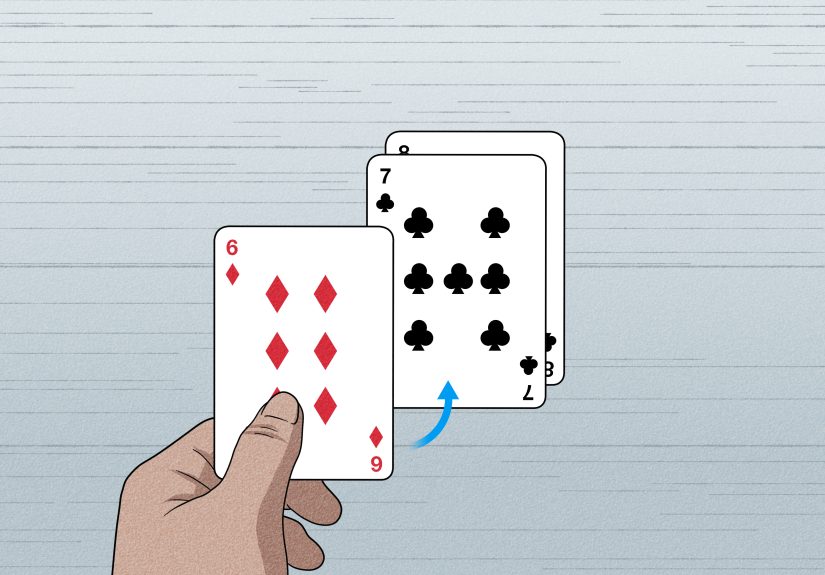
Center build piles are shared by all players. They usually begin with an Ace and build upward in rank: Ace, 2, 3, 4, 5, 6, 7, 8, 9, 10, Jack, Queen. Suits do not matter. A 5 of hearts can be placed after a 4 of clubs, and nobody should complain unless they are trying to distract you.
When a center pile reaches Queen, the pile is complete. It is removed from the center and usually shuffled back into the draw stock or set aside until needed, depending on the house rules. Removing a completed pile opens space for a new build pile.
The Discard Piles
Each player may have up to four personal discard piles. You can place cards onto your own discard piles in any order, but you can only play the top card from each pile. This means bad discard pile management can bury useful cards under useless ones. That is the card-game version of putting your keys in the freezer.
How to Play Spite and Malice
Step 1: Draw Up to Five Cards
At the start of your turn, draw from the draw pile until you have five cards in your hand. If you already have five cards, do not draw.
Step 2: Play Cards to the Center
On your turn, you may play legal cards onto the center build piles. Cards may come from your hand, the top of your goal pile, or the top of one of your discard piles. Your main priority should be playing from your goal pile whenever possible, because emptying that pile is the only way to win.
To start a center pile, play an Ace. After that, cards must continue in order. For example, if a center pile shows 7, the next card must be 8. You cannot skip ranks. You cannot play a 10 on an 8 and claim you were “manifesting efficiency.” The table will not support this legal argument.
Step 3: Continue Playing as Long as You Can
You may keep playing cards as long as you have legal moves. If you play all five cards from your hand without discarding, draw five more and continue. This rule rewards planning because a well-organized hand and discard layout can create long, satisfying turns.
Step 4: End Your Turn by Discarding
When you cannot or do not want to play more cards, end your turn by placing one card from your hand onto one of your personal discard piles. Once you discard, your turn ends. This is one of the most important Spite and Malice rules because your discard choice sets up your future options.
How to Win Spite and Malice
You win by playing the last card from your goal pile onto a center build pile. Cards left in your hand or discard piles usually do not matter. The goal pile is the race. Everything else is just luggage.
If the draw pile runs out, house rules vary. Some players shuffle completed center piles back into a new draw pile. Some digital or modern versions end the game and declare the player with fewer goal pile cards remaining as the winner. Because this rule can affect strategy, agree on it before the game begins.
Important Spite and Malice Rules to Remember
Only the top card of your goal pile is playable. You cannot peek through the rest of the pile. You also cannot move cards from the center piles back into your hand or discard piles.
You may only play the top card of each personal discard pile. Cards underneath are locked until the cards above them are removed. This is why stacking cards carelessly is one of the fastest ways to turn your discard area into a cardboard traffic jam.
Suits do not matter in most versions. Rank is everything. A black 4 and a red 4 are functionally the same when building center piles.
Wild card rules vary. Some versions use Kings as wild cards. Some use Jokers. Some use no wild cards at all. If wild cards are included, they can usually represent any needed rank in a center pile, though some groups restrict wild cards from representing Aces. Confirm before playing.
Beginner-Friendly Example Turn
Imagine your goal pile shows a 6. One center pile currently shows 5. Great news: you can play your goal pile 6 immediately. After playing it, you flip over the next goal pile card and reveal a 9.
Your hand contains 7, 8, 10, Queen, and 3. Another center pile shows 6, so you play 7 and 8 from your hand. Now the pile shows 8, and your goal pile shows 9, so you play your goal pile 9. Excellent. You flip the next goal pile card and reveal an Ace.
If there is an empty center pile, you can play that Ace from your goal pile to start a new pile. In one turn, you have removed three goal pile cards. That is the kind of turn that makes opponents suddenly “need a snack break.”
Spite and Malice Strategy for Beginners
Play Your Goal Pile First
The biggest beginner mistake is focusing too much on hand cards. Your hand is useful, but your goal pile is the win condition. If you can play either a card from your hand or the same rank from your goal pile, usually play the goal pile card first.
Do Not Help Your Opponent Too Much
Because your opponent’s top goal pile card is visible, you can make smart defensive choices. If your opponent needs a 9 and you are about to play an 8 to the center, ask yourself whether that move helps you enough to justify opening the door for them. Sometimes the best move is not the most obvious move.
Organize Discard Piles Carefully
A strong basic method is to build discard piles in descending order when possible. For example, placing a 9 on a 10, then an 8 on the 9, can make the pile easier to play later. You do not have to follow this pattern every time, but having a system helps prevent accidental card burial.
Keep Low Cards Accessible
Aces, 2s, and 3s are valuable because they start or develop new center piles. If you bury them deep in discard piles, you may regret it. Low cards often create the bridge that lets you reach your goal pile card.
Use Wild Cards With Purpose
If your version uses Kings or Jokers as wild cards, avoid spending them casually. Wild cards are most powerful when they help you play a goal pile card, complete a long sequence, or prevent your opponent from gaining an easy opening. A wasted wild card is like using a fire extinguisher to blow out a birthday candle.
Advanced Strategy: How to Think Several Cards Ahead
Good Spite and Malice players do not just ask, “What can I play now?” They ask, “What does this move unlock next?” Before playing a card from your hand, check your goal pile, discard piles, and your opponent’s visible goal card.
Suppose your goal pile shows Jack. A center pile shows 8, and you have 9 and 10 in hand. Playing 9 and 10 may unlock your Jack, which makes the move highly valuable. But if your opponent’s goal pile also shows Jack, you may need to decide whether racing forward benefits you more than helping them.
Advanced play often involves controlled generosity. Sometimes you build a center pile even though your opponent can use it, because you can use it better. Other times you deliberately avoid playing a card that would give your opponent a perfect chance. The balance between offense and defense is what makes the game more than simple counting.
Common Mistakes to Avoid
Discarding Without a Plan
Random discarding is dangerous. Since only the top card of each discard pile is available, every discard should be placed with future access in mind. Try not to cover a card you are likely to need soon.
Ignoring the Opponent’s Goal Card
You do not need to stare at your opponent’s pile like a detective in a raincoat, but you should check it before making center pile moves. One careless play can hand them a huge turn.
Saving Too Many Cards
Defense matters, but hoarding cards can slow your own progress. If you never build center piles because you are afraid of helping your opponent, you may trap yourself too. The best players know when to block and when to sprint.
Forgetting the Goal
It is easy to get fascinated by beautiful discard pile organization. But tidy piles do not win by themselves. Your goal pile must shrink. Whenever possible, use your entire turn to create paths to that top goal card.
Popular Spite and Malice Variations
Different Goal Pile Sizes
Many players use 20 cards in the goal pile, but shorter games may use 10 or 15. Longer games may use 25 or 30. A smaller goal pile makes the game faster and friendlier for beginners. A larger pile creates a longer strategic battle.
More Than Two Players
With three or four players, add more decks if needed. More players create more blocking opportunities and more unpredictable turns. The game becomes less controlled but often more entertaining.
Wild Kings or Jokers
Some groups treat Kings as wild because the standard center sequence ends at Queen. Others include Jokers as wild cards. Wild cards make the game faster and more explosive, but they can also reduce the pain of being stuck. Whether that is good or bad depends on how much emotional spice your table enjoys.
Unlimited Center Piles
Some house rules allow unlimited center build piles instead of limiting the table to three or four. This makes the game easier and more open. Limited center piles create tighter strategy because players must fight for space.
Is Spite and Malice the Same as Skip-Bo?
Spite and Malice and Skip-Bo are closely related, but they are not exactly the same. Skip-Bo uses a special commercial deck with numbered cards and Skip-Bo wild cards. Spite and Malice uses standard playing cards and has many traditional house-rule variations.
If you already know Skip-Bo, you will understand Spite and Malice quickly. The main concepts are familiar: personal stockpile, shared building piles, discard piles, sequential play, and racing to empty your own pile first. The standard-card version, however, has its own charm. It feels a little more old-school, a little sharper, and slightly more like something your grandparents mastered while pretending they were “just lucky.”
Why Spite and Malice Is So Fun
The magic of Spite and Malice comes from its mix of luck, planning, and friendly sabotage. You cannot control which cards appear in your goal pile, but you can control how you use your hand, how you arrange your discard piles, and when you choose not to help your opponent.
It is easy enough for beginners to learn in one game, but it has enough tactical depth to stay interesting. Every turn offers small decisions: Should you start a new pile? Should you save that Ace? Should you play the 8 even though your opponent needs a 9? Should you use the wild card now or wait? These choices make the game feel lively without requiring a rulebook the size of a dishwasher manual.
Experiences and Practical Lessons From Playing Spite and Malice
After several games of Spite and Malice, one lesson becomes painfully clear: the game rewards people who pay attention. The first time many players learn it, they treat the discard piles like a junk drawer. A 4 goes here, a Queen goes there, a 7 lands wherever there is space. Ten minutes later, they realize the one card they need is buried under three others, and their opponent is calmly emptying a goal pile with the peaceful expression of someone watering houseplants.
A better experience comes from treating discard piles like little staircases. You do not need a perfect system, but you should know why each card goes where it goes. For example, if you place higher cards underneath lower cards, you give yourself a chance to peel them off in sequence later. This is especially helpful when a center pile begins moving quickly. Suddenly your messy-looking discard pile becomes a useful backup engine.
Another real playing lesson is that blocking feels good, but overblocking can backfire. New players often discover their opponent needs a 10, then refuse to play a 9 under any circumstances. That can be smart, but not if the 9 also helps you reach your own goal pile card. Spite and Malice is not just about stopping the other player. It is about stopping them only when it does not stop you harder. The best defensive move is one that delays your opponent while still improving your own position.
The most satisfying turns usually happen when you plan backward from your goal pile. If your top goal card is Queen, scan the center piles and ask what sequence is needed to reach it. Maybe a pile shows 8, and you have 9, 10, and Jack available. That is not just a nice hand; it is a runway. If you can land the Queen from your goal pile, the whole turn is worth building around. This habit makes the game feel less random and more strategic.
Spite and Malice also teaches timing. Sometimes you should hold a wild card because it can rescue a future turn. Other times, using it immediately opens your goal pile and starts a chain reaction. The difference depends on what is visible: your goal card, your opponent’s goal card, the center piles, and your discard pile tops. Inexperienced players use wild cards because they can. Strong players use them because they should.
Another fun experience is how quickly the table mood changes. At the start, everyone is friendly. By the middle, players are saying things like, “Interesting choice,” which actually means, “You just ruined my entire plan.” By the end, every Ace feels valuable, every wild card feels suspicious, and every discard pile looks like a personal diary full of bad decisions. That emotional swing is part of the fun.
For families, Spite and Malice works well because it is competitive without being too complicated. Kids can understand the basic sequence building, while adults can enjoy the deeper strategy of timing, blocking, and pile management. For two players, it is especially good because there is no downtime. Every move your opponent makes affects you, so you stay involved even when it is not your turn.
The best house rule experience is to agree on everything before the first deal. Decide how many cards go in the goal pile, how many center piles are allowed, whether Kings or Jokers are wild, and what happens when the draw pile runs out. Most arguments in Spite and Malice do not come from the game being difficult. They come from two people confidently remembering two different versions from childhood. Both may be valid, but only one should be used at the table.
Ultimately, Spite and Malice is fun because it gives players constant little choices. You get luck from the draw, strategy from the piles, and drama from the visible goal cards. It is easy to learn, surprisingly sharp, and just mischievous enough to keep everyone leaning forward. And when you finally play the last card from your goal pile, victory feels wonderfulespecially if your opponent was one card away. That, dear reader, is not just winning. That is Spite and Malice doing exactly what it promised.
Conclusion
Spite and Malice is a smart, competitive card game built around simple rules and surprisingly rich decisions. Learn the setup, protect access to your discard piles, prioritize your goal pile, and watch your opponent’s visible card before opening the center piles too generously. Once you understand the rhythm, the game becomes a lively mix of racing, planning, and perfectly legal table sabotage.
For beginners, the best advice is simple: play your goal pile whenever possible, keep your discard piles organized, and do not waste wild cards. For experienced players, the game becomes a battle of timing. Knowing when to build, when to block, and when to hold back is what separates casual players from the person everyone suddenly wants to sit across from “just one more time.”