Table of Contents >> Show >> Hide
- Why the USS Enterprise Is So Hard to Dismantle
- From Historic Warship to Very Expensive Puzzle
- Why the Navy Pivoted Toward Commercial Dismantling
- The Regulatory and Environmental Maze
- Why This Matters Beyond One Ship
- The Real Problem: Dismantling History Is Never Clean
- What the Experience of This Project Really Looks Like
- Conclusion
Taking apart an old ship sounds simple until the ship in question is the USS Enterprise, the world’s first nuclear-powered aircraft carrier, a floating landmark with a resume longer than most office buildings. This is not a “grab a wrench and call the scrapyard” situation. It is an engineering puzzle, a regulatory maze, a budget headache, a logistics marathon, and a history lesson all welded into one enormous steel problem.
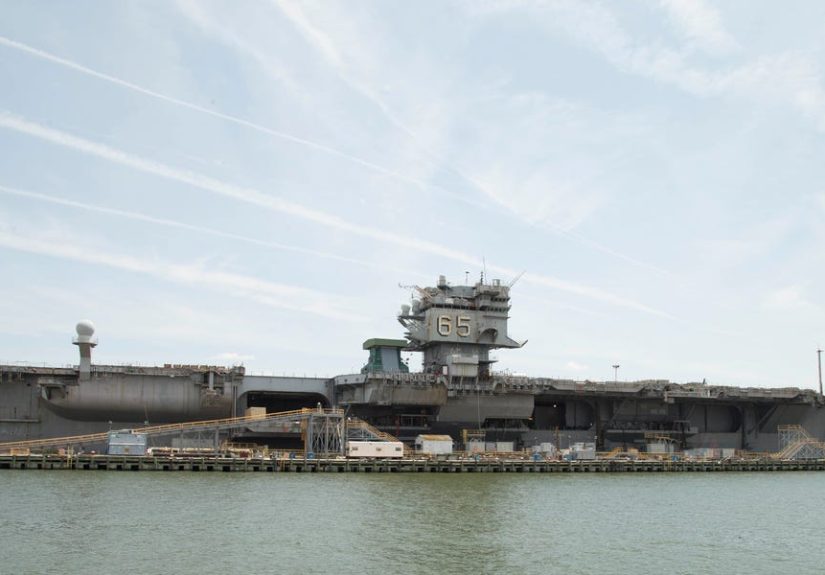
That is why the Navy has spent years figuring out what to do with the former Enterprise, also known as CVN-65. The carrier served for more than half a century, became a symbol of American naval power, and then stubbornly refused to fit neatly into any existing dismantling playbook. Decommissioning a one-of-a-kind nuclear-powered supercarrier turns out to be exactly as messy as it sounds: expensive, slow, politically sensitive, environmentally scrutinized, and packed with decisions that could shape how the Navy disposes of future carriers for decades.
In other words, the Navy is not just scrapping a ship. It is writing the instruction manual while holding the instruction manual’s heaviest chapter in dry storage.
Why the USS Enterprise Is So Hard to Dismantle
The first reason is obvious: Enterprise was not a normal carrier. It was the first nuclear-powered aircraft carrier ever built, and unlike later Nimitz-class carriers, it was powered by eight reactors. That unusual design makes the dismantling job more complicated than the retirement of a conventional warship and even more awkward than the disposal of later nuclear carriers, which were built with a more standardized approach.
Then there is the size. Enterprise was a giant in every sense, a ship with a legendary career and a hull that was never going to disappear quietly. Giant ships create giant problems: more compartments, more hazardous materials, more specialized labor, more planning for cutting, packaging, transport, waste handling, and environmental controls. A vessel like this is not dismantled. It is methodically disassembled, documented, monitored, and argued over.
And nuclear-powered ships live in a special category of complexity. Even after fuel removal, the reactor plants and radiological materials turn the project into something far more sensitive than ordinary ship recycling. That means strict procedures, licensed disposal pathways, specialized contractors, and a paper trail so thick it could probably stop small-caliber optimism.
A Ship With No Real Precedent
The Navy has experience dismantling nuclear submarines and cruisers, but Enterprise is different. It is the first nuclear-powered carrier the service has had to fully retire and dispose of. That matters because precedent is everything in defense bureaucracy. Once the Navy decides how to handle this ship, that choice will influence how it tackles future carrier disposals, especially as Nimitz-class carriers age out over the coming decades.
That is one reason the project has drawn so much scrutiny. The Navy is not merely solving today’s problem. It is establishing a model for tomorrow’s fleet retirement pipeline. Every cost overrun, every environmental requirement, every regulatory interpretation, and every schedule slip can echo into future programs.
From Historic Warship to Very Expensive Puzzle
Part of the trouble is timing. Enterprise was deactivated in 2012 and decommissioned in 2017, but getting from retirement to final dismantling has taken far longer than many outside observers expected. That gap has fueled a simple question: why did it take so long?
The answer is that the Navy had to work through several ugly realities at once. One, the carrier had to be defueled and placed in a safe condition for long-term storage. Two, officials had to decide whether the work should be done at a public naval shipyard, through a mixed public-private approach, or by commercial industry. Three, environmental review had to be completed. Four, regulators and program managers had to sort out how radioactive materials would be handled, where waste would go, and how responsibilities would be divided. Five, the price tag kept demanding attention like a smoke alarm that nobody could ignore.
Government watchdogs warned years ago that dismantling and disposal could cost well over $1 billion under some options. Even when commercial dismantlement looked faster and potentially cheaper, the job still remained massive, technical, and politically sensitive. Saving money did not mean making the project simple. It just meant choosing the least painful version of a painful task.
Why the Navy Pivoted Toward Commercial Dismantling
For a while, the Navy weighed multiple approaches. Eventually, commercial dismantling emerged as the preferred path. The logic was practical, not romantic. Public naval shipyards are already overloaded with maintenance, modernization, and submarine inactivation work. Asking them to absorb a one-of-a-kind carrier dismantling project was a bit like asking an airport control tower to also host a wedding reception because, technically, both involve scheduling.
The Navy’s public yards, especially Puget Sound Naval Shipyard, have long faced heavy workloads. Reports and Navy planning documents made clear that adding Enterprise to that queue risked clogging capacity needed for fleet readiness. That matters because an inactive historical giant may be fascinating, but the Navy’s first obligation is keeping operational ships and submarines available.
Commercial dismantling, by contrast, offered several advantages:
- It could move faster than a public-shipyard-heavy option.
- It could cost significantly less than some earlier alternatives.
- It could free public shipyard resources for active fleet maintenance.
- It could tap private-sector nuclear decommissioning expertise.
That strategic shift became concrete when the Navy moved ahead with a commercial dismantlement plan and, in 2025, awarded a contract worth about $536.7 million to NorthStar Maritime Dismantlement Services. Work is set to be performed in Mobile, Alabama, with completion targeted for November 2029. On paper, that sounds like progress. In practice, it is the beginning of the hardest chapter: turning a decision into a safe, compliant, real-world dismantling operation.
The Regulatory and Environmental Maze
If you want to understand why this process has dragged, look past the torches and cranes and pay attention to the regulations. A nuclear-powered carrier is not just steel and nostalgia. It is also a mobile package of hazardous materials, low-level radiological waste, and environmental obligations.
Earlier in the process, one of the biggest headaches involved regulatory authority. Government reviews described a disagreement over who would oversee aspects of a commercial dismantlement path. That uncertainty mattered because contractors need to know what rules govern their work, how waste will be classified, what standards apply, and which agencies have the final word. Regulatory ambiguity is bad for schedules, bad for pricing, and spectacularly bad for anyone hoping this would be quick.
Environmental review also added time, though not frivolously. The Navy had to examine how dismantling would affect public and occupational health, hazardous and radioactive waste management, air quality, biological resources, and surrounding communities. That included studying location options, transportation issues, hull cleaning, disposal facilities, and mitigation measures. None of that is glamorous, but all of it is necessary when the subject is a giant nuclear-era warship.
The Navy ultimately selected a commercial dismantlement alternative after environmental analysis concluded the approach could be carried out with proper controls and mitigation. That decision also reflected a practical goal: reduce the inactive ship inventory, avoid ongoing storage costs, and dispose of the carrier in an environmentally responsible way. In government terms, that is progress. In plain English, it means the Navy finally decided how to move from “thinking about dismantling” to “actually dismantling.”
Why This Matters Beyond One Ship
Enterprise is not just an old carrier waiting its turn. It is the test case for a much larger national challenge. The Navy has more nuclear-powered aircraft carriers that will eventually retire. What happens with CVN-65 will influence cost models, industrial-base planning, environmental review strategies, contract structures, and oversight expectations for the next generation of carrier retirements.
That is why the project has attracted attention from Navy leaders, financial managers, defense reporters, and watchdog agencies. This is where the Pentagon learns whether commercial industry can safely and efficiently help dismantle nuclear-powered surface ships on a larger scale. It is where the Navy figures out whether private-sector decommissioning expertise can reduce cost and schedule pressure without weakening oversight. And it is where taxpayers find out whether “more efficient” actually means more efficient, or just differently expensive.
There is also a symbolic layer here. Enterprise was not some anonymous hull. It served during the Cold War, Vietnam, and the post-9/11 era. It appeared in crisis after crisis and became one of the Navy’s most recognizable names. Dismantling a ship like that is operationally necessary, but emotionally awkward. The Navy is not merely disposing of steel. It is closing the life cycle of a national icon.
The Real Problem: Dismantling History Is Never Clean
One reason this story resonates is that it exposes the hidden side of military power. The public sees commissioning ceremonies, deployments, and dramatic carrier photos at sunset. It rarely sees the long, unglamorous afterlife of a warship: defueling, planning studies, storage costs, waste packaging, legal notices, public comments, disposal contracts, and endless coordination between the Navy, the Department of Energy, contractors, and regulators.
That afterlife is where strategy meets accounting. It is where engineering meets environmental law. It is where patriotic symbolism meets scrap value, labor hours, disposal pathways, and taxpayer patience. It is also where a simple truth becomes impossible to ignore: building a weapon system is only half the story. Retiring it responsibly can be almost as complicated.
Enterprise makes that tension visible because it was first, famous, and freakishly complicated. If a later carrier retirement becomes smoother, it may be because this project absorbed the confusion up front. Someone has to be the first ship through the wall. Unfortunately for the Navy, that first ship is also one of the biggest and most historically loaded ships it has ever owned.
What the Experience of This Project Really Looks Like
To understand the human side of the Enterprise dismantling saga, it helps to imagine the experience from three different angles: the planners, the workers, and the surrounding communities. None of them gets a simple version of this story.
For Navy planners, the experience is probably one long exercise in managing contradictions. They have to protect the public, satisfy environmental requirements, preserve readiness at busy public yards, control cost, answer Congress, and still move a unique ship toward disposal. Every solution creates a new category of paperwork, risk analysis, or public explanation. This is not the kind of project that rewards swagger. It rewards grim patience, technical competence, and a high tolerance for meetings that begin with “Before we proceed, we need to clarify the disposal pathway.”
For contractors and shipbreaking crews, the experience is more physical but no less demanding. Dismantling a vessel like Enterprise is not cinematic chaos with sparks flying in every direction. It is controlled, sequential, deeply procedural work. Teams have to identify materials, isolate hazards, cut methodically, package correctly, document everything, and operate under standards that leave little room for improvisation. The romance of ship recycling ends quickly when the real job is careful segmentation, contamination control, transport planning, and regulatory compliance. This is skilled industrial labor, not a demolition montage.
For nearby communities, the experience is mixed. There is economic opportunity in large dismantling projects: jobs, subcontracting work, port activity, and industrial investment. But there is also understandable concern. People hear “nuclear-powered carrier” and do not immediately think “routine materials management.” They think risk. They think accidents. They think about whether officials are being fully transparent. That tension is normal, and frankly healthy. Public skepticism tends to sharpen oversight, and a project this sensitive should never coast on vague reassurance.
Then there are the veterans and former sailors who served aboard the ship. For them, the experience is emotional in a different way. Watching a legendary carrier sit idle for years, waiting for its final disposition, can feel strange and a little sad. Ships like Enterprise are workplaces, symbols, memory containers, and national artifacts all at once. Dismantling one can feel necessary and unsettling at the same time. It is the maritime version of knowing an old landmark is unsafe to keep standing but still wincing when the fence goes up.
That mix of emotions and obligations is part of what makes the Enterprise story so compelling. It is not merely a defense contract update. It is a window into how America deals with the aging infrastructure of power. The ship once projected military strength around the globe. Now it demands a different kind of strength: administrative discipline, engineering rigor, environmental responsibility, and public trust. None of that looks heroic in the movie-trailer sense. But if the Navy gets this right, it may be one of the most important quiet victories in the carrier’s long life.
Conclusion
The Navy’s struggle to dismantle the USS Enterprise is not a sign of incompetence so much as a reminder of what happens when history, nuclear technology, industrial limits, and bureaucracy collide. The ship is enormous, unique, radioactive in all the least entertaining ways, and too important to dispose of carelessly. That combination guarantees friction.
Still, the story has moved from indecision to execution. The commercial dismantling path is now selected, the contract is awarded, and the Navy finally has a real route forward. The hard part, of course, is that the hard part is still ahead. Taking apart the world’s first nuclear-powered carrier was never going to be quick, cheap, or tidy. It was always going to be a grind.
And maybe that is the real lesson. Great warships do not simply leave history. Sometimes history has to cut them apart one regulated piece at a time.