Table of Contents >> Show >> Hide
- What Makes a Chocolate Chip Cookie “Perfect”?
- A Brief, Bite-Sized History (Because Cookies Have Lore)
- The Cookie Science That Actually Matters
- 1) Butter: temperature changes everything
- 2) Sugars: brown sugar brings chew; white sugar brings crisp
- 3) Flour: protein level affects thickness and bite
- 4) Eggs: yolks = richness; whites = structure
- 5) Leavening: baking soda vs. baking powder
- 6) Resting and chilling: the easiest upgrade you can make
- A Reliable “Everyday” Chocolate Chip Cookie Recipe (Built for Customizing)
- Texture Dial: Make One Dough, Get Three Different Cookies
- Troubleshooting: Fix the Usual Cookie Drama
- Storage and Make-Ahead Tricks (Future You Says Thanks)
- Fun Variations That Still Feel Like “Chocolate Chip Cookie”
- Chocolate Chip Cookie Experiences: Why These Cookies Follow Us Around
- Conclusion
Chocolate chip cookies are the unofficial national anthem of “I deserve a treat.” They’re also one of the most customizable bakes on earth: crispy or chewy, thin or thick, salty-sweet or full-on caramel-buttery, studded with chips or packed with molten chocolate puddles the size of small lakes.
This guide breaks down what actually changes a cookie’s texture and flavor (spoiler: it’s not your vibesit’s your butter and your timing), gives you a dependable base recipe, and shows you how to tweak it without ending up with a tray of chocolate chip pancakes. Let’s bake smarter, not harder.
What Makes a Chocolate Chip Cookie “Perfect”?
“Perfect” is personal. Some people want a crisp snap and a caramelized crunch. Others want a soft center that bends like a warm brownie and leaves chocolate on your fingertips like evidence. The good news: you can steer cookies toward your ideal texture with a few intentional choices.
A quick texture cheat sheet
| What you want | Do more of this | Do less of this |
|---|---|---|
| Chewy centers | More brown sugar, an extra egg yolk, rest/chill the dough | Overbaking, too much flour |
| Crispy edges | More white sugar, slightly thinner scoops, longer bake | Too much moisture (extra yolks, heavy add-ins) |
| Thick & gooey | Cool dough, taller scoops, chopped chocolate, slightly higher flour | Warm butter, hot baking sheets |
| Deep toffee flavor | Brown butter, dark brown sugar, longer dough rest | Rushing straight to the oven |
A Brief, Bite-Sized History (Because Cookies Have Lore)
Chocolate chip cookies didn’t exist the way we know them until the late 1930sbefore that, chocolate tended to show up as cocoa, grated chocolate, or melted chocolate mixed into dough. The “aha” moment was adding chopped pieces of semi-sweet chocolate into a cookie so they’d soften but still hold their shape.
Ruth Wakefield, who ran the Toll House Inn in Whitman, Massachusetts, published an early version of the recipe in her 1938 cookbook. The cookie’s popularity exploded fast enough that by 1939 the recipe was being widely publicizedand chocolate companies noticed. Soon, chocolate was being sold in forms designed to make “little pieces in cookies” easier, helping turn a smart idea into a classic American habit.
The takeaway: chocolate chip cookies were born from a practical baking insighttexture matters. People didn’t fall in love with “chocolate-flavored cookies.” They fell in love with warm dough plus real pockets of chocolate.
The Cookie Science That Actually Matters
1) Butter: temperature changes everything
Butter is the steering wheel for cookie texture. When you cream room-temperature butter with sugar, you’re trapping air. That air expands in the oven, which helps cookies rise and stay a little lighter. If the butter is too warm, your dough can turn slack and the cookies spread fast.
Melted butter is a different personality: it gives you denser, chewier cookies with more spread and a shinier, crackly surface. Brown butter takes it further by adding nutty, toffee-like flavoramazing in chocolate chip cookiesjust make sure it cools down before it meets your eggs, unless you’re trying to invent scrambled-cookie dough.
2) Sugars: brown sugar brings chew; white sugar brings crisp
White sugar encourages spreading and crispness because it dissolves and caramelizes readily. Brown sugar contains molasses, which adds moisture and chew. Want a cookie that stays soft longer? Lean into brown sugar. Want a cookie that crunches at the edges? Keep a healthy portion of white sugar in the mix.
3) Flour: protein level affects thickness and bite
All-purpose flour is the standard, reliable choice. Higher-protein flours (like bread flour) can create a chewier, sturdier cookieespecially useful for big, bakery-style chocolate chip cookies that you want to hold their shape. If you’ve ever bitten into a thick cookie that felt satisfyingly “substantial,” flour protein probably helped.
4) Eggs: yolks = richness; whites = structure
Egg yolks add fat and emulsifiers, which can make cookies richer and chewier. Egg whites add water and protein, which can help structure but can also push cookies toward cakier if the balance leans too far. A common move for a chewy cookie is adding one extra yolk (without adding the extra white).
5) Leavening: baking soda vs. baking powder
Baking soda promotes browning and spread and helps create that classic “cookie” flavor. Baking powder adds lift and can make cookies puffier. Many recipes use baking soda alone; some use a little of both to get a balance: enough spread for crisp edges, enough lift for a soft center.
6) Resting and chilling: the easiest upgrade you can make
If there’s one technique that shows up across serious cookie testing, it’s resting the dough. Even a short rest helps flour hydrate and lets flavors meld. A longer chill (overnight to a couple days) often produces better texture and deeper flavorless “sweet dough,” more “caramel-butter-chocolate.”
Short on time? You can still firm the dough quickly (think: fast chill methods) to slow spreading and get cleaner, thicker cookies. Time is an ingredient, but you can borrow some when you need it.
A Reliable “Everyday” Chocolate Chip Cookie Recipe (Built for Customizing)
This is a practical, crowd-pleasing base: crisp edges, chewy centers, plenty of chocolate. It’s designed so you can tweak it without the cookie gods immediately revoking your baking privileges.
Ingredients (makes about 24 medium cookies)
- 2 1/3 cups (about 280g) all-purpose flour
- 3/4 teaspoon baking soda
- 1/2 teaspoon baking powder
- 1 teaspoon fine salt
- 1 cup (227g) unsalted butter, softened (or see brown-butter option below)
- 3/4 cup (165g) packed brown sugar (dark brown for extra toffee vibes)
- 1/2 cup (100g) granulated sugar
- 2 teaspoons vanilla extract
- 1 large egg + 1 large egg yolk
- 10 ounces (280g) semi-sweet chocolate chips or chopped chocolate
- Optional: flaky salt for finishing, 1/2 cup toasted nuts, or 1/2 cup toffee bits
Instructions
- Heat the oven: Preheat to 350°F. Line baking sheets with parchment paper.
- Mix dry ingredients: Whisk flour, baking soda, baking powder, and salt in a bowl.
- Cream butter and sugars: Beat butter, brown sugar, and granulated sugar until fluffyabout 2–4 minutes. (This is where structure starts.)
- Add wet ingredients: Beat in vanilla, the whole egg, then the extra yolk. Scrape the bowl.
- Combine: Add dry ingredients and mix on low just until you don’t see dry flour. Overmixing = tougher cookies.
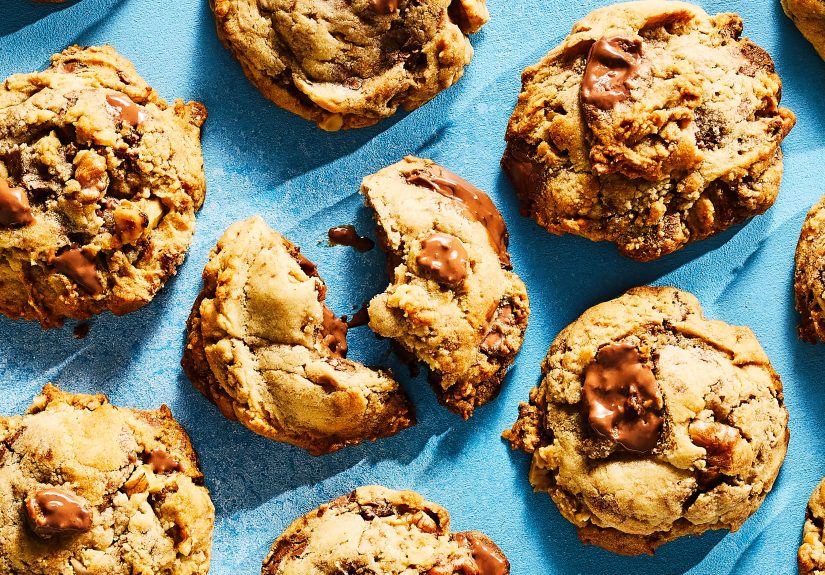
- Add chocolate: Stir in chips/chocolate. If you’re using chopped chocolate, save a small handful to press on top for dramatic, bakery-style puddles.
- Chill (recommended): Chill dough 30 minutes for thicker cookies. For deeper flavor, chill overnight.
- Scoop: Scoop 2 tablespoons of dough per cookie (about 35–40g). Place 2–3 inches apart.
- Bake: Bake 10–12 minutes, until edges look set and the centers still look slightly underdone. They finish cooking on the hot sheet.
- Cool: Cool 5 minutes on the sheet, then move to a rack. Finish with flaky salt if desired.
Brown butter option (extra flavor)
Brown 1/2 cup (113g) of the butter in a small saucepan until it smells nutty and turns amber. Pour into a bowl and let it cool until warmnot hotthen beat it with the remaining 1/2 cup softened butter and continue the recipe. This gives you a richer, toasted-butterscotch base that makes chocolate taste even more chocolatey.
Texture Dial: Make One Dough, Get Three Different Cookies
Chewy chocolate chip cookies
- Use dark brown sugar instead of light brown sugar.
- Keep the extra egg yolk (don’t skip it).
- Chill dough overnight if you can.
- Pull cookies when centers still look soft.
Thin and crispy
- Increase granulated sugar slightly and reduce brown sugar slightly.
- Use melted butter (then chill briefly so it’s scoopable).
- Scoop smaller portions and bake a minute longer.
Thick, bakery-style
- Chill dough at least 1 hour (overnight is even better).
- Use chopped chocolate for bigger melted pockets.
- Make tall scoops (stacking dough helps height).
- Keep baking sheets cool between batches.
Troubleshooting: Fix the Usual Cookie Drama
“Why did my cookies spread into one giant cookie continent?”
- Butter too warm: If it feels greasy or melty, chill the dough 20–30 minutes.
- Hot baking sheet: Don’t scoop dough onto a sheet that just left the oven.
- No chill time: Even a short chill can slow spreading.
- Measuring issue: Too little flour is a common culpritspoon-and-level if using cups.
“They look done, but they fall apart when I move them.”
- Let them cool on the sheet for a few minutes before transferring.
- Use parchment paper for easier release and more consistent bottoms.
- Use a thin metal spatula and lift gently.
“Mine taste fine, but they’re kind of… bland.”
- Add salt correctly: A full teaspoon of fine salt makes chocolate pop.
- Upgrade vanilla: Real vanilla extract matters more than you’d think.
- Try a dough rest: Even a few hours deepens flavor; overnight is a noticeable leap.
- Use better chocolate: Chopped chocolate bars can taste richer than standard chips.
“They’re dry.”
- Pull them earliercookies continue to set as they cool.
- Check your flour measurement (too much flour dries cookies fast).
- Store airtight once fully cool.
Storage and Make-Ahead Tricks (Future You Says Thanks)
Chocolate chip cookies are at peak greatness the day they’re baked, but you can get very close later with smart storageor better, by freezing dough.
Freeze dough balls
- Scoop dough into balls and freeze on a lined sheet until solid.
- Transfer to an airtight bag/container and freeze for up to a few months.
- Bake from frozen at 350°F; add 1–3 extra minutes as needed.
Store baked cookies
- Cool completely, then store airtight at room temperature.
- If you love soft cookies, store with a small piece of bread (it donates moisture like a tiny carbohydrate humidifier).
- For crisp cookies, store loosely covered so they don’t steam themselves soft.
Fun Variations That Still Feel Like “Chocolate Chip Cookie”
You can change a cookie’s personality without losing the classic vibe. Here are upgrades that taste intentional, not accidental:
- Sea salt finish: A pinch of flaky salt on warm cookies makes chocolate taste louder.
- Toffee bits: Adds crunch and caramel notes; great with brown butter.
- Espresso powder: A small amount boosts chocolate flavor without making it taste like coffee.
- Mixed chocolate: Use a blend of semi-sweet and dark for depth.
- Toasted nuts: Pecans or walnuts add texture and a roasty background note.
- “One cookie” method: Scale down when you want a treat without a week of leftovers.
Chocolate Chip Cookie Experiences: Why These Cookies Follow Us Around
Chocolate chip cookies aren’t just dessertthey’re a portable mood. They show up in people’s lives the way certain songs do: you hear the opening notes (or smell the butter and vanilla), and suddenly you’re time-traveling.
For a lot of us, the first “real” baking memory is chocolate chip cookies because they’re forgiving enough for a beginner but dramatic enough to feel like magic. You pour in a bowl of brown sugar and it looks like sand. You crack eggs and suddenly you’re doing something grown-up and important. Then you stir in chocolate chipsalways more than the recipe saysbecause recipes can’t see your heart, and your heart says, “More chocolate.”
They’re also the social cookie. Brownies are a commitment. Cakes require plates and forks and a small emotional support team. But cookies? Cookies are a handshake. You can bring them to school events, team practices, study sessions, family gatherings, and neighbors who helped you carry something heavy. Nobody needs instructions for how to enjoy a cookie. The cookie is the instructions.
Chocolate chip cookies are the MVP of “I didn’t know what to bring.” They’re dependable, familiar, and they make a kitchen smell like you have your life togethereven if the rest of your day has been a slideshow of chaos. That warm butter-and-sugar aroma has a way of turning a random evening into something that feels safe and intentional.
Then there’s the ritual side of it: the cookie scoop, the parchment paper, the first tray coming out, the internal debate about whether you can eat one while standing over the sink (yes), and the second debate about whether you should let them cool (also yes… but maybe not all of them). Some people love the first cookie because it’s the “tester.” Others love the last cookie because it’s the one that got crispest at the edges and somehow tastes like caramelized victory.
The cookie also teaches you how tiny changes matter. Chill the dough and you get a thicker cookie with better texture. Brown the butter and suddenly the cookie tastes like it went to culinary school. Use chopped chocolate and the cookie becomes more dramaticpuddles, streaks, glossy molten spots that make it look like a bakery display case. Even sprinkling a pinch of flaky salt on top can turn “good” into “wait, why is this so good?”
And maybe that’s why chocolate chip cookies stick with us: they’re simple enough to feel familiar, but complex enough to keep getting better. You can make them for comfort. You can make them to celebrate. You can make them to apologize. You can make them because you’re bored, or because you’re proud, or because the day was a lot and you want something warm and sweet that doesn’t ask questions. In a world that loves complications, the chocolate chip cookie remains beautifully direct: here is butter, here is sugar, here is chocolate, and for a few minutes, that’s more than enough.