Table of Contents >> Show >> Hide
- How America’s star interceptor ended up in Iran
- Then the alliance blew up
- Why keeping the Tomcat alive became such a big deal
- The “secret war” was really a war of parts
- When scrap metal became national security policy
- What the long campaign says about modern power
- Experiences from the long, strange Tomcat shadow war
- Conclusion
There are military rivalries, there are sanctions fights, and then there is the weird, wrench-in-the-gears saga of Iran’s F-14 Tomcats. This was not a classic war story with dramatic maps, triumphant trumpet music, and a narrator barking into the void. It was stranger than that. The United States sold one of its most advanced fighters to Iran in the 1970s, watched the alliance collapse after the 1979 revolution, and then spent decades trying to keep the same jet from staying alive through smugglers, shell companies, spare-part hustlers, and bureaucratic loopholes. If that sounds like Top Gun wandered into a customs investigation, that is because it basically did.
The phrase “secret war” fits because the campaign was not fought mainly in the air. It played out in export-control offices, criminal indictments, intelligence files, liquidation websites, and desert scrapyards where retired American jets were literally chopped to pieces. The target was not just an airplane. It was a chain of survival: radar parts, microcircuits, hydraulics, wing-control components, avionics, missiles, and every other little piece that keeps a complicated Cold War fighter from becoming a very expensive lawn ornament.
How America’s star interceptor ended up in Iran
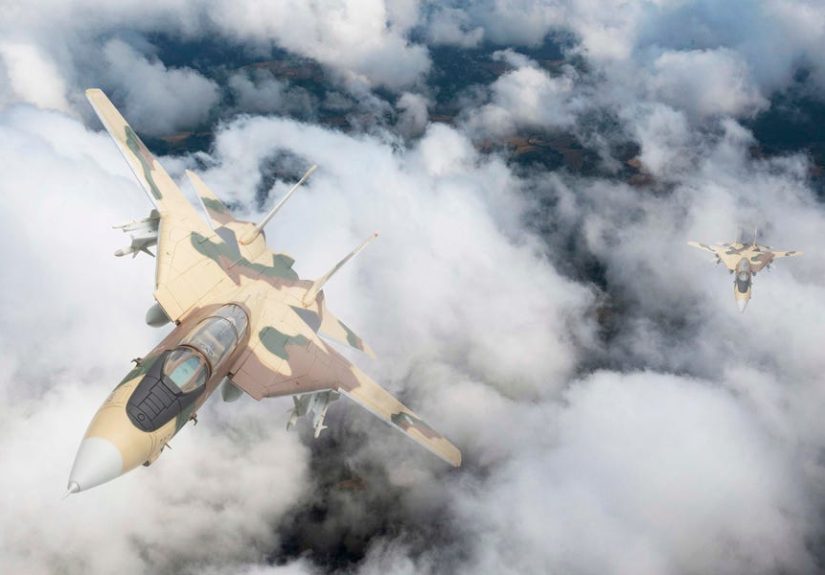
To understand the later crackdown, you have to start with a time when Washington and Tehran were close partners. In the early 1970s, Shah Mohammad Reza Pahlavi wanted a high-end fighter that could counter Soviet MiG-25 reconnaissance flights. The F-14 was tailor-made for that role. It was fast, long-legged, and built around the AWG-9 radar and AIM-54 Phoenix missile combination, a pairing that gave the aircraft the ability to detect targets at long range and engage multiple threats in ways that felt almost unfair for their era.
Iran did not buy the Tomcat as a vanity project. It bought the jet because it had a real air-defense problem and wanted the best available answer. The deal was huge, and by the time the relationship collapsed, Iran had taken delivery of 79 of the 80 F-14s it had ordered, along with training, spare parts, and the Phoenix missile ecosystem that made the aircraft so dangerous. In a twist worthy of defense-industry folklore, the Iranian order also helped keep the F-14 program alive at a critical moment. The Tomcat was not just a fighter sale. It was a geopolitical marriage, a prestige purchase, and a major industrial lifeline all at once.
Then the alliance blew up
Five years after the big sale, the 1979 Islamic Revolution turned one of Washington’s best-armed regional partners into one of its most determined adversaries. American technicians left. The hostage crisis poisoned relations. Sanctions followed. Overnight, Iran possessed one of the world’s most sophisticated fighters but no longer had normal access to the factory ecosystem needed to support it.
That should have been the end of the story. Instead, history took a sharp left turn. Iraq invaded Iran in 1980, and Tehran suddenly needed every serious weapon it could keep alive. The F-14 went from awkward inheritance to national necessity. Iranian crews, many originally trained with U.S. help, brought the aircraft back into service and used it as a long-range interceptor, a defensive umbrella, and a psychological weapon. The Tomcat’s reputation mattered almost as much as its missiles. Iraqi pilots learned to respect it, and in many accounts, they learned to fear it.
Exactly how many Iraqi aircraft Iranian F-14s shot down is still debated. Wartime records are messy, political incentives were everywhere, and competing claims remain part of the legend. But the broader point is not especially controversial: the Tomcat mattered. It helped defend key targets, it complicated Iraqi operations, and it gave Iran an air-defense tool that was still unusually capable even after the revolution severed official support.
Why keeping the Tomcat alive became such a big deal
The F-14 was never a simple machine, even for the U.S. Navy. It was maintenance-hungry, electronically complex, and deeply dependent on a support network of specialized parts. For Iran, that meant every flying Tomcat was a small miracle built out of engineering skill, cannibalization, improvisation, and stubbornness. Some jets flew while others became “hangar queens,” donating components so a smaller number could remain operational. Over time, Iranian technicians also reverse-engineered systems and tried to replace missing U.S. hardware with locally produced substitutes.
That survival story explains why Washington saw the Tomcat as more than a relic. As long as Iran could sustain even part of the fleet, it retained a symbolically important and operationally useful aircraft. The F-14’s radar, range, and interceptor role still made it relevant in a regional air-defense picture, even if age, sanctions, and attrition steadily reduced the fleet’s edge. Iran later pursued workarounds including domestic missile efforts tied to the old Phoenix concept, because once a country has spent decades keeping a rare fighter alive, it does not casually let the cat die.
The “secret war” was really a war of parts
This is where the story becomes wonderfully unglamorous and therefore extremely important. Washington did not wage its long campaign against Iran’s F-14s by sending Navy pilots to dogfight over the Gulf. It went after supply chains.
U.S. investigators, lawmakers, and prosecutors kept running into the same ugly truth: Iran and its intermediaries were still hunting parts for American-made military systems through brokers, front companies, transshipment routes, and poorly controlled surplus channels. Some of those efforts involved F-14 components directly. Others involved the wider ecosystem of U.S.-built aircraft and missile systems that Iran had inherited from the Shah’s era. Either way, the strategy was clear: if Iran could not legally buy what it needed, it would try to source it indirectly.
Leaky pipelines, middlemen, and third-country routes
Government reports and criminal cases painted a picture of procurement by detour. Parts moved or were attempted to move through places such as the United Arab Emirates, Turkey, Malaysia, and Singapore. In one notable pattern, Iranian buyers sent wish lists to brokers, brokers reached out to U.S. sellers, and the shipments were routed through third countries to disguise the final destination. That is not a spare-parts market. That is a spy novel with invoices.
By the late 2000s, the Department of Justice had announced multiple prosecutions involving efforts to export U.S.-made aircraft parts to Iran. One 2008 case alleged that parts for the F-14, CH-53, and AH-1 were bought in the United States, shipped to Dubai, and then forwarded to Iran. A 2009 case broadened the picture further, charging an Iranian national and multiple co-defendants in a conspiracy to export U.S.-made military aircraft parts to Iran. Later cases continued the pattern. In a 2016 sentencing summarized by DOJ, prosecutors described a scheme involving microcircuits designed for use on F-14 fighter jets that were arranged for shipment from the United States through Turkey to Iran.
That sequence matters because it shows the “secret war” was not one operation but a long counter-procurement campaign. It was repetitive, procedural, and maddeningly persistent. Close one route, and another opened. Arrest one broker, and a new company name appeared on the paperwork. The F-14 story became a lesson in how sanctions work in real life: not as a magic wall, but as a constant contest between control and evasion.
Then Washington discovered its own backyard was messy
If the smugglers were one problem, the Pentagon’s own surplus system was another. This was the deeply embarrassing chapter. GAO found that sensitive military property, including F-14 parts, had ended up for sale to the public through the Defense Department’s liquidation channels. Iran, lawmakers were warned, was known to be seeking those parts. In plain English: the United States was trying to stop Iran from supporting its Tomcats while parts connected to the Tomcat were slipping out through American disposal systems. That is the sort of irony that causes congressional hearings and very long sighs in government offices.
Reuters reported in 2007 that the Pentagon had mistakenly sold about 1,400 aircraft parts sought by Iran because of a technical glitch tied to automated controls. Around the same time, the Defense Logistics Agency halted sales of all F-14 parts, not just uniquely sensitive components. Officials also reviewed tens of thousands of items and moved toward destroying those that could pose a risk if diverted. This was the moment the U.S. approach hardened from “be more careful” to “stop selling this stuff and start breaking it.”
When scrap metal became national security policy
The most visually dramatic chapter of the crackdown came after the U.S. Navy retired the F-14 in 2006. Normally, old aircraft go to the boneyard, museums, training roles, or long-term storage. The Tomcat got different treatment. Concern over black-market diversion was so strong that the Pentagon chose to destroy many retired jets rather than preserve them in a condition that could feed the spare-parts trade.
AP reporting carried by CBS described retired F-14s being shredded into rubble at Davis-Monthan. The government reportedly paid a contractor to tear the aircraft into unusable chunks. This was not theater. It was supply denial. An intact retired Tomcat is a warehouse with wings. Once cut into scraps, it becomes a nostalgia problem instead of a sanctions problem.
That decision also revealed how unusual the Iranian Tomcat case had become. The F-14 was one of the most iconic fighters in U.S. naval aviation, beloved by pilots, crews, movie fans, and anyone with a pulse and basic appreciation for variable-sweep wings. Yet Washington concluded that sentimentality was a luxury. If keeping spare parts out of Iranian hands meant destroying the remaining American fleet piece by piece, then the cutters would roll.
What the long campaign says about modern power
The hidden brilliance of this story is that it shows how military power is never just about platforms. People love the shiny object: the fighter jet, the missile, the radar dish, the action photo. But strategy often lives in the boring stuff. Customs checks. export-control lists. auction rules. licensing databases. investigators following invoices. prosecutors untangling shell companies. A frontline aircraft can survive years beyond expectation if somebody keeps feeding it the right components. Cut off those components, and even a legend starts coughing.
That was the U.S. theory of victory in the Tomcat shadow war. Washington could not erase the sale that had already happened, but it could make the aircraft harder to sustain year after year. Sometimes that meant diplomacy and sanctions. Sometimes it meant criminal cases. Sometimes it meant tightening disposal rules. And sometimes it meant a mechanical shredder turning a once-prized fleet defender into a pile of jagged aluminum and titanium confetti.
Experiences from the long, strange Tomcat shadow war
For the people caught up in this story, the experience was rarely cinematic in the way outsiders imagine. Iranian pilots and maintainers lived with a different kind of pressure than the one usually shown in fighter-jet mythology. Flying the F-14 in wartime was one thing; keeping it flying without normal access to parts, factory support, and a stable logistics chain was another. Every sortie carried the weight of scarcity. Every maintenance choice could become a triage decision. Which jet flies this week? Which one gets cannibalized? Which radar problem can be patched, and which one turns an aircraft into a parts donor? That is not glamorous aviation. That is survival engineering with a cockpit attached.
For U.S. officials, the experience was maddening in a completely different way. Investigators were not confronting a single shipment with a giant label reading “Hello, I am an illegal F-14 component headed to Iran.” They were chasing patterns hidden inside normal commerce: a broker here, a freight forwarder there, a company in Dubai, a contact in Turkey, an email chain that suddenly made a lot of uncomfortable sense. It was a law-enforcement problem mixed with a national-security problem, which is the bureaucratic equivalent of having two bosses and both of them are stressed.
Lawmakers, meanwhile, were dealing with the embarrassment of discovering that America’s own disposal and liquidation systems were not airtight. Few things concentrate the mind in Washington like realizing the bad guys may not need a Hollywood heist if they can just exploit sloppy controls, bad data, or a website glitch. In that sense, the Tomcat saga felt less like a spy thriller and more like an audit report with teeth. The stakes were high, but the battlefield often looked like inventory management.
Even the destruction of retired F-14s carried its own emotional charge. For maintainers, former aviators, and aviation enthusiasts, watching Tomcats get shredded was a little like seeing a classic muscle car fed into a wood chipper. These were airplanes with enormous symbolic value. They represented a whole era of naval aviation. Yet the practical logic was brutal and clear: an intact memory could be sentimentalized, but an intact airframe could be harvested. The shredder won that argument.
There was also an experience gap between how the public saw the aircraft and how professionals saw it. To moviegoers, the F-14 was swagger, sunsets, and soundtrack. To prosecutors, it was export-controlled hardware. To Iranian crews, it was a demanding but still useful weapon system that had to be coaxed through history one component at a time. To strategists, it became a case study in the afterlife of arms sales: once you sell a sophisticated system abroad, you may spend decades dealing with the consequences. The Tomcat’s afterburners were loud, but its real legacy may be the paperwork trail it left behind.
Conclusion
The U.S. campaign against Iran’s F-14s was not really about destroying a famous fighter for the sake of symbolism. It was about denying endurance. Washington understood that Iran did not need a pristine, fully modern air force for the Tomcat to remain useful. It only needed enough parts, enough ingenuity, and enough time. So the United States fought back in the least glamorous but most revealing way possible: by targeting the plumbing of military power.
That is what makes this story so compelling. It starts with one of America’s most iconic aircraft and ends in a shadow struggle over scrap, circuits, smugglers, and sanctions. The F-14 may have been born for long-range interception, but in Iran’s hands it became something else too: a reminder that weapons have afterlives, alliances can curdle, and sometimes the most important battle is not the one in the sky. It is the one over whether the machine can ever get off the ground again.