Table of Contents >> Show >> Hide
- What Is The OpenR/C Project?
- How The Project Took Shape
- Why The OpenRC F1 Car Became The Star
- OpenR/C Was Never Just About Cars
- What Made The OpenR/C Project So Important?
- The Community Was The Real Engine
- Real Lessons Builders Took From OpenR/C
- The Challenges Were Real Too
- Why The OpenR/C Project Still Matters Today
- Hands-On Experience: What Building An OpenR/C Machine Feels Like
- Conclusion
Some projects are useful. Some are fun. A rare few manage to be useful, fun, educational, and slightly dangerous to your spare time. The OpenR/C Project belongs in that last category. What began as an open-source effort to create radio-controlled vehicles that could be produced with common desktop 3D printers grew into something much bigger: a maker movement wrapped in gears, suspension arms, and enough M3 hardware to make your workbench look like a tiny metal hailstorm.
At its core, The OpenR/C Project showed hobbyists that 3D printing could do more than produce decorative trinkets and cute little desk dragons. It could make functional machines. Fast ones. Repairable ones. Remixable ones. And most importantly, it could bring together a global community of builders who wanted to print, test, break, improve, and print again. That cycle, more than any single car or quadcopter, is what turned OpenR/C into one of the most memorable open hardware projects in the maker world.
What Is The OpenR/C Project?
The OpenR/C Project is an open, community-driven initiative centered on designing radio-controlled vehicles and related parts that can be made largely with desktop 3D printing. Instead of treating manufacturing as something reserved for factories, the project invited hobbyists to become the factory. Builders could download files, print components at home, combine them with standard hardware and electronics, and assemble real RC machines with real performance ambitions.
That idea sounds obvious now, in a world where printable parts and open-source hardware are part of the everyday maker vocabulary. But OpenR/C arrived during a period when desktop 3D printing was still proving itself. The project helped answer a big question with a satisfyingly loud mechanical whirr: can hobby-grade printers create parts tough enough, precise enough, and useful enough for moving machines? OpenR/C’s answer was basically, “Yes, but bring patience, a screwdriver, and maybe a spare front suspension arm.”
What made the project especially compelling was its blend of accessibility and ambition. It was not merely about printing a shell for an RC car. It was about printing deeply functional parts, experimenting with materials, refining designs through use, and sharing what worked so the next builder could get a little farther a little faster.
How The Project Took Shape
The OpenR/C story is best understood as an evolution rather than a single launch. Early work centered on printable RC car concepts that gradually became more polished, more practical, and more builder-friendly. The first major stepping stone was the OpenRC Touring Car, which served as an early proof of concept for the idea that a printable RC platform could be more than a novelty. It established the project’s DNA: open files, community sharing, and a willingness to use 3D printing as a serious tool rather than a gimmick.
Then came the OpenRC Truggy, and this is where things started getting properly interesting. The Truggy was not just a continuation of the idea. It felt like a statement. It was designed with printability, durability, and ease of modification in mind, making it a more mature expression of the project’s goals. In practical terms, it moved OpenR/C from “look what can be printed” to “look what can be built, driven, repaired, and improved.”
Even the technical framing of the Truggy reinforced that seriousness. It was presented as a 1/10-scale electric 4WD platform, with a printable chassis structure, printable shock components, printable rims, and a drivetrain designed around a mix of printed and off-the-shelf parts. That hybrid approach was smart. OpenR/C never insisted on printing every single component at all costs. Instead, it focused on what 3D printing did best while still using conventional hardware where that made more engineering sense. In other words, the project chose practicality over ideology, which is usually a good sign that real builders were involved.
Why The OpenRC F1 Car Became The Star
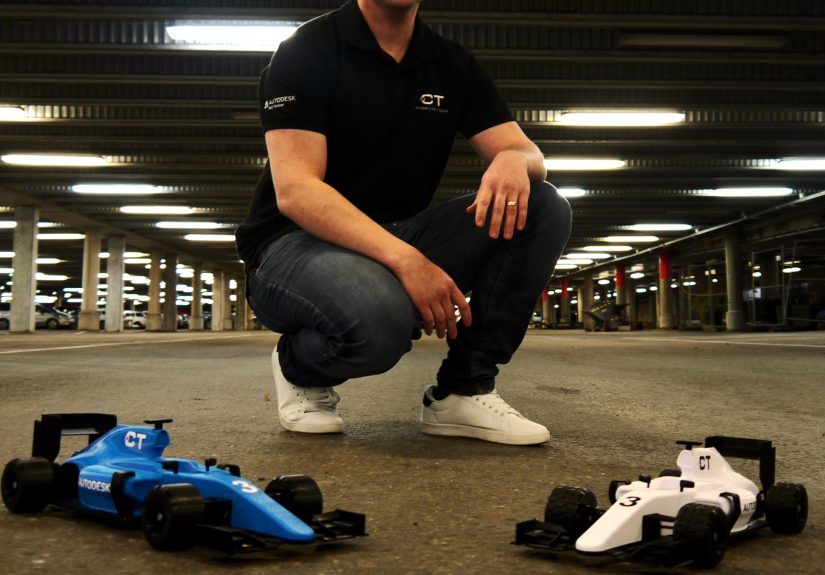
If the Touring Car was the opening act and the Truggy was the breakthrough, the OpenRC F1 car was the crowd-pleaser. It became one of the project’s most recognizable designs because it captured the sweet spot between performance, style, and buildability. And let’s be honest: a Formula 1-inspired RC car automatically receives bonus points for looking fast even when it is sitting motionless on a table surrounded by hex drivers.
The F1 design emphasized simplicity. That mattered. One of the hardest parts of open hardware is not publishing the files. It is making the project approachable enough that people actually complete it. The F1 car reduced complexity, used relatively accessible materials, and came with clearer assembly support. Its build guides, diagrams, parts lists, and step-by-step breakdowns made it one of the most approachable entry points into the OpenR/C universe.
It also reflected a mature design philosophy. Rather than chasing maximum complexity for bragging rights, the F1 car focused on giving builders a satisfying path from printer to track. Many parts could be printed in PLA, while flexible materials such as TPE or TPU were suited to tires. That kind of material-aware design helped new builders understand an important truth of functional printing: the right shape matters, but the right material matters just as much.
The F1 platform also proved unusually remix-friendly. Builders created alternative bodies, mini versions, aerodynamic packages, upgraded wheels, and other modifications. That remix culture is the clearest sign that OpenR/C succeeded. People do not spend their evenings redesigning suspension-adjacent plastic for a project they do not care about. OpenR/C inspired people to care.
OpenR/C Was Never Just About Cars
Although cars formed the heart of the brand, OpenR/C expanded beyond the road. The release of the OpenRC quadcopter pushed the project into the air, showing that the same open design principles could be applied to flying machines as well. Later additions such as FPV-oriented designs broadened the family even further.
This matters because it reveals the true identity of the project. OpenR/C was not just a product line. It was a design mindset. The goal was to explore what desktop fabrication could do for RC systems in general, whether that meant a touring car, an off-road truggy, a sleek F1 machine, a quadcopter, or other community-developed offshoots. The project’s build map eventually reflected that broader ecosystem by including multiple categories of builds rather than one single hero model.
That expansion also reinforced a subtle but important idea: when a project is open enough, the community stops acting like customers and starts acting like collaborators. One person wants better tires for snow. Another wants a different body shell. Another wants to scale something up, shrink it down, or strap something absurd to it and call it innovation. OpenR/C made room for that energy, and the result was a richer platform than any one designer could have produced alone.
What Made The OpenR/C Project So Important?
It Turned 3D Printing Into Real Mechanical Experimentation
OpenR/C gained attention because it was rooted in function. Media coverage repeatedly highlighted how much testing went into materials, print methods, and durability. RC vehicles are an unforgiving proving ground. They get launched, scraped, smashed, rolled, and occasionally introduced to curbs with alarming enthusiasm. A design that survives that kind of use earns respect.
Because 3D printing lowers the cost of iteration, OpenR/C could evolve quickly. Builders could tweak a part, reprint it, run it, destroy it, and revise it again without waiting on molds, vendors, or large production runs. That fast feedback loop is one of the biggest advantages of digital fabrication, and OpenR/C made it visible in a way that was exciting even to people who had never touched an RC transmitter.
It Embraced Open-Source Hardware The Right Way
Plenty of projects call themselves open. Fewer actually create a culture of sharing around the files. OpenR/C did. The project circulated across community platforms, build guides, and file repositories, which allowed people to fork ideas, publish derivatives, and contribute improvements. New tires, alternate rims, revised bodies, mini versions, and race-specific tweaks all added momentum to the ecosystem.
That openness made the project more resilient. A closed product rises or falls with one company. An open project can keep evolving as long as people care enough to keep improving it. OpenR/C benefited from that kind of distributed creativity. It became less like a single invention and more like a collaborative engineering sandbox.
It Helped Teach Engineering Through Play
One reason OpenR/C still matters is that it quietly became an educational platform. Builders who came for the cool factor ended up learning about tolerances, fasteners, flexible filaments, gear wear, center of gravity, suspension geometry, electronics packaging, and the emotional resilience required when a tiny nut launches itself into another dimension under your desk.
That learning-by-building model is powerful. Reading about manufacturing is useful. Printing, assembling, troubleshooting, and racing your own machine is unforgettable. OpenR/C made engineering tactile, visible, and personal.
The Community Was The Real Engine
The most impressive thing about OpenR/C may not have been a specific model at all. It was the community that formed around it. Official build maps, group discussions, shared modifications, and public contests all helped transform the project from an interesting design portfolio into a living ecosystem. At various points, the community included thousands of members sharing ideas, improvements, and completed builds from around the world.
That community energy spilled into events as well. OpenR/C builds appeared in competitions, design challenges, and even organized race events, including championship-style gatherings around the F1 platform. Those events mattered because they gave the project a social life. A printed RC car on a shelf is a cool object. A printed RC car on a track, surrounded by equally obsessive builders comparing materials, crashes, and modifications, becomes part of a culture.
And culture is what keeps projects alive. OpenR/C had enough structure to be buildable and enough freedom to be playful. That combination is catnip for makers.
Real Lessons Builders Took From OpenR/C
- Design for the process, not just the picture. A part that looks great in CAD but prints badly is just a very confident failure.
- Material choice changes everything. PLA, ABS, nylon, TPU, and carbon-fiber-filled filaments all behave differently under stress, heat, and impact.
- Open hardware gets better through use. The best revisions often come after a crash, not before one.
- Modularity beats perfection. Easy-to-replace parts encourage experimentation and keep projects alive longer.
- Documentation is part of the design. Build guides, BOMs, and diagrams are not side dishes. They are the meal.
The Challenges Were Real Too
OpenR/C is worth praising, but it is also worth understanding honestly. Printable RC vehicles are not magic. They require tuning, patience, and a tolerance for iterative frustration. Some parts are more suited to printing than others. Some materials work beautifully in one role and terribly in another. Printed tires can be clever, but clever and competitive are not always the same thing. A fully dialed hobby-grade commercial platform may outperform a home-printed build in raw reliability. That is not a failure of OpenR/C. It is simply the reality of mechanical engineering colliding with the laws of physics at speed.
In fact, those limits may be part of the project’s value. OpenR/C teaches builders where 3D printing shines and where it still needs help from traditional components. It encourages experimentation without pretending that every printable part is automatically the best part. That balance makes the project more credible, not less.
Why The OpenR/C Project Still Matters Today
The maker movement has matured, desktop printers have improved, and functional materials are far more accessible than they were when OpenR/C first caught the internet’s attention. Yet the project still feels relevant because its core ideas have aged well. OpenR/C sits at the intersection of open-source design, distributed manufacturing, hobby engineering, and community-led innovation. Those themes are even more important now than they were a decade ago.
It also remains a compelling example of what happens when a project invites participation instead of passive consumption. OpenR/C did not just ask people to admire a finished object. It asked them to make one, modify one, fix one, race one, and improve one. That is a very different relationship between creator and audience. It is messier, slower, and far more rewarding.
In many ways, OpenR/C helped preview a broader shift in how enthusiasts think about products. Why settle for buying a closed object when you can build an open platform, understand how it works, and change it to fit your own goals? That question continues to shape how people approach robotics, drones, hobby vehicles, tools, and countless other maker projects.
Hands-On Experience: What Building An OpenR/C Machine Feels Like
If you want to understand the appeal of The OpenR/C Project, do not just look at the finished cars. Imagine the actual experience of building one. It usually begins with optimism. Pure, cinematic optimism. You download the files, admire the renderings, tell yourself this will be a nice weekend project, and cue up a playlist that says, “I am definitely about to become a mechanical genius.” Then the printer starts, and reality joins the chat.
The first phase is strangely peaceful. Parts appear layer by layer, and there is a little thrill in realizing that something which looked like a digital model yesterday is now becoming an actual suspension arm in your hand. Soon your table fills with parts that look like you raided the toy box of a very ambitious robot. Chassis pieces, wheels, gear housings, brackets, body panels, steering components: each print feels like progress, and each one makes the project look more believable.
Then assembly begins, and the project gets wonderfully human. You learn very quickly that “some assembly required” is a phrase with a wicked sense of humor. Tiny hardware rolls off the table. A part goes in backward. You tighten something too soon and have to undo three steps. One printed piece fits beautifully, which makes you feel unstoppable. The next needs sanding, trimming, or a reprint because tolerances, like house cats, do not always cooperate on command.
But this is exactly where OpenR/C becomes addictive. Every little problem feels solvable. If a part flexes too much, you can change the material. If a wheel rubs, you can revise the geometry. If a body shell cracks, you can print another one instead of mourning it like an irreplaceable relic. The project changes your mindset from “I hope this works” to “I can make this work better.” That is a huge shift, and it is one of the most satisfying things about open hardware.
The first test drive is usually part victory lap, part science experiment. Maybe the car rockets forward beautifully. Maybe it drifts into a chair leg and sheds a spoiler with dramatic flair. Either way, it tells you something useful. You start hearing the machine differently. A clicking gear is feedback. A wobbling front end is feedback. A suspiciously warm motor is definitely feedback. OpenR/C turns every run into a conversation between builder and machine.
There is also a very specific joy in realizing you are driving something you did not merely buy. You printed it. You assembled it. You learned its weaknesses the hard way. That makes even imperfect performance feel meaningful. A commercial RC car can be impressive, but an OpenR/C build feels personal. It carries your decisions in every material choice, every modification, and every tiny compromise between aesthetics and durability.
And perhaps the most memorable part is what happens after the run. You do not just put the car away. You start thinking. What if the front end were stiffer? What if the tires used a different filament? What if the shell were lighter, the gearing different, the steering sharper, the whole thing slightly more ridiculous? That curiosity is the real reward. OpenR/C does not simply give you a model to build. It gives you a reason to keep building.
Conclusion
The OpenR/C Project deserves its reputation because it did more than put printable RC vehicles on the map. It helped demonstrate what open-source hardware can look like when it is practical, ambitious, and genuinely community-driven. From early touring concepts to the truggy, the iconic F1 car, and airborne experiments, OpenR/C proved that desktop fabrication could be playful without being trivial and serious without becoming joyless.
Its legacy is not just a collection of files. It is a way of thinking. Build it yourself. Learn from failure. Share what you improve. Repeat until your machine runs better, looks cooler, or survives an impact that would have shattered last week’s version. In the maker world, that is not just a project. That is a philosophy with wheels.