Table of Contents >> Show >> Hide
- Why Baby Yoda Changes Everything
- The Show Stops Pretending It Is Only About Bounty Hunting
- Baby Yoda Is Cute, but the Show Is Smarter Than “Cute”
- The Practical Magic Matters
- How Baby Yoda Softens the Hard Edges of Star Wars
- The Internet Fell in Love, and the Show Knew Exactly Why
- Why This Love Story Works Better Than Pure Nostalgia
- What the Show Is Really Saying About Baby Yoda
- Audience Experience: What Watching Baby Yoda Felt Like
- Conclusion
Note: Body-only HTML in standard American English. SEO tags are included in JSON format at the end.
Some TV shows introduce a breakout character. The Mandalorian introduced a small green child, watched the internet collectively lose its mind, and then wisely decided, “Yes, let’s build the emotional center of this whole space-Western around that tiny soup-sipping legend.” That was the right call. In fact, it may have been the smartest storytelling decision in the entire first season.
When the series debuted, it already had plenty going for it: battered armor, dusty planets, a lone bounty hunter with a strict code, and enough blaster fire to make any Star Wars fan sit up straighter on the couch. But the show did not fully become The Mandalorian in the way viewers now think of it until Baby Yoda appeared. Suddenly, this was not just a stylish genre exercise with cool helmets and low voices. It was a story about a hardened warrior discovering, against all personal habit and professional common sense, that he cared deeply for someone vulnerable.
And that is what this title really gets at: The Mandalorian does not merely feature Baby Yoda. It openly, joyfully, almost shamelessly adores him. The camera adores him. The pacing adores him. The jokes, the pauses, the reaction shots, the musical cues, and even the structure of several episodes all bend toward one central truth: this child is not a side quest. He is the heartbeat.
That affection is not accidental fan service. It is the engine that transforms the show from cool to memorable. Without Baby Yoda, The Mandalorian might still have been a slick, respectable addition to the franchise. With him, it became a cultural event. More importantly, it became a surprisingly tender one.
Why Baby Yoda Changes Everything
At first glance, Din Djarin is built like a classic mythic drifter. He enters dangerous places, speaks sparingly, collects bounties, and gives off the sort of energy that says, “I have never once enjoyed a spa day.” He belongs to a long line of genre heroes shaped by Westerns, samurai films, and old-school pulp adventure. That makes Baby Yoda the perfect disruption.
Once the Child enters the story, every familiar trope gets rerouted. The lone wolf becomes a reluctant guardian. The professional hunter becomes prey. The man who once measured value in credits and contracts starts making decisions based on conscience. The armor remains the same, but the soul inside it changes. That is the real drama of the first season.
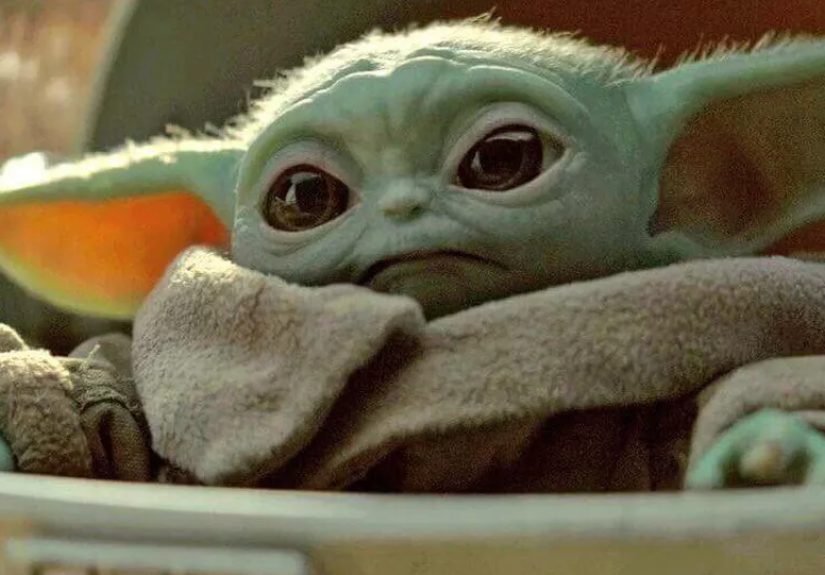
Baby Yoda works because he is more than cute. Yes, he has the giant ears, the solemn blinking eyes, the floating pram, and the kind of expression that can make a grown adult grin at a television like they have just been handed a puppy in a cardigan. But he also carries mystery, danger, innocence, and mythic significance all at once. He is a child, a target, a symbol, and a secret. That combination gives the show emotional pull and narrative momentum at the same time.
In other words, the series found the holy grail of franchise storytelling: a character who deepens the mythology while also making viewers say, “Look at him holding that cup. I would cancel plans for him.”
The Show Stops Pretending It Is Only About Bounty Hunting
Chapter 1 sets the trap
The pilot cleverly sells one kind of show before revealing another. For most of its runtime, The Mandalorian plays like a stripped-down, atmospheric bounty hunter tale. Then comes the reveal: the quarry is a child. Not a villain. Not a weapon. A child. That ending reframes everything that came before it and quietly informs everything that follows.
Chapter 2 makes the bond visible
Once the second episode lets Baby Yoda toddle around the edges of the story, the show’s priorities become clearer. The action still matters, but the real pleasure now comes from interaction: the Child reaching, watching, wandering, helping, and nearly getting himself into trouble because he is curious in the way only babies and people who have never read warning labels can be. The Mudhorn sequence is a turning point not only because the Child uses the Force, but because Din sees him as something more than cargo.
Chapter 3 makes the emotional choice unavoidable
If the first two episodes build affection, the third one commits. Din turns the Child in, gets paid, upgrades his armor, and should, in theory, move on like a consummate professional. Instead, the show lingers on his unease. It makes room for guilt. It lets silence do the work. Then it sends him back. That is the moment The Mandalorian stops being a show about a bounty hunter doing jobs and becomes a show about a man choosing who he is.
This is where the title’s idea becomes obvious. The series is not embarrassed by its emotional investment. It does not treat Baby Yoda as a gimmick to goose ratings for a week and then shove into the background. It doubles down. It risks sincerity. In a franchise that can sometimes get tangled in lore and legacy, that emotional clarity feels refreshing.
Baby Yoda Is Cute, but the Show Is Smarter Than “Cute”
Let’s be fair: cuteness did an enormous amount of heavy lifting. The design is outrageously effective. Baby Yoda has the visual logic of a classic movie creature and the instantly meme-able face of a modern internet icon. He looks timeless and market-tested at the same time, which is not an insult. That is craftsmanship.
But if all the series had was cuteness, the character would have worn out his welcome. Plenty of franchises have tried to bottle “adorable” and ended up with glorified merchandise delivery systems. Baby Yoda avoids that fate because the show attaches emotional meaning to every cute beat. When he reaches for controls, it is funny, but it also reminds us he is still a child. When he uses the Force, it is exciting, but it also underlines how exposed he is. When he watches Din leave, or waits in silence, or curls into his pram, the show is building attachment through vulnerability.
That is why Baby Yoda feels less like a mascot and more like a relationship. The series teaches us to watch him the way Din does: not just as a mystery box, but as a little being who needs protection. Once that happens, the stakes get personal. A firefight is no longer only about whether the hero escapes. It is about whether the kid makes it out too.
And suddenly the old genre machinery feels new again. Escort missions are more intense. Hideouts are more fragile. Moral choices hit harder. It turns out all a grizzled warrior saga needed was one improbably adorable green toddler to expose every emotional seam in the armor.
The Practical Magic Matters
Part of why the show’s affection reads so strongly is that Baby Yoda feels physically present. He does not seem like a weightless special effect floating through scenes to collect applause. He seems like a creature actors can look at, react to, worry over, and, crucially, believe in. That tactile quality makes all the difference.
You can sense it in the pacing of the scenes. The show is willing to pause and simply let Baby Yoda exist in the frame. He blinks. He tilts his head. He raises a little hand. The effect is subtle, almost old-fashioned, and that is exactly why it works. The character feels handmade in the best sense of the word, not because the production lacks technology, but because it understands restraint.
This choice also fits the show’s larger aesthetic. The Mandalorian often works best when it feels dusty, practical, and lived-in. Its worlds are full of worn metal, rough leather, patched-up ships, and creatures that seem like they have actual weight. Baby Yoda belongs to that design philosophy. He does not arrive as a glossy futuristic marvel. He arrives like an object from a beloved creature-feature tradition, updated just enough for modern prestige television.
That practical presence helps explain why the audience reaction was so immediate. Viewers did not just admire the design from a distance. They responded to him the way people respond to something they can imagine holding, protecting, or speaking to. It sounds silly until you remember that this is exactly how stories create attachment. We do not fall for abstractions. We fall for details.
How Baby Yoda Softens the Hard Edges of Star Wars
Star Wars has always balanced wonder and warfare. It can swing from mythic destiny to toy-box chaos in a matter of seconds. The Mandalorian understands that tradition, but Baby Yoda gives it a particularly effective emotional shortcut. He softens the harsher elements of the world without draining them of danger.
Din still fights brutal enemies. Imperial remnants still loom. Money is tight, loyalties are shaky, and the galaxy remains a deeply inconvenient place to raise any child, let alone one with mysterious Force abilities. Yet Baby Yoda changes the tone from nihilistic to hopeful. He does not erase violence; he gives the violence moral context. The show now has a reason to ask what strength is for.
That is an important distinction. The best genre storytelling is not just about conflict. It is about what conflict reveals. Baby Yoda reveals Din’s capacity for care. He reveals the Empire’s hunger to control innocence and power. He reveals the difference between a code that protects life and a system that profits from it. Even when the show is playful, those themes are underneath the surface.
In that sense, Baby Yoda is not merely the object of affection. He is the thing that exposes everyone else’s character. Good people protect him. Selfish people exploit him. Conflicted people change because of him. He functions almost like a moral tuning fork, and the series keeps striking it.
The Internet Fell in Love, and the Show Knew Exactly Why
The Baby Yoda explosion was not just a byproduct of fandom. It was a near-perfect collision of timing, design, and weekly storytelling. Because episodes rolled out week by week rather than arriving all at once, the character had time to spread through culture like happy galactic pollen. Each new gesture, reaction, and tiny act of chaos generated another wave of jokes, memes, and group texts that essentially read, “Have you seen the baby do the thing?”
That weekly rhythm mattered. Instead of burning out in a single binge weekend, Baby Yoda stayed in public conversation. The show kept feeding the audience small, memorable moments rather than oversaturating them. It was disciplined enough to understand that one good reaction shot can sometimes do more than ten pages of exposition.
But the internet obsession was not only about novelty. It was also about relief. In a crowded content landscape, Baby Yoda felt strangely unifying. Here was a character almost everyone could instantly understand: vulnerable, odd, funny, mysterious, and impossible not to protect. There was no homework required. No sprawling continuity chart. No need to memorize five spin-offs and a glossary of side planets. He was emotionally legible at first glance.
That accessibility may be one of the show’s greatest achievements. The Mandalorian is deeply rooted in Star Wars texture, but Baby Yoda opened the door for casual viewers, lapsed fans, and even people who ordinarily would not care about bounty guild politics in a galaxy far, far away. He made the series feel less like a franchise obligation and more like a story you wanted to visit.
Why This Love Story Works Better Than Pure Nostalgia
There is a temptation to reduce Baby Yoda’s success to nostalgia because he visually echoes one of the most beloved figures in all of popular culture. That resemblance obviously helped. The audience did not need a seminar to understand that this little character carried a mythic charge. But nostalgia alone cannot sustain eight episodes, let alone an emotional investment strong enough to define a series.
What really works is the show’s willingness to build something new around that old spark. Din and the Child are not repeating the emotional architecture of Luke and Yoda, or Han and Chewie, or any other classic duo. Their relationship is quieter, stranger, and more domestic. It grows through travel, danger, waiting, and mutual dependence. It is less about destiny than caretaking.
That may be the secret reason the show’s affection lands so well. Beneath the armor, mythology, and laser blasts, The Mandalorian becomes a story about responsibility. Not glamorous responsibility, either. The messy kind. The kind where someone keeps wandering toward danger, touching buttons they absolutely should not touch, and occasionally using impossible powers at the worst imaginable moment. In other words, parenthood with better visual effects.
The series understands that this tension is funny, moving, and universal. Din is still a capable action hero, but he is also a man trying to keep a child alive while improvising every step. That makes him more relatable, not less. Heroism becomes less abstract when it looks like care.
What the Show Is Really Saying About Baby Yoda
When The Mandalorian professes its love for Baby Yoda, it is really making a larger statement about what kind of story it wants to be. It wants to be exciting, yes. It wants to be stylish, absolutely. It wants to play in the sandbox of Westerns, samurai stories, monster movies, and old Star Wars adventure. But more than anything, it wants you to care.
That emotional ambition is what elevates the series. The Child is the soft center that gives weight to every hard edge. He reminds the audience that mystery works best when it protects something human, or at least something emotionally human. He turns a taciturn gunfighter into a guardian. He gives the galaxy a pulse.
And maybe that is why the title feels so right. The show does not hide its attachment. It leans into it. It stages action around it. It writes character growth through it. It lets us laugh at it, worry over it, and yes, probably send one too many Baby Yoda GIFs to friends who did not ask. This is not a series embarrassed by tenderness. It is a series powered by it.
In a franchise famous for legacy bloodlines, giant revelations, and operatic conflict, that is a surprisingly intimate move. It is also a smart one. Because while fans may come for armor, lore, and lightsaber-adjacent excitement, they stay for relationships. And few recent genre relationships have been as instantly effective as Din Djarin and the Child.
Audience Experience: What Watching Baby Yoda Felt Like
One of the most fascinating things about the Baby Yoda moment was how quickly it became an experience people felt they were having together. Streaming often turns television into a private habit. You watch at different times, avoid spoilers, finish whole seasons in a weekend, and then move on before the rest of the planet has found the remote. The Mandalorian somehow reversed that pattern. For a few weeks, Baby Yoda turned the internet into one giant living room.
Part of that shared experience came from rhythm. A new episode would arrive, and almost immediately the conversation would begin. Not just criticism, not just fan theories, but delight. Screenshots traveled fast. Jokes traveled faster. People who had not yet watched the show still knew exactly who Baby Yoda was, which is both impressive and slightly terrifying if you are trying to measure the power of pop culture with any scientific precision.
There was also something refreshingly simple about the emotional response. Viewers were not reacting to a complicated twist or arguing over some grand continuity puzzle. They were responding to a feeling. Baby Yoda made people protective, amused, curious, and weirdly soft-hearted. He was a tiny emotional shortcut in a media environment that often rewards snark over sincerity. The common reaction was not, “Let me explain the canon.” It was, “I love this little guy and would like him to stop being in danger immediately.”
That matters because audience experience is part of what gave the series its identity. Watching The Mandalorian was not just about following Din’s mission from point A to point B. It was about anticipation. Would Baby Yoda do something adorable? Probably. Would he also do something alarming, mysterious, or unexpectedly powerful? Also probably. The show got real mileage out of that balance. It kept the audience emotionally open while still feeding suspense.
For longtime Star Wars fans, the experience had another layer. Baby Yoda felt both familiar and entirely new. He carried the silhouette of old mythology but behaved like a child who had not yet learned the rules of the galaxy. That combination made him feel like discovery instead of recycling. It reminded viewers that the franchise could still surprise them without throwing out everything that made the universe appealing in the first place.
For newer viewers, the experience was even cleaner. You did not need decades of attachment to understand what was happening. A lonely warrior found someone worth protecting. That emotional line is universal. In some ways, Baby Yoda became the perfect ambassador for the series because he lowered the barrier to entry without lowering the stakes. He made the galaxy feel welcoming.
And then there is the pure memory of it all: the pram, the blinking, the soup, the tiny hands, the sideways glances, the quiet moments when the show let him just sit there and exist. Those details became the texture of the viewing experience. They gave the series warmth. They made episodes linger after the credits rolled. People did not just remember plot points; they remembered moods, gestures, and reactions. That is the kind of attachment most shows would sell a crate of beskar to achieve.
So yes, Baby Yoda was a character, a meme, a mystery, and a merchandising meteor. But he was also an experience. He made people feel like watching television together again. In a fragmented entertainment culture, that may have been his most impressive Force trick of all.
Conclusion
The Mandalorian may have arrived wearing the armor of a gritty space-Western, but it won hearts by embracing tenderness. Baby Yoda is not just the show’s cutest asset; he is its emotional thesis. Through him, the series finds humor, danger, mystery, and a surprisingly moving sense of purpose. Din Djarin’s journey matters because the Child gives it a soul. And that is why the title rings true: The Mandalorian really does profess its love for Baby Yoda, and in doing so, it invites the audience to do the same. Happily, loudly, and with zero shame.