Table of Contents >> Show >> Hide
- What Happened: The Viral Moment That Sparked the Backlash
- Let’s Be Clear: A Wheelchair Isn’t Luggage
- How Often Do Airlines Damage Wheelchairs?
- Why Wheelchairs Get Damaged in Transit
- What the Law Says: Your Rights When Flying With a Wheelchair
- What Delta Says It Will Do in These Situations
- What To Do If Your Wheelchair Is Damaged After a Flight
- Why the Internet “Calling Out” Actually Matters
- What Better Looks Like: Practical Fixes Airlines Can Implement
- Conclusion: The Real Story Behind the Tears
- Additional Experiences: What Wheelchair Travelers Say This Situation Feels Like (And What Helps)
- SEO Tags
Airlines love to say they “handle your baggage with care.” And most days, that’s probably trueif your baggage is a
duffel bag full of socks and emotional support snacks. But when the “baggage” is a person’s wheelchairthe piece of
equipment that functions like legs, independence, and freedom rolled into one“with care” isn’t a cute slogan.
It’s the whole job.
That’s why the internet lit up after a viral video showed a woman sobbing at the airport because her wheelchair had
been damaged after flying with Delta. People weren’t just mad at a scuffed frame or a loose bolt. They were reacting
to something bigger: the gut-punch reality that air travel can turn a mobility device into a question mark
Will it come back? Will it work? Will I be stranded?
What Happened: The Viral Moment That Sparked the Backlash
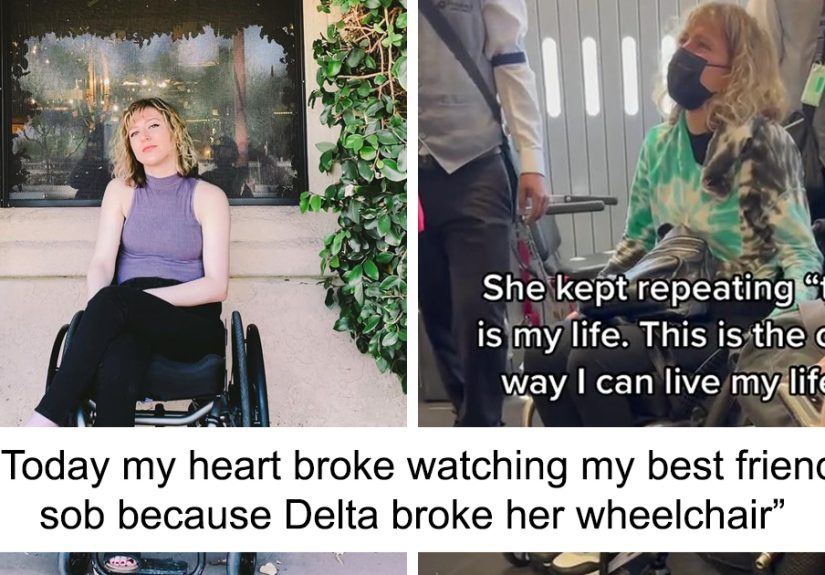
The incident that fueled the outrage traces back to a widely shared TikTok posted by a friend of Gabrielle DeFiebre,
a wheelchair user who relies on her chair for daily life. After landing in Phoenix, she discovered her wheelchair’s
wheel had been warped and damaged. In the video, she’s visibly overwhelmed, repeating the kind of sentence that hits
like a brick because it’s not dramaticit’s accurate: her wheelchair is her life.
Multiple outlets reported that Delta apologized publicly and said it was investigating what happened, while also
communicating with her directly about repairs and making things right. The internet response, meanwhile, was a tidal
wave of comments from disabled travelers who said some version of: “This isn’t rare. This is Tuesday.”
Why the Clip Landed So Hard
People cry in airports for lots of reasons: delays, cancellations, overpriced salads that taste like regret.
But this wasn’t “travel stress.” This was a person watching her mobilityher ability to move through the worldget
treated like cargo. The emotional reaction wasn’t the story’s most shocking part. The shocking part was how many
people said they recognized the situation instantly.
Let’s Be Clear: A Wheelchair Isn’t Luggage
A suitcase can be replaced. A wheelchair often can’tat least not quickly, not easily, and not with a generic swap.
Many chairs are custom-fitted to a person’s body and medical needs. Some include specialized seating, positioning
support, or power-assist components that help with limited hand or arm function. Repairs may require specific parts
and specialized vendors, and the “temporary fix” can still mean pain, injury risk, or losing the ability to work,
travel, or live independently.
Even when airlines pay for repairs, time is its own form of damage. A wheelchair user can’t put their life on hold
while a claim bounces through customer service like a lost carry-on.
How Often Do Airlines Damage Wheelchairs?
Here’s the part that turns outrage into urgency: the problem isn’t hypothetical, and it isn’t invisible.
The U.S. Department of Transportation (DOT) tracks “mishandled wheelchairs and scooters” in its consumer reporting.
Recent federal data has shown that, on domestic flights, at least one wheelchair or scooter is damaged, delayed, or
lost for roughly every 100 transportedan unsettling statistic for anyone who needs a mobility device to function.
In the DOT/Bureau of Transportation Statistics reporting for full-year 2024, airlines reported a mishandled
wheelchair/scooter rate around the low 1% range, with hundreds mishandled in a single month. If that sounds small,
translate it into real life: each percentage point represents thousands of people dealing with mobility disruption,
missed connections, injuries, or being stranded in an airport chair that doesn’t fit their body or needs.
“Mishandled” Can Mean More Than One Kind of Disaster
- Damaged: cracked frames, bent wheels, broken joysticks, snapped footrests, busted power components.
- Delayed: your chair arrives later than you do (cool for suitcases; catastrophic for humans).
- Lost: rare, but devastating when it happens.
Why Wheelchairs Get Damaged in Transit
Airports are engineered for speed. Mobility devices are engineered for bodies. Those priorities collide in the
luggage tunnel.
Common Pain Points in the Process
- Transfers and time pressure: when staff are rushing, safe handling techniques can get skipped.
-
Unclear lift points: wheelchairs often have specific “do not lift here” zones. If those aren’t
followed, frames and wheels can warp. -
Power components and fragile add-ons: power-assist wheels, joysticks, cushions, and seating systems
can be damaged if not removed, padded, or secured properly. -
Cargo hold realities: tight spaces, shifting loads, and stacking decisions that treat a chair like
a box can lead to breakage.
None of this is a mystery. Airlines know it’s a riskbecause the data exists, the complaints exist, and the viral
videos exist. The question is whether the system is designed to prevent the risk, or merely apologize after it.
What the Law Says: Your Rights When Flying With a Wheelchair
In the U.S., the Air Carrier Access Act (ACAA) prohibits airlines from discriminating against passengers because of
disability, and DOT regulations spell out what airlines must do when assisting disabled travelers. That includes how
airlines provide wheelchair assistance, handle mobility devices, and respond when a device is damaged.
If an Airline Damages Your Wheelchair, They Owe You More Than “We’re Sorry”
DOT guidance and the Air Travel Passenger Disability Bill of Rights make a core point clear: if an airline loses,
damages, or destroys a wheelchair or assistive device, the airline must provide compensation up to the original
purchase price of the device. In plain English: if they break it, they’re responsible for making you whole.
Cabin Stowage: The Rule Many Travelers Don’t Know
On aircraft with 100 or more seats, airlines are required to have priority space to stow at least one typical
adult-sized folding manual wheelchair in the cabin, awarded first-come, first-served. That doesn’t solve power-chair
cargo concerns, but it’s a meaningful protection for many manual chair usersespecially those who can fold their chair
and want to avoid the cargo hold altogether.
Complaint Resolution Officials (CROs) Exist for a Reason
Airlines are required to have trained personnel (often referred to as Complaint Resolution Officials) available to
help resolve disability-related issues. If something goes wrongdamage, delayed return, unsafe assistanceyou can ask
to speak with the CRO. That request can shift the conversation from “customer service vibes” to “regulatory reality.”
What Delta Says It Will Do in These Situations
Delta’s published policies on accessible travel and medical items describe wheelchair services, advance notice for
certain devices, and guidance for traveling with mobility aids. Delta also states that if a mobility aid or wheelchair
is destroyed or lost, it will repair or replace it with a comparable model, and it provides a U.S. disability bill of
rights notice that mirrors DOT language about compensation up to the original purchase price when assistive devices are
damaged or destroyed.
Policies matter, but execution matters more. The viral wheelchair video became a flashpoint because it showed the
gap between what’s written and what sometimes happens at the jet bridge.
What To Do If Your Wheelchair Is Damaged After a Flight
Nobody wants a “how to survive your airline experience” checklistyet here we are. If you discover damage, these steps
can help protect your safety and your claim.
1) Inspect Immediately (Before You Leave the Airport)
- Look for bent wheels, cracked welds, broken armrests/footrests, torn wiring, joystick issues, missing parts.
- Test movement and brakes if safe to do so.
- Take photos and short videos right away, including any baggage tags.
2) Report It On the Spot and Ask for Written Documentation
- Notify gate staff or the baggage service office immediately.
- Ask for written confirmation of the report and next steps.
- If needed, request the Complaint Resolution Official (CRO).
3) Prioritize Safety Over “Toughing It Out”
If the chair is unsafe, say so clearly. A quick “It’s probably fine” can turn into an injury laterand it can also
muddle the claim timeline.
4) Keep Receipts and Records
- Repair estimates, vendor invoices, rental/loaner costs, alternative transportation costs.
- Names, times, case numbers, and a short timeline of events.
5) Escalate if You’re Getting the Runaround
If the airline response stalls, DOT accepts disability-related complaints. Sometimes the fastest way to get traction is
to show you know the rulesand you’re willing to use the channels designed to enforce them.
Why the Internet “Calling Out” Actually Matters
It’s easy to roll your eyes at online outrage. But in accessibility issues, public visibility can be the difference
between “we’ll look into it” and “we’ll fix it now.” Viral attention can compress corporate timelines, bring media
scrutiny, and validate a community that has been saying the same thing for years: mobility devices deserve the same
seriousness as any other safety-critical equipment.
The deeper point isn’t that airlines are uniquely evil. It’s that aviation systems were built around able-bodied
assumptions, and retrofitting dignity is harder than issuing an apology tweet. Better training, better equipment,
better tracking, and better accountability aren’t feel-good extrasthey’re the baseline for accessible travel.
What Better Looks Like: Practical Fixes Airlines Can Implement
Hands-On Training That Treats Wheelchairs Like Medical Equipment
Regulations and recent federal rulemaking have emphasized stronger training expectations for personnel who physically
assist passengers and handle mobility devices. Real training means practiced techniques: how to lift, where to secure,
what to remove, and what not to touch. A 10-minute slideshow is not a strategy.
Tracking That Works Like a Modern Supply Chain
Airlines can track a $19 checked bag across three airports, two time zones, and the emotional arc of your vacation.
They can apply similar rigor to mobility devices: scan points, handling accountability, and clear passenger updates.
Jet-Bridge Return as a Standard, Not a Favor
Many travelers request gate check and return at the aircraft door because it reduces time out of their own equipment.
Treating that as “extra” increases riskboth physical and emotional.
A Claim Process That Doesn’t Require a Law Degree
When a wheelchair is damaged, the passenger should not have to chase five departments, repeat the story eight times,
and upload the same photos like it’s a ritual offering to the Customer Service Gods. A single point of contact and a
clear timeline would go a long way.
Conclusion: The Real Story Behind the Tears
The viral Delta wheelchair video resonated because it showed the stakes of “mishandling” in human terms. A damaged
wheelchair isn’t an inconvenienceit’s a disruption to autonomy, safety, and daily life. And while apologies matter,
prevention matters more.
The internet calling out an airline can feel messy, but it also forces a conversation many travelers never have to
think about: accessible travel is not a niche feature. It’s civil rights in motion. Until wheelchairs are treated with
the care they require, the outrage won’t be a trendit’ll be a recurring headline.
Additional Experiences: What Wheelchair Travelers Say This Situation Feels Like (And What Helps)
To understand why the Delta incident hit such a nerve, it helps to zoom out into the lived experiences that disabled
travelers and advocates repeatedly describe. These aren’t “one-off horror stories.” They’re patternssmall moments of
friction that add up to a travel day that feels like running an obstacle course while everyone else is casually
collecting mileage points.
The Pre-Flight Mental Checklist No One Sees
For many wheelchair users, flying starts days before the airport. There’s planning around battery specifications,
device dimensions, removable parts, and how to communicate handling instructions to staff who may have never touched
that type of chair. Some travelers print handling forms, laminate instructions, or label lift points because experience
has taught them that “Please be careful” is not specific enough. The goal is to reduce ambiguity in a high-speed
environmentbecause ambiguity is where damage lives.
The Jet Bridge Hand-Off: Where Anxiety Spikes
A common emotional peak happens right at the aircraft door. That’s where many travelers have to transfer out of their
own chair into an aisle chair or a seat. It can be physically vulnerable and socially exposed, especially if the
process is rushed or handled without clear communication. Meanwhile, the personal wheelchair is taken away, sometimes
quickly, sometimes with little explanation of where it’s going, who’s moving it, or how it will be secured. Even when
staff are kind, the moment can feel like handing your mobility to a system you can’t control.
Arriving Without Your Chair: The “Now What?” Moment
When things go wrong, the impact isn’t just frustrationit can be immediate loss of function. Travelers describe
landing and waiting on the plane while everyone else deplanes, because their chair hasn’t arrived at the door. Some
are brought an airport wheelchair that doesn’t match their support needs, doesn’t fit properly, or can’t be
self-propelled. If the traveler needs specialized seating or positioning, a generic chair can cause pain fast. Add a
tight connection, and the situation becomes a logistical scramble where the passenger is trying to solve an equipment
emergency in the least accessible place imaginable: an airport terminal designed for movement, not for waiting safely.
Damage That Isn’t Obvious Until Later
Not all damage is dramatic. Some travelers report discovering problems only after leaving the airportsubtle wheel
alignment issues, loosened bolts, a joystick that intermittently cuts out, a cushion that was lost or swapped, or a
footrest that’s just “slightly off” until it throws off posture for hours. That’s part of why immediate inspection
matters. It’s also why the emotional reaction in the viral video made sense: when you’ve seen small issues cascade
into big ones, you don’t wait around for the plot twist.
What Helps in Real Life
-
Clear, specific instructions: labeled lift points, removable parts taken off and packed if possible,
and a short, direct explanation of what can’t be bent, twisted, or lifted by. -
Preboarding and cabin stowage (when applicable): for folding manual chairs, getting early access to
priority space can reduce cargo handling. -
Advocating without apologizing: travelers often say it helps to be calm but firm: “This is medical
equipment. I need it returned to the gate. I need documentation if it’s damaged.” -
Community knowledge: wheelchair users share tips, vendor contacts, and airport-specific advice that
can make the difference between a ruined trip and a workable workaround.
The takeaway from these experiences isn’t “don’t fly.” It’s that accessible air travel still requires too much
unpaid labor from the people who need it most. The internet calling out Delta wasn’t just reacting to a single bad
outcomeit was reacting to a familiar system where dignity can feel optional. And that’s exactly why the story keeps
resurfacing: until the process is built to protect mobility devices as consistently as it protects aircraft safety,
there will always be another traveler hoping their independence survives baggage handling.