Table of Contents >> Show >> Hide
- What Is a Freestanding Telephone Tub Faucet?
- Why Cross Handles Still Have a Loyal Fan Club
- What “Supplies” Usually Means in This Product Category
- Freestanding vs. Deck-Mount vs. Wall-Mount Tub Faucets
- Materials, Finishes, and Performance Details That Actually Matter
- How to Choose the Right Freestanding Telephone Tub Faucet
- Installation Realities Nobody Mentions Until Renovation Day
- Best Design Pairings for Cross-Handle Telephone Faucets
- Maintenance Tips for Keeping the Look Sharp
- Conclusion: Is a Freestanding Telephone Tub Faucet With Cross Handles Worth It?
- Experience Section: What It Is Really Like to Live With One
Some bathroom fixtures are practical. Others are pretty. And then there is the freestanding telephone tub faucet with cross handlesthe rare species that manages to be practical, pretty, and just dramatic enough to make your tub area look like it deserves its own soundtrack. If you love the charm of vintage bath design but still want modern reliability, this style of freestanding tub filler sits in a sweet spot. It brings old-world character, a sculptural floor-mounted presence, and the kind of hand shower that looks like it belongs in a classic hotel, a clawfoot tub setup, or a very confident bathroom remodel.
At first glance, the name sounds a little fussy. “Telephone tub faucet” feels like a phrase that wandered in from another century wearing polished brass and excellent manners. But the concept is surprisingly simple: a tub faucet paired with a handheld shower that rests in a cradle, often with exposed supplies, decorative detailing, and traditional cross handles. In freestanding form, it rises from the floor rather than the tub deck or wall, which makes it ideal for open, statement-making tubs.
In this guide, we will break down what makes this fixture special, what “supplies” usually means, how cross handles change both the look and the user experience, and what to know before you buy one. If you are building a bathroom that feels equal parts timeless and tailored, this is the fixture category that quietly steals the show while pretending to be terribly polite about it.
What Is a Freestanding Telephone Tub Faucet?
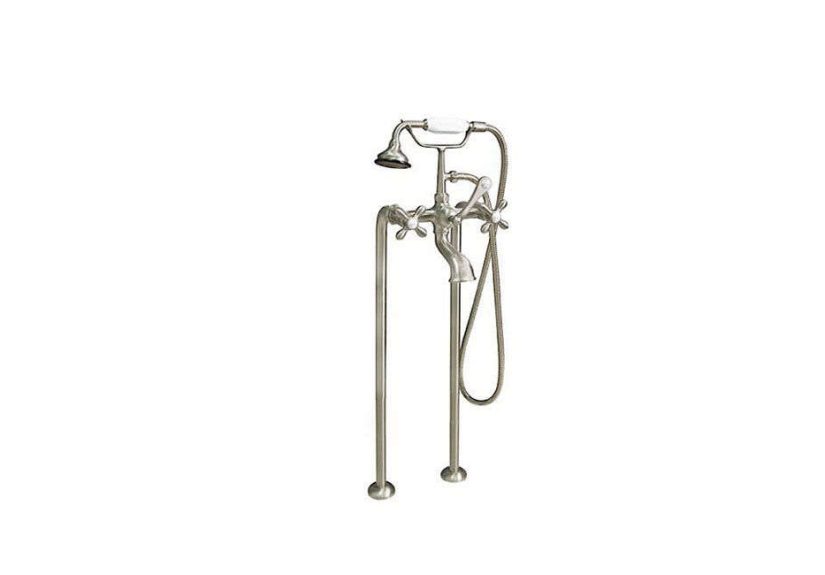
A freestanding telephone tub faucet is a floor mount tub faucet designed to stand beside a freestanding bathtub, usually with a high arched spout and a handheld shower attached by a flexible hose. The “telephone” nickname comes from the traditional shape of the handheld sprayer and cradle. On classic models, the hand shower has a slender, elongated form that echoes an old telephone receiver. No, it will not call anyone. Yes, it will make your bathroom look a lot more interesting.
This style is especially popular in bathrooms with:
- Clawfoot tubs and pedestal tubs
- Vintage, Victorian, or English-inspired interiors
- Transitional bathrooms mixing classic details with updated finishes
- Open layouts where the tub sits away from the wall
The biggest visual difference between a standard freestanding tub filler and a telephone-style version is personality. Modern fillers tend to be sleek, minimal, and almost architectural. Telephone styles lean decorative. They often feature porcelain-style accents, exposed plumbing details, cross handles, and a hand shower that looks intentional rather than purely utilitarian.
Why Cross Handles Still Have a Loyal Fan Club
Let us talk about the stars of the show: cross handles. In a world full of single levers and minimalist controls, cross handles feel wonderfully unapologetic. They are detailed, tactile, and unmistakably classic. They also visually balance the tall, vertical shape of a freestanding faucet. Instead of looking like a lone metal stalk beside the tub, the fixture gets a fuller, more furniture-like silhouette.
Cross handles work so well in this category for a few reasons:
- They reinforce vintage style. If you want old-school elegance, cross handles instantly send the message.
- They add visual symmetry. Two balanced handles frame the spout beautifully.
- They feel deliberate. Turning hot and cold separately has a ceremonial charm that modern levers simply do not have.
- They pair well with clawfoot tubs. This combination has a built-in sense of design history.
Of course, style is only half the story. Cross handles also create a certain user experience. There is something satisfying about physically dialing in the water the old-fashioned way. It is not faster than a single handle, but it is undeniably more enjoyable if you appreciate detail. Think of it as the bathroom equivalent of winding a mechanical watch. Completely necessary? Not really. Delightful? Absolutely.
What “Supplies” Usually Means in This Product Category
In the phrase “Freestanding Telephone Tub Faucet & Supplies – Cross Handles,” the word supplies matters more than many shoppers realize. It usually refers to the supporting components that make the faucet functional and installation-ready. Depending on the product design, that can include exposed supply lines, shutoff valves, freestanding risers, floor legs, unions, or connection pieces that visually complete the faucet from the floor up.
In plain English, supplies are the hardware that helps the faucet look finished instead of looking like a great idea abandoned halfway through plumbing.
Common supply components may include:
- Floor-mounted supply tubes or risers
- Hot and cold shutoff valves
- Mounting hardware and escutcheons
- Hand shower hose and cradle
- Diverter controls for switching from spout to hand shower
- Rough-in valve or rough-in compatibility requirements
Some vintage-inspired exposed systems are sold as more complete “packages,” while others split the trim, rough-in, and supply parts into separate purchases. That distinction matters. A beautiful faucet listing can look like a full set right up until the moment you notice the fine print and discover the rough-in valve is sold separately. This is why reading the full product description is not optional. It is self-defense.
Freestanding vs. Deck-Mount vs. Wall-Mount Tub Faucets
If your tub sits in the center of the room or several inches away from the wall, a freestanding tub filler is usually the most natural fit. It is plumbed through the floor and stands beside the tub, which gives you flexibility in layout and creates a luxury-spa look. This is one reason freestanding tubs and floor-mounted fillers are so often paired together in modern remodels.
Deck-mount faucets install directly on the tub deck or tub rim. They work well on tubs designed for faucet drilling, but they will not deliver the same dramatic look as a separate floor-mounted fixture. Wall-mount tub faucets can save floor space and look elegant in the right room, but they require the tub to sit close enough to the wall and place more emphasis on wall plumbing placement.
For homeowners chasing a classic statementespecially with a clawfoot or vintage-style freestanding tubthe freestanding telephone faucet remains one of the strongest visual choices. It feels intentional, sculptural, and just a little bit theatrical in the best possible way.
Materials, Finishes, and Performance Details That Actually Matter
Many quality freestanding tub faucets in the U.S. market are built with brass construction, and that is a good sign. Brass is valued for durability, resistance to corrosion, and long-term performance in wet environments. You will also commonly see ceramic disc cartridges or ceramic valve technology, which helps deliver smoother operation and better drip resistance over time.
Finishes can completely change the personality of the same faucet design. Here is how the most common ones tend to read:
- Polished Chrome: crisp, reflective, classic, and easy to pair with white tubs
- Brushed Nickel: softer and more forgiving in busy family bathrooms
- Polished Brass or Unlacquered Brass: warm, bold, and especially good for traditional spaces
- Oil-Rubbed Bronze: moody, antique-friendly, and rich against light tile
- Matte Black: dramatic and modern, though less historically traditional for telephone styles
Performance-wise, the biggest practical features are usually the hand shower, hose length, spout reach, and the faucet’s ability to fill a tub quickly. The hand shower is more than a decorative extra. It is genuinely useful for rinsing off, washing hair, helping children bathe, cleaning the tub, or handling the occasional muddy dog who somehow became your problem.
How to Choose the Right Freestanding Telephone Tub Faucet
1. Match the faucet to the tub’s shape and era
A curvy clawfoot tub and a severe ultra-modern faucet often look like two strangers forced to share a ride. If your tub has vintage lines, cross handles and a telephone hand shower will look far more cohesive than a minimalist single-lever design.
2. Check height and spout reach
The faucet should clear the tub rim comfortably and reach far enough into the bathing well to fill effectively without awkward splash-back. This sounds obvious until you see a gorgeous faucet sitting next to a deep tub and barely reaching the water line.
3. Confirm what is included
Read the package contents closely. Does it include the hand shower, hose, diverter, shutoff valves, supply lines, and rough-in? Or is it trim only? This one question can save you budget surprises and a lot of annoyed browsing later.
4. Think about your floor and plumbing access
Floor-mounted installation usually requires planning before the final floor is finished. If you are remodeling, this is much easier to coordinate while the subfloor is open. Retrofitting can still be done, but it may involve more labor, more cost, and more muttering.
5. Choose finish based on the whole room, not just the faucet
A faucet does not live alone. It needs to work with the tub feet, drain trim, lighting, mirror frame, towel bars, and even the tone of your tile. The best choice usually echoes at least one or two other finishes in the room.
Installation Realities Nobody Mentions Until Renovation Day
A floor mount tub faucet looks elegant because the plumbing is hidden below and the fixture rises cleanly from the floor. That elegance takes planning. The location of the rough-in valve or supply connections must line up correctly with both the tub placement and the faucet footprint. If the tub shifts late in the project, the faucet placement may need to shift too.
Exposed vintage-style systems can be a little more forgiving visually because decorative supplies and floor unions are part of the aesthetic. Even so, installation should be precise. Freestanding tub fillers are highly visible. Small placement mistakes are not shy.
It is also smart to think about cleaning access around the faucet base. A fixture that looks amazing in a showroom can become mildly annoying if it is squeezed too tightly between the tub and a wall niche. Leave enough breathing room so the faucet looks graceful and your future self can wipe around it without inventing new yoga poses.
Best Design Pairings for Cross-Handle Telephone Faucets
This faucet style shines brightest when the room supports its personality. Some of the most successful design pairings include:
- White clawfoot tubs with polished chrome or polished brass fixtures
- Marble-look floors with brushed nickel for a softer traditional look
- Black-and-white tile with chrome for a tailored hotel feel
- Warm natural stone with unlacquered brass for an aged, collected atmosphere
- Traditional vanities with framed mirrors and classic sconces
The beauty of cross handles is that they can push a room in several directions. They can feel Victorian, English country, classic American, or transitional depending on the tub and finish around them. That flexibility is part of their enduring appeal. They are decorative, yes, but they are not one-note.
Maintenance Tips for Keeping the Look Sharp
A freestanding telephone faucet is a detail-rich fixture, so regular care helps it stay beautiful. Wipe down the faucet after use when possible, especially in hard-water areas. Avoid abrasive cleaners that can damage specialty finishes. Clean the hand shower face and hose periodically, and check the cradle and diverter for mineral buildup.
If you choose an unlacquered or living finish, expect natural patina over time. That is not a flaw. It is part of the appeal. If you want a finish that stays more visually consistent, chrome or brushed nickel is usually the lower-drama option. Either way, the goal is simple: let the faucet age gracefully, not suspiciously.
Conclusion: Is a Freestanding Telephone Tub Faucet With Cross Handles Worth It?
If your goal is to create a bathroom that feels memorable, tailored, and genuinely finished, the answer is yes. A freestanding telephone tub faucet with cross handles is not just plumbing. It is a design decision. It frames the tub, elevates the room, and turns an everyday fixture into part of the visual story. It also brings real function through the hand shower, floor-mounted installation, and supply components that support both convenience and style.
The key is choosing carefully. Make sure the proportions fit your tub, the included supplies match your installation needs, and the finish works with the room as a whole. Do that, and this classic faucet style will reward you with a look that feels both timeless and personal. In other words, it is the rare bathroom fixture that can be sensible and a little dramatic at the same time. Honestly, more fixtures should try harder.
Experience Section: What It Is Really Like to Live With One
Living with a freestanding telephone tub faucet is a little different from simply admiring one online. On a screen, it reads as a handsome, nostalgic fixture. In a real bathroom, it becomes a daily design experience. The first thing most homeowners notice is how much visual weight it adds to the room. In a good way. It makes the tub area feel intentional, as if the bath is not just installed there but actually styled. A plain freestanding tub can suddenly look custom once the right cross-handle faucet is standing beside it.
There is also a tactile pleasure that does not show up in product specs. Cross handles invite interaction. You do not just flick on the water; you turn it. That tiny ritual changes the mood. It slows things down just enough to make bath time feel a bit more special. People who love traditional hardware tend to notice this immediately. It feels substantial in the hand and more engaging than the typical single lever.
The telephone-style hand shower ends up being one of those features you assume is mostly decorative until you use it for a week. Then it quietly becomes indispensable. It helps rinse shampoo, spray down the tub walls, wash a child’s hair with less chaos, and make quick cleanup easier after a long soak. Anyone with a deep tub learns fast that the hand shower is not some fancy extra. It is one of the hardest-working parts of the whole setup.
Another real-world observation is that placement matters a lot. A well-positioned freestanding faucet feels elegant and effortless. A poorly placed one can feel like a very attractive obstacle course. When it sits at the right distance from the tub rim, it looks balanced and functions naturally. When it sits too close or too far, you notice every time you reach for it. This is why thoughtful installation is worth every bit of attention it gets.
Owners also tend to discover that this style creates a stronger “finished room” effect than many standard fixtures. Guests notice it. The bathroom photographs better. The tub corner becomes a focal point without needing a lot of extra decoration. In some spaces, the faucet does more design work than a piece of art. That sounds dramatic, but so is the faucet, and that is sort of the point.
Over time, the finish choice shapes the experience too. Chrome tends to stay bright and classic. Brushed nickel feels softer and hides water marks a bit better. Brass develops character and makes the room feel warmer. None of these choices is universally perfect; they simply create different personalities. The best one is the finish that still makes you happy after the novelty wears off and real life moves in.
In the end, the experience of owning a freestanding telephone tub faucet with cross handles is about more than filling a tub. It adds ceremony, charm, and a sense of completeness. It turns a bath from a functional corner into a destination inside the home. That is a big return from one fixtureand a pretty good trick for a piece of plumbing with such excellent manners.