Table of Contents >> Show >> Hide
- Quick Take: The 4 BHG-Tested Picks
- How BHG Tested Pool Covers (and Why It Matters)
- The 4 Best Pool Covers, Tested by BHG
- How to Choose the Best Pool Cover for Your Backyard
- What a Pool Cover Can Save You (Water, Heat, Money, Sanity)
- Real-World Tips for Using a Solar Pool Cover Without Losing Your Mind
- Safety Note You Shouldn’t Skip
- of Real-Life “Pool Cover Experience” (What It’s Like Day to Day)
- Conclusion
A pool is basically a backyard vacation… until it turns into a leafy soup that evaporates like it’s trying to escape your property taxes.
The right pool cover fixes a surprising amount of that drama: it helps hold heat, slows evaporation, and keeps debris from throwing a pool party without you.
Better Homes & Gardens (BHG) tested a lineup of pool covers at hometracking water temperature, water level, ease of use, durability, and how well each cover kept out twigs, leaves, and other “nature confetti.”
Below are the four BHG-tested picks, plus a practical guide to choosing the best pool cover for your pool type, climate, and patience level.
Quick Take: The 4 BHG-Tested Picks
- Best Overall: Crystal Blue Above-Ground Solar Pool Cover
- Runner-Up, Best Overall: Doheny’s Supreme Blue 2400 Series Solar Cover
- Best Budget: Sun2Solar 800 Series Solar Pool Cover
- Best Small: Solar Sun Rings UV Resistant Pool Solar Covers
How BHG Tested Pool Covers (and Why It Matters)
“Best” is a bold word when your weather changes its mind every afternoon. That’s why BHG’s approach is useful:
they started by measuring water temperature and water level, applied the cover, and tracked how easy it was to position and secure.
After about three weeks, they re-measured temperature and water level to estimate evaporation control and known heat retention.
They also watched for wear and tear and noted how each cover handled extreme weather and debris.
Translation: these picks weren’t crowned because their product photos were pretty. They had to perform in real backyards,
with real wind, real rain, and real people who don’t want to wrestle a floppy plastic tortilla every day.
The 4 Best Pool Covers, Tested by BHG
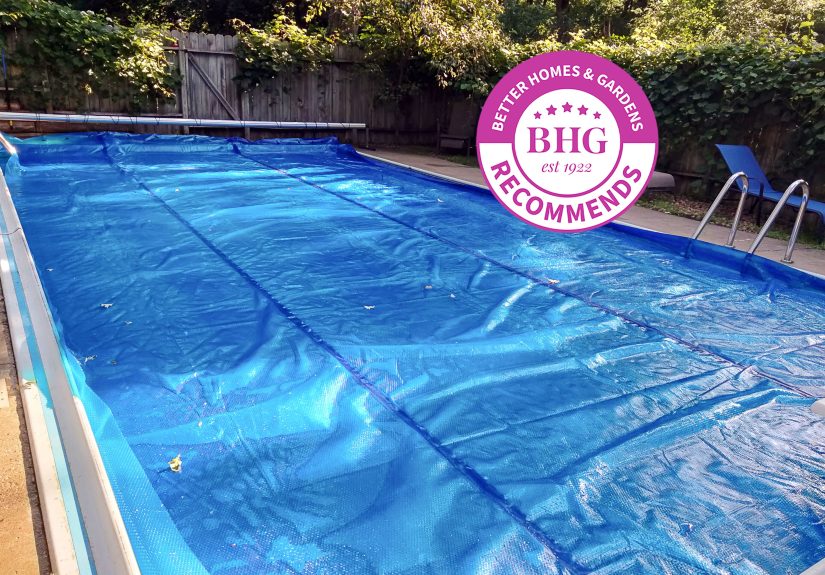
Best Overall: Crystal Blue Above-Ground Solar Pool Cover
If you want the “why didn’t I buy this sooner?” feeling, this is the one. In BHG’s testing, the Crystal Blue cover boosted
water temperature by about 8°F in one weekan impressively fast payoff for a cover that’s essentially a smart, UV-resistant
sheet of heavy-duty polyethylene.
The headline benefit is heat retention, but the practical benefit is what you’ll notice: fewer top-offs, less chemical
babysitting, and less debris getting comfortable. BHG noted reduced evaporation, less chlorine degradation, and protection
from debris. They also reported cutting stabilizer and chlorine additions by roughly half during the test period, estimating
about $300 in seasonal savings from reduced chemical use.
Why it won
- Noticeable warming: A measurable temperature bump in a short time.
- Strong material: UV-resistant polyethylene designed to live outdoors.
- Flexible fit: Slightly oversized, making it easier to work around ladders and edges.
- Wind-ready: Durable enough to handle gusty days better than flimsier covers.
Keep in mind
Like many higher-quality solar blankets, it’s bulky. BHG flagged maneuverability as the main downsidethis is a “bring a buddy”
situation unless you enjoy solo battles with clingy plastic.
Best for: Above-ground round pools where you want maximum heat retention and evaporation control without upgrading to a full safety cover system.
Runner-Up, Best Overall: Doheny’s Supreme Blue 2400 Series Solar Cover
This pick is for pool owners who want strong performance with a slightly different feelespecially if your pool is in-ground
and rectangular. BHG liked how reliably it maintained temperature. During a pool party test, it helped raise the water from
80°F to 82°F, and it held temperature steadily even when conditions weren’t perfect.
The other win: chemical stability. BHG reported that, with this cover, chlorine levels held more consistently over a two-week
span. That’s exactly what you want in peak seasonmore swimming, less “Wait, why is it cloudy again?”
Why people love it
- Consistent heat retention: Especially helpful during cooler nights.
- Helpful for maintenance: Better stability can mean fewer chemical adjustments.
- Nice-to-have hardware: Often paired with reel-friendly handling for easier rolling and storage.
Keep in mind
BHG noted a small but real annoyance: the slits for a pool reel setup weren’t pre-cut, so you may need to do minor setup work.
Not hardjust not “open box, instantly zen.”
Best for: In-ground rectangular pools where you want reliable warming and easier day-to-day routine with reel-style handling.
Best Budget: Sun2Solar 800 Series Solar Pool Cover
If your budget is saying “be responsible,” but your pool is saying “evaporate immediately,” this cover is the compromise you deserve.
BHG chose the Sun2Solar 800 Series as the best budget pick because it delivered meaningful warming and stayed durablewithout the
sticker shock of heavier premium covers.
In testing, it raised pool temperature from the low 70s to around 80°F by the end of the evaluation window.
It also held up during rough weather conditions, including strong heat and rain, without showing obvious damage.
For a cover that can cost around (or under) the price of a family takeout night, that’s impressive value.
Why it’s a smart buy
- Solid performance for the price: Good warming and evaporation control without premium pricing.
- Easy to live with: Lighter than some thick blankets, so it’s less annoying to deploy.
- Multiple sizes: Designed to fit common pool dimensions with fewer “close enough” compromises.
Keep in mind
This BHG pick focuses on round above-ground compatibility. If you have an unusual shape, you may need to trim a larger cover
or consider a cover style better suited to custom fitting.
Best for: Above-ground round pool owners who want better heat retention and water savings at the lowest reasonable cost.
Best Small: Solar Sun Rings UV Resistant Pool Solar Covers
Not every pool is a full-size cannonball arena. For kiddie pools, small plunge-style setups, and any situation where a giant
blanket feels like overkill, BHG recommended Solar Sun Rings: inflatable, lightweight rings that float on the surface and are
easy for one person to handle.
Each ring is about 5 feet in diameter, and the set typically comes with three rings. BHG found they retained heat fairly well
and helped keep water levels consistent. But (because physics) there are tradeoffs: wind and rain can make rings scrunch,
flip, or drift, leaving gaps that let smaller debris through.
Why they’re great for small pools
- Ultra maneuverable: No wrestling. No dragging. No folding gymnastics.
- Modular coverage: Add more rings as needed rather than buying one giant cover.
- Quick deploy: Toss them on, take them off, repeat like a functional adult.
Keep in mind
BHG noted durability is not the rings’ superpower. You also have to inflate them individually, and larger pools will require
multiple setswhich can add up. Think “convenience for small spaces,” not “forever cover for a 20×40.”
Best for: Kiddie pools, small above-ground pools, and anyone who wants a lightweight, modular approach.
How to Choose the Best Pool Cover for Your Backyard
Before you buy, decide what you want most: warmer water, less evaporation, less debris, safer off-season coverage, or “all of the above.”
Most pool owners end up with two cover strategies: a daily/seasonal cover (often solar) and an off-season cover (winter or safety).
1) Type: Solar vs. Winter vs. Safety vs. Liquid
Solar covers (also called solar blankets) are designed to reduce evaporation and help warm water by capturing and retaining heat.
They look like thicker bubble wrap and are typically placed bubble-side down so the air pockets trap warmth.
These are usually best for swim season.
Winter covers are built for the off-season. Their job is to block sunlight and keep debris out so algae doesn’t treat your pool like a condo complex.
They’re secured with cables, anchors, or water bags depending on your setup. They’re often not convenient for daily on/off use.
Safety covers (including many automatic covers and anchored safety systems) are meant to act as a barrier that reduces access to the water.
If safety is a priorityespecially with children or pets aroundlook for covers that meet recognized safety standards
(such as ASTM performance specifications). A basic solar blanket is not a safety cover.
Liquid evaporation suppressants can reduce evaporation without a physical cover, but they won’t keep out debris and they won’t deliver the same
heat retention benefits as a solid cover. They can be a convenience add-on, not a full replacement for most people.
2) Size: Measure Like You Mean It
For most covers, measure your pool’s maximum length and width from inside edge to inside edge.
Many winter-style covers include overlap built in, so you often don’t need to size up dramatically. For in-ground pools, you typically want enough overlap
for secure anchoring. For solar covers, buying close to your pool’s dimensions and trimming to fit is usually the cleanest approach.
3) Material: The “Why Did It Rip?” Factor
Most solar covers are polyethylene; higher-quality versions often include UV inhibitors to slow sun damage.
Winter covers are commonly made from woven polyethylene or polypropylene and can vary widely in durability depending on thickness and weave.
If you live somewhere windy, durability matters more than you thinkbecause wind is basically a free personal trainer for your pool cover.
4) Color: Not Just Aesthetic
Darker covers can absorb more heat and block more light (helpful for reducing algae growth), while clear or lighter covers can allow more sun through,
which may warm water faster but can also let more light into the poolmeaning you may need to stay on top of water chemistry.
What a Pool Cover Can Save You (Water, Heat, Money, Sanity)
Evaporation is the main villain. Water that evaporates takes heat with it, so your heater works harder and your pool level drops faster.
Multiple reputable U.S. resources emphasize that using a cover is one of the most effective ways to reduce evaporationand for heated pools,
the savings can be substantial.
- Water: Some solid covers can cut evaporation dramatically (often quoted as over 90% when properly used).
- Heat: Keeping evaporation down helps keep your water warmer, especially overnight.
- Chemicals: Less evaporation and less UV exposure can reduce how quickly sanitizers break down, meaning fewer adjustments.
- Cleaning time: Less debris in the pool means fewer skimmer marathons.
Real-World Tips for Using a Solar Pool Cover Without Losing Your Mind
Put it on the right way
Most bubble-style solar covers go bubble-side down, so the air pockets float and help trap heat.
If you put it on upside down, it may still “cover” the pool, but you’ll likely lose performance (and gain frustration).
Use a reel if your pool is medium-to-large
If your cover is heavy or bulky, a reel can turn a daily chore into a 60-second routine. Without one, many people “temporarily” stop using their cover…
and then wonder why their pool is evaporating like a cup of coffee.
Keep chemistry in check to extend cover life
Solar covers are tough, but they’re not invincible. Strong chemical doses and poor water balance can shorten lifespan.
Follow your sanitizer instructions and avoid leaving the cover on immediately after heavy shockingmany pool-care guides recommend giving the water time
to circulate and normalize before covering again.
Expect some tradeoffs
Solar covers can trap heat (great) but may also trap humidity and reduce surface aeration (sometimes impacts pH behavior).
They can keep out a lot of debris, but not everythingespecially during windstorms when tiny leaves behave like they have a personal mission.
Safety Note You Shouldn’t Skip
If safety is a concern, don’t assume a solar blanket counts as a barrier. Many solar covers are not designed to support weight or prevent entry.
For households with kids or pets, consider layered protection: proper fencing, alarms, and a true safety-rated cover system where appropriate.
of Real-Life “Pool Cover Experience” (What It’s Like Day to Day)
Here’s the part most buying guides skip: the cover you’ll love is the one you’ll actually use. In real backyards, the difference isn’t just temperature chartsit’s friction.
If a cover takes two adults, a pep talk, and a full-body workout to deploy, it starts to “mysteriously” stay folded up in the garage.
That’s why the lived experience matters as much as the material specs.
In the first week of consistent cover use, most pool owners notice the water level stops dropping so dramatically between swims.
You stop doing that casual “Is the pool leaking?” stare at the skimmer line. It’s usually evaporation. A cover makes the level changes feel boringand boring is good.
Less evaporation also means fewer top-offs, which can help keep your chemistry steadier because you’re not constantly diluting the water with fresh fill.
Then there’s the temperature routine. On warm days, a solar cover can feel like you unlocked a secret setting: morning water that’s actually swimmable.
You’ll also notice nights matter more than you thought. Without a cover, the pool can dump heat overnight; with a cover, the water often holds onto yesterday’s warmth.
That’s when people stop treating the heater like a life support machine and start using it as an occasional boost instead.
The “debris experience” depends on your yard. If you have trees, a cover quickly becomes your skimmer’s best friend.
Instead of fishing out leaves one sad handful at a time, you’re usually removing debris from the cover itselffaster, less gross, and less likely to clog baskets.
But you’ll still get surprises: tiny leaves and little twigs can slip in around gaps, and heavy wind can push lightweight covers around.
That’s why fit matters. Slightly oversized covers can be easier to position, but they can also fold and cling to themselves like they’re auditioning for a soap opera.
Speaking of cling: handling is the make-or-break. Thick, durable covers can feel like a winuntil you try to remove them solo and realize you’re basically wrestling a giant wet sleeping bag.
A reel changes that experience completely. With a reel, removing a large cover can go from “two-person ordeal” to “one-person routine.”
Without it, even the best cover can become “special occasion equipment,” used only when you remember (or when your water bill arrives).
Finally, the small-pool experience is its own category. Rings and modular covers feel almost comically easy: pick up, toss on, done.
But wind will test your optimism. Rings can drift, flip, and bunch up. They’re great for convenience, not perfection.
If your goal is “better than nothing, and easy enough that I’ll keep doing it,” they nail it.
The bottom line: the best pool cover isn’t only about performanceit’s about whether it fits your lifestyle.
Choose the cover you’ll use on a random Tuesday, not the one you imagine using after a motivational speech.
Conclusion
BHG’s testing makes one thing clear: a pool cover isn’t just an accessoryit’s a maintenance strategy.
If you want the strongest overall results, the Crystal Blue solar cover delivered standout heat retention in testing.
If you want steady performance for an in-ground rectangle, the Doheny’s Supreme Blue 2400 is a reliable runner-up.
If price is your priority, Sun2Solar is the budget pick that still meaningfully warms water.
And if your pool is small (or you just hate wrestling big covers), Solar Sun Rings bring convenienceeven if they sacrifice some durability.
Pick the cover that matches your pool size, your climate, and your willingness to deploy it regularly. Because the “best pool cover” is the one that actually makes it onto the water.