Table of Contents >> Show >> Hide
- What “Games Like Prey” Usually Means
- How This Ranking Works
- The 25 Best Games Like Prey, Ranked
- 1) System Shock 2
- 2) System Shock (Remake)
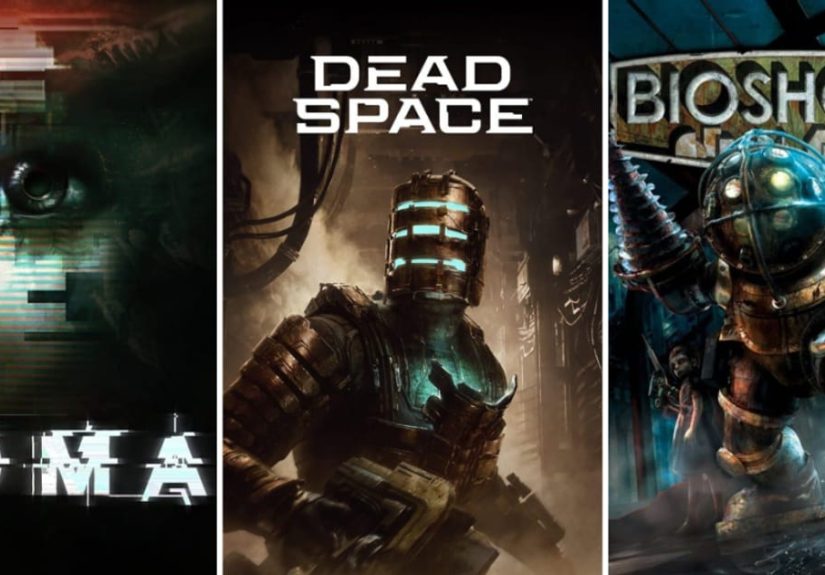
- 3) BioShock
- 4) Dishonored 2
- 5) Deus Ex: Human Revolution
- 6) Deus Ex (2000)
- 7) Dishonored
- 8) Deus Ex: Mankind Divided
- 9) Deathloop
- 10) BioShock 2
- 11) Thief Gold
- 12) Thief II: The Metal Age
- 13) Alien: Isolation
- 14) Dead Space (Remake)
- 15) SOMA
- 16) Control
- 17) Void Bastards
- 18) Metro Exodus
- 19) S.T.A.L.K.E.R.: Shadow of Chernobyl
- 20) Resident Evil 7: Biohazard
- 21) Atomic Heart
- 22) Arx Fatalis
- 23) Dark Messiah of Might & Magic
- 24) Weird West
- 25) Observation
- Quick Picks: Choose Your Next “Prey-Like” Based on Your Favorite Part
- Conclusion
- Player Experiences: Chasing the “Prey” Feeling (Extra ~)
Finishing Prey (2017) does something strange to a person. You start eyeing every office chair like it’s about to
sprout legs, you hoard snacks like you’re one busted airlock away from starvation, and you become emotionally attached
to a turret that would absolutely shoot you if you wore the wrong face.
If you’re here, you’re chasing that specific “Prey feeling”: a smart sci-fi setting, deliciously creepy tension, and
the freedom to solve problems your wayby hacking, sneaking, crafting, stacking boxes like a deranged interior designer,
or turning the environment into a physics-based apology letter.
What “Games Like Prey” Usually Means
Prey-like games tend to share a few traits: immersive-sim design (multiple solutions), exploration-first
level layouts (often a station, facility, or tightly connected hub), environmental storytelling (emails, audio logs,
notes, “why is there blood in the break room?”), and a steady drip of upgrades that let you build your own playstyle.
Some picks below lean more “systemic sandbox,” others lean more “sci-fi dread,” but all of them scratch the same itch.
How This Ranking Works
I ranked these by a blend of: (1) how strongly they match Prey’s immersive-sim DNA, (2) atmosphere and worldbuilding,
(3) meaningful build choices, and (4) how often the game lets you feel clever instead of merely well-armed.
The 25 Best Games Like Prey, Ranked
-
1) System Shock 2
The closest relative in tone and design: a doomed sci-fi setting, survival tension, RPG-like character building, and
a constant sense that you’re one bad decision away from being an audio log yourself. If you loved Prey’s “smart
horror + systems,” start here. -
2) System Shock (Remake)
A modern way to experience the classic “space station nightmare” blueprint. Expect exploration, resource pressure,
and a world that rewards paying attention (and punishes sprinting into rooms like you own the place). It’s less
“comfortably guided” than Preyin a good, sweaty-palms way. -
3) BioShock
If you liked scavenging, audio logs, and the feeling of being trapped somewhere stunning and hostile, Rapture is your
next vacation spot (no refunds). It’s more linear than Prey, but the atmosphere, upgrades, and storytelling-through-spaces
are absolutely in the family. -
4) Dishonored 2
A masterclass in giving you tools and saying, “Go be a genius or a menaceyour call.” The setting is different,
but the Arkane-style level design, flexible powers, and “I can solve this five ways” energy will feel instantly familiar
to anyone who loved Prey. -
5) Deus Ex: Human Revolution
Cyberpunk conspiracies, stealth vs. combat choices, hacking, and hub areas packed with alternate routesthis is
“player agency” served with a side of trench-coat drama. If your favorite part of Prey was building a clever,
self-made approach, this is prime fuel. -
6) Deus Ex (2000)
The classic that helped define immersive sims: layered levels, flexible problem-solving, and a world that reacts
enough to make you feel like you’re improvising inside a real place. It’s older and rougher, but the freedom is still
dangerously addictive. -
7) Dishonored
The original still hits: tight missions that feel like playgrounds, powers that encourage experimentation, and
consequences that actually matter. It’s more stealth-forward than Prey, but the “systems-first” design philosophy
is the same delicious brain food. -
8) Deus Ex: Mankind Divided
Smaller than Human Revolution but packed with intricate spacesexactly the kind of layered layout Prey fans
appreciate. If you loved rummaging through Talos I for alternate access routes, Mankind Divided’s dense hubs will feel
like home. -
9) Deathloop
Another Arkane spin on immersive-sim thinking, wrapped in a time-loop structure. You’ll experiment, learn systems,
and gradually master the island like it’s a puzzle box. The vibe is punchier than Prey, but the “creative solutions
are the point” mindset is pure Arkane. -
10) BioShock 2
Often underrated, and very friendly to Prey fans who like mixing combat styles, upgrading tools, and exploring
an environment that feels lived-in (and then un-lived-in, violently). It refines combat flow while keeping the same
“story in the walls” approach. -
11) Thief Gold
The stealth grandparent of the genre. If you liked the “vulnerable early game” feeling in Prey, Thief is
that sensation distilledcareful movement, listening, resource management, and levels built like real places with real
problems (for you). -
12) Thief II: The Metal Age
More stealth brilliance, more intricate spaces, more opportunities to feel like a wizard with a blackjack. While it’s
not sci-fi, it shares Prey’s love of systems and letting the environment do half the storytelling. Also: you will
fear tile floors. -
13) Alien: Isolation
For the “Talos I is terrifying” crowd, this is the purest form of space-station dread. It’s less about builds and more
about survival, stealth, and learning routinesbut it nails the isolation, the scavenging, and the constant tension of
being hunted. -
14) Dead Space (Remake)
Third-person, yesbut the mood is a cousin: an enclosed, hostile sci-fi environment where your resources matter and
every corridor feels like a threat assessment. If you loved Prey’s horror edge and “fix the ship/station while
everything hates you,” this lands hard. -
15) SOMA
Less combat, more existential sci-fi horrorand a story that sticks to your ribs. If what you loved in Prey was
the eerie, philosophical side of “what makes a person… a person,” SOMA is a must. Come for the atmosphere, stay
for the emotional damage. -
16) Control
A shifting government facility, uncanny phenomena, and lore delivered through documents you’ll pretend you’re “just
skimming” (you won’t). It’s more action-heavy than Prey, but the setting’s weird science energy and exploration
rhythm feel surprisingly adjacent. -
17) Void Bastards
Imagine Prey got locked in a closet with a comic book and a roguelite rulebook. You’ll board derelict ships,
scavenge supplies, make tactical choices, and improvise with what you find. It’s lighter, faster, and funnierwhile
still delivering that “resourceful survivor” loop. -
18) Metro Exodus
Not an immersive sim in the purest sense, but it shares Prey’s love for atmosphere, scavenging, and grounded
survival tension. The world feels physical, supplies matter, and the pacing gives you space to explore, plan, and
occasionally panic in slow motion. -
19) S.T.A.L.K.E.R.: Shadow of Chernobyl
A legendary blend of eerie exploration, emergent moments, and “the Zone does not care about your plans.” It’s more
open and janky than Prey, but the sense of danger, looting pressure, and unpredictable encounters can feel like
Talos I’s chaos stretched into a wider wilderness. -
20) Resident Evil 7: Biohazard
Different flavor of horror, but the first-person perspective and survival anxiety overlap nicely. If your favorite
part of Prey was creeping through tight spaces with limited resources and a bad feeling about every door, RE7
turns that into an art form (and then locks the art in your basement). -
21) Atomic Heart
A stylish sci-fi setting, abilities, and a mix of exploration and combat that can remind people of the “BioShock-to-Prey”
pipeline. It’s more bombastic and less systemic than Prey, but if you want an alternative-history tech nightmare
with upgrades and weirdness, it fits. -
22) Arx Fatalis
Arkane’s earlier immersive-sim workfantasy instead of sci-fi, but the DNA is there: experimentation, exploration, and
problem-solving that doesn’t always have a single “correct” answer. If you want to see the roots of the studio style
that helped shape Prey, this is a fascinating time capsule. -
23) Dark Messiah of Might & Magic
Here for the physics? This one is a gleeful reminder that “the environment is a weapon” didn’t start with space
wrenches. It’s more action-forward, but the systemic chaoskicking enemies into traps, using tools creativelylines up
with the part of Prey that rewards inventiveness. -
24) Weird West
A top-down immersive-sim-adjacent sandbox where systems collide and your choices matter. It’s not first-person and it’s
not sci-fi, but it shares Prey’s spirit: creative solutions, flexible builds, and a world that responds when you
try something clever (or reckless). -
25) Observation
If what you want most is the “mysterious station + unsettling sci-fi” mood, Observation delivers a tight,
story-driven experience. You’re not building a combat loadout hereyou’re unraveling a mysterybut the space-station
tension and slow-burn dread feel very Prey-adjacent.
Quick Picks: Choose Your Next “Prey-Like” Based on Your Favorite Part
- You want maximum immersive-sim freedom: System Shock 2, Deus Ex, Dishonored 2.
- You want space-station horror vibes: System Shock (Remake), Alien: Isolation, Observation.
- You want story told through environments: BioShock, Control, SOMA.
- You want scavenging + improvisation: Void Bastards, Metro Exodus, S.T.A.L.K.E.R.
- You want “Arkane flavor” specifically: Dishonored, Dishonored 2, Deathloop, plus the historical roots: Arx Fatalis.
Conclusion
The secret truth is that nothing is exactly like Preythat’s why it haunts your brain in the first place.
But the games above can give you the same core pleasures: smart spaces to explore, systems to bend, and that delicious moment
when you solve a problem in a way the game clearly anticipated… but still looks slightly offended that you did it.
Player Experiences: Chasing the “Prey” Feeling (Extra ~)
A lot of players describe Prey as a “story generator,” and that’s the real hook you’re trying to relight. It’s not
just the plot twist energy or the sci-fi mysteryit’s the way the game remembers that you are a person with impulses.
You see a locked door and immediately think, “Okay, but what if I stack three chairs, a recycler, and my dignity?”
And somehow… it works. That feelingof being rewarded for curiosity instead of punished for stepping off the “intended path”is
what makes Prey-like games feel so satisfying.
Another common experience: the first few hours are humbling in the best way. You’re underpowered, low on ammo, and suddenly
you’re reading every email like it’s a survival manual. You start making tiny, meaningful decisions: do you spend scarce
resources crafting medkits, or do you gamble that you can sneak past danger and save materials for upgrades? That tension
turns ordinary objects into strategic assets. A foam dart gun becomes reconnaissance. A wrench becomes courage. A turret becomes
your emotionally complicated roommate.
That’s why the highest-ranked picks here tend to share two qualities. First, they make space mattercorridors,
vents, locked labs, maintenance shafts, and “why is there a ladder here?” nooks that turn level design into a puzzle.
Second, they make systems matterhacking, stealth, physics, elemental interactions, enemy behaviors, resource loops,
and upgrades that genuinely change how you play. When those two pieces click, you get moments that feel personal: you didn’t
just clear a room; you engineered your own escape plan.
People also talk about the “museum effect” in these games: even after the danger passes, you still want to poke around.
You read notes, inspect objects, connect dots, and build a mental timeline of what happened before you arrived. It’s a very
specific kind of immersionthe sense that the world existed without you, and you’re now trespassing in it. That’s why titles like
BioShock, Control, and SOMA hit so hard even when they’re not as sandboxy: they create places you want to
understand, not just survive.
Finally, there’s the “confidence curve” that fans chase: the moment you realize you’re no longer prey. You walk into a space that
used to terrify you, and now you have tools, knowledge, and a plan. Not because the game handed you a power fantasy, but because you
earned itby learning layouts, systems, and enemy logic. If you pick your next game from the list above based on what you loved
mostfreedom, dread, lore, or improvisationyou’ll find that feeling again. And yes, you will still flinch at a suspicious coffee mug.