Table of Contents >> Show >> Hide
- First, Know What “Better” Actually Means
- Build the Foundation Before You Chase More Power
- Technique Fixes to Discuss With Your Coach
- Why Your Back Handspring May Not Be Improving
- Conditioning That Actually Helps
- Flexibility Matters, but Control Matters More
- The Mental Side of a Better Back Handspring
- A Safer Checklist for Improving
- When to Stop and Get Help
- Experience-Based Lessons From Athletes, Coaches, and the Real World
- Final Thoughts
If you’ve ever watched a gorgeous back handspring and thought, “Wow, that looked easy,” welcome to the oldest illusion in gymnastics. A great back handspring looks light, fast, and effortless. In real life, it’s a skill built on timing, confidence, strength, body tension, mobility, and the kind of patience most athletes would happily trade for instant results.
The good news? You absolutely can improve your back handspring. The less-fun news? The answer usually is not “throw it harder and hope for the best.” Better back handsprings come from smarter training, cleaner basics, and a brutally honest look at what is actually breaking down in your skill. Sometimes it’s power. Sometimes it’s shoulder flexibility. Sometimes it’s fear. And sometimes it’s all three showing up like uninvited guests.
This guide breaks down how to improve your back handspring in a realistic, safe, and coach-friendly way. Instead of trying to self-teach a risky tumbling skill, use this article to understand what strong athletes do differently, what habits usually hold people back, and what you should focus on with your coach in the gym.
First, Know What “Better” Actually Means
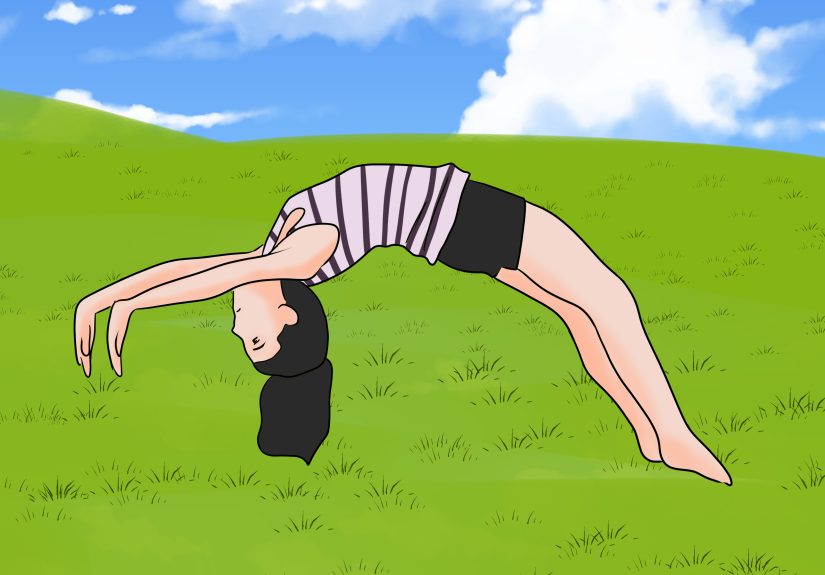
A better back handspring is not just one that “goes over.” That’s a low bar. A strong back handspring usually has several qualities at once: it looks quick off the floor, stays tight through the middle, reaches a solid hand support position, rebounds with control, and finishes in a way that sets up the next skill instead of ending in survival mode.
In other words, the goal is not merely to avoid disaster. The goal is to create a back handspring that is consistent, safe, and useful. If your back handspring is for cheer, tumbling passes, or gymnastics connections, it has to do more than exist. It has to work on purpose.
Build the Foundation Before You Chase More Power
One of the most common mistakes athletes make is trying to fix a technical issue by adding more effort. More effort sounds heroic. It also often makes ugly mechanics uglier. Before you worry about height, speed, or “throwing it bigger,” check the four foundations that usually matter most.
1. Shoulder Mobility
Back handsprings demand that the shoulders open well enough to support the body without collapsing the line. If your shoulders are tight, your shape tends to break down fast. That can show up as bent arms, a short reach, an arched or crunched position, or a landing that feels rushed and heavy.
Improving shoulder mobility does not mean becoming floppy. It means gaining usable range of motion that you can control. The athletes who progress fastest are usually the ones who combine mobility work with strength, not the ones who stretch for five minutes and then pray to the gymnastics gods.
2. Core Control
If the middle of your body turns to spaghetti halfway through the skill, everything else gets harder. Core control helps you transfer power cleanly, stay connected through the snap, and avoid the dreaded “my back handspring feels different every single time” problem.
Athletes often hear “squeeze your core” so often that the phrase loses all meaning. In practice, it means being able to hold a firm body line under speed, pressure, and momentum. Strong abs help, yes, but so do glutes, ribs that stay organized, and awareness of where your body is in space.
3. Leg Power and Rebound
Back handsprings are not won by arm flinging alone. Your legs matter a lot. Stronger jumps, cleaner takeoff mechanics, and better rebound habits all contribute to a more dynamic skill. Athletes who rely only on their upper body often end up with a low, dragged-out back handspring that looks tired before it even lands.
If you want more height and better flow, your lower body has to contribute. Think of power as something you organize, not something you randomly explode into existence.
4. Wrist and Upper-Body Tolerance
Your hands, wrists, shoulders, and upper back take real load in tumbling. If those areas are weak, irritated, or overworked, your back handspring quality may drop even when your technique knowledge is fine. This is one reason athletes sometimes feel “off” for weeks without understanding why.
A stronger skill is often built by respecting the parts of the body that absorb force, not just the flashy parts people see in a video.
Technique Fixes to Discuss With Your Coach
Because a back handspring is a high-risk skill, this is where coaching matters most. The safest way to improve is to let a qualified coach identify what your version of the skill needs. Still, it helps to know the usual categories of correction so you can understand the feedback you’re getting.
Are You Sitting or Are You Collapsing?
Many athletes are told to “sit” into the back handspring, but what they actually do is drop their chest, dump their hips, and lose tension. Those are not the same thing. A controlled set creates direction and power. A collapse creates chaos with extra drama.
If your back handspring feels low, jammed, or late, there’s a good chance the entry position needs work. This is a classic example of why the same correction can mean very different things depending on the athlete.
Are Your Arms Helping or Just Creating Theater?
Fast arms are useful. Wild arms are performance art. If your arm action is mistimed, it can throw off rhythm, shoulder position, and body tension. Athletes sometimes think they need bigger arm motion when what they really need is better timing and less panic.
Are You Staying Tight Through the Middle?
Loose ribs, separated legs, soft knees, or a relaxed core can turn a decent back handspring into a mushy one. Tightness is not about looking robotic. It is about helping your body move as one connected unit instead of a collection of separate opinions.
Are You Finishing in a Position That Sets Up the Next Skill?
A back handspring that ends with control is far more useful than one that technically lands but leaves you fighting for balance. Good finish positions matter whether you’re connecting another skill, rebounding out, or simply trying to build consistency.
Why Your Back Handspring May Not Be Improving
Sometimes progress stalls not because you are untalented, but because your training habits are getting in the way. Here are some of the usual culprits.
You Repeat the Skill More Than You Refine It
Mindless repetition is sneaky. It feels productive because you are working hard, sweating, and doing “a lot.” But if you repeat the same flawed version over and over, you are not practicing improvement. You are practicing loyalty to the mistake.
You Skip Basics Because They Feel Boring
Handstand shapes, hollow body control, jumping mechanics, shoulder work, and rebound drills are not glamorous. They are also where cleaner skills are born. Athletes who embrace basics usually look “naturally talented” later, which is a very rude trick of the universe.
You’re Training Through Fatigue
A tired nervous system makes timing worse. A tired body makes positions sloppier. If your best back handspring appears only in the first few attempts and then falls apart, fatigue may be the missing explanation.
You’re Ignoring Fear
Fear is not weakness. It is information. When athletes pretend fear is not there, it often shows up as hesitation, throwing the head, cutting off the reach, or rushing the skill. Mental blocks do not always need more bravery. Sometimes they need better progressions, clearer feedback, and a training environment that rebuilds trust.
Conditioning That Actually Helps
If you want to improve your back handspring, your conditioning should support what the skill demands. That means training for body tension, jumping power, shoulder strength, and control through fast movement.
Useful conditioning often includes core work that teaches stability, lower-body exercises that build explosive power, upper-body strength that supports sound hand contact mechanics, and drills that improve spatial awareness. The goal is not to become exhausted for social-media bragging rights. The goal is to become more capable.
Conditioning also works better when it is consistent. Ten minutes of smart work several times a week usually beats one dramatic session that leaves you unable to laugh, sneeze, or sit down like a normal person.
Flexibility Matters, but Control Matters More
Gymnasts and tumblers love flexibility, and fair enough, it looks impressive. But flexibility without strength can create its own problems. A back handspring does not improve just because you can fold yourself like a travel pillow.
The best mobility work supports better positions under load. Shoulders, upper back, hip flexors, ankles, and wrists all deserve attention, but they should be trained with control. Think “usable range,” not “party trick.”
The Mental Side of a Better Back Handspring
Confidence in tumbling is rarely random. It usually comes from feeling prepared. Athletes get more confident when they understand the correction, trust their setup, feel physically ready, and have done enough quality progressions that the skill stops feeling like a surprise.
If you get nervous, try focusing on one cue at a time instead of ten. Ten cues create static. One helpful cue creates action. It can also help to judge practice by quality rather than by whether every turn felt perfect. Improvement is often messy in the middle. That does not mean it is failing.
And yes, some days your back handspring may feel weird for no dramatic reason. Bodies are like that. The answer is not usually to spiral. It is to zoom out, return to basics, and work with your coach instead of picking a fight with physics.
A Safer Checklist for Improving
Use this as a reality check, not a do-it-yourself instruction manual:
- Train with a qualified coach who can spot mechanical issues in real time.
- Use proper surfaces, mats, and progressions for your level.
- Warm up thoroughly before tumbling.
- Build strength and mobility year-round, not only when the skill feels bad.
- Prioritize quality attempts over endless sloppy ones.
- Speak up early about wrist pain, back pain, or mental hesitation.
- Get enough sleep, recovery, and hydration so your body can actually learn.
When to Stop and Get Help
If your back, wrists, shoulders, or ankles hurt during or after back handsprings, do not try to “tough it out” as a personality trait. Pain changes mechanics, and altered mechanics raise risk. Persistent soreness, sharp pain, repeated fear, or sudden regression all deserve attention.
Talk to your coach, parent, athletic trainer, or sports-medicine professional if something feels off. Rest is not laziness. Rehab is not failure. Sometimes the fastest route back to a better skill is backing up long enough to fix what your body has been trying to tell you.
Experience-Based Lessons From Athletes, Coaches, and the Real World
Ask enough gymnasts about improving a back handspring, and you start hearing the same stories in different outfits. One athlete says her skill changed when she stopped chasing “bigger” and started chasing “cleaner.” She had spent months trying to make the skill more powerful, only to realize that her set was inconsistent and her shoulders were tight. Once she focused on basics, the back handspring looked better without feeling harder. The lesson was not magical. It was annoyingly logical.
Another athlete describes the opposite problem: she had enough flexibility to impress everyone in the room, but not enough control to use it well. Her back handspring looked loose and unpredictable. She assumed the answer was more stretching. Her coach disagreed and emphasized strength, body tension, and better shape awareness. Within weeks, the skill felt more reliable. Not easier, exactly, but less chaotic. That matters.
Coaches often tell similar stories. The athletes who improve fastest are not always the boldest ones. They are usually the ones who listen closely, repeat corrections with intention, and are willing to work on the boring stuff. Good athletes learn the skill. Great athletes learn why the skill works.
There is also the mental side. Plenty of tumblers go through a phase where the back handspring suddenly feels scary, even after they have done it before. That can be frustrating and embarrassing, especially when everyone around them seems fearless. But this experience is common. Many athletes rebuild confidence by returning to progressions, taking pressure off the end result, and letting consistency replace panic. Confidence that is rebuilt carefully tends to last longer than confidence borrowed from adrenaline.
Parents and athletes also learn, sometimes the hard way, that more training is not always better training. A packed schedule can make it look like progress should be automatic. But if sleep drops, soreness builds, and technique gets sloppy, the body starts sending invoices. The athlete may feel flat, inconsistent, or suddenly afraid of skills that were once fine. That does not always mean the athlete has “lost” the back handspring. Sometimes the athlete has simply lost freshness, recovery, or trust.
In real gyms, improvement is usually less dramatic than people hope and more encouraging than they fear. It often looks like a slightly cleaner entry this week, a stronger rebound next week, a better finish a few practices later, and one day the athlete realizes the skill no longer feels like a fight. It feels organized. Reliable. Useful.
That’s the real win. A better back handspring is not just prettier for videos or more impressive in a routine. It gives you options. It lets you connect skills more confidently, train with less panic, and build future tumbling on a stronger base. It turns the skill from “something I survive” into “something I can trust.”
So if your back handspring is frustrating you right now, don’t assume you’re stuck. Usually, the answer is not hidden in some secret trick. It lives in cleaner basics, smarter conditioning, honest feedback, proper recovery, and patience that feels wildly uncool but works anyway.
Final Thoughts
Improving your back handspring is not about finding one miracle correction. It is about building a better system around the skill. Strong fundamentals, coach-guided feedback, smart conditioning, body awareness, recovery, and patience all matter more than dramatic effort.
Work on what your body actually needs, not what looks most exciting on social media. Respect pain. Respect fear. Respect the basics. And remember: a back handspring that is clean, controlled, and repeatable will always beat one that is chaotic but technically “made it over.”
That may not be the flashy answer. It is, however, the answer that tends to work.