Table of Contents >> Show >> Hide
- How the Story Took Off
- Why “Where Do Bad Words Come From?” Is Actually a Smart Question
- Where Bad Words Actually Come From
- The Psychology of Swearing: More Than Shock Value
- Comedy + Politics + Profanity: Why the Mix Is Explosive
- Media, Law, and the “Can You Say That?” Question
- What We Learn from the Ted Cruz–Tom Segura Moment
- How to Talk About Bad Words Without Sounding Like a Hall Monitor
- Conclusion
- Extended Experience Section (500+ Words): What This Topic Feels Like in Real Life
Some stories are too weird to stay small. A U.S. senator, a stand-up comic, a neighborhood sidewalk, and a question that sounds like it escaped from a late-night philosophy class:
Where do bad words come from?
That is the kind of setup that makes the internet sit up straight, refill its coffee, and say, “Okay… go on.”
The now-famous exchange associated with Ted Cruz and comedian Tom Segura became a pop-culture mini-saga because it sits at the exact intersection Americans can’t resist: politics, comedy, and taboo language.
It’s funny on the surface. But if you dig one level deeper, it reveals something surprisingly useful about how people think, speak, bond, signal identity, and draw social lines.
This deep dive unpacks the moment itself, why it traveled so far, where profanity actually comes from, what psychology says about swearing, and why the “bad words” debate keeps returning in media, law, and everyday life.
Think of this as a guided tour through language, with a little satire, a little sociology, and zero pearl-clutching.
How the Story Took Off
The comedy bit that became political gossip
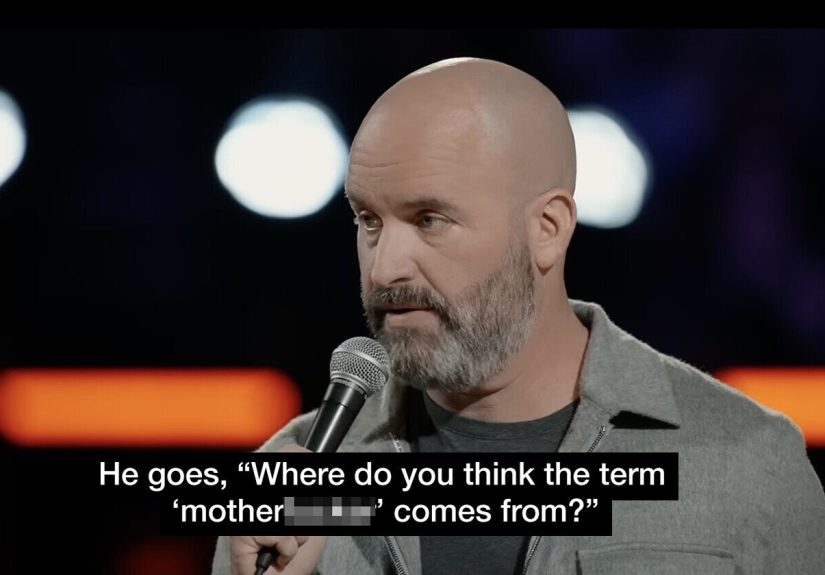
The title says it all: “Ted Cruz asks Tom Segura where bad words come from.” The premise gained traction because it feels both absurd and plausible.
Segura’s comedic style thrives on awkward realism the kind where you can almost see the exact facial expression someone made before saying something wildly inappropriate.
In the viral retelling, the senator allegedly asks about the origin of a profanity in a way that sounds less like a political interview and more like a curious anthropology student who accidentally swallowed espresso shots.
The public response split instantly into two camps: people who believed every syllable and people who treated it like a great story whether it was factual or not.
The timeline people forget
Segura’s Netflix special Sledgehammer released in 2023, putting the bit into a wider mainstream pipeline where clips and recountings can bounce across platforms for months.
Then came follow-up commentary and media recaps, including a public denial from Cruz in 2024.
Once both “the joke” and “the rebuttal” existed, the story became perfect internet fuel: every side had a screenshot.
Why this moment traveled farther than the average comedy clip
Because it offered a three-layer package:
- Celebrity friction: Politician versus comic is always clickable.
- Taboo language: Anything involving “forbidden” words sparks curiosity.
- Identity projection: People read the same bit differently based on political tribe and media habits.
In other words, this was not just a joke. It was a social Rorschach test in real time.
Why “Where Do Bad Words Come From?” Is Actually a Smart Question
Strip away the headlines and the question is excellent. If you ask where a curse word comes from, you’re asking three deeper things:
- History: How old is this word, and what did it mean first?
- Culture: Who gets offended, when, and why?
- Power: Who is “allowed” to say what and in which context?
That is not shallow gossip. That is sociolinguistics with better ratings.
Bad words are social technology
Swear words are not just random verbal fireworks. They can intensify emotion, establish in-group trust, reject authority, signal authenticity, or deliberately provoke.
A single taboo word can function like a tiny social switch: friendship in one room, offense in the next.
Taboo language changes over time
The things people consider “unspeakable” are not fixed forever. In one era, religious profanity is shocking. In another, sexual terms dominate the taboo list.
Then media norms evolve again, and suddenly yesterday’s scandal sounds mild compared with today’s comment section.
Where Bad Words Actually Come From
Etymology: older than most people think
Many profanity terms have long linguistic histories, including roots in older Germanic languages and centuries of semantic drift.
What’s fascinating is not only how old some words are, but how their meanings widened from literal actions to emotional punctuation.
For example, one major English expletive has documented historical roots stretching back to the 14th century.
Another high-voltage compound insult is recorded in modern dictionaries with a first known use in the early 20th century.
So when people say “language is getting worse,” history politely raises its hand and says, “Actually, this has been a long-running project.”
From sacred to social to comedic
A key pattern in the history of profanity is migration:
- First: words tied to sacred boundaries and blasphemy.
- Then: words tied to bodily functions and sex.
- Now: words used as emotional shorthand, identity markers, and comedic tools.
Even the word taboo itself entered English from Tongan in the late 18th century, reminding us that the language of “forbidden speech” has always been culturally layered.
Why people invent softer versions
Humans are expert negotiators with social norms.
We censor ourselves creatively using euphemisms, sound swaps, and “minced oaths” that keep emotional force while reducing social risk.
That is why “darn,” “heck,” and dozens of modern substitutes survive: they are linguistic compromise devices.
The Psychology of Swearing: More Than Shock Value
Swearing and pain tolerance
Research over the years has repeatedly found an interesting pattern: in controlled settings, repeating a swear word can increase pain tolerance for some participants.
This is one reason people instinctively curse after stubbing a toe or stepping on a toy brick shaped like regret.
Translation for everyday humans: that sudden expletive after minor pain may be less “bad manners” and more “nervous system emergency shortcut.”
Swearing and physical performance
More recent research reviews suggest swearing may also help in short, intense effort tasks by changing psychological state, effort perception, and inhibition levels.
In plain English: a strategically timed bad word can sometimes function like a tiny “go” button.
Important caveat: this does not mean profanity is a magic supplement.
Context matters. Frequency matters. Audience matters.
If you try this during a company all-hands meeting, your “performance gains” may be offset by a meeting with HR.
Swearing as social glue (or social sandpaper)
In trusted groups, swearing can signal closeness and authenticity.
In mixed or formal settings, the exact same words can sound aggressive or disrespectful.
That duality is why taboo language remains so powerful: it encodes relationship boundaries in real time.
Comedy + Politics + Profanity: Why the Mix Is Explosive
Comedians test boundaries for a living
Stand-up comedy is basically a lab for social risk.
Comics take a premise, push the edge, watch the crowd, and adjust.
The goal is not merely to offend; it is to reveal contradictions people already feel but rarely admit in polite settings.
Politicians now live in creator media
The modern political ecosystem no longer runs only through press conferences and Sunday shows.
Podcasts, clips, reaction threads, and short-form videos now shape public persona just as strongly.
That helps explain why language moments especially awkward or taboo ones can become headline-sized events.
The authenticity trap
Audiences say they want “real talk.”
But real talk comes with rough edges, including profanity, sarcasm, and unfiltered phrasing.
So public figures constantly balance two conflicting demands:
- Sound authentic enough to feel human.
- Sound polished enough to avoid scandal.
That tension is exactly why one odd question about a bad word can trigger a full week of think pieces.
Media, Law, and the “Can You Say That?” Question
Broadcast rules versus internet norms
American media still carries a split personality:
- Legacy broadcast: historically regulated for indecency/profanity in certain contexts.
- Digital platforms: governed more by private platform policies and community standards.
This explains the weird modern experience where one phrase is bleeped on traditional channels but repeated uncut online five minutes later.
Audiences are living across two language regimes at once.
Why legal context still matters
U.S. court and regulatory debates over fleeting expletives, indecency standards, and notice to broadcasters shaped how editors and producers still handle profanity.
Even if viewers have shifted culturally, legal and institutional frameworks move more slowly.
What We Learn from the Ted Cruz–Tom Segura Moment
Lesson 1: People are deeply curious about language origins
Beneath the meme layer, people genuinely want to know why certain words feel powerful.
Etymology turns “that’s offensive” into a richer conversation about history, class, religion, media, and identity.
Lesson 2: Taboo words are emotional accelerators
They can intensify humor, pain response, intimacy, aggression, rebellion, or catharsis.
Few language tools are as compact and as context-dependent.
Lesson 3: The same story can be true in different ways
Whether people treat the original anecdote as literal fact, comic exaggeration, or cultural metaphor, it still reveals something real:
Americans are negotiating public speech norms in front of each other, live, every day.
How to Talk About Bad Words Without Sounding Like a Hall Monitor
A practical framework
- Ask context first: Who’s speaking to whom, and where?
- Separate word from intent: Not every expletive is an attack.
- Measure impact: Some terms carry historical harm beyond “just language.”
- Allow code-switching: People naturally adjust language by setting.
- Prefer curiosity over panic: “Why that word?” beats “How dare you?” in most discussions.
- Teach nuance: Linguistic literacy is better than blanket censorship.
This approach works for parents, teachers, creators, employers, and anyone trying to survive group chats with multiple generations.
Conclusion
The “Ted Cruz asks Tom Segura where bad words come from” moment is memorable because it is ridiculous, yes but also because it is intellectually loaded.
It opens a door into etymology, social psychology, media law, and political branding, all through one supposedly simple question.
Bad words are not just verbal chaos. They are cultural instruments: sometimes sharp, sometimes funny, sometimes healing, sometimes harmful.
They can provoke, bond, relieve pain, trigger backlash, and define group boundaries in seconds.
No wonder people keep arguing about them. We are not just debating vocabulary; we are debating identity, power, and belonging.
So if someone asks where bad words come from, don’t roll your eyes.
That question might be the start of one of the most honest conversations people can have about language, society, and what “acceptable” really means in modern America.
Extended Experience Section (500+ Words): What This Topic Feels Like in Real Life
Let’s move from headlines to lived experience, because this is where the subject gets vivid.
Imagine four scenes.
Scene one: a comedy club.
The comic drops a taboo word, and the room splits by age and expectation. The younger crowd laughs instantly; older couples laugh half a beat later, after checking whether the joke was clever enough to “earn” the language.
Nobody asked for a sociology lesson, but everyone just gave one with their reaction.
Scene two: a campaign event livestream.
A politician tries to sound relatable, uses casual language, and clips from the speech spread online.
Supporters call it authentic. Critics call it unserious. Commentators call it strategic.
What happened? The exact same sentence was interpreted through tribe first, language second.
Scene three: a family kitchen.
A teenager repeats a phrase heard online. One parent says, “Absolutely not.” The other says, “Depends on context.”
Dinner becomes a spontaneous seminar on respect, intent, and audience. By dessert, everyone has discovered the central truth of modern speech:
nobody actually disagrees that words matter they disagree on how they matter.
Scene four: a gym.
Someone mutters a swear under strain during a heavy set. Nobody faints. Nobody files a report.
The person finishes the rep and nods like they just hacked the human operating system.
This scene captures the paradox: in some spaces, profanity is considered impolite; in others, it is treated like emotional torque.
Here’s the bigger pattern those scenes reveal.
Most people do not have one fixed “profanity policy.” They have a sliding policy based on:
- relationship closeness,
- setting formality,
- power dynamics,
- and perceived intent.
That is why debates feel endless. People are often arguing from different contexts without saying so.
One person imagines a classroom. Another imagines a locker room. A third imagines a comedy stage.
Same word, different world.
There is also an emotional layer we rarely admit.
Taboo language fascinates people because it lets them rehearse social risk in miniature.
Saying, hearing, or censoring a forbidden word is a quick way to test boundaries:
“Are we close?” “Are we safe?” “Are we on the same wavelength?”
In that sense, profanity can function as a tiny trust experiment.
The Ted Cruz–Tom Segura episode became so sticky because it dramatized this exact experiment in public.
A senator represents institutional formality. A stand-up comic represents edge-testing informality.
Put them in one anecdote, add a taboo-word origin question, and you get a perfect cultural x-ray.
Personal takeaway? Curiosity is better than panic.
When someone uses a charged word, ask what function it served:
- Was it pain relief?
- Was it humor?
- Was it aggression?
- Was it group bonding?
- Was it careless imitation?
Once you identify function, the conversation gets smarter and less theatrical.
You can still set boundaries and you should but with clarity instead of moral static.
If this whole topic proves anything, it is this: language is a living system, not a museum exhibit.
People update it every day under social pressure, media influence, legal constraints, and cultural creativity.
Bad words sit at the hottest part of that system, which is why they keep showing up in comedy specials, political podcasts, and family debates alike.
So yes, the story is funny. But it is also revealing.
A question about where bad words come from turns out to be a question about where we come from our values, our discomforts, our humor, our group identities, and our constantly renegotiated rules for what can be said, where, and by whom.