Table of Contents >> Show >> Hide
- What the Impassa SCW9057G-433 Actually Is
- What the Teardown Reveals About the Hardware
- The Meaning of “G-433” and Why It Matters
- Where the Design Still Holds Up
- Where the Design Shows Its Age
- Battery, Power, and the Quiet Practicality of the Design
- So, Is the Impassa SCW9057G-433 a Good Design?
- Real-World Experiences With the Impassa SCW9057G-433
- Conclusion
- SEO Tags
The Impassa SCW9057G-433 is one of those alarm panels that feels like a time capsule from the era when home security was trying to become smarter without becoming too fancy. It is not sleek in the way today’s glassy touchscreen hubs are sleek. It is not cute. It does not wink at you with app-first minimalism. Instead, it looks like what it is: a serious, self-contained wireless security system built to protect a house or small business, log events, talk to a central station, and get on with its day.
And honestly? That is part of its charm.
This teardown is not about defeating the system or turning it into a movie prop for suspicious late-night activities. It is about understanding how the Impassa SCW9057G-433 was designed, what its hardware layout says about its priorities, why it earned a place in so many professionally installed security setups, and why some people still keep these panels alive long after newer systems started showing off color touchscreens and smart-home dashboards.
The short version is that the SCW9057G-433 was built around practical integration. It combines a keypad, display, internal sounder, wireless receiver, alarm controller, and optional communications hardware in one wall-mounted enclosure. The “9057” model adds two-way audio capability over the related 9055 platform, the “G” version includes a 3G cellular communicator, and the “433” designation tells you it lives in DSC’s 433 MHz wireless sensor ecosystem. Translation: this panel was meant to be the compact brains and voice of a full wireless intrusion system, not just a beeping box on the wall.
What the Impassa SCW9057G-433 Actually Is
At its core, the Impassa SCW9057 family is a self-contained two-way wireless alarm system for homes and small businesses. DSC positioned it as an all-in-one platform with support for up to 64 wireless zones, 16 wireless keys, multiple wireless keypads, multiple sirens, event logging, user-code management, and central-station communication. In the SCW9057 version, the headline differentiator is built-in two-way audio, which allows a monitoring station to open a talk/listen or listen-in session after an alarm event. That is a big clue about the product’s original mission: verification, response, and professional monitoring mattered more than glossy consumer tech theater.
The panel also supports two hardwired zones on the main board, which is a nice little reminder that security installers rarely live in a purely wireless fantasy world. Legacy contacts happen. Edge cases happen. Existing wiring in older homes happens. DSC clearly understood that real installations are messy, and the Impassa reflects that reality.
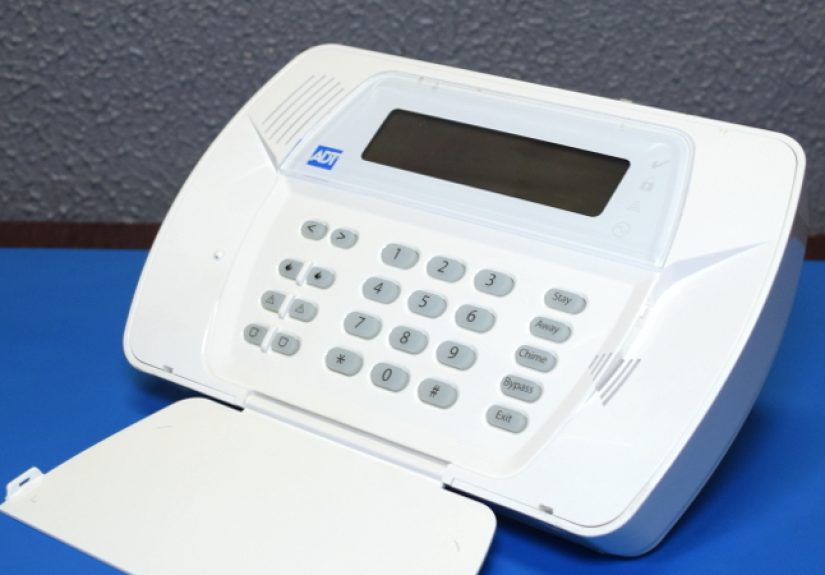
Usability lands somewhere between “solid” and “you should probably keep the manual nearby for the first week.” The built-in interface uses a 2×16 LCD, four status indicators, and five programmable one-touch function keys down the right side. It is functional, not glamorous. You can tell the design team prioritized durability and alarm workflow over giving the panel the personality of a smartphone. If modern systems are a tablet nailed to the wall, the Impassa is a calculator that studied criminal psychology.
What the Teardown Reveals About the Hardware
FCC internal photos tell a lot of the story even without zooming in like a conspiracy theorist with too much coffee. The overall construction is simple and efficient. Inside the shell, the Impassa uses a large main PCB, a separate smaller front-interface board, a rubber keymat, and an onboard sounder mounted in the enclosure. That layout immediately tells us three things.
1. It was built for integration, not modular glamour
This is not a system that spreads its personality across half a dozen internal daughterboards just because it can. The Impassa keeps things tight. The keypad membrane, the display interface, the controller board, and the enclosure all work as a single appliance-style package. That makes the product easier to mount, easier to ship, and easier to deploy at scale. It also helps explain why the Impassa became such a practical panel in the field. Installers like fewer variables, and fewer variables mean fewer service calls where someone ends up muttering at drywall.
2. The front interface was designed for repeated daily use
The underside of the main board shows clear contact geometry for the keypad, reinforcing the fact that this system expected heavy interaction from real households. Arm away. Arm stay. Bypass a zone. Quick exit. Check trouble conditions. Silence that beep before the dog launches a formal complaint. The physical button layout makes sense in that context. It is not luxurious, but it is dependable, and dependable is exactly what alarm hardware is supposed to be.
3. Audio was not an afterthought
The SCW9057’s big selling point over the 9055 is two-way audio, and the hardware arrangement backs that up. The presence of a dedicated audio transducer and the product’s official support for alarm verification sessions suggest that voice interaction was designed into the system architecture early, not glued on later by marketing after somebody saw a trend report.
In other words, the Impassa feels like a panel designed by people who spent more time thinking about dispatch workflows, alarm verification, and installer convenience than about whether the enclosure would look good next to a designer vase. That may sound unromantic, but in security gear it is usually a compliment.
The Meaning of “G-433” and Why It Matters
Model numbers in security hardware often look like alphabet soup spilled on a service ticket, but the SCW9057G-433 code is actually useful once you decode it. The “9057” identifies the two-way audio-capable Impassa model. The “G” points to a bundled 3G2055 cellular communicator. And the “433” tells you the system is built around DSC’s 433 MHz wireless ecosystem.
That last part matters a lot. One of the Impassa’s biggest real-world advantages was its compatibility with a broad pool of legacy DSC 433 MHz devices, including door/window contacts, PIRs, glassbreak detectors, repeaters, keypads, and wireless sirens. That made the panel especially appealing in retrofit jobs, takeovers, and upgrades where a property already had DSC-compatible wireless hardware installed. Instead of ripping everything out and starting from scratch, installers could often reuse a working sensor base and just rebuild the brain around it.
This is one reason the Impassa still gets respect from people who know older alarm hardware. It may look dated, but it was never pointless. The platform solved a real problem: how do you deliver a professionally monitored wireless system without turning every installation into a full renovation project?
Where the Design Still Holds Up
Even by current standards, several aspects of the Impassa architecture deserve credit.
Support for serious zone counts
Sixty-four wireless zones is plenty for many homes and smaller commercial spaces. Add 16 wireless keys and multiple keypads and sirens, and the Impassa moves beyond “basic apartment alarm” territory into something genuinely flexible.
Event logging and system management
A 500-event buffer with date and time stamps does not sound glamorous, but in the alarm world that kind of accountability matters. When was the system armed? Which zone faulted? Was there a trouble condition? Did communication fail? Good security design is part prevention, part documentation, and the Impassa clearly understood that.
Function-first controls
The five programmable one-touch keys are classic security-panel thinking. Stay arm, away arm, chime, bypass, quick exit: these are daily actions, not buried menu items. The interface may not win any design awards from a startup founder in all-white sneakers, but it respects the fact that alarm systems are tools first.
Professional monitoring logic
The SCW9057’s two-way audio support, cellular signal readout, and communication options reflect a platform built for monitored service, not just local noisemaking. That distinction is important. Plenty of panels can scream. Fewer are designed to communicate clearly, verify events, and support service-provider workflows.
Where the Design Shows Its Age
Now for the lovingly delivered roast.
The Impassa is old enough to remember when touchscreens were still a flex. Compared with modern all-in-one panels, its on-board interface feels dense, button-heavy, and a little intimidating for new users. Alarm Grid has been blunt about this: the platform works, but it is dated, harder to program than newer alternatives, and not the first choice for anyone shopping fresh in today’s market.
The biggest practical aging issue is communications. The SCW9057G-433’s built-in 3G communicator was a meaningful upgrade in its day, but the industry moved on, and 3G sunsets made that hardware a liability. DSC itself later pushed LTE as the longer-life path, and modern Impassa owners who still want monitoring generally need an LTE-compatible path rather than relying on old 3G gear. That does not make the whole panel junk. It just means the communications layer aged faster than the alarm logic underneath it.
In fact, that is one of the most interesting things about this teardown: the control panel itself is not the weak point people usually complain about. The weak point is time. Time comes for every network technology, every carrier standard, and every “future-ready” communicator that gets to discover the future had other plans.
Battery, Power, and the Quiet Practicality of the Design
Official documentation also shows a very practical power strategy. Systems without an alternate communicator module used a 1500 mAh Ni-MH battery pack, while systems with a communicator used a larger 3600 mAh Ni-MH battery pack. That bigger battery was needed to meet longer standby targets, including the 24-hour standby requirement associated with residential fire applications. Again, this is not glamorous stuff, but it is real engineering. The Impassa was built around actual installation requirements, not just brochure adjectives.
That detail also tells you the panel was designed with field upgrades in mind. DSC even documented communicator-related battery changes. In plain English, the company expected the panel to evolve depending on the communication path. That modular service mindset is a major reason older professional alarm equipment often outlives trendier consumer devices.
So, Is the Impassa SCW9057G-433 a Good Design?
Yes, with an asterisk the size of a keypad button.
As a product of its era, the Impassa SCW9057G-433 is well designed. It combines panel, keypad, display, sounder, wireless support, event logging, and professional communication features into a compact enclosure that was clearly optimized for fast deployment and dependable operation. The teardown shows a system built around integration and field practicality, not excess. It reused the enclosure intelligently, packed meaningful capability into a single unit, and supported enough sensors and peripherals to cover a wide range of homes and light commercial jobs.
Where it falls short today is not because the original architecture was foolish. It falls short because user expectations changed. People now expect better onboarding, prettier interfaces, richer apps, easier programming, and communications hardware that survives carrier transitions without drama. On those fronts, the Impassa feels old. But old and bad are not the same thing.
The better verdict is this: the Impassa SCW9057G-433 is a smart legacy panel. It is not a modern luxury experience. It is a compact professional security appliance from a phase in the industry when “wireless” still had to prove it could be serious. And judging by how many of these systems are still discussed, upgraded, or reused, it proved the point pretty well.
Real-World Experiences With the Impassa SCW9057G-433
If you talk to people who have actually lived with Impassa systems, a pattern emerges. The first impression is usually something like, “This thing looks old.” The second impression, after a few days of use, is usually, “Okay, but it works.” That gap between appearance and function is probably the defining Impassa experience.
In existing homes, especially former professionally monitored installations, the panel often shows up already mounted, already enrolled with legacy 433 MHz sensors, and already connected to a layout that makes sense. A front door contact here, a motion detector in the hallway, maybe a glassbreak in the family room, maybe a wireless siren that absolutely has no interest in indoor diplomacy. In those cases, the Impassa feels less like a new gadget and more like inherited infrastructure. You do not “discover” it so much as negotiate with it.
For homeowners, the daily experience is a mix of competence and mild menu archaeology. The one-touch function keys are genuinely convenient once you know them. Arming in stay mode becomes second nature. Trouble beeps are easy enough to silence. The event buffer is useful. The system status messaging is surprisingly honest. If something is wrong, the panel tends not to be subtle about it. That is annoying at 6:12 a.m., but valuable at literally every other time.
For installers and takeover technicians, the experience is more nuanced. The good news is that the Impassa often rewards methodical work. Wireless enrollment is straightforward once you are inside the ecosystem, and the broad compatibility with DSC 433 MHz devices makes the panel practical in retrofit scenarios. Reusing existing contacts and detectors can save time, reduce cost, and avoid unnecessary wall repair. That is a big deal in the real world, where homeowners rarely clap with joy when told their perfectly functional sensors are being replaced for no reason.
The less charming part is that the platform asks for patience. Programming is not as friendly as newer touchscreen systems. New users can find the keypad logic a little stern, like being taught algebra by a smoke detector. And when old 3G communications are part of the mix, the ownership experience can quickly become a lesson in why cellular sunsets ruin everyone’s mood.
Still, the Impassa earns loyalty in an old-school way: by being dependable. Many owners and dealers describe it as a panel that simply keeps going. It is not flashy. It is not fashionable. It is not trying to become the center of your digital lifestyle. It wants to supervise zones, communicate alarms, log events, and let you get back to your life. In a product category full of hype, that kind of reliability ages surprisingly well.
Conclusion
The teardown verdict on the Impassa SCW9057G-433 is clear: this is a thoughtfully integrated legacy alarm panel whose design makes perfect sense once you judge it by security priorities rather than consumer-tech trends. Its enclosure, PCB layout, keypad architecture, audio support, and communication strategy all point to a system built for professional installation, practical monitoring, and long service life. It has obvious age lines now, especially around interface design and legacy 3G communications, but the bones are solid. If you want a case study in how the security industry bridged the gap between old-school alarm reliability and early wireless convenience, the Impassa is a very good one.