Table of Contents >> Show >> Hide
- What Starbucks Confirmed About Red Cup Day 2025
- Why Red Cup Day Keeps Going Viral
- The Holiday Menu That Helped Build the Hype
- What the 2025 Red Cup Design Says About the Brand
- How Smart Customers Approached Red Cup Day 2025
- Why This Promotion Still Works So Well for Starbucks
- More Than a Cup: The Experience of Red Cup Day in 2025
- Experiences Related to Starbucks Red Cup Day 2025
- Final Thoughts
Some holiday traditions involve string lights, awkward family group texts, and someone dramatically overbaking cookies. Starbucks Red Cup Day belongs on that list too. The coffee giant confirmed that its wildly popular Red Cup Day returned in 2025, and the announcement landed exactly how these things usually do: with excitement, social buzz, calendar reminders, and the kind of urgency normally reserved for concert tickets and Black Friday electronics.
At first glance, Red Cup Day sounds simple. Buy a qualifying seasonal drink, get a limited-edition reusable red cup, and go on with your peppermint-scented life. But in reality, the event has evolved into a full-on pop culture moment. It now sits at the intersection of holiday nostalgia, collectible merch culture, TikTok anticipation, and Starbucks’ unmatched ability to turn a paper cup into a personality trait.
For 2025, Starbucks didn’t just bring the tradition back. It gave customers another reason to line up early, refresh the app, and debate whether the cup itself or the seasonal drink inside it is the real star. Spoiler alert: it is both. One is a caffeine delivery system. The other is a tiny red trophy that says, “Yes, I am emotionally prepared for December.”
What Starbucks Confirmed About Red Cup Day 2025
Starbucks confirmed that Red Cup Day 2025 would return during its holiday season rollout, then later revealed the official date: Thursday, November 13. That timing placed the event shortly after the launch of the broader 2025 holiday menu, which began on November 6. In other words, Starbucks gave fans just enough time to get reacquainted with their seasonal favorites before unleashing the big collectible-cup moment.
The basic offer stayed beautifully familiar. Customers who purchased a qualifying handcrafted holiday or fall beverage at participating Starbucks locations could receive a free limited-edition reusable red cup while supplies lasted. That “while supplies last” wording is doing a lot of heavy lifting here, because veteran Starbucks fans know Red Cup Day is not the day to wander in at 2:47 p.m. with casual optimism. This is a morning mission.
Starbucks also widened convenience around the promotion. The cup was tied to multiple ordering methods, including in-store orders, drive-thru orders, app purchases, and even delivery through participating partners. That matters because Red Cup Day is no longer just a coffeehouse event. It is a digitally fueled retail ritual, and Starbucks understands that many customers now experience the brand through a phone screen first and a pickup counter second.
The 2025 Red Cup Details
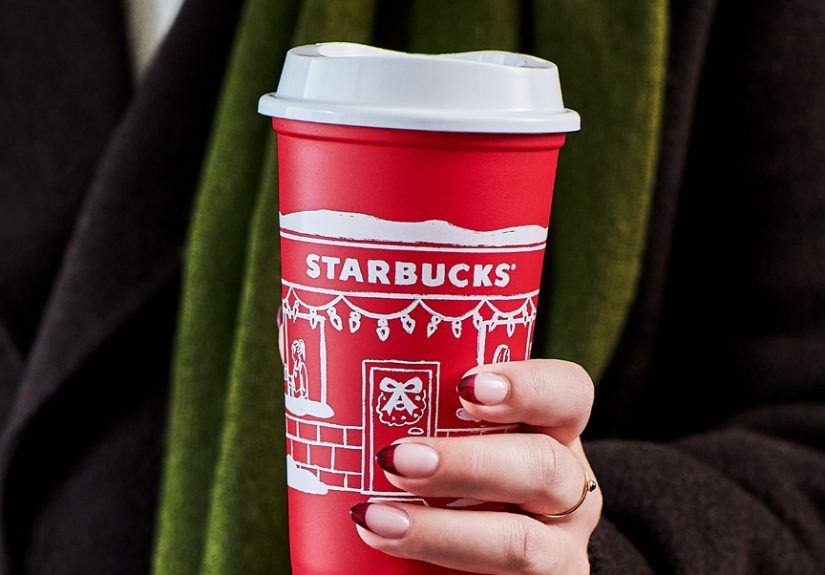
The 2025 version came as a grande-size reusable cup, which added a practical bonus to the collectible factor. This was not just a one-and-done novelty item destined to live in the back of a cabinet behind a protein shaker and three mystery lids. Starbucks positioned the cup as something customers could actually use again, and that fit neatly with the company’s broader emphasis on reusable drinkware.
Even better for sustainability-minded customers, Starbucks said the 2025 red cup was made with 95% recycled material. That gave the event a slightly more modern angle. Yes, Red Cup Day is still fueled by hype, but 2025’s version also let Starbucks frame the tradition as festive and at least somewhat aligned with reuse culture. It is holiday cheer with a side of conscience, which is probably the most 2025 sentence imaginable.
Why Red Cup Day Keeps Going Viral
Let’s be honest: a free reusable cup should not, in theory, cause the internet to behave like it has just spotted a royal wedding, a surprise album drop, and a half-price latte all at once. And yet Red Cup Day keeps going viral because Starbucks understands something many brands still struggle to replicate. It knows how to turn a product release into a social event.
The secret sauce is scarcity. The cup is limited edition. The date is fixed. Supplies are not endless. Those three ingredients create just enough pressure to turn an ordinary purchase into a mini competition. Add the annual mystery of the design, the flood of “I got mine” posts, and the annual wave of customer strategy tips, and suddenly the event has escaped the coffee category entirely. It becomes holiday internet culture.
There is also the nostalgia factor. Starbucks holiday cups have been part of the seasonal conversation for decades, and Red Cup Day taps directly into that memory bank. For many customers, seeing the red cup marks the unofficial start of the holiday stretch. It is less about buying coffee and more about participating in a ritual that signals winter comfort, cozy routines, and permission to be just a little extra about cinnamon, whipped cream, and matching scarves.
In 2025, the viral energy around Starbucks was already running hot thanks to holiday merch chatter, the return of fan-favorite menu items, and strong interest in collectible drinkware. That created perfect conditions for Red Cup Day to explode again. By the time the event arrived, it felt less like a single promotion and more like the climax of Starbucks’ early-holiday marketing arc.
The Holiday Menu That Helped Build the Hype
Red Cup Day does not exist in a vacuum. It rides in on the back of Starbucks’ holiday menu, and the 2025 lineup gave fans plenty to talk about. Returning beverages included classics such as Peppermint Mocha, Caramel Brulée Latte, Iced Sugar Cookie Latte, and Iced Gingerbread Chai. Later in the season, Starbucks also brought back Chestnut Praline Latte and Eggnog Latte, a move that especially energized longtime fans.
That matters because holiday menu strength directly affects Red Cup Day excitement. If the drinks feel stale, the cup becomes the whole story. But when the menu includes favorites with built-in fan bases, the promotion gains momentum. Suddenly customers are not just showing up for a cup; they are showing up for their cup paired with their winter order. Starbucks knows the best collectible is one handed over with a drink people were already planning to buy.
Popular Drinks and Seasonal Pairings
The Peppermint Mocha remained the sentimental blockbuster, the Caramel Brulée Latte continued to appeal to the sweet-and-toasty crowd, and the Iced Sugar Cookie Latte offered a more modern, social-media-friendly aesthetic for customers who want their holiday beverage cold, cute, and camera-ready. Meanwhile, the return of Eggnog Latte added extra emotion to the season because it carried true legacy status within Starbucks holiday culture.
On the food side, Starbucks gave customers more seasonal reasons to show up. Returning favorites and new bakery items made the holiday menu feel fuller and more event-worthy, which is exactly what a brand wants when it is trying to make one day feel bigger than a regular promotion. Red Cup Day benefits from this ecosystem. It feels festive because Starbucks makes the entire week feel festive.
What the 2025 Red Cup Design Says About the Brand
Starbucks described the 2025 cup design as warm, hand-drawn, and inspired by the little bit of magic people feel when they step in from the cold. That is textbook Starbucks storytelling, and frankly, it works. The brand has always sold more than beverages. It sells atmosphere, mood, and the fantasy that your life becomes slightly more organized and cinematic once a barista hands you a well-dressed drink.
The 2025 cup design leaned into that cozy emotional space. Rather than making the cup feel purely promotional, Starbucks gave it a crafted, seasonal identity. This is important because customers do not talk about Red Cup Day like a basic giveaway. They talk about it like a collectible tradition. The design needs to justify that emotional inflation, and in 2025 Starbucks seemed to understand the assignment.
It also helps that the cup is reusable. In branding terms, that keeps the experience going after the purchase. Every time the cup reappears at home, in a car cup holder, or in a desk-side photo, Starbucks gets another tiny echo of the original promotion. A paper cup is a moment. A reusable red cup is a memory with repeat appearances.
How Smart Customers Approached Red Cup Day 2025
If Red Cup Day teaches us anything, it is that free can still require planning. The most prepared customers knew the drill: go early, order a qualifying handcrafted beverage, use the app if helpful, and do not assume your local store will still have cups after the morning rush. This is not the day for leisurely indecision at the register while wondering whether you are “more of a gingerbread person this year.” Decide first. Sip later.
Customers also benefited from thinking beyond the in-cafe experience. Because Starbucks made the promotion available across multiple order channels, people had more flexibility than ever. That likely expanded participation and helped the event feel even bigger. A brand moment goes viral faster when people can join it from the drive-thru, the office, the school pickup line, or the couch.
Another underrated perk involved reuse. Bringing the red cup back later could unlock a small discount on drinks, and Starbucks Rewards members had extra reason to pay attention thanks to bonus-star incentives tied to reusable cups. That gave the event a tiny afterlife. The cup was not just a one-day souvenir. It became part of the post-promotion routine.
Why This Promotion Still Works So Well for Starbucks
From a marketing standpoint, Red Cup Day is a case study in brand theater. Starbucks is not simply discounting beverages or tossing out a freebie at random. It is creating a date-based ritual that drives urgency, social sharing, store traffic, and emotional association all at once. That is incredibly difficult to pull off year after year, yet Starbucks keeps doing it.
The 2025 version also showed how the company continues to balance old-school brand symbols with modern customer behavior. The red cup is legacy branding. The order-anywhere structure is modern retail. The reusable element nods to current values. The online conversation amplifies everything. Together, those pieces make Red Cup Day feel both traditional and freshly optimized for the current internet.
And the strategy appears to have paid off. After the event, Starbucks said the 2025 occasion became its strongest Reusable Red Cup Day in company history. That is the kind of result brands dream about: a nostalgic event that still grows, still trends, and still convinces people to rearrange their mornings for coffee and a cup.
More Than a Cup: The Experience of Red Cup Day in 2025
What made Red Cup Day 2025 especially interesting was that it felt bigger than the cup itself. The event had the vibe of a seasonal checkpoint. Once it arrived, people mentally crossed into full holiday mode. Before Red Cup Day, it is “Maybe I’ll start planning for the holidays.” After Red Cup Day, it is “I now own a festive cup and therefore must become the sort of person who uses words like cozy on purpose.”
That emotional shift is part of the reason the promotion keeps resonating. Customers are not just buying coffee. They are buying permission to enter a holiday mood. Starbucks has packaged that feeling so effectively that Red Cup Day now functions like a cultural signal. It tells customers the season is officially on, no matter what the weather, your inbox, or your bank account happens to think about it.
Experiences Related to Starbucks Red Cup Day 2025
One of the most interesting parts of Starbucks Red Cup Day 2025 was how differently people experienced the same event. For one customer, it was a five-minute drive-thru stop before work. For another, it was a mission involving an alarm, a group chat, and the kind of determination usually seen in people trying to buy front-row tickets. The cup may have been the same, but the experience around it varied wildly, which is exactly what made it so fun to watch and so easy to write about.
Imagine the early commuter who orders a Peppermint Mocha at 6:45 a.m., still half asleep, only to realize the barista is handing over something special. Suddenly, the morning is upgraded. The coffee is no longer just coffee. It becomes a tiny holiday win before the workday has even had a chance to misbehave. That kind of emotional boost is easy to underestimate, but it is a major reason people remember Red Cup Day so vividly.
Then there is the planner. This person knew the date in advance, probably saved it in their phone, and maybe even chose their drink the night before. They arrive early, move efficiently, and leave with the quiet satisfaction of someone who has defeated limited inventory through discipline and caffeine-based foresight. The cup in their hand is basically a medal for strategic excellence.
There is also the social-media crowd, which experiences Red Cup Day as part beverage run, part content opportunity. They photograph the cup in the car, on a desk, by a laptop, next to a sweater sleeve, beside a pastry, and probably in front of a dashboard that says the temperature has finally dropped below “mildly offensive.” For these customers, Red Cup Day is not complete until the internet has witnessed it. Starbucks understands this dynamic better than almost any other coffee chain, and the design of the promotion practically invites that kind of sharing.
Another relatable experience is the late arriver. This person strolls in with hope and leaves with a holiday drink but no red cup because the supply disappeared hours earlier. Strangely, even this slightly tragic version of the event adds to its legend. Scarcity is frustrating in real time, but it is also what keeps the tradition feeling urgent and newsworthy. If everyone could wander in at sunset and still grab a cup, Red Cup Day would lose some of its myth.
Families and friend groups had their own version of the fun. A parent grabbing seasonal drinks after school pickup, roommates doing a coffee run together, coworkers coordinating orders through the app, or best friends comparing cup photos by text all helped turn the promotion into a shared experience. It is easier for a brand event to become viral when it naturally creates little social rituals. Starbucks did not just offer a product; it gave people a reason to check in with one another.
Even the reusable aspect of the cup changed the emotional experience. A paper cup is exciting for an hour. A reusable red cup lingers. You wash it, use it again, notice it on the kitchen counter, and remember the morning you got it. That extends the life of the promotion beyond a single purchase. It also makes the event feel less disposable and more tied to actual daily routine.
Ultimately, Red Cup Day 2025 worked because it combined anticipation, convenience, nostalgia, and a bit of holiday chaos into one neat package. Whether customers showed up for the drink, the collectible, the tradition, or the bragging rights, the experience delivered a memorable little spark. And in a crowded holiday retail season, that is no small achievement. Starbucks did not just confirm Red Cup Day’s return in 2025. It confirmed that people still love a reason to celebrate the season with something simple, festive, and just exclusive enough to feel special.
Final Thoughts
Starbucks Red Cup Day 2025 proved that the company still knows how to create a holiday moment people want to join, photograph, discuss, and repeat. The event works because it is bigger than the cup and smarter than a basic giveaway. It blends nostalgia, limited-edition urgency, seasonal menu strength, and emotional storytelling into one highly shareable experience.
Yes, it is technically about coffee. But it is also about timing, mood, ritual, and the surprisingly strong human desire to feel festive before noon. Starbucks confirmed the return of Red Cup Day 2025, and customers responded the way they always do when a favorite tradition comes back: they showed up, showed off, and carried home a little red symbol of holiday cheer.