Table of Contents >> Show >> Hide
- What Is the Naloxone Challenge, Really?
- Why This Challenge Matters Right Now
- How Naloxone Works Without the Pharmacology Headache
- Who Should Take the Naloxone Challenge?
- How to Recognize an Opioid Overdose
- How to Respond: A Practical Step-by-Step Guide
- Where to Get Naloxone
- Common Myths That Need to Retire Immediately
- How to Take the Naloxone Challenge This Week
- Conclusion: A Small Act With a Very Big Return
- Experience-Based Stories: What Taking the Naloxone Challenge Can Feel Like
- SEO Tags
Let’s be honest: most internet challenges are a spectacular waste of human thumb strength. They ask you to dance, lip-sync, balance on one foot, or somehow turn breakfast into performance art. The naloxone challenge is different. It is not about going viral. It is about being useful. Quietly, practically, gloriously useful.
The challenge is simple: learn what naloxone is, know how to use it, carry it if there is any chance you might witness an opioid overdose, and talk about it without whispering like you are sharing a state secret. That is it. No costume. No choreography. No ring light required.
And yet this small challenge matters because opioid overdoses still happen in ordinary places: homes, bathrooms, parking lots, dorm rooms, break rooms, cars, and bedrooms. In other words, not in some far-off movie scene with dramatic music. They happen where regular people are standing nearby, stunned, scared, and wishing they had been more prepared. Naloxone gives those people a chance to act.
If you have ever thought, “I don’t use opioids, so this has nothing to do with me,” the naloxone challenge is for you. If you love someone who has opioid use disorder, it is for you. If a friend has pain pills after surgery, it is for you. If you teach, coach, parent, bartend, manage a workplace, run events, live in a building with other humans, or simply move through the world, yes, it is still for you.
What Is the Naloxone Challenge, Really?
At its core, the naloxone challenge is a public-health dare with unusually excellent manners. It asks you to do four things:
1. Get naloxone
Naloxone is the medication that can reverse an opioid overdose. You may know it by the brand name Narcan, especially in nasal spray form. Think of it as an emergency tool, like a fire extinguisher or AED. You hope you never need it, but if the moment comes, you will be deeply grateful it is there.
2. Learn overdose signs
You do not need a medical degree, a stethoscope, or a television-show voice that says, “We’re losing him.” You need to recognize the basics: very slow or stopped breathing, unresponsiveness, limpness, pinpoint pupils, blue or gray lips or fingertips, and a person who cannot be awakened.
3. Practice the response
The challenge is not just owning naloxone like it is a lucky charm in your backpack. It is knowing what to do in order: check the person, call 911, give naloxone, support breathing if you can, stay with them, and be ready with a second dose if needed.
4. Normalize the conversation
This may be the hardest part. Plenty of people will happily discuss probiotics, collagen powder, or magnesium gummies for 40 minutes, yet act weirdly evasive about naloxone. The challenge asks us to stop treating overdose prevention like taboo material. Carrying naloxone is not an admission of guilt. It is an act of preparedness.
Why This Challenge Matters Right Now
The overdose crisis in America has been shaped by powerful synthetic opioids, especially fentanyl, and by a drug supply that is often unpredictable. That means overdose risk is not limited to one stereotype, one neighborhood, or one life story. Someone may knowingly use opioids. Someone else may misuse pills. Another person may take a counterfeit tablet and have no idea what is in it. Risk does not always announce itself with a marching band.
That is why naloxone matters so much. It gives communities a fighting chance in the minutes that matter most. It does not “fix addiction,” and it is not a substitute for treatment. What it does is something more immediate and more urgent: it can keep a person alive long enough to get emergency care and, ideally, another chance at recovery.
There is also a deeply practical reason to take the challenge: overdoses often happen outside hospitals. Not in some neat, supervised place with fluorescent lights and twelve trained professionals. They happen where friends, partners, siblings, roommates, teachers, security staff, cashiers, and complete strangers may be the first people on the scene. In that moment, the bystander is not “just a bystander.” The bystander becomes the bridge between crisis and survival.
How Naloxone Works Without the Pharmacology Headache
Here is the plain-English version. Opioids can slow or stop breathing. Naloxone blocks opioid effects at the receptor level and helps restore breathing. In many cases, it starts working fast. That speed is what makes it lifesaving.
One important detail: naloxone is temporary. It can wear off before the opioids do, especially when long-acting or highly potent opioids are involved. That is why calling 911 is not optional theater. It is part of the response. The person still needs medical attention, monitoring, and sometimes additional doses.
Another important detail: naloxone may trigger withdrawal symptoms in people who are physically dependent on opioids. That can look rough. The person may wake up confused, upset, nauseated, sweaty, or agitated. None of that means you did the wrong thing. It means you interrupted an overdose. Saving a life is still the correct move, even if the person is not thrilled with your timing.
Who Should Take the Naloxone Challenge?
The better question may be: who should not? But let’s get specific.
People at higher risk of opioid overdose
This includes people who use heroin or fentanyl, people with opioid use disorder, people taking prescribed opioid pain medication, and people mixing opioids with other sedating substances such as alcohol or benzodiazepines.
Family members, partners, and roommates
You cannot use naloxone on yourself once you are unconscious. That means the people nearby need to know where it is, how to use it, and why they should not panic and freeze like a laptop during a software update.
People in community-facing roles
Teachers, campus staff, librarians, public transit workers, hospitality staff, coaches, security teams, faith leaders, and workplace managers all benefit from overdose-response training. The same goes for anyone who oversees public spaces where emergencies can happen without warning.
People who think this issue belongs to “other people”
This group is larger than it realizes. The naloxone challenge pushes back against the myth that overdose prevention is only relevant in one kind of life. It is relevant wherever there are people, medications, stress, pain, experimentation, stigma, or a drug supply that can be contaminated or mislabeled.
How to Recognize an Opioid Overdose
If someone looks extremely drowsy, slumped over, or hard to wake, do not brush it off as “sleeping it off.” An opioid overdose is about breathing and responsiveness, not laziness or drama.
- Very slow, shallow, or absent breathing
- Unresponsiveness to shouting or a firm sternal rub
- Pinpoint pupils
- Blue, gray, or pale lips and fingernails
- Limp body
- Slow, erratic, or absent pulse
- Gurgling, choking, or snoring-like sounds
That weird snoring or gurgling sound deserves special attention. Many people mistake it for deep sleep. It can actually be a sign that the person is not getting enough oxygen. In overdose situations, “they’re just sleeping” is one of the most dangerous sentences in the English language.
How to Respond: A Practical Step-by-Step Guide
Step 1: Try to wake the person
Call their name. Rub your knuckles hard on the center of their chest. If they do not respond and their breathing looks weak or absent, act immediately.
Step 2: Call 911
Do this right away. Tell the dispatcher the person is unresponsive and not breathing normally. Follow the instructions you are given. The goal is not to perform heroics from memory. The goal is to get help moving while you intervene.
Step 3: Give naloxone
If you have nasal spray naloxone, place the nozzle into one nostril and press firmly. It is designed to be simple. No assembly. No advanced puzzle-solving. Just use it.
Step 4: Support breathing
If you know rescue breathing or CPR, do it. If you do not, follow the dispatcher’s guidance. Oxygen matters. Even before naloxone fully kicks in, breathing support can help keep the person alive.
Step 5: Put the person on their side
If they are breathing on their own, place them in the recovery position. This helps protect the airway and reduces choking risk if vomiting occurs.
Step 6: Watch closely and give a second dose if needed
If the person does not respond in about two to three minutes, give another dose if available. Fentanyl and other potent opioids may require repeat dosing. Do not assume one spray is the grand finale.
Step 7: Stay until help arrives
Even if the person wakes up and starts insisting they are “fine,” stay with them. Naloxone wears off. The overdose can return. This is not the time for a dramatic exit.
Where to Get Naloxone
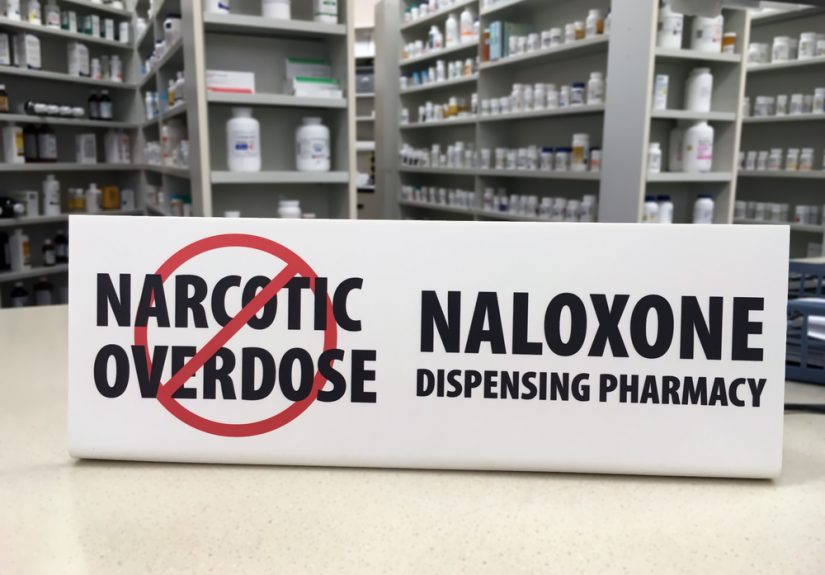
The good news is that access is broader than many people realize. In the United States, naloxone is available over the counter in some forms, and many pharmacies provide access through standing orders. Community health departments, harm reduction organizations, hospitals, and overdose prevention programs may also offer free kits and short trainings.
If you are prescribed an opioid after surgery, for chronic pain, or for another medical reason, ask about naloxone at the same time. That question should feel as normal as asking whether the medication should be taken with food. If your loved one is at risk, ask for it. If your workplace serves the public, stock it. If your school has an AED, it is worth asking whether naloxone belongs in the emergency plan too.
Common Myths That Need to Retire Immediately
“Having naloxone encourages drug use.”
No. That argument falls apart the second you compare naloxone to any other rescue tool. Seat belts do not encourage car crashes. Fire extinguishers do not encourage arson. Naloxone acknowledges reality and prepares for it.
“I’ll know for sure if it’s an opioid overdose.”
Maybe. Maybe not. That is exactly why public-health guidance stresses using naloxone when opioid overdose is suspected. If opioids are not involved, naloxone generally will not harm the person. Hesitation is often more dangerous than action.
“Only people who use illicit drugs need to worry.”
Also false. Risk can involve prescribed opioids, medication interactions, reduced tolerance after abstinence, or counterfeit pills. Overdose prevention is not reserved for one social category.
“If the person wakes up, the emergency is over.”
Not necessarily. Because naloxone is temporary, the person can slip back into overdose after the initial response. Emergency follow-up matters.
How to Take the Naloxone Challenge This Week
If this article has you nodding thoughtfully while doing absolutely nothing, let’s fix that. Here is the real challenge:
- Get naloxone this week.
- Read the package instructions all the way through.
- Tell two people where you keep it.
- Learn the overdose signs out loud, not just in your head.
- Share one accurate fact about naloxone with a friend, family member, coworker, or neighbor.
If you want to level up, encourage your school, workplace, church, gym, or apartment building to include naloxone in emergency preparedness. One person carrying naloxone is helpful. A whole community being trained is better.
Conclusion: A Small Act With a Very Big Return
The naloxone challenge is not glamorous, and that is exactly why it works. It lives in pockets, glove compartments, backpacks, first-aid kits, dorm drawers, medicine cabinets, and staff offices. It turns ordinary people into prepared people. It reduces the gap between “someone should do something” and “I know what to do.”
In a crisis, the most powerful person in the room is often not the loudest one. It is the one who recognizes what is happening, reaches for naloxone, calls 911, and stays. That is the challenge. Get prepared. Stay calm. Save a life.
Experience-Based Stories: What Taking the Naloxone Challenge Can Feel Like
The stories below are composite, experience-based scenarios based on common situations described in overdose education, public-health training, and community response settings.
A sister who stopped waiting for the “perfect moment”
Maria had been meaning to ask her brother whether he wanted naloxone in the apartment, but every time she tried, the conversation felt loaded. She worried he would hear judgment where she meant love. Then she changed the script. Instead of saying, “I think you might overdose,” she said, “I want our home to have emergency tools, the same way we have bandages and a fire extinguisher.” That shift mattered. The conversation got less emotional and more practical. They picked up naloxone together, watched a short training video, and stored it in the kitchen drawer. Maria later said the hardest part was not buying it. The hardest part was getting past the silence.
A college staff member who realized preparedness is not paranoia
James worked in student housing and used to think overdose prevention belonged to campus police or medical staff. Then he attended a training and learned how quickly an opioid overdose can become fatal when no one nearby knows what to do. He started keeping naloxone in the residence hall office and pushed for basic staff education during orientation week. A few colleagues worried this would “send the wrong message.” What actually happened was the opposite. Students saw a campus taking health and safety seriously. James said the training made him feel less fearful, not more. Preparedness did not create danger; it gave him a plan.
A friend who learned that panic wastes precious seconds
One woman described finding a friend slumped over and hearing a strange, irregular breathing sound she first mistook for sleep. She froze for a split second, then remembered the training: try to wake them, call 911, give naloxone, stay with them, watch the breathing. She later said the biggest surprise was how ordinary the room looked. No cinematic chaos. No dramatic warning label floating in the air. Just an everyday room and a very real emergency. That experience changed her view of overdose forever. She began telling people that naloxone is not for “other people.” It is for ordinary moments that go bad fast.
A parent who decided embarrassment was a terrible reason to stay unprepared
Another common story comes from parents picking up naloxone at a pharmacy and feeling awkward, as if everyone in line were somehow reading their private life. But many people describe that discomfort fading almost instantly once they get home and realize they now have something concrete that could save a life. A few minutes of embarrassment is a very small price for peace of mind. More than one parent has said the same thing afterward: carrying naloxone made them feel less helpless. Not carefree, not magically unworried, but less helpless. And that matters.
A community that stopped whispering
Perhaps the most powerful experience is collective rather than individual. In communities where naloxone training becomes normal, the emotional temperature changes. People stop acting as though overdose prevention is a shameful secret. Staff meetings include emergency planning. Families ask questions earlier. Friends tell each other where naloxone is stored. The mood shifts from fear and stigma to competence and care. That may be the real heart of the naloxone challenge: not just carrying a medication, but building a culture where preparedness beats denial. One dose cannot solve the whole overdose crisis, but one prepared person can absolutely change the outcome of one terrible day. And sometimes that is where every bigger change begins.