Table of Contents >> Show >> Hide
- What “Nick Haus Dinner Party Style” Actually Means
- The Hero Moment: Lighting That Feels Like Art (Without Needing a Trust Fund)
- The Table Philosophy: “Perfectly Mismatched” Beats Perfectly Predictable
- The Remodelista-Approved Centerpiece: Fruit + One Flower = Effortless Flex
- Linens That Don’t Try Too Hard (But Still Do the Job)
- Place Settings: Enough Etiquette to Feel Polished, Not Enough to Feel Scared
- Objects with Stories: The Secret Ingredient That Money Can’t Buy
- Menu Planning: Simple, Make-Ahead, and Designed for Conversation
- Step-by-Step: How to Steal the Nick Haus Dinner Party Look
- Common Mistakes (and How to Fix Them Fast)
- Why This Look Works So Well (Even in Real Life)
- of Real-World Hosting “Experience” (The Kind You Earn After a Few Dinners)
- Conclusion
Some dinner parties feel like a performance: matching plates, matching forks, matching hosts who pretend they’re not
sweating. And then there’s the Nick Haus version (as featured by Remodelista): relaxed, thrift-forward, and charmingly
“I just happened to have a perfectly moody chandelier overhead” without trying too hard.
The best part? This look isn’t about buying a whole new life. It’s about borrowing a few smart ideas: vintage finds,
a light touch with flowers, a fruit centerpiece that doubles as dessert’s opening act, and a table that feels
collected over time instead of ordered in one panic-click at midnight.
What “Nick Haus Dinner Party Style” Actually Means
Remodelista’s post highlights Nick Heywood (the Providence, Rhode Island–based, RISD-trained interior architect behind
Nick Haus) and his economical, post-grad entertaining approach: second-hand crockery, mismatched flatware, a few
inexpensive IKEA elements, and a simple menu. It’s a vibe that says, “Come over. Eat well. Don’t inspect my napkin folds.”
The signature visual is the contrast: sculptural lighting overhead, casually mismatched pieces below, and a table that
looks intentional without looking “produced.” It’s the design equivalent of rolling up your sleeves and still looking
good in the photo.
The Hero Moment: Lighting That Feels Like Art (Without Needing a Trust Fund)
Why the chandelier matters
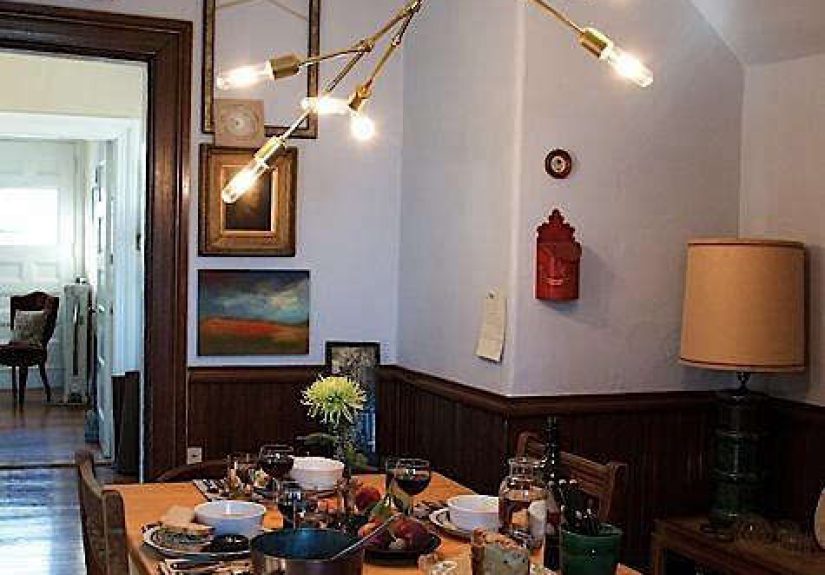
In the Remodelista feature, the dinner party is tied to Heywood’s completed version of Lindsey Adelman’s “You Make It”
chandelier. That’s the secret sauce: one dramatic element that anchors everything else. When you have a strong focal
point overhead, the table can be simplerand your mismatched plates suddenly look curated instead of chaotic.
How to channel the look safely
If you love the “You Make It” spirit, think in terms of a sculptural silhouette and warm, flattering bulbs. You don’t
need to copy a specific fixture to get the effect. Look for lighting with branching arms, globe bulbs, or a modern
mobile-like shape. The goal is soft glow plus visual structuresomething that makes the room feel like an occasion.
Pro tip for the Nick Haus mood: use warm light (not ice-blue “office ceiling” light). Warm lighting makes thrifted
ceramics, fruit, and linen look expensive. Cold lighting makes everyone look like they’re waiting for a dental exam.
The Table Philosophy: “Perfectly Mismatched” Beats Perfectly Predictable
The Nick Haus look is a love letter to second-hand dishes and flea-market finds. That doesn’t mean “random.” It means
“collected.” And collected has rulesjust not the kind that require matching salad plates.
Rule 1: Repeat something so it feels intentional
Food52’s advice for a mismatched table can be summed up as: repetition creates calm. Repeat a color, a material, or a
shape across the table so the mix reads as design, not accident. If one plate is bold, echo that color in napkins,
candles, or fruit so it looks like you meant it (because you did).
Rule 2: Keep one “constant” element
If everything is differentplates, forks, glasses, napkins, chairsyour guests may love it, but your table might look
like a yard sale. A simple fix (also echoed in modern entertaining tips): keep one thing consistent. For example, make
all the water glasses the same, or keep flatware in one finish, or use matching napkins even if plates vary.
Rule 3: Mix eras like you mix music at a party
A great playlist doesn’t play only one genre. Same with a great table. Pair a vintage plate with a clean-lined modern
glass. Put a rustic bowl next to a sleek candleholder. The contrast is what makes it feel alive.
The Remodelista-Approved Centerpiece: Fruit + One Flower = Effortless Flex
Remodelista calls out a few standout ideas from the Nick Haus table: a single green chrysanthemum as a floral
arrangement; a centerpiece of peaches, nectarines, and oranges; and a vintage apothecary jar used as a water jug.
That’s a masterclass in “simple, but make it interesting.”
Why fruit works (and why it’s underrated)
Fruit is color, sculpture, and abundance in one move. A bowl of citrus or stone fruit reads as generous, seasonal, and
a little European-in-the-best-waylike you might also have strong opinions about olive oil.
Better Homes & Gardens and other entertaining guides often recommend centerpieces that don’t block conversation. Fruit
is naturally low, easy to shift, and doubles as a snack. It’s also forgiving: if the arrangement isn’t “perfect,” it
still looks delicious.
Why the single-stem flower move is so smart
One stem in a small vessel (or even one stem per place setting) feels modern and graphic. It’s also budget-friendly
and refreshingly not fussy. Bonus: you can pull this off with grocery-store flowers and still look like you have a
secret florist friend.
Linens That Don’t Try Too Hard (But Still Do the Job)
IKEA’s table linens are popular for a reason: they’re an easy layer that instantly says “host mode,” while still being
practical. Linen or cotton napkins and a simple tablecloth/runner soften the look of mismatched pieces and make even
thrift-store plates feel elevated.
Easy linen strategy for the Nick Haus vibe
- Pick a calm base: white, oatmeal, soft gray, muted stripe.
- Add texture, not chaos: a slightly rumpled linen looks intentional and relaxed.
- Let one thing be imperfect: if your linens are casual, keep the glassware tidy; if plates are wild, keep napkins simple.
Place Settings: Enough Etiquette to Feel Polished, Not Enough to Feel Scared
The Emily Post Institute’s core guidance is wonderfully simple: utensils go in order of use, from the outside in. The
Kitchn’s modern approach is similarly practicalbasic settings for everyday, upgraded pieces for special occasions.
Translation: you don’t need twelve forks. You just need the right ones in the right general neighborhood.
Nick Haus–style “casual correct” setup
- Plate (or bowl) centered at each seat.
- Fork to the left; knife and spoon to the right.
- Water glass above the knife; wine glass nearby if you’re serving wine.
- Napkin under the fork or on the platechoose what looks best with your dishes.
If you’re mixing flatware, do it on purpose: keep finishes in the same family (all silver-toned, all blackened, etc.),
or make a repeating pattern (every other place has the “fancy” fork).
Objects with Stories: The Secret Ingredient That Money Can’t Buy
Remodelista mentions details like repurposed ceramic tiles used as hot plates and found objects that do real work.
That’s the part you can’t fake with a quick shopping cart. It’s also what makes guests lean in and ask, “Waitwhat is
that?” (The best compliment, because it means they’re looking, not scrolling.)
Three “found-object” upgrades you can copy
- Use a vintage jar as a water carafe: apothecary, canning, or any sturdy glass vessel with presence.
- Make trivets interesting: tiles, stone samples, small cutting boards, or thrifted saucers.
- Serve from unexpected pieces: a vintage platter, enamel tray, or wooden board as the “center of the table.”
Menu Planning: Simple, Make-Ahead, and Designed for Conversation
The Remodelista post nods to a “simple menu,” and that’s very on-brand for this look. The table is doing visual work;
the food should do comforting work. Think one strong main, a couple of sides, and something that can hang out at room
temp without drama.
A practical formula: one hot, one cold, one room-temp
Bon Appétit’s make-ahead menus lean into a host-friendly truth: the more you can prep in advance, the more you can
actually enjoy your guests. Aim for a main that holds well (roast chicken, braise, pasta bake), a salad or crunchy
veg situation, and a room-temp side that tastes better after it sits (marinated beans, grain salad, roasted veg).
Nick Haus–adjacent sample menu ideas
- Main: slow-roasted chicken thighs or a simple pasta with a bold sauce.
- Side: roasted vegetables served warm or room temp.
- Salad: something crisp with acid (lemon, vinegar) to balance cozy flavors.
- Dessert: fruit-forward (citrus olive oil cake, stone fruit with yogurt, or cookies that travel well).
If your centerpiece includes peaches and oranges, you can even “echo” it in the menucitrus in the salad dressing, or
sliced peaches as dessert. Repetition isn’t just a design trick; it’s a hosting trick, too.
Step-by-Step: How to Steal the Nick Haus Dinner Party Look
Step 1: Start with the room, not the plates
Set lighting first. Turn off overhead “daylight” bulbs. Use warm lamps or a statement fixture, plus candles if you
like. You’re creating a flattering scene.
Step 2: Choose your “anchor” piece
Pick one star: a sculptural pendant, a dramatic serving platter, or even a bold linen. Everything else supports that.
This is how you keep thrifted variety from becoming visual noise.
Step 3: Build a cohesive mismatch
Pull out all your plates and glasses. Then edit. Choose pieces that share at least one common thread (color family,
shape, material, pattern style). Keep one element consistentlike water glasses or napkins.
Step 4: Do the easiest centerpiece in the world
Put fruit down the center (in a bowl, scattered, or piled on a platter). Add one green stem in a small vessel. Done.
If you want extra, add a few candles at different heights.
Step 5: Add one “story object”
A found tile trivet. A vintage jar used as a carafe. A mismatched stack of little plates that look like they’ve seen
things. This is what makes the table feel collected.
Step 6: Make the menu host-proof
Choose dishes you can prep early. Write a tiny timeline. If you’re sweating at the stove while guests arrive, you’ll
miss the point of the whole vibe.
Common Mistakes (and How to Fix Them Fast)
Mistake: The table looks random, not curated
Fix: repeat a color at least three times (napkins, fruit, candles), and remove one overly loud piece.
Mistake: The centerpiece blocks conversation
Fix: keep it low. Fruit is great. One stem is great. Tall arrangements belong at weddings and in romantic comedies.
Mistake: The lighting is too bright
Fix: warmer bulbs, dimmers, lamps, and a few candles. Your thrifted plates will look instantly more expensive.
Mistake: You’re cooking too much, too late
Fix: simplify. Make one dish ahead. Serve dessert that doesn’t require last-minute heroics. A calm host is the best
décor.
Why This Look Works So Well (Even in Real Life)
“Steal This Look” isn’t really about copying someone’s exact plates or chandelier. It’s about copying a strategy:
invest energy where it shows (lighting, editing, a strong centerpiece), and relax where it doesn’t (perfect matching,
overly complicated florals, fussy formality).
The Nick Haus dinner party style is also quietly sustainable: thrifted dishware, repurposed objects, and linens that
last. It’s good design with a conscienceand a sense of humor about the fact that someone will absolutely spill
something.
of Real-World Hosting “Experience” (The Kind You Earn After a Few Dinners)
I can’t claim personal memories, but I can tell you what happens in the real world when people try to pull off the
Nick Haus dinner party lookbecause the pattern is wonderfully consistent: the “imperfect” table is the one guests
remember.
First, there’s the moment you stop chasing matching sets. Someone inevitably says, “Wait, these plates don’t match,”
and thenplot twistthey smile. Because mismatched plates give the table a story. Guests start trading observations
like baseball cards: “My grandma had a bowl like this.” “This glass feels fancy.” “Why does this fork weigh more than
my phone?” Suddenly your table is a conversation starter before anyone even tastes the food.
Second, fruit centerpieces are the underrated MVP of hosting. People reach for grapes or oranges the way they reach
for a basket of bread: automatically, happily, without making it weird. The fruit also quietly solves a common
hosting problemwhat to do when the table feels empty. Flowers can be expensive, and tall arrangements get in the way.
Fruit is low, generous, and looks better as the night goes on because it signals abundance (even if you bought it at
a normal grocery store like a normal human).
Third, one “odd object” on the table does more work than ten perfectly coordinated purchases. A vintage apothecary jar
used as a water jug? Someone will ask about it. A tile used as a trivet? Someone will touch it and say, “This is cool.”
And the best part: you don’t have to pitch a design thesis. You can just shrug and say, “Found it,” like you casually
live inside a magazine spread.
Finally, the biggest lesson: the more you prep ahead, the more your guests feel cared for. Not because you made twelve
dishesbecause you’re present. When you’re not trapped in the kitchen doing last-minute gymnastics, you can refill
water, notice who needs another napkin, and actually enjoy your own party. The Nick Haus look is quietly about that:
a table that invites people in, not a table that intimidates them into whispering.
In other words, “steal this look” isn’t stealing at all. It’s borrowing a mindset: choose a few bold, smart moves,
let the rest be human, and trust that the warm light, the thrifted charm, and the peaches in the center will do what
they always domake people linger.
Conclusion
The Nick Haus dinner party aesthetic (as seen on Remodelista) proves that a memorable table doesn’t require a matching
set, a massive budget, or a panic spiral. Start with warm lighting, lean into thrifted character, keep the centerpiece
simple and low, and plan a menu that lets you sit down with your guests. That’s the real luxury: a table that feels
good to be around.