Table of Contents >> Show >> Hide
- Why This Comparison Hits So Hard (Even If It Shouldn’t)
- The Scene That Sparked It: Dragon Meets Nervous Guy, Internet Loses Its Mind
- 17 Scenes Where ‘Game Of Thrones’ Feels Weirdly… Shrek-ish
- What the Meme Really Reveals: Storytelling, Patterns, and Internet Brain
- Quick FAQ
- Final Take: The Swamp and the Iron Throne Can Coexist
- Experiences Fans Have With This Mashup (And Why It’s So Addictive)
- SEO Tags
At some point, the internet stopped being a place where we merely watched stories and became a place where we
cross-examined them like suspiciously confident witnesses. And that’s how we ended up here: a wildly popular
fantasy epic about bloodlines, dragons, and political betrayal getting lovingly compared to an animated fairy-tale parody
where a talking donkey speed-runs the “meet-cute” with a dragon.
If you’ve ever watched a dramatic dragon bonding moment in Westeros and thought, “Why does this feel like a
children’s movie where someone definitely yells in a swamp?”you’re not alone. A viral side-by-side comparison kicked off
a wave of “wait, hold on…” posts, and soon fans were playfully mapping the overlap like it was a scholarly field of study:
Ogre Studies, with a minor in Medieval Trauma.
Below, we’ll break down why this mashup works, revisit the scene that launched a thousand memes, and walk through
17 Shrek-ish moments that make the similarities feelagainst all logickind of… incredible.
Why This Comparison Hits So Hard (Even If It Shouldn’t)
On paper, these stories shouldn’t share oxygen. One is an R-rated political fantasy built around power, brutality, and
long-term consequences. The other is a PG fairy-tale roast where the hero treats personal boundaries like a hobby. But the
reason the comparison keeps working is simple: both stories remix familiar myths.
Shrek flips classic fairy-tale expectationshandsome prince, pristine kingdom, polite etiquetteby making the “monster” the
hero and turning the fantasy world into a comedic pressure cooker. Meanwhile, Game of Thrones takes the shiny hero’s-journey
energy and says, “Cool, now let’s add politics, history, and a lot of consequences.”
Both worlds are also obsessed with the same narrative engines:
- Outsiders vs. institutions: swamp dwellers and bastards alike get treated as “less than.”
- Power as performance: crowns, castles, titles, and “the rules” are constantly questioned (or torched).
- Big emotional swings: laughs and shock can come from the same setup, depending on the framing.
- Dragons as relationship tests: sometimes the scariest creature is also the one that reveals character.
And then there’s the internet’s favorite sport: placing two frames side-by-side and declaring it either “a coincidence” or
“evidence the writers owe us child support.”
The Scene That Sparked It: Dragon Meets Nervous Guy, Internet Loses Its Mind
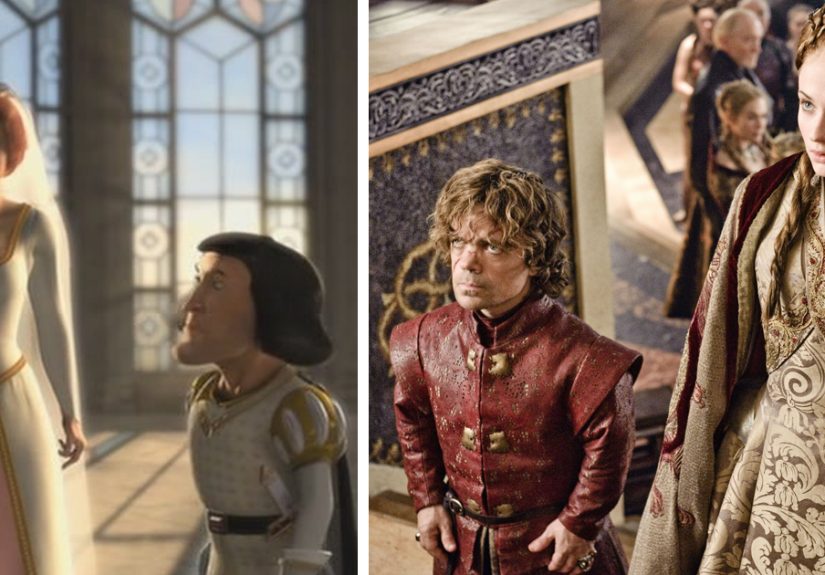
The meme fuel that really caught fire was a comparison between a dramatic dragon encounter in Game of Thrones and the iconic
Shrek moment where Donkey meets Dragon. In the viral framing, both scenes share a similar rhythm: cautious approach, intense
face-to-face inspection, and a moment where fear turns into a weird kind of trust.
Fans weren’t just saying “both have dragons.” They were pointing at the body language: the hesitant steps, the
close-up, the “this could go horribly wrong” pauseand then the surprising calm. The internet’s conclusion was essentially:
“This is the same vibe. I can’t unsee it. Please send help.”
Once that door opened, people started spotting echoes everywhere. Some are genuine structural similarities. Others are
the brain doing what it does best: creating patterns, committing to the bit, and refusing to let go.
17 Scenes Where ‘Game Of Thrones’ Feels Weirdly… Shrek-ish
To be clear: this is not an accusation, a lawsuit, or a formal petition to rename Westeros “Greater Duloc Metro Area.”
It’s a fan-fueled, trope-powered celebration of how stories rhymeeven when one story includes more decapitations and fewer
onions (tragically).
-
The “Get Off My Land” Energy: Shrek’s swamp is sacred. So is every inch of territory in Westeros. Different
tone, same message: step onto my property and you’re about to learn a lesson. -
Reluctant Hero Mode: Shrek wants peace and privacy. Several Thrones protagonists would also like peace and
privacy, but destiny keeps jumping out from behind a tree like an unpaid bill. -
Misfit Squad Formation: Shrek collects displaced fairy-tale characters. Thrones collects unlikely alliances:
exiles, outcasts, former enemies, and the occasional person who looks like they haven’t slept since Season 1. -
The “Perfect” Kingdom That’s Actually Awful: Duloc is clean, bright, and creepy. King’s Landing can be
grand and glitteringright up until you notice the rot under the paint. -
The Petty Tyrant Problem: Lord Farquaad is tiny in stature, huge in control issues. Westeros has multiple
rulers with the same core trait: the desperate need to be taken seriously (and the terrifying power to demand it). -
Big, Public Pageantry: Duloc’s musical welcome is forced cheer. Thrones’ ceremoniescoronations, trials,
feastsare often performances designed to intimidate, recruit, or manipulate. -
Quests That Are Secretly About Identity: “Rescue the princess” becomes a story about who Shrek is beneath
the armor of sarcasm. “Win the throne / survive the war” becomes a story about who people are when power tests them. -
The Castle Approach: Shrek trudges toward a towering stronghold with dread and determination. In Thrones,
approaching a castle often feels like walking toward either destiny or a trap. Sometimes both. -
The ‘Princess’ Subversion: Fiona breaks the “passive princess” mold. Thrones repeatedly complicates what
“princess” even meansturning royalty into strategists, survivors, symbols, and sometimes lightning rods. -
Love Stories With Teeth: Shrek’s romance is goofy, tender, and surprisingly sincere. Thrones has love, too
but it’s often tangled in politics, duty, and the reality that feelings don’t automatically come with safety. -
Dragons as a Personality Test: Donkey survives Dragon by talking, connecting, and not panicking
(wellmostly). In Thrones, dragon moments often reveal character: fear, courage, arrogance, sincerity, or the ability to
read the room when the room has fangs. -
The ‘Chosen One’ Fake-Out: Shrek is not the “storybook hero” by defaulthe becomes one by choice. Thrones
repeatedly plays with prophecy and expectations, then swerves when you think you know “the point.” -
Found Family Over Bloodlines: Shrek builds a home with people who were rejected elsewhere. Thrones keeps
returning to the idea that loyalty, belonging, and identity aren’t always inheritedthey’re forged. -
Comedy Next to Horror: Shrek uses jokes to undercut fantasy seriousness. Thrones uses humor as pressure
reliefoften right before the show does something emotionally violent to your bloodstream. -
The ‘Rules’ Are Flexible (Especially for the Rich): Duloc has rules until Farquaad wants something else.
Westeros has rules until a powerful house decides the rules are more like… suggestions. -
The Monster Isn’t the Monster: Shrek looks scary but isn’t. Thrones repeatedly asks who the “real monsters”
areand often answers: “the people who think they’re civilized.” -
The Ending Isn’t the Fairy Tale You Ordered: Shrek ends with sincerity and a twist on “happily ever after.”
Thrones famously complicates what “winning” even means, because surviving a power struggle is not the same thing as being
whole afterward.
None of this means one story secretly copied the other. It means stories are built from shared building blocksquests,
kingdoms, monsters, love, betrayaland the internet is extremely talented at spotting when the blocks line up in funny ways.
What the Meme Really Reveals: Storytelling, Patterns, and Internet Brain
This comparison didn’t spread because everyone earnestly believes an ogre wrote a prestige drama. It spread because memes
are a modern way of doing cultural criticismfast, visual, and collaborative.
When a show becomes a major cultural event, viewers don’t just watch it. They process it together: recaps, reaction
GIFs, theories, jokes, side-by-sides, and “I’m screaming” texts sent at 1:12 a.m. The bigger the show, the more it becomes
shared languageand the more it invites playful remixing.
Shrek also has a uniquely meme-friendly legacy: it’s both sincere and self-mocking, iconic and slightly chaotic, familiar
to multiple generations, and packed with visuals that work perfectly as reaction images. Combine that with a dragon scene
that looks eerily similar in silhouette and pacing, and the internet does what it does:
turns recognition into a sport.
Quick FAQ
Did Game of Thrones actually “rip off” Shrek?
No. Similar scenes can happen because fantasy storytelling leans on shared archetypesdragons, quests, confrontations,
power dynamics, and the universal human experience of walking toward a large creature thinking, “This might be my last day.”
The joke lands because the comparison is visually and emotionally persuasive, not because it’s literally true.
Why do side-by-side comparisons go viral?
Because they’re immediate. Your brain can grasp the “same energy” in half a second, and the punchline is built into the
format. No one needs a long explanationjust two images and the dawning realization that your serious show is sharing DNA
with a swamp-based comedy.
Why is Shrek still everywhere online?
Nostalgia helps, but so does the movie’s tone: it’s a fairy tale that winks at fairy tales. That self-awareness makes it
easier to remix, quote, and repurpose without losing the fun.
Final Take: The Swamp and the Iron Throne Can Coexist
The reason “Game of Thrones is basically Shrek” works as a meme is that it’s not really about proving anything.
It’s about the joy of noticing patternsand the joy of sharing that noticing with other people who immediately understand
what you mean.
In other words, this comparison is less “deep conspiracy” and more “collective group chat poetry.” And honestly?
That’s the healthiest kind of fantasy.
Experiences Fans Have With This Mashup (And Why It’s So Addictive)
If you’ve ever been in a watch partywhether it’s a living room couch situation or a remote “3, 2, 1, press play” text chain
you already know the secret: half the fun is the second screen. Not the TV. The group chat. That’s where the real
narrative happens: live reactions, wild theories, and the inevitable moment when someone posts a GIF that permanently changes
how you see a scene.
The Shrek-versus-Thrones comparison is basically a perfect group-chat grenade. One person drops the side-by-side dragon moment,
and suddenly nobody is emotionally available to take the show seriously for the next ten minutes. You try to focus on the
dramatic score, but your brain is already playing an imaginary soundtrack where a noble speech is interrupted by someone
whispering, “Get out of my… kingdom?”
People also love this mashup because it gives you permission to laugh at something you care about. Big fantasy worlds
can feel intensehigh stakes, long arcs, heavy losses. Memes are how fans release pressure without dismissing the story. You’re
not saying the show is bad; you’re saying the show is so culturally huge that it can handle being teased. It’s like affection,
but with more screenshots.
And then there’s the nostalgia factor. Shrek is one of those shared reference points that crosses friend groups: the movie you
watched as a kid, then rewatched ironically, then rewatched again and realized you were never actually joking. When you connect
that familiar comfort-food vibe to a prestige drama, you get a comedic contrast that feels instantly rewarding. Your brain gets
two treats at once: “I recognize this epic moment” and “I recognize this ridiculous ogre energy.”
In practice, fans turn the comparison into little rituals. Some do “spot the Shrek beat” during rewatch marathons: the reluctant
hero moment, the petty ruler moment, the sudden sincerity after a joke, the dramatic walk toward a castle that looks suspiciously
like it’s hiding a musical number. Others go full creativity mode: parody captions, reaction memes, “Thrones characters as Shrek
characters” debates, and (of course) endless “short king” jokes that would make Lord Farquaad file a complaint.
The best part is how collaborative it becomes. One person notices a parallel, another adds a second example, and suddenly you’ve
got a whole thread of “17 scenes” worth of shared laughter. That’s the internet at its best: not just consuming stories, but
playing with themturning fandom into a game where the prize is a perfectly timed screenshot and a friend replying,
“NOOOO I CAN’T UNSEE IT.”