Table of Contents >> Show >> Hide
- Why E. R. Butler Feels Different From Other New York Design Shops
- What You Will Find at E. R. Butler
- How the Shopping Experience Works
- Best Things to Notice First at E. R. Butler
- Why E. R. Butler Matters in New York Specifically
- Who Should Shop Here and Who Might Not Need To
- Extended Diary: 500 More Words From the Brass-and-Crystal Rabbit Hole
- Conclusion
If New York has a secret handshake for design obsessives, it might just be a beautifully weighted brass doorknob. And if that doorknob happens to come from E. R. Butler in SoHo, congratulations: you have entered a very particular tier of shopping, one where hardware is treated less like a finishing detail and more like the final line of a love letter to a room.
E. R. Butler is not the kind of place you wander into because you suddenly remembered you need a hinge. This is not hardware-store chaos with fluorescent lighting and a shopping cart full of zip ties. This is a deeply considered New York showroom where craftsmanship, history, architecture, and decorative taste all shake hands politely before showing you a crystal knob that could make a plain cabinet feel like it just inherited money.
Located at 55 Prince Street and open by appointment, E. R. Butler occupies a building with real pedigree. The address is tied to the old Prince Street Works, the former silver department of Tiffany & Co., which already tells you the atmosphere is less “quick errand” and more “small pilgrimage.” That setting matters. It frames the shopping experience before you even look at a single latch, pull, lockset, or escutcheon. In a city that often celebrates speed, E. R. Butler is a reminder that slowness can be a luxury too.
Why E. R. Butler Feels Different From Other New York Design Shops
The first thing to understand is that E. R. Butler sells objects, yes, but it also sells a point of view. The company is known for fine architectural hardware, especially brass and crystal pieces, and for keeping older traditions of design and manufacturing alive without making them feel dusty or trapped in amber. Its official history traces the business name to 1990, while its lineage reaches much further back through New England metalworking, 19th-century hardware makers, and historic American decorative arts. That blend of scholarship and style is the brand’s superpower.
In practical terms, this means you are not just shopping for a doorknob. You are shopping for proportion, touch, finish, silhouette, and the way light catches metal at four in the afternoon. You are shopping for the tiny detail that quietly changes the entire character of a kitchen, library, dressing room, or front door. Designers understand this instinctively, which is why E. R. Butler shows up again and again in top interiors. The company’s hardware appears in elegant kitchens, tailored historic homes, maximalist townhouses, and rooms where nothing is accidental, not even the hinge.
A Store for People Who Notice Everything
E. R. Butler appeals to a particular type of shopper: the person who cannot unsee bad hardware after noticing good hardware once. That is both a blessing and a minor financial curse. After you have handled a beautifully made brass pull or seen a faceted crystal knob paired with the right rose, ordinary options can start to feel like sad costume jewelry. Harsh? Maybe. Accurate? Also maybe.
Design publications often describe Butler’s offerings the same way people talk about heirlooms or jewelry, and that feels right. A strong piece from the showroom does not merely perform a function. It creates a moment. A door opens differently. A cabinet front has more authority. A pocket door edge pull suddenly becomes a detail guests remember instead of something no one sees. That is the Butler effect in a nutshell: small scale, big consequence.
What You Will Find at E. R. Butler
The most celebrated category is, of course, architectural hardware. Think door knobs, door pulls, cabinet hardware, edge pulls, roses, thumb turns, locks, latches, hinges, and the kind of trim that makes serious architects lean in a little closer. Brass is central to the identity here, especially solid machined or hand-finished brass pieces with a rich physical presence. Crystal also plays a starring role, especially in historical collections derived from early American patterns and patents.
One of the most distinctive offerings is the company’s crystal hardware, especially pieces linked to the E. & G.W. Robinson tradition. These knobs carry a clarity and sparkle that can read as refined rather than fussy when used well. They are especially compelling in rooms where you want a sense of quiet glamour: a pantry, a jewel-box powder room, a formal study, or cabinetry that needs a little wink without turning into stage scenery.
Then there are the imported and collaborative lines that broaden the mood board. E. R. Butler has also been associated with pieces from Maison Vervloet and other makers whose work leans classical, Art Moderne, or richly architectural. That range is part of the fun. You can find something early American and scholarly, then pivot to something sleeker and more sculptural without feeling like the showroom lost the plot.
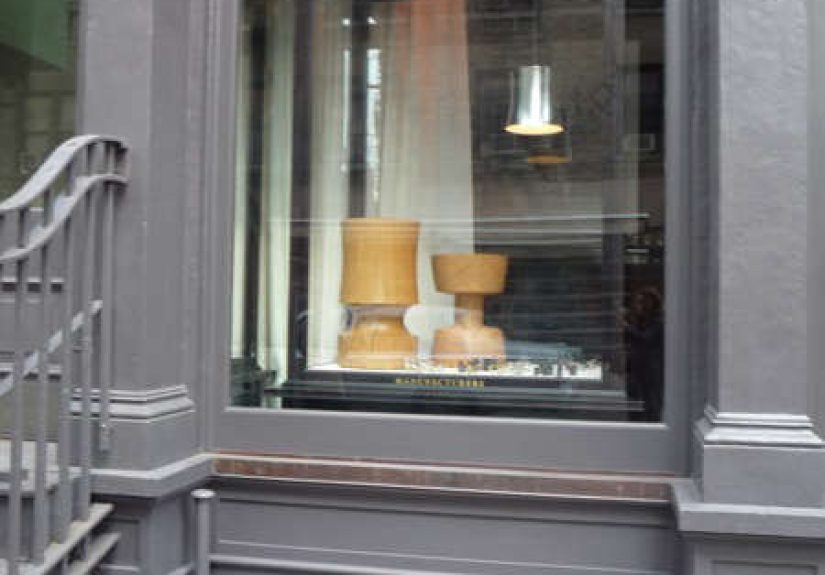
Beyond hardware, the company also offers lighting, furnishings, decorative objects, and curated accessories. This matters because E. R. Butler is best understood as a design universe, not a single-product shop. The window displays, which have been noted in design coverage over the years, reinforce that idea. They make the storefront feel part boutique, part gallery, part cabinet of curiosities. Even people who know nothing about hinges can appreciate a beautifully staged window. People who do know something about hinges may need a moment to compose themselves.
How the Shopping Experience Works
Because the showroom is by appointment, visiting E. R. Butler feels more deliberate than casual retail. That is a good thing. It encourages preparation and helps shoppers focus on what matters: scale, finish, intended use, and the style vocabulary of the home. If you are renovating, bring measurements, drawings, finish samples, photos, and a clear sense of whether your project is leaning Georgian, Federal, Arts and Crafts, tailored modern, or “I just want it to feel expensive without shouting.” That last one is more common than anyone admits.
It also helps to know where you want to splurge. Not every room needs a grand gesture, but certain touchpoints are worth spending on. The front door is one. Kitchen cabinetry is another, because you interact with it constantly. A study, library, or primary bedroom can also justify elevated hardware if you want the room to feel composed rather than merely complete. E. R. Butler is especially persuasive when you start thinking in terms of daily contact. These are the objects your hand meets every day. That is not a small thing.
Expect Quality, Not Bargain Theater
This is not discount design, and it does not pretend to be. Butler’s pieces are often described as heirloom-grade, and the pricing philosophy follows that logic. The value proposition is durability, material honesty, visual depth, and design integrity over trend-driven turnover. In other words, you are buying something meant to age gracefully, not something destined to get swapped out the minute the internet invents a new obsession.
That is why E. R. Butler works especially well for shoppers who are restoring historic homes, building custom interiors, or simply trying to avoid the slightly flimsy feeling that mass-market hardware can bring. Good hardware changes the tactile experience of a house. It can also change the emotional one. A room with thoughtful hardware feels more finished, more grounded, and more trustworthy. It is hard to explain until you experience it. Then it becomes impossible not to notice.
Best Things to Notice First at E. R. Butler
1. The Crystal Knobs
If you are new to the brand, start here. Butler’s crystal knobs are among the easiest ways to understand the company’s appeal. They are historical without feeling costume-like and decorative without becoming sugary. Depending on finish and setting, they can read stately, airy, romantic, or quietly formal.
2. The Brass Pulls and Edge Pulls
These are catnip for people who love cabinetry and millwork. A handsome brass pull or an elegant edge pull can shift a room from perfectly nice to deeply memorable. Butler’s versions have the kind of precision that makes you suddenly care about grip, thickness, and profile. Welcome to the club. There are snacks, but mostly it is just more opinions about metal.
3. The Historical Collections
These collections reveal how seriously the company takes design history. Rather than treating the past as a mood board, E. R. Butler often approaches it as a source of patterns, patents, techniques, and material intelligence. That depth is part of what makes the showroom resonate with architects, preservationists, and old-house enthusiasts.
4. The Decorative Accessories
Do not ignore the objects beyond hardware. Candlesticks, lighting, and smaller decorative pieces round out the experience and show how Butler fits into a larger design ecosystem. This is where the showroom starts to feel less like a specification source and more like a place with personality.
Why E. R. Butler Matters in New York Specifically
New York is full of places that sell luxury. Fewer places sell discernment. E. R. Butler belongs to the second category. Its appeal is tied to the city’s appetite for layered design, old buildings, serious restoration, and beautifully made things that reward attention. The showroom sits at the intersection of architecture, material culture, and retail theater, which is a very New York intersection indeed.
There is also something fitting about a hardware showroom becoming a destination in a city built on details. New York’s best interiors are not memorable because they are merely expensive. They are memorable because someone cared enough to choose the right molding profile, the right finish, the right latch, the right pull. E. R. Butler serves that instinct. It honors the idea that a home is built not just with walls and windows, but with decisions.
Who Should Shop Here and Who Might Not Need To
If you are designing a forever home, restoring a townhouse, upgrading a kitchen you plan to live with for years, or searching for hardware that feels historically intelligent and visually rich, E. R. Butler makes a strong case for itself. It is also a worthwhile stop for designers, architects, collectors, and anyone who enjoys seeing craftsmanship presented with seriousness and style.
If, however, you need twenty identical pulls by Tuesday at a budget price and would rather spend the difference on takeout and concert tickets, this may not be your battlefield. And that is okay. Butler is not trying to be all things to all shoppers. Its magic lies in specificity. It knows what it is, and that confidence is part of its charm.
Extended Diary: 500 More Words From the Brass-and-Crystal Rabbit Hole
A visit to E. R. Butler, at least in the imagination of any design-minded shopper, begins before the door opens. Prince Street has its usual downtown energy, people moving at New York speed, coffee in one hand, opinion in the other. Then you stop in front of the showroom and everything slows down. The windows alone tell you this is not ordinary retail. They suggest curation, restraint, mood, and a belief that everyday objects deserve staging worthy of art. Even before you step inside, the store has already started teaching you how to look.
That might be the real luxury here: not just the objects themselves, but the recalibration of attention. Suddenly, you are thinking about the curve of a lever, the softness of an aged finish, the slight sparkle of crystal against painted millwork. Things that usually hide in the background come forward. A cabinet pull is no longer a cabinet pull. It is a punctuation mark. A doorknob is not just a turning mechanism. It is an introduction. A hinge is not invisible. It is the quiet engineering that makes grace possible. That sounds dramatic, but E. R. Butler is the kind of place that makes a little drama feel justified.
What makes the fantasy of shopping there so compelling is that the store seems to respect both beauty and use. Nothing is purely decorative in the empty, showroom-only sense. These are working objects, but they have been elevated through craft, material, and proportion. That combination is catnip for anyone who loves houses. You start imagining where each piece would live: crystal knobs in a linen closet painted a soft chalky blue, a brass pull on a walnut pantry door, a polished latch on the study you swear you are going to keep tidy this year. Design daydreaming does not get much better.
There is also a refreshing lack of trend panic in the Butler world. The pieces do not feel eager to impress the algorithm. They feel patient. They assume that good taste can survive a news cycle. In an era when so much shopping is built around speed, novelty, and the fake urgency of limited drops, that patience is almost rebellious. It invites you to ask better questions: Will I still love this in ten years? Does it suit the architecture? Does it feel good in the hand? Does it make the room calmer, sharper, richer, or more complete?
And then there is the New York part of the experience. Only in this city could a hardware destination also feel like a cultural footnote, a restoration case study, a design education, and a glamorous errand. E. R. Butler turns shopping into a form of close reading. You do not just buy. You observe, compare, edit, and reconsider. You leave with a stronger opinion about brass than you had an hour earlier, which is either delightfully sophisticated or a sign you have fully crossed into design-person territory. Probably both.
The best takeaway from a Butler-inspired shopping diary is not that everyone needs luxury hardware. It is that details deserve more respect than they usually get. E. R. Butler makes that argument beautifully. It reminds shoppers that the smallest choices in a home often carry the longest echo. A room may win you over with color, light, or furniture, but sometimes it is the cool weight of a knob in your hand that convinces you the whole place has soul.
Conclusion
E. R. Butler in New York is what happens when hardware escapes the utility closet and enters the realm of design obsession. The SoHo showroom offers more than beautiful brass, crystal knobs, and architectural trim. It offers context, history, craftsmanship, and the rare pleasure of shopping somewhere that assumes details matter. For architects and designers, it is a resource. For homeowners, it is a master class. For curious shoppers, it is proof that even a doorknob can have charisma.
If your idea of a memorable New York shopping experience involves fashion, fragrance, or antiques, E. R. Butler deserves a place on the same list. It is polished without being cold, historical without being stuffy, and luxurious without turning gaudy. In a city full of spectacle, that kind of quiet authority stands out. And once you see it, you may never look at ordinary hardware the same way again.