Table of Contents >> Show >> Hide
- The Big Idea: SaaS in 2024 Is Not One Market Anymore
- World One: B2B2C SaaS Is Showing Real Strength
- World Two: B2B2B SaaS Is Still Working Through the Hangover
- World Three: AI Is Warping the Software Market
- Why Cloud Keeps Growing While SaaS Feels Uneven
- The Venture Capital Reality: Money Exists, But the Bar Is Higher
- Public Market Multiples Still Shape Private Company Behavior
- AI Parity: The New Competitive Tax
- Customer-Centricity Is Back, Wearing a Helmet
- What Founders Should Do Now
- The Practical Meaning of “Just Build”
- Additional Experiences and Lessons from the SaaS, Cloud, and AI Shift
- Conclusion
In 2024, the software world feels less like one industry and more like three different planets sharing the same awkward elevator ride. On one floor, classic SaaS companies are dealing with slower sales cycles, tighter budgets, and customers who now inspect every renewal like it is a suspicious restaurant bill. On another floor, cloud infrastructure keeps growing because every AI model needs compute, storage, security, and enough GPUs to make a data center sweat. And on the top floor, AI companies are raising money, rewriting product roadmaps, and causing founders everywhere to ask the same slightly panicked question: “Do we add AI, rebuild around AI, or pretend our chatbot counts?”
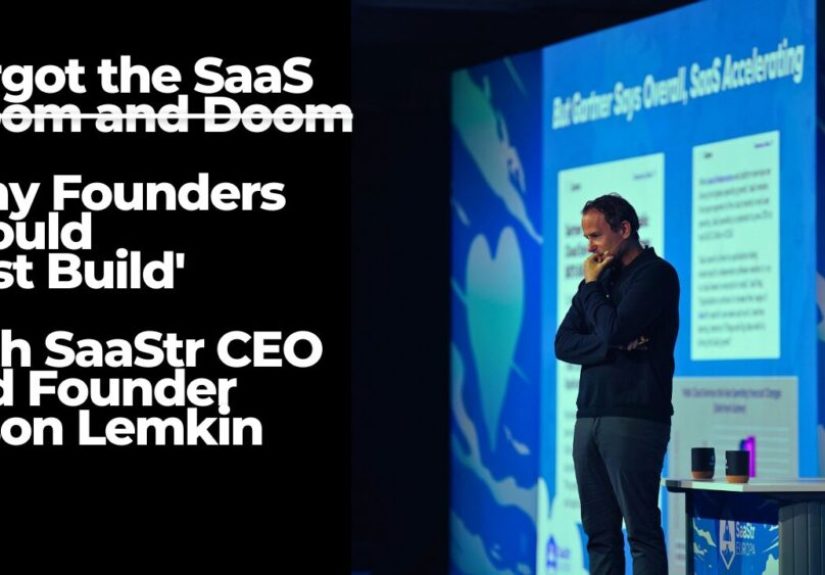
That is the heart of SaaStr Podcast #744: “A Tale of 3 Worlds: Where SaaS, Cloud, and AI are in 2024”, featuring SaaStr CEO and Founder Jason Lemkin. The episode captures a strange but important moment in the technology market. The old SaaS playbook is not dead, but it is definitely wearing reading glasses. Cloud is not slowing down, but growth is increasingly tied to AI infrastructure. AI is booming, but not every AI feature automatically turns into revenue, retention, or a better business.
Lemkin’s central message is refreshingly simple: just build. Not “just raise.” Not “just rebrand as AI.” Not “just panic-post on LinkedIn until a buyer appears.” Build better products. Build closer customer relationships. Build more efficient go-to-market systems. Build through the cycle.
The Big Idea: SaaS in 2024 Is Not One Market Anymore
For years, “SaaS” was treated as one big category. Investors compared revenue multiples, founders compared ARR growth, and everyone compared their dashboards as if the universe were fair. But in 2024, SaaS has split into different worlds with very different gravity.
Jason Lemkin frames the market around three practical worlds: B2B2C, B2B2B, and AI. B2B2C companies sell software to businesses that serve consumers, such as restaurants, mobile app developers, ecommerce brands, field operations teams, and creators. Many of these companies have seen demand rebound faster because their end markets recovered faster. B2B2B companies sell into other businesses, especially tech and enterprise buyers, where budgets remain tighter and procurement cycles have become slower. Then there is AI, a category that sometimes behaves less like a market and more like a weather system: exciting, powerful, and occasionally responsible for everyone canceling their afternoon plans.
This split explains why two founders can both say “SaaS is hard right now” and mean completely different things. One may be selling workflow software to restaurants and growing nicely. Another may be selling into over-budgeted tech companies that are cutting seats, delaying contracts, and asking whether the product comes with AI, magic, and a 30% discount.
World One: B2B2C SaaS Is Showing Real Strength
One of the more optimistic takeaways from the episode is that not all SaaS is stuck in the mud. Companies serving non-tech or consumer-facing industries have often shown stronger resilience. Think about platforms that help restaurants process payments, ecommerce brands run marketing, mobile apps manage subscriptions, or physical-world companies connect fleets and operations.
These businesses benefit from a different demand cycle. Consumer behavior can shift quickly. A restaurant can adopt a payment platform, an ecommerce merchant can install a marketing tool, and a mobile app can change subscription infrastructure without running a six-month enterprise procurement marathon. In contrast, a large enterprise software purchase may involve finance, legal, security, procurement, IT, a committee, and at least one person who replies to email only on alternate Tuesdays.
The B2B2C world matters because it shows that software demand has not disappeared. Buyers still want tools that create revenue, improve operations, or connect them with customers. What has changed is the tolerance for vague value. A “nice-to-have” app now has to become a “prove-it-or-lose-it” app. That is not bad news for strong SaaS companies. It is bad news for lazy positioning.
World Two: B2B2B SaaS Is Still Working Through the Hangover
If B2B2C is recovering faster, classic B2B2B SaaS is still dealing with the aftereffects of 2021. During the boom, software budgets expanded quickly, valuations soared, and many companies hired as if growth would remain permanently turbocharged. Then came inflation, higher interest rates, lower public multiples, slower venture funding, and a new obsession with efficiency.
The result: customers are not always canceling software outright, but they are buying less, expanding more slowly, and inspecting usage more aggressively. Deals take longer. Contract sizes shrink. CFOs are involved earlier. Renewal conversations have become more serious. In 2021, a customer might ask, “Can this help us grow?” In 2024, the question is more like, “Can this pay rent, do chores, and explain itself to finance?”
This pressure is visible in net revenue retention, growth rates, and sales efficiency across the SaaS market. Many software companies are still growing, but the growth is harder-won. The easy expansion dollars that once came from larger headcounts and bigger departmental budgets are less available. For SaaS founders, this means the product must be tied to a clear business outcome: more revenue, lower cost, better compliance, faster execution, or measurable productivity.
World Three: AI Is Warping the Software Market
AI is the loudest world in the room. It is attracting venture capital, reshaping customer expectations, and forcing every software company to rethink its roadmap. But the AI boom is not evenly distributed. Some AI-native companies are experiencing explosive demand and massive funding rounds. Many traditional SaaS companies, however, are discovering that adding an AI feature does not automatically create new revenue.
That is one of the most useful points in Lemkin’s analysis. AI can be both essential and economically confusing. A software company may need AI parity just to stay competitive, even if customers do not immediately pay more for it. In other words, AI becomes the new baseline. If your competitor has intelligent summaries, automated workflows, natural-language search, and agent-like recommendations, your product may feel outdated without similar capabilities. But adding those features can increase compute costs, engineering complexity, and risk.
This creates a painful but important question: Is AI a feature, a product, a platform, or the company itself? The answer depends on the category. In some markets, AI will be an enhancement layered into existing workflows. In others, AI will replace the workflow interface entirely. A dashboard may matter less if an AI agent can take action. A seat-based pricing model may become less obvious if work is completed by software rather than humans clicking buttons.
Why Cloud Keeps Growing While SaaS Feels Uneven
One reason 2024 feels contradictory is that cloud spending continues to grow even while many SaaS founders feel pressure. Public cloud services are expanding because companies still need infrastructure for application modernization, data workloads, cybersecurity, analytics, and AI. The AI wave is especially compute-hungry, pushing demand toward hyperscalers, GPU infrastructure, model hosting, data pipelines, and observability tools.
But cloud growth does not automatically mean every SaaS vendor wins. Infrastructure providers may capture a large share of the first wave of AI spending because model training, inference, and data processing require serious compute. Meanwhile, application-layer SaaS vendors must prove that AI features create practical outcomes for customers. In plain English: the cloud provider may get paid when everyone experiments with AI, but the SaaS vendor gets paid only when the experiment becomes a habit.
This is why cloud and SaaS can move in different directions at the same time. Cloud usage can rise because companies are building, testing, and running more AI workloads. SaaS budgets can still be scrutinized because buyers are reallocating dollars from older tools into newer AI initiatives. The pie may be growing, but the slices are being redistributed.
The Venture Capital Reality: Money Exists, But the Bar Is Higher
Another major theme from the episode is venture capital. VCs still want to invest. They especially want exposure to AI, infrastructure, and standout software companies. But the days of “good enough growth plus a big TAM equals a big round” are much harder to find.
In 2024, investors are asking tougher questions. How efficient is the growth? What is gross retention? Is net revenue retention above 100%? Can the company reach profitability without endless funding? Is AI improving the business model or just improving the pitch deck? Does the product have pricing power? Can the founder survive if the next round takes twice as long and comes at a less generous valuation?
This does not mean great startups cannot raise. They can. But the gap between good companies and obviously fundable companies has widened. The top performers still attract capital. Everyone else must operate as if money will be harder to secure. That mindset can be healthy. It forces focus. It reduces vanity spending. It reminds founders that a business is not a fundraising machine with a login screen attached.
Public Market Multiples Still Shape Private Company Behavior
Even private founders who never check stock tickers are affected by public market multiples. Public software valuations influence how late-stage investors price private rounds, how acquirers think about M&A, and how boards evaluate growth versus profitability.
When public SaaS multiples compress, private companies feel it. Growth that once looked spectacular may now look merely acceptable. Burn that once seemed strategic may now look irresponsible. A company growing 35% with heavy losses might have been celebrated during the boom. In 2024, investors may ask whether that same company can grow 25% with much better margins.
This is why the “growth at all costs” era has shifted into “efficient growth.” The Rule of 40 is not just a slogan for investor presentations; it is a reminder that durable software companies need both expansion and discipline. Founders should still be ambitious, but ambition now needs a spreadsheet buddy.
AI Parity: The New Competitive Tax
One of the trickiest parts of the AI era is that companies may need to invest just to avoid falling behind. This is AI parity. It means your product must offer enough intelligent functionality that customers do not view it as outdated compared with competitors.
AI parity does not always create immediate monetization. A CRM company may add AI email drafting. A customer support platform may add automated response suggestions. A project management tool may add summaries and next-step recommendations. Customers may appreciate these features, but they may also start expecting them as standard. That can turn AI into a competitive tax: expensive to build, necessary to keep, and difficult to price separately.
The winning companies will avoid random AI decoration. They will embed AI where it reduces friction, saves time, improves accuracy, or completes work. A good AI feature should not feel like a toy glued to a dashboard. It should feel like the product suddenly learned where the customer’s headaches live.
Customer-Centricity Is Back, Wearing a Helmet
In frothy markets, companies sometimes drift away from customers and toward narratives. In tighter markets, customers become the whole game again. Lemkin’s “just build” advice is not passive. It means build what customers urgently need. Build a product that gets renewed because it is woven into the business. Build trust. Build distribution. Build proof.
Customer-centric SaaS companies in 2024 should spend more time understanding budget owners, not just end users. The person using the product may love it, but the CFO may still ask why it costs more than a small vacation. Successful teams equip champions with ROI stories, usage data, and clear business cases. They reduce shelfware. They design onboarding that reaches value quickly. They make renewals feel obvious.
This is also where customer success becomes more strategic. It is no longer just a friendly check-in department. It is a revenue defense system. Strong customer success teams identify adoption gaps, surface expansion opportunities, prevent churn, and translate product value into business language.
What Founders Should Do Now
1. Build for measurable outcomes
Do not sell software as “better collaboration” unless you can explain what improves. Faster response time? Lower support cost? More qualified pipeline? Better conversion? Fewer compliance mistakes? Buyers need outcomes that survive a budget meeting.
2. Treat AI as product strategy, not confetti
AI should make the product meaningfully better. If it only creates a press release, keep building. The best AI features remove steps, automate work, improve decisions, or make previously impossible workflows possible.
3. Know your world
A B2B2C SaaS company may operate very differently from a classic enterprise B2B vendor. Sales cycles, pricing, retention, product velocity, and budget pressure vary by market. Do not copy benchmarks blindly from a company selling to a completely different buyer.
4. Protect retention like it is oxygen
In efficient-growth markets, retention is not a metric hiding on slide 17. It is the business. High net revenue retention gives a company more room to grow, more pricing power, and more investor confidence.
5. Assume funding will be harder than expected
Even if the company is doing well, founders should plan for a tougher fundraising environment. Extend runway, improve unit economics, and make every dollar prove its usefulness. Cash is not a personality trait, but running out of it does create character development nobody asked for.
The Practical Meaning of “Just Build”
“Just build” sounds simple, but it is not simplistic. It is a discipline. It means refusing to let market noise replace execution. It means understanding that SaaS cycles rise and fall, but customer problems remain. It means remembering that the best companies often gain ground during difficult markets because weaker competitors slow down, cut too deeply, or lose focus.
For SaaS founders, 2024 is not a year to wait for perfect conditions. It is a year to improve the product, sharpen messaging, deepen customer relationships, and build AI capabilities that actually matter. For cloud companies, it is a year to support the massive infrastructure shift AI is creating while helping customers control cost and complexity. For AI-native startups, it is a year to convert excitement into durable revenue, defensibility, and trust.
The market may be split into three worlds, but the best advice travels across all of them: build something customers cannot easily remove from their lives.
Additional Experiences and Lessons from the SaaS, Cloud, and AI Shift
One of the most useful ways to understand the 2024 SaaS market is to imagine sitting inside a founder’s weekly leadership meeting. The sales team says deals are still coming in, but procurement is slower. Customer success says renewals are stable, but expansion is no longer automatic. Product says customers want AI, but they are not always clear which AI features they will pay for. Finance says cloud costs are rising because AI features require more compute. Marketing says competitors are suddenly “AI-native,” even when their product appears to be the same dashboard wearing a futuristic hat.
This is the real operating environment behind the buzzwords. SaaS leaders are not just debating trends; they are making trade-offs every week. Should they hire more account executives or invest in product-led growth? Should they add usage-based pricing for AI features or bundle them into higher-tier plans? Should they rebuild their data architecture before launching AI agents? Should they cut underused features or keep them for enterprise accounts that asked for them once in 2019 and have not logged in since?
From experience, the strongest SaaS teams in this kind of market do three things well. First, they talk to customers constantly, especially the customers who almost churned but stayed. Those conversations reveal what really matters. A happy customer can explain why the product is useful. A nearly lost customer can explain what the company must fix to survive. Second, they simplify the product story. In a tighter market, vague messaging becomes expensive. Buyers need to understand the value quickly, because attention is short and internal approval is even shorter. Third, they connect product analytics with revenue conversations. Usage data should not live in a separate universe from renewals, upsells, and customer health.
AI adds a new layer to these lessons. Many companies rushed into AI experiments in 2023 and 2024, but the practical winners are the ones that identify boring, expensive, repetitive work. That is where AI shines first. Summarizing support tickets, drafting sales follow-ups, classifying leads, detecting anomalies, helping users search messy knowledge bases, and automating internal workflows may not sound as glamorous as “replacing the enterprise stack,” but those use cases can produce real value.
Cloud strategy also becomes more important as AI adoption grows. A company that adds AI without watching infrastructure costs can accidentally build a feature customers love and margins hate. That is not a fun board meeting. Strong operators think about model selection, caching, usage limits, monitoring, privacy, and cost controls from the beginning. The future of AI in SaaS is not only about intelligence; it is also about economics.
The biggest lesson from SaaStr Podcast #744 is that founders should not wait for the market to become easy again. Easy markets can hide weak strategy. Hard markets expose reality faster. If customers renew, if usage grows, if AI improves the workflow, if sales efficiency gets better, and if the company can grow without burning reckless amounts of cash, then the business is becoming stronger. That strength may not trend on social media, but it compounds.
In other words, 2024 is not the end of SaaS. It is the end of lazy SaaS. It is the end of assuming every workflow tool deserves a premium multiple. It is the end of treating AI as a decorative badge. But it is also the beginning of a more serious, more useful, and potentially more durable software era. The founders who keep building through it may look back and realize this strange three-world moment was not a crisis. It was a filter.
Conclusion
SaaStr Podcast #744 captures a defining moment for software: SaaS is uneven, cloud is expanding, and AI is changing the rules faster than most teams can update their slide decks. Jason Lemkin’s message cuts through the noise. The market is challenging, but not hopeless. Some categories are thriving. Others are resetting. AI is both an opportunity and a pressure point. Venture capital is available, but only for companies that can prove they deserve it.
The smartest founders will not waste 2024 arguing whether SaaS is dead. They will build products that customers need, use, renew, and expand. They will use AI where it creates real value. They will manage cloud costs carefully. They will measure retention, efficiency, and customer outcomes with discipline. Most importantly, they will keep going.
Because in SaaS, cloud, and AI, the companies that survive the confusing middle usually get the best view from the other side.