Table of Contents >> Show >> Hide
- Why This Roast Turkey Breast Recipe Works
- Bone-In vs. Boneless Turkey Breast
- Ingredients
- Equipment You Will Want Nearby
- How to Make Roast Turkey Breast
- How to Make a Quick Gravy
- Tips for a Juicy Roast Turkey Breast
- Common Mistakes to Avoid
- What to Serve With Roast Turkey Breast
- How to Store and Reheat Leftovers
- Frequently Asked Questions
- Experience and Real-Life Notes From Making Roast Turkey Breast
- Conclusion
If roasting a whole turkey feels a little like signing up to direct a holiday action movie, this roast turkey breast recipe is your calmer, juicier, far less dramatic backup plan. You get tender white meat, crisp golden skin, rich pan juices, and all the cozy holiday vibes without needing a bird the size of a small ottoman. It is perfect for a smaller Thanksgiving, a Sunday dinner, meal prep, or any occasion when you want turkey without committing to leftovers until next Tuesday.
The beauty of roasted turkey breast is that it is simple, forgiving, and surprisingly elegant. With a little butter, a handful of herbs, a hot oven, and one absolutely non-negotiable meat thermometer, you can make a turkey breast that tastes like you have been planning for weeks. In reality, you are just making smart choices and letting the oven do the heavy lifting. That is the kind of kitchen magic we respect.
Why This Roast Turkey Breast Recipe Works
A good turkey breast recipe has one job: keep the meat juicy while getting the skin beautifully browned. This version does both. Rubbing softened herb butter under and over the skin adds flavor and helps protect the meat from drying out. Roasting on a bed of onion, garlic, and broth adds moisture to the pan and creates drippings that can become gravy if you are feeling ambitious. Resting the meat before slicing keeps the juices where they belong instead of letting them sprint across the cutting board.
This method also works well because it does not rely on guesswork. Turkey is not the time for vague optimism. A thermometer gives you confidence, better texture, and a much lower chance of serving dry slices that require half a lake of gravy to save them.
Bone-In vs. Boneless Turkey Breast
You can use either bone-in or boneless turkey breast for this recipe, but they behave a little differently. A bone-in, skin-on turkey breast is the classic choice. It tends to stay juicier, looks more impressive on the table, and gives you better drippings. A boneless turkey breast cooks faster and slices neatly, making it ideal for weeknight meals or easier carving.
If you want the best balance of flavor, moisture, and holiday-worthy presentation, go with bone-in. If you want convenience and fewer carving theatrics, boneless is completely respectable. There is no judgment here. This is a safe space for practical cooks.
Ingredients
For the turkey
- 1 bone-in, skin-on turkey breast, about 5 to 7 pounds
- 4 tablespoons unsalted butter, softened
- 1 tablespoon olive oil
- 4 cloves garlic, minced
- 1 tablespoon chopped fresh rosemary
- 1 tablespoon chopped fresh thyme
- 1 tablespoon chopped fresh sage
- 1 teaspoon kosher salt, plus more as needed
- 1 teaspoon black pepper
- 1 teaspoon paprika
- 1 lemon, zested and cut into wedges
- 1 onion, sliced thick
- 1 cup low-sodium chicken broth or turkey stock
Optional gravy
- 2 tablespoons pan drippings
- 2 tablespoons butter
- 2 tablespoons flour
- 1 to 1 1/2 cups warm broth
- Salt and pepper to taste
Equipment You Will Want Nearby
You do not need a professional kitchen, but a few tools make life easier:
- Roasting pan or rimmed baking dish
- Rack, if you have one
- Instant-read meat thermometer
- Small bowl for mixing herb butter
- Foil for tenting if the skin browns too quickly
- Sharp carving knife
How to Make Roast Turkey Breast
1. Bring the turkey closer to room temperature
Take the turkey breast out of the refrigerator about 30 to 45 minutes before roasting. Pat it very dry with paper towels. This step helps the skin brown better and keeps the seasoning from sliding around like it is trying to escape responsibility.
2. Preheat the oven
Preheat your oven to 350°F. If you like a more aggressive browning start, you can begin at 425°F for 20 to 30 minutes and then reduce to 350°F. Either approach works well. For most home cooks, a steady 350°F is simple and reliable.
3. Make the herb butter
In a small bowl, mix the softened butter, olive oil, garlic, rosemary, thyme, sage, salt, pepper, paprika, and lemon zest. You want a spreadable paste that smells like Thanksgiving wandered into your kitchen early.
4. Season the turkey breast
Gently loosen the skin from the turkey breast with your fingers. Rub some of the herb butter underneath the skin, directly on the meat. Rub the rest over the outside. Place the onion slices in the roasting pan and set the turkey breast on top. Tuck in the lemon wedges and pour the broth into the pan.
5. Roast until golden and cooked through
Roast the turkey breast uncovered until the skin is golden and the thickest part of the breast reaches 165°F. For a 5- to 7-pound bone-in turkey breast, this usually takes about 1 1/2 to 2 hours. Some breasts may finish a little sooner or later depending on size, shape, and your oven’s personality. Start checking the temperature early so you do not accidentally roast it into a cautionary tale.
If the skin starts getting too dark before the turkey is done, loosely tent it with foil. Do not wrap it tightly. You are protecting it, not mummifying it.
6. Rest before slicing
Remove the turkey breast from the oven and let it rest for 15 to 20 minutes. This is not optional. Resting helps the juices settle back into the meat, which means the slices stay moist and beautiful instead of dry and vaguely disappointing.
7. Slice and serve
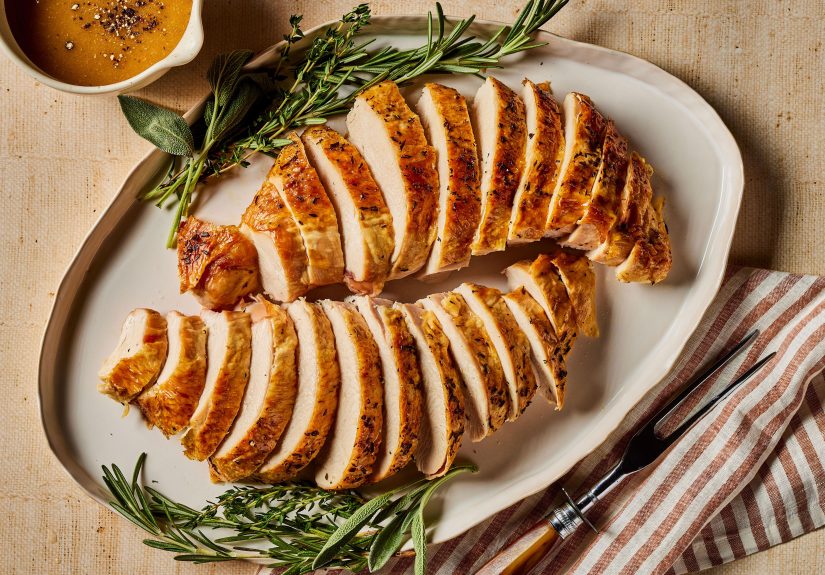
Slice against the grain into thick or thin pieces, depending on how dramatic you want the platter to look. Spoon a little warm pan juice over the top and serve immediately.
How to Make a Quick Gravy
While the turkey rests, pour the pan drippings into a small skillet or saucepan. Melt 2 tablespoons butter, whisk in 2 tablespoons flour, and cook for about 1 minute. Slowly whisk in the warm broth and a few spoonfuls of drippings until smooth. Simmer until thickened, then season with salt and pepper. It is quick, easy, and extremely useful when someone at the table asks for “just a little gravy” and then proceeds to pour half the pot.
Tips for a Juicy Roast Turkey Breast
Use a thermometer, not blind faith
The best turkey breast recipe is not about exact minutes. It is about internal temperature. Insert the thermometer into the thickest part of the breast without touching bone.
Do not skip the fat
Butter and oil help brown the skin and add flavor. Turkey breast is lean, so a little fat is not excess. It is strategy.
Consider a brine if you have time
A simple dry brine or wet brine can help the meat retain moisture. Even salting the turkey breast the night before can make a noticeable difference.
Leave the skin on
Even if some people do not eat it, the skin protects the meat as it roasts. Think of it as a built-in moisture shield that also becomes deliciously crispy.
Rest longer than you think
Many roast turkey disappointments happen after the bird leaves the oven. Slice too soon, and all that precious moisture ends up on the cutting board instead of in your dinner.
Common Mistakes to Avoid
- Overcooking: The number one turkey crime. Dry turkey is not tradition. It is just dry turkey.
- Not patting the skin dry: Moisture is the enemy of crisp skin.
- Using too little seasoning: Turkey needs a confident hand with salt, herbs, and aromatics.
- Ignoring carryover cooking: The temperature can rise slightly while the turkey rests.
- Slicing the whole thing at once: Slice what you need and leave the rest intact to help it stay juicy.
What to Serve With Roast Turkey Breast
This roast turkey breast recipe pairs beautifully with the classics: mashed potatoes, stuffing, cranberry sauce, green beans, roasted carrots, sweet potatoes, and dinner rolls. For a lighter dinner, try it with a crisp salad, roasted Brussels sprouts, wild rice, or a lemony green bean skillet.
And yes, leftovers are part of the appeal. Cold sliced turkey on toasted bread with mayo, cranberry sauce, and a little stuffing is one of life’s more convincing arguments for roasting turkey even when it is not a holiday.
How to Store and Reheat Leftovers
Store leftover turkey breast in an airtight container in the refrigerator for up to 4 days. Keep a little broth or pan juice with it if possible to help prevent drying. To reheat, place slices in a baking dish with a splash of broth, cover with foil, and warm in a 300°F oven until heated through. Microwaving works in a pinch, but it can turn beautiful turkey into something that tastes like it lost a fight.
You can also freeze cooked turkey breast for up to 3 months. Slice it first, wrap it well, and thaw overnight in the refrigerator before reheating.
Frequently Asked Questions
What temperature should turkey breast be cooked to?
Turkey breast should reach 165°F in the thickest part for safe eating. That is the number to trust.
How long do you roast turkey breast at 350°F?
As a rough estimate, plan on about 15 to 20 minutes per pound for a bone-in turkey breast. But always let the thermometer make the final decision.
Should I cover turkey breast while roasting?
Roast it uncovered for most of the cooking time so the skin can brown. If it gets too dark before the inside is done, loosely tent it with foil.
Can I make this ahead?
Yes. You can season the turkey breast a day ahead and refrigerate it uncovered for better flavor and drier skin. You can also roast it earlier in the day and rewarm gently before serving.
Experience and Real-Life Notes From Making Roast Turkey Breast
One of the best things about learning how to make roast turkey breast is realizing that it is much less fussy than people think. The first time many home cooks make turkey, they treat it like a high-pressure final exam. There is stress, there are timelines taped to cabinets, and there is always one person asking whether the turkey is done every seven minutes. Turkey breast changes that energy completely. It feels manageable. It feels like you can actually enjoy the cooking process instead of glaring at the oven like it has personally offended you.
In real kitchens, this recipe shines because it fits regular life. Maybe you are cooking for four people, not fourteen. Maybe you want something special without buying a giant bird and reorganizing your refrigerator like a game of holiday Tetris. Maybe you love turkey sandwiches more than the grand centerpiece moment. Roast turkey breast solves all of that. It gives you the flavor of a holiday roast, but on a scale that makes sense.
Another thing experience teaches quickly is that small details matter. Patting the skin dry seems boring, yet it makes a huge difference. Resting the meat feels like a test of patience, yet it is often the difference between juicy slices and a puddle of wasted juices. Using fresh herbs may sound fancy, but even a modest amount of rosemary, thyme, and sage gives the turkey that unmistakable cozy aroma that makes the whole house smell as though someone’s grandmother has been cooking all day.
There is also the matter of confidence. Once you make roast turkey breast successfully one time, you stop being intimidated by it. The next time, you might dry-brine it overnight. You might add orange zest to the butter, tuck garlic cloves into the pan, or build a quick gravy from the drippings. You start treating the recipe as a flexible formula rather than a rigid script. That is when cooking gets fun. Not chaotic fun, like flambéing something you probably should not, but solid, satisfying fun.
And then there are the leftovers, which deserve their own applause. Leftover roast turkey breast is incredibly versatile. It can go into sandwiches, salads, soups, grain bowls, pasta, casseroles, quesadillas, and late-night refrigerator raids. In fact, some people secretly prefer roast turkey breast because it gives them the best part of the holiday meal with far less hassle and a much faster path to the sandwich phase. Honestly, that is not laziness. That is wisdom.
So if you have been hesitant to try a roast turkey breast recipe because turkey has a reputation for being dry, difficult, or holiday-only, let this be your sign to go for it. With a simple herb butter, a steady oven, and a thermometer, you can make a turkey breast that is juicy, flavorful, and genuinely worth repeating. No giant bird. No kitchen panic. No carving performance art required. Just really good turkey.
Conclusion
This roast turkey breast recipe proves that you do not need a full-size bird to serve a memorable meal. With crisp skin, juicy slices, classic herb flavor, and minimal stress, it is one of the smartest ways to enjoy turkey for holidays or everyday dinners. Use a thermometer, let the meat rest, and do not underestimate the power of butter, herbs, and a little kitchen confidence. When done right, roast turkey breast is simple, elegant, and far more forgiving than its intimidating reputation suggests.