Table of Contents >> Show >> Hide
- Why Tight Hips Happen in the First Place
- Why the Classic Butterfly Stretch Is Not Always the Best Option
- The Better Butterfly Stretch for Tight Hips: The Supported Butterfly
- What Muscles the Butterfly Stretch Actually Targets
- How to Make the Stretch Work Better
- A Simple Progression for Tight Hips
- Pair the Butterfly Stretch With These Moves
- Common Butterfly Stretch Mistakes
- When to Be Careful
- Final Thoughts: The Best Stretch Is the One Your Hips Can Actually Use
- Real-World Experiences With a Better Butterfly Stretch for Tight Hips
If your hips feel like they were assembled with rusty hinges and a warning label, welcome. You are among friends. Tight hips are one of those modern-life souvenirs we collect from sitting too much, driving too much, working too much, and occasionally pretending that a five-second toe touch counts as “mobility work.” The butterfly stretch has long been the go-to move for opening the hips and inner thighs, but for a lot of people, the classic version feels awkward, pinchy, or about as relaxing as folding yourself into a carry-on suitcase.
That is exactly why this article is not about forcing your knees to the floor like you are trying to win an argument with gravity. It is about doing a better butterfly stretch for tight hipsone that actually helps your body open up without turning your lower back, groin, or ego into collateral damage. The best version for many people is a supported butterfly stretch, sometimes done upright on a cushion or reclined with props. It keeps the stretch where you want it, reduces compensation, and makes the position feel doable instead of dramatic.
So let’s talk about why the usual butterfly stretch sometimes misses the mark, how to improve it, and how to turn tight hips from a daily complaint into a fixable problem. Your jeans, your squat, and your post-commute mood may all benefit.
Why Tight Hips Happen in the First Place
Tight hips are not usually caused by one villain wearing a cape. They are more like a group project involving the hip flexors, adductors, glutes, deep rotators, and your daily habits. When you sit for long stretches, your hips stay in flexion for hours at a time. Over time, that position can leave the front of the hips feeling stiff, the inner thighs cranky, and your overall range of motion less generous than it used to be.
The problem is not just comfort. Hip stiffness can change how you move when you walk, run, lunge, squat, or even stand up from a chair. If your hips do not move well, something else often tries to pick up the slack. Usually that “something else” is your lower back, which did not volunteer for the extra shift. This is why people with tight hips often talk about groin tightness, low-back tension, shallow squats, or feeling weirdly restricted when trying yoga, strength training, or even simple floor stretches.
And yes, athletes get tight hips too. Runners, lifters, cyclists, court-sport athletes, and desk workers can all end up with hip stiffness. Tight hips are equal-opportunity troublemakers.
Why the Classic Butterfly Stretch Is Not Always the Best Option
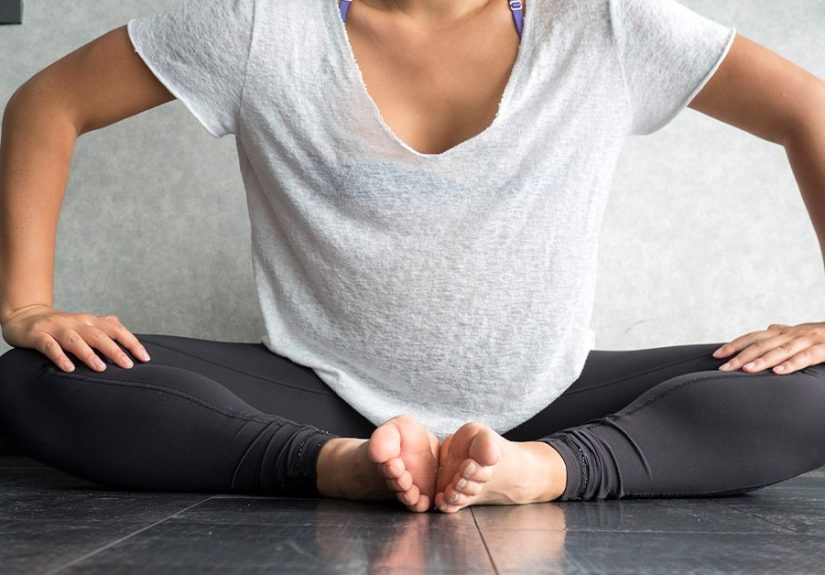
The standard butterfly stretch looks simple enough: sit down, bring the soles of your feet together, let the knees fall open, and lean forward. In theory, this opens the hips and stretches the inner thighs. In practice, a lot of people with very tight hips run into the same problems.
Problem #1: The lower back does all the bending
Instead of hinging from the hips, people round their spine and collapse their chest forward. The result is less useful hip opening and more “sad desk posture, now on the floor.”
Problem #2: The knees hang in midair
When the hips are stiff, the knees may float high off the floor. That is not bad by itself, but it can create a feeling of strain instead of a clean stretch, especially if you push down aggressively.
Problem #3: The groin gets irritated
If you pull your heels too close or crank your knees downward, the stretch can move from “helpful tension” to “absolutely not.” Sharp pinching is not a badge of honor. It is feedback.
That is why many people need a butterfly stretch modification before they need a deeper stretch. Better positioning beats brute force every time.
The Better Butterfly Stretch for Tight Hips: The Supported Butterfly
For most people with stiff hips, the best upgrade is the supported butterfly stretch. It keeps the benefits of the classic move, but it removes the parts that make it feel like a hostage situation.
Option 1: Seated Supported Butterfly Stretch
This version is excellent if your hips are tight, your knees sit high, or your lower back tends to round.
- Sit on the front edge of a folded blanket, yoga block, or firm cushion.
- Bring the soles of your feet together and let your knees open naturally.
- Move your feet a comfortable distance away from your body. Do not glue your heels to your pelvis unless that position actually feels good.
- Place yoga blocks, pillows, or folded towels under each knee or thigh for support.
- Sit tall with your ribs stacked over your hips. Imagine the crown of your head lifting toward the ceiling.
- Rest your hands on your ankles, shins, or the floor behind you for balance.
- Stay upright or hinge forward only a little from the hips while keeping your back long.
- Breathe slowly for 20 to 30 seconds. Repeat 2 to 4 rounds.
This version is “better” because it gives your hips room to relax instead of forcing them into a dramatic angle they are not ready for. The elevation under your seat helps your pelvis tip forward more naturally. The support under your knees reduces strain and lets your inner thighs release gradually.
Option 2: Reclined Supported Butterfly Stretch
If sitting upright feels tense or fatiguing, this version can be even friendlier.
- Lie on your back.
- Bend your knees and bring the soles of your feet together.
- Let the knees fall out to the sides.
- Place pillows, yoga blocks, or folded blankets under each thigh.
- Keep your arms relaxed at your sides and breathe for 30 to 60 seconds.
This reclined variation is wonderful for people who compensate with the low back when seated. Gravity still helps open the hips, but the floor supports your spine. It is less about chasing depth and more about giving the tissues time to unclench.
What Muscles the Butterfly Stretch Actually Targets
The butterfly stretch mostly targets the adductors, which are the muscles along your inner thighs that help draw your legs toward the center. It also affects the groin, the hips, and to some degree the deep rotators depending on your position. If you sit a lot or train hard, these tissues can feel stubbornly tight.
Here is the important thing: tight hips are not always just “tight hip flexors.” Sometimes the adductors are part of the story. Sometimes the glutes are underactive. Sometimes you need both mobility and strength. That is why the best hip routine usually includes stretching plus a little activation work, not just endless attempts to melt into the floor like a yoga candle.
How to Make the Stretch Work Better
1. Warm up first
Cold stretching is overrated. Do a few minutes of walking, marching, bodyweight squats, leg swings, or easy hip circles before you stretch. Warm tissue tends to tolerate mobility work better.
2. Think “long spine,” not “face to feet”
You are not winning points for folding your forehead toward your toes. A small hip hinge with a flat back is more useful than a huge spinal collapse.
3. Let the feet move farther away
Pulling the heels super close increases the intensity. If that feels rough on your hips or groin, slide the feet farther away and make a diamond shape with the legs. This often feels much kinder.
4. Use props without shame
Blocks, pillows, cushions, towelsuse whatever helps you relax into the position. Mobility work is not a performance. Nobody is scoring your blanket height.
5. Breathe like a normal human
Holding your breath is an excellent way to make your body think danger is happening. Slow exhales often help the hips settle more than muscling through the pose.
A Simple Progression for Tight Hips
If the supported butterfly stretch feels good, great. Stay with it for a few weeks. If it begins to feel easy, here is a smart progression:
- Week 1–2: Reclined supported butterfly, 30 seconds x 3 rounds
- Week 2–3: Seated supported butterfly on a cushion, 20 to 30 seconds x 3 rounds
- Week 3–4: Seated butterfly with less support under the knees
- Week 4 and beyond: Gentle forward hinge if your spine stays long and the hips feel clean, not pinchy
The keyword here is gentle. Flexibility improves from consistency, not from one heroic stretching session that leaves you waddling around like a cowboy in a bad movie.
Pair the Butterfly Stretch With These Moves
If your goal is better hip mobility, the butterfly stretch works best as part of a team. These moves complement it beautifully:
Adductor rock-backs
Start on all fours, extend one leg out to the side, and rock your hips back. This adds dynamic mobility for the inner thigh.
90/90 hip switches
These improve rotational control in the hips and make seated stretches feel less foreign.
Half-kneeling hip flexor stretch
If the front of your hips is tight from sitting, this is your friend.
Glute bridges
Because opening the hips is nice, but teaching them to stabilize is even better.
A simple routine might look like this: 1 minute of leg swings, 8 adductor rock-backs per side, 6 slow 90/90 switches, 20 seconds of half-kneeling hip flexor stretch per side, then 2 rounds of supported butterfly. Quick, effective, and far more useful than randomly poking at your hamstrings and hoping for spiritual growth.
Common Butterfly Stretch Mistakes
- Pushing the knees down aggressively: This can irritate the groin and hips.
- Rounding the back: It shifts the stretch away from the hips.
- Stretching cold: Warm up first for better results.
- Copying advanced flexibility photos: Social media is not a medical assessment.
- Ignoring pain: Tension is okay. Sharp pain, pinching, numbness, or joint pain is not.
When to Be Careful
If you feel sharp groin pain, deep pinching in the front of the hip, numbness, tingling, or pain that lingers after the stretch, back off. A mild stretch sensation is normal. Joint pain is not. If you have a recent hip, groin, pelvic, or lower back injury, or if stretching keeps making symptoms worse, it is smart to check in with a physical therapist or sports medicine professional before turning your living room into a flexibility laboratory.
Final Thoughts: The Best Stretch Is the One Your Hips Can Actually Use
The classic butterfly stretch is not bad. It is just not always the best starting point for people with very tight hips. A supported butterfly stretch is often more effective because it gives you better alignment, less strain, and a real chance to relax into the position. That means the stretch goes where it is supposed to go: your inner thighs and hips, not your lower back and patience.
If your hips are tight, think less about how deep the stretch looks and more about how clean it feels. Add support. Sit taller. Ease in. Breathe. Repeat. Do that consistently, and your hips usually become a lot less dramatic over time.
Real-World Experiences With a Better Butterfly Stretch for Tight Hips
One of the most common experiences people report with the butterfly stretch is surpriseusually the unpleasant kind. They sit down, bring the feet together, and immediately discover that their knees are hovering somewhere near their shoulders. Their back rounds, their face says, “This cannot be correct,” and the whole thing feels more like a failed origami project than a mobility drill. That reaction is normal. Tight hips tend to announce themselves with very little subtlety.
But once people switch to a supported version, the experience changes fast. A runner who always felt tugging in the groin may notice that putting blocks under the knees makes the stretch feel broad and even instead of sharp and cramped. An office worker who spends eight hours a day seated may realize that just elevating the hips on a folded blanket helps them sit taller without fighting for posture. Someone returning to exercise after a long break often finds that the reclined variation feels much less intimidating and much easier to breathe through.
There is also a psychological shift that happens with better setup. When a stretch feels punishing, people avoid it. When it feels manageable, they actually do it. That matters. Consistency beats intensity in flexibility work. Doing a supported butterfly stretch for a few minutes several times a week is far more useful than doing one dramatic session, declaring your hips “broken,” and ghosting your yoga mat for the next three months.
Many people also notice benefits outside the stretch itself. Squats may start to feel deeper and less pinchy. Sitting cross-legged on the floor becomes less awkward. Long car rides feel slightly less offensive to the human body. Some people report that their lower back feels less tense because the hips are finally contributing more to movement. Others find that the stretch helps them slow down mentally, especially when paired with steady breathing. It becomes part mobility drill, part mini reset button.
Of course, progress is rarely cinematic. Your hips probably will not open like a magic gate while inspirational music plays in the background. Improvement is usually more subtle. Maybe your knees rest a little lower. Maybe you can hinge forward without rounding like a shrimp. Maybe the stretch feels calm instead of confrontational. Those small wins are real wins.
Another common experience is learning that less is more. People often assume that a deeper stretch must be a better stretch, but tight hips usually respond better to patience than force. Once you stop yanking your feet in too close, stop pushing your knees down like you are trying to flatten cardboard, and start supporting the position, the stretch often becomes more productive. Funny how the body appreciates being negotiated with instead of mugged.
Over time, the better butterfly stretch becomes less about chasing flexibility and more about building trust with your body. You learn what mild tension feels like. You learn when your back is compensating. You learn that props are tools, not signs of defeat. And you learn that mobility is not reserved for dancers, yogis, or genetically blessed people who can sit in weird positions while making eye contact. It is trainable. Slowly, yes. Imperfectly, sure. But absolutely trainable.
So if your hips are tight, stubborn, or deeply committed to behaving like old wood, do not write off the butterfly stretch entirely. Just make it better. Support it. Modify it. Breathe through it. Keep showing up. The goal is not to impress the room. The goal is to move through life with a little more ease and a lot less grumbling from your hips.