Table of Contents >> Show >> Hide
- Who Are Sam Blond and Matt Plank, and Why Should You Listen to Them?
- Competing in a Crowded Market: How Rippling Found Its Wedge
- Building the Revenue Engine: From Founder-Led Sales to Scalable GTM
- Outbound as a Moat: Why “Old-School” Still Wins
- Hiring and Culture: The Hidden Levers Behind the Metrics
- How Founders and CROs Can Apply These Lessons
- Experience: What It’s Like to Implement a CRO Confidential-Style Playbook
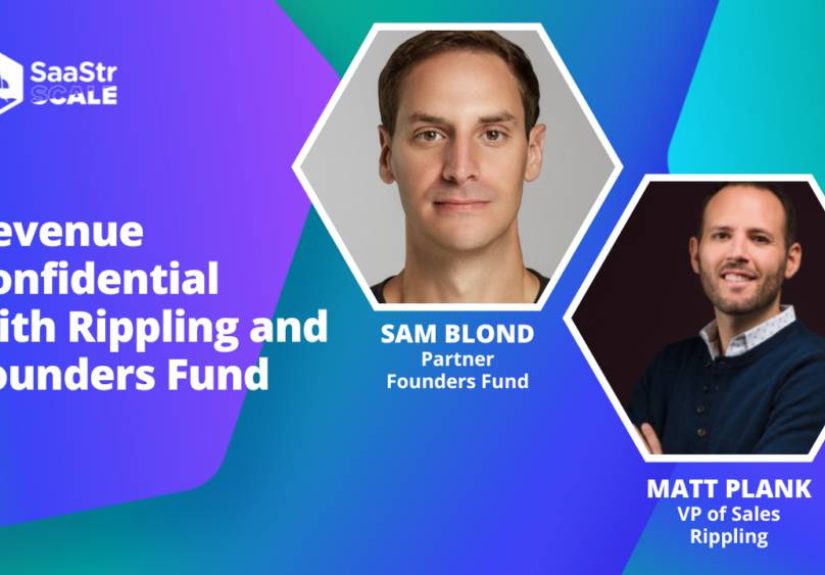
If you’ve ever stared at your MRR graph and thought, “Cool story, but can we make it go up faster?”, then the SaaStr CRO Confidential episode with Founders Fund partner (and former Brex CRO) Sam Blond and Rippling VP of Sales–now CRO–Matt Plank is basically required viewing.
This conversation isn’t just another “we hired sales reps and things worked out” tale. It’s a detailed playbook on how Rippling entered a brutally competitive HR and IT software market, carved out a wedge, and then scaled from basement-cold-calls to hundreds of millions in ARR on the way to a multi-billion-dollar valuation. Along the way, Sam and Matt unpack how to build outbound from zero, how to structure a sales org for multiple products, and how to avoid burning your brand (and your people) in the process.
In this article, we’ll break down the key takeaways from the episode, put them in context with other CRO Confidential conversations, and translate their lessons into practical moves you can use in your own SaaS companywhether you’re still in founder-led sales or already managing a global revenue organization.
Who Are Sam Blond and Matt Plank, and Why Should You Listen to Them?
Sam Blond: Operator, Ex-Brex CRO, and CRO Confidential Host
Before hosting SaaStr’s CRO Confidential series, Sam Blond spent years in the trenches running sales at hyper-growth startups. He’s best known as the Chief Revenue Officer at Brex, where he helped the company become a fintech rocket ship, and later joined Founders Fund as a partner focused on B2B software. That mix of operator and investor gives him a rare vantage point: he’s seen what works across many go-to-market motions, and he’s painfully familiar with the patterns that kill growthusually slowly, then all at once.
On CRO Confidential, Sam’s style is very “no fluff, just scars.” He’s not trying to sound clever; he’s trying to help founders and sales leaders avoid the expensive mistakes he and his peers have already made. When he sits down with someone like Matt Plank, he knows exactly which questions actually matter to a CRO who’s trying to turn ambition into revenue.
Matt Plank: From Basement Cold Calls to Rippling CRO
Matt Plank joined Rippling at the “we’re a few people in a basement” stage, when founder Parker Conrad was still rebuilding from his Zenefits days and the company had essentially zero revenue. Instead of stepping into a polished playbook, Matt had to help invent one: new product, crowded market, and a category dominated by large incumbents with bigger budgets and brand recognition.
Over time, Rippling grew into a multi-product people and IT cloud with hundreds of millions in ARR and a valuation measured in tens of billions. As Rippling’s sales leaderfirst as VP of Sales and later CROMatt had to evolve from “person who makes cold calls and closes deals” to “architect of a global revenue machine.” That journey is exactly what makes this CRO Confidential episode so valuable: it’s not theory; it’s what they actually did under real pressure.
Competing in a Crowded Market: How Rippling Found Its Wedge
Most founders dream about a wide-open market where nobody has heard of their competitors. Reality check: if you’re in HR, payroll, IT, security, or most B2B SaaS categories, you’re walking into a room full of well-funded players. Rippling’s story is proof that you can still win bigeven when you’re late to the partyif you’re ruthless about your wedge and message.
In the episode, Sam and Matt highlight a few core principles that guided Rippling’s early go-to-market motion:
- Sharp positioning: Rippling didn’t try to be “another HR system.” They leaned into an integrated people + IT platform that automated a painful, messy, cross-department problem: managing employees and their access to tools from one place.
- ICP discipline: Instead of trying to sell to “everyone with employees,” the early team focused on segments where their product advantage was most obvious and urgentfast-growing companies drowning in manual people-ops and IT tasks.
- Wedge-first mindset: A wedge is a narrow, high-value entry point into an account. For Rippling, that often started with payroll or HR, but the real goal was to land and expand into IT management, device provisioning, and access control.
The lesson for founders and CROs: you don’t need a brand monopoly to grow like a rocket. You need a wedge that’s 10x clearer and more compelling than “we’re an all-in-one platform.” Customers rarely buy “platforms” at the beginningthey buy specific outcomes.
Building the Revenue Engine: From Founder-Led Sales to Scalable GTM
Stage 1: Founder-Led Sales with a Bias for Outbound
Like many SaaS companies, Rippling’s earliest deals were closed by the founder. That’s a feature, not a bug. In the CRO Confidential conversation, Sam and Matt reinforce the idea that founder-led sales is where you test messaging, hear objections in raw form, and figure out which customer problem actually makes people pull out their credit card.
But Rippling didn’t treat outbound as a “nice to have.” From day one, Matt and the team leaned heavily on outbound prospecting: cold calls, curated target lists, tailored outreach. Instead of waiting for inbound leads to magically show up, they went and found the accounts that matched their ICPand learned a ton along the way.
Key takeaways from that early stage:
- Script from real calls, not from a whiteboard: The best talk tracks were built from the exact phrases prospects used when describing their pains.
- Track objections relentlessly: If you hear “We already use X” all day, don’t ignore it. Build positioning and proof specifically around displacing or coexisting with that tool.
- Don’t over-automate too early: Manual outbound is painful, but it forces you to understand why someone should care. You can automate once you know what actually works.
Stage 2: Adding SDRs and AEs Without Breaking What Works
Once the team had repeatable messaging and a working outbound motion, the next step was to scale humans, not just hustle. That meant formalizing the SDR (Sales Development Rep) function and layering in Account Executives whose full-time job was to run high-quality discovery and close deals.
Sam’s broader CRO Confidential content often outlines a simple evolution path: founder → first AE → first SDR → specialized pods. The point is not to copy Rippling’s organizational chart, but to advance in stages:
- Validate that someone besides the founder can sell the product.
- Prove that a rep can be consistently productive with clear expectations.
- Then hire SDRs to keep those productive reps fully loaded with pipeline.
The trap many founders fall into is skipping straight to “we hired a bunch of SDRs” without a proven closing motion or without clear accountability. The result? Lots of meetings, not a lot of revenue, and a very confused board.
Stage 3: Specialization for Multi-Product at Scale
Rippling’s complexity grew as it launched more products and went upmarket. At that point, Matt couldn’t just rely on generalist reps who “sell Rippling.” The company had to align its sales structure with its product strategy and customer segments.
That meant moves like:
- Specializing teams around segments (by size or vertical) and sometimes by product focus.
- Clarifying ownership of expansion revenue versus net new, so reps weren’t tripping over each other in the same accounts.
- Investing in sales ops, enablement, and RevOps to keep the machine coherent as the org scaled.
The underlying principle is simple but easy to ignore: every time you add product lines, regions, or segments, you’re increasing entropy. If you don’t proactively design for that complexity, it will quietly eat your growth.
Outbound as a Moat: Why “Old-School” Still Wins
One of the strongest themes in the Matt + Sam conversation is that outbound isn’t deadit’s just lazy outbound that’s dead.
Rippling’s top growth tactics lean heavily on targeted outbound. We’re not talking about blasting 10,000 generic emails or auto-dialing a random list of companies. Instead, the team focused on high-intent accounts and high-quality touches:
- Account selection: Carefully choosing accounts where Rippling had a clear value edge (fast-growing companies, many SaaS tools, complex people + IT workflows).
- Personalization at scale: Not a novel sentence on LinkedIn, but actual personalization based on the prospect’s tech stack, headcount, and structure.
- Relentless follow-up: Many deals came from the 5th, 6th, or 7th touchnot from the first email.
For SaaS leaders, the message is clear: if your outbound motion is basically a spam cannon, of course it doesn’t work. But if you treat outbound like a strategic engine, backed by strong ICP definition and crisp messaging, it becomes one of your most reliable levers for revenue growthespecially in markets where inbound alone will never be enough.
Hiring and Culture: The Hidden Levers Behind the Metrics
Revenue strategy gets all the slides, but hiring and culture are what actually make those slides real. Both Sam and Matt are candid about hiring mistakes from prior hyper-growth experiencesand how they overcorrected at Rippling.
Some of the key people lessons that surface in the episode and related CRO Confidential content include:
- Don’t hire ahead of clarity: It’s tempting to “staff for the plan,” but if you haven’t proven productivity at the role level, you’re just scaling confusion.
- Coachability beats résumé polish: The best early reps are often those who can handle candid feedback, are curious about the product, and can iterate quickly on their approach.
- Make expectations uncomfortably clear: Targets, activity expectations, territory rules, and comp structure should be explicit. Ambiguity creates drama, not performance.
Culture-wise, the Rippling story emphasizes a high-accountability, high-support environment. You’re expected to execute at a high levelbut you’re also given the tools, feedback, and leadership context to actually do it. That balance is what keeps a sales org from turning into a burnout factory.
How Founders and CROs Can Apply These Lessons
You might not be building the next Rippling (yet), but the principles from Sam and Matt’s CRO Confidential episode translate surprisingly well to companies of many sizes and stages. Here’s how to adapt their playbook to your world.
1. Define a Real Wedge Before You Scale Headcount
Instead of saying, “We sell HR software to SMBs,” ask, “Exactly which 500 companies would miss us most if we disappeared?” That clarity guides everything from messaging to territory design.
2. Treat Outbound as a Product, Not a To-Do
Design your outbound motion the way you’d design a feature: hypothesize, test scripts, measure results, iterate. Document what works and train on it. When you see signs of repeatability, then pour on more people and tooling.
3. Scale in Stages, Not in Panic Bursts
Anchor your hiring to proven productivity, not to a spreadsheet forecast. If your first AE isn’t productive, more AEs won’t magically fix it. If your SDRs can’t consistently generate qualified pipeline, adding 10 more SDRs just multiplies the problem.
4. Build for Multi-Product Complexity Early
Even if you only have one product today, assume you’ll eventually have multiple offers, segments, or geos. Start tracking which reps win where, which segments respond to which messaging, and how expansion deals actually materialize. That data becomes your map when the product surface area explodes.
Experience: What It’s Like to Implement a CRO Confidential-Style Playbook
The theory in this episode is powerful, but the magic happens when you start applying it inside a real SaaS business. Here’s what it tends to look and feel like when teams lean into the kind of playbook Sam and Matt describe.
From “Random Acts of Selling” to a Coherent Motion
Many young companies operate on what you might politely call “vibes-based selling.” Reps use their own messaging, founders jump into random deals, and nobody is quite sure why the good months are good and the bad months are bad. When you start to operationalize the lessons from Rippling’s journey, that chaos slowly turns into a system.
The first shift is often uncomfortable: you start capturing data on things the team is used to doing intuitively. You log objections, you standardize discovery questions, you define what a qualified opportunity actually is. Reps might initially resist (“I know how to sell!”), but over a few quarters, patterns emerge. You see which talk tracks consistently move deals forward, which segments have the highest close rates, and which activities correlate most tightly with outcomes.
Once you hit that point, pipeline and revenue stop feeling random. You still have surprises, but you now have a shared language for explaining themand a toolkit for fixing them.
The Emotional Roller Coaster of Outbound
Another real-world experience that mirrors the Rippling story is just how psychologically demanding outbound can beuntil you instrument it correctly. Early on, outbound often feels like “send messages into the void and hope.” Rejection is constant, and the wins feel rare.
When you apply a CRO Confidential-style approach, the emotional tone gradually changes. Instead of judging yourself solely on meetings booked or deals closed, you start to focus on controllable inputs and iterative experiments. For example, you might frame a week like this:
- “We’re testing two new subject lines across 50 prospects each.”
- “We’re adjusting our opening line on cold calls to highlight a different pain point.”
- “We’re narrowing our list to companies that just raised a round and hit 100+ employees.”
When you see a 3% reply rate jump or a noticeable bump in held meetings, the team gets hooked on experimentation rather than just enduring rejection. Outbound becomes less about “convincing strangers” and more about “learning faster than competitors.”
Leading a Multi-Product Sales Org Without Losing Your Mind
As you add more products, the reality that Matt describesnavigating multi-product complexitystarts to feel painfully familiar. You’ll hear questions like:
- “Who owns expansion into Product B for this account?”
- “Are we prioritizing cross-sell or net new this quarter?”
- “Why are three different reps emailing the same customer from three different angles?”
Leaders who borrow from Rippling’s approach don’t try to solve this chaos with motivational speeches. They solve it with structure. That might mean carving out a dedicated expansion team, assigning clear product focuses to certain pods, or aligning comp plans with the behavior you actually want (for example, paying extra on cross-sell only when it’s attached to real adoption, not just a signed order form).
The more intentional you are here, the more your reps feel like they’re rowing in the same direction. Instead of political turf wars over “who owns what,” you get constructive debates about which plays to run in which situationsand that’s a much better problem to have.
The Long-Term Payoff: Compounding Learning Across the Org
Perhaps the most underrated experience of implementing a SaaStr CRO Confidential-style playbook is how much it compounds over time. The scripting you refine this quarter becomes onboarding material for the next wave of reps. The outbound experiments you run today become your go-to plays next year. The ICP clarity you gain from 50 lost deals helps you close the next 500.
Sam and Matt’s conversation underscores a quiet truth: the best revenue organizations aren’t just better at closing deals today; they’re better at learning faster than everyone else. That learning advantagecodified in your hiring profile, in your enablement, in your outbound strategy, and in your org designis ultimately what separates “nice little business” from “category-defining company.”
If you’re a founder, CRO, or sales leader, that’s the real invitation of SaaStr CRO Confidential: don’t just listen for inspirationsteal the systems, the structure, and the mindset, and start building your own version of a revenue engine that can grow from basement calls to global scale.