Table of Contents >> Show >> Hide
- How This Survival Horror Remake Ranking Works
- #8. Resident Evil 3 (2020)
- #7. Alone in the Dark (2024)
- #6. System Shock (2023)
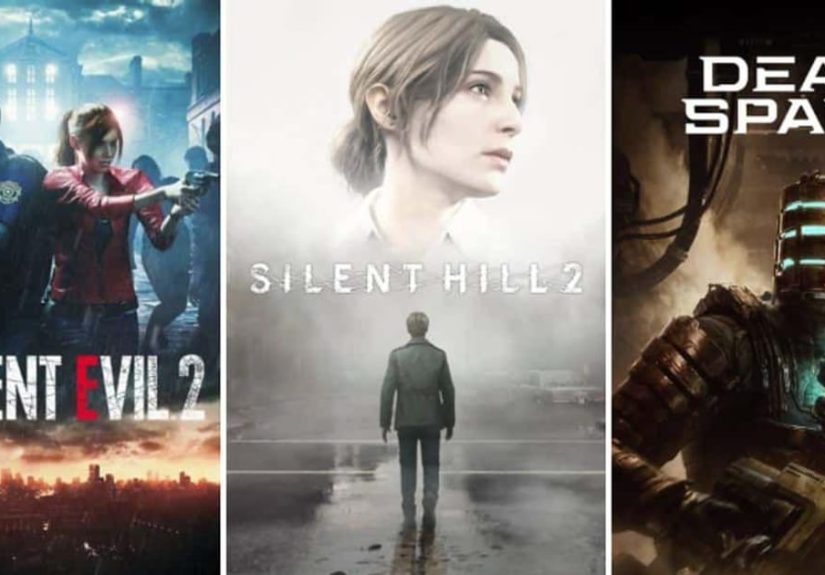
- #5. Silent Hill 2 (2024)
- #4. Resident Evil HD Remaster (2015)
- #3. Resident Evil 4 (2023)
- #2. Dead Space (2023)
- #1. Resident Evil 2 (2019)
- Extra: Player Experiences and Tips for Enjoying These Remakes (500+ Words)
Survival horror never really died it just shambled around for a bit, moaned loudly,
and then came back with a gorgeous 4K facelift. From Capcom’s modern Resident Evil 2
remake to Motive’s chilling revival of Dead Space, remakes have become the best way
to revisit classic nightmares without digging your old CRT TV out of storage.
In this ranking, we’re stacking up the biggest modern survival horror remakes focusing on
how well they capture the tension, resource management, and sheer dread that defined the
originals, while still feeling fresh for today’s players. Faithfulness matters, but so do
smart quality-of-life upgrades, tighter controls, and meaningful new content.
Grab your green herbs, save at the nearest typewriter, and let’s rank these remakes from
“fun but flawed” to “all-time horror royalty.”
How This Survival Horror Remake Ranking Works
Before we start counting down, here’s how we’re judging each remake:
- Survival horror feel: Tension, vulnerability, limited resources, and genuine fear.
- Faithfulness to the original: Does it respect the tone, story beats, and atmosphere?
- Modernization: Controls, camera, visuals, and quality-of-life upgrades.
- New ideas: Extra areas, expanded story, or reworked systems that add value.
- Replayability: Unlocks, modes, difficulty options, and campaign variety.
#8. Resident Evil 3 (2020)
The Good: Jill Valentine Deserved This Glow-Up
Let’s start with the elephant or rather, the unstoppable bioweapon in the room.
Resident Evil 3 (2020) looks fantastic, plays smoothly, and gives Jill Valentine
the modern showcase she absolutely deserved. Raccoon City at street level finally feels
chaotic and dangerous, and Nemesis can still make you panic-roll into a wall.
The dodge mechanic is surprisingly satisfying once it clicks, and when the game leans into
frantic survival under pressure dodging Nemesis, managing ammo, and sprinting between
safe rooms it absolutely nails the “run now, regret later” flavor of survival horror.
The Not-So-Good: Too Short, Too Trimmed
The problem? It feels like someone hit “cutscene skip” on entire sections of the original.
Iconic locations are missing, the campaign is short, and replay value relies heavily on
challenge runs rather than fresh content. It’s a good-looking roller coaster but once you
step off, there’s not much reason to ride again unless you’re trophy hunting.
As a survival horror remake, RE3 is fun and polished, but it doesn’t quite earn a
top-tier spot in this new golden age of remakes.
#7. Alone in the Dark (2024)
The Good: Old-School Vibes and Moody Puzzles
The 2024 remake of Alone in the Dark is a love letter to early 90s survival horror.
Set in Derceto Manor, it leans harder into story, atmosphere, and puzzle-solving than
full-throttle combat. You get branching perspectives depending on whether you play as Emily
Hartwood or Edward Carnby, which adds replayability and narrative flavor.
The game’s strengths sit firmly in its mood: creaking corridors, cryptic notes, surreal
visuals, and puzzles that make you feel clever when you finally crack them. It’s less about
mowing down monsters and more about being slowly smothered by weirdness and dread.
The Not-So-Good: Combat That Feels Stuck in the Past
The big knock against this remake is its clunky combat. While the “you are not an action hero”
philosophy fits survival horror thematically, the shooting and melee can feel unrefined
in a world where RE2, RE4, and Dead Space have set such a high bar.
Still, if you’re into story-heavy, slightly B-movie horror with an intentionally retro flavor,
Alone in the Dark earns its place as a scrappy, imperfect underdog in this ranking.
#6. System Shock (2023)
The Good: A Terrifying Cyberpunk Labyrinth
System Shock (2023) sits at the edge of the survival horror genre more immersive
sim and sci-fi dungeon crawler than pure “ammo counting in a mansion” horror but there’s
no denying how tense and unnerving its space station setting can be. Nightdive rebuilt the
original from the ground up with modern visuals, sharper controls, and a beautifully oppressive
atmosphere aboard Citadel Station.
SHODAN remains one of gaming’s most chilling antagonists, and the remake leans into that
unsettling AI presence with updated voice work, lighting, and environmental storytelling.
Limited resources, nasty enemies in tight corridors, and constant vulnerability keep the
survival angle alive, even as you tinker with gadgets and explore.
The Not-So-Good: Not Your Traditional Survival Horror
Some players find the gunplay stiff and the level layouts confusing, especially if they’re
expecting something as streamlined as modern Resident Evil. This is a game that
demands patience: you’re meant to get lost, poke at systems, and slowly wrest control of
the station away from SHODAN.
As a remake, it’s incredibly faithful and thoughtfully modernized but because it straddles
genres, it lands mid-pack in a ranking focused on “classic” survival horror structure.
#5. Silent Hill 2 (2024)
The Good: Psychological Horror, Updated for a New Generation
Remaking Silent Hill 2 is like repainting the ceiling of the Sistine Chapel risky,
emotionally loaded, and guaranteed to ignite arguments. The 2024 remake modernizes the visuals,
camera, and combat while trying very hard not to break what made the original so haunting:
its oppressive fog, eerie town, and devastatingly human story about grief and guilt.
When it’s firing on all cylinders, the remake captures that feeling of being alone inside a
nightmare you can’t quite explain. The redesigned environments, improved facial animation, and
stronger voice acting help make James Sunderland feel more like a person and less like a PS2-era
mannequin mumbling into the void.
The Not-So-Good: Pacing and Expectations
The biggest issue isn’t that the remake is bad it’s that it’s remaking a near-mythic classic.
Combat, while improved, can feel repetitive; the pacing sometimes drags; and certain scenes hit
slightly differently than fans remember. It’s a strong survival horror experience in its own
right, but it lives in the shadow of one of the most beloved horror games ever made.
In this ranking, it lands comfortably in the middle: respectably modern, emotionally heavy,
but not quite the definitive new face of the genre.
#4. Resident Evil HD Remaster (2015)
The Good: The Blueprint for Survival Horror, Still Terrifying
Technically, this one arrived before the current remake wave, but ignoring
Resident Evil HD Remaster would be like ranking slasher movies and skipping
Halloween. This is the 2002 GameCube remake polished for modern platforms
pre-rendered backgrounds, tank controls (optional), fixed camera angles, and pure,
concentrated tension.
The Spencer Mansion is still a masterclass in level design. Every hallway, puzzle, and enemy
placement is built around limited ammo, fragile health, and the fear of what’s around the next
corner. Crimson Heads zombies that resurrect faster and angrier if you don’t burn or decapitate
them remain one of survival horror’s nastiest “oh no” ideas.
The Not-So-Good: Old-School in Every Sense
For some players, the fixed camera angles and deliberate movement are part of the charm. For
others, they’re dealbreakers. Even with widescreen support and better visuals, this remake
still feels like a game from an earlier era in pacing, structure, and difficulty.
As a survival horror experience, though, it’s almost unmatched. It ranks high because
it proves you don’t always need an over-the-shoulder camera to make players sweat through
their controller.
#3. Resident Evil 4 (2023)
The Good: Action Horror Perfection With Real Tension
The original Resident Evil 4 reinvented the genre with its over-the-shoulder camera
and action-forward design. The 2023 remake pulls off a tricky balancing act: it keeps the
intense gunplay and over-the-top set pieces while leaning a little harder back into horror.
Environments are darker and more atmospheric, enemy encounters are more threatening, and
resource management matters again especially on higher difficulties. The village, castle,
and island areas have been expanded and reimagined, with new routes, tighter level design,
and more reasons to explore. Combat feels weighty and tactile: staggering a ganado for a
roundhouse kick never gets old.
The Not-So-Good: More Action Than Pure Survival Horror
Make no mistake, this is still more “action horror” than “barely scraping by with six bullets.”
You’re usually better-armed, more mobile, and generally more capable than the protagonists in
other entries on this list. If you’re looking for constant desperation and inventory anxiety,
RE4 isn’t quite as punishing.
As a remake, though, it’s phenomenal a polished, content-rich update that introduces new
players to a classic and gives veterans plenty of surprises. It lands in the top three for
sheer quality and replay value.
#2. Dead Space (2023)
The Good: A Necromorph Clinic in How to Remake a Classic
The 2023 remake of Dead Space is what happens when a studio asks, “What if we change
almost nothing but make everything better?” Motive rebuilt the USG Ishimura in stunning detail:
lighting, sound design, and environmental storytelling work together to create one of the most
oppressive settings in modern horror.
The core loop carefully dismembering necromorphs, managing ammo, and dreading every flickering
corridor remains intact. But the remake expands the ship into a more seamless, interconnected
space, improves zero-G movement, gives Isaac Clarke a voice, and reworks side objectives so they
feel more integrated rather than tacked on.
The Not-So-Good: Faithful to a Fault (For Some)
If you’ve memorized the 2008 original, the remake can feel like a very polished déjà vu rather
than a bold reinterpretation. You’re still hitting many of the same beats in roughly the same
order. But for most players, that faithfulness is the point: this is the definitive way to
play Dead Space today.
As survival horror, it’s relentless, cinematic, and mechanically sharp. As a remake, it sets an
incredibly high bar but there’s still one game that edges it out.
#1. Resident Evil 2 (2019)
The Gold Standard of Modern Survival Horror Remakes
Resident Evil 2 (2019) didn’t just revive a classic it resurrected an entire genre.
Capcom took a beloved PS1 game and rebuilt it as a third-person survival horror experience that
feels both cutting-edge and true to the spirit of the original. The Raccoon City Police
Department is now a labyrinth of shadowy hallways, creaking floors, and lurking zombies that
refuse to stay politely seated on the ground.
Every system reinforces tension: limited inventory, brutal enemy damage, and sound design
that makes your headphones feel haunted. Mr. X stalking you through the station is one of the
most effective “oh no he’s right there” mechanics in modern horror. Leon and Claire’s campaigns
offer different perspectives and scenarios, encouraging multiple playthroughs and higher
difficulties once you’ve mastered the basics.
Why It Tops the List
Where some remakes lean too hard into action or nostalgia, RE2 strikes a nearly perfect
balance. It modernizes controls and camera movement without sacrificing vulnerability. It respects
the original’s structure while trimming filler and adding new scenes. And it’s scary not just in
jump scares, but in that slow, gnawing way where you start calculating whether you can afford to
open one more door with only three bullets left.
In many ways, Resident Evil 2 is the blueprint other survival horror remakes are still
chasing. That’s why it sits at the top of this ranking.
Extra: Player Experiences and Tips for Enjoying These Remakes (500+ Words)
So you’ve got a pile of survival horror remakes on your wishlist and a limited amount of free
time (and sanity). How should you approach them, and what’s the best way to actually enjoy
these games rather than just stress-sprinting through them?
First, understand that each remake offers a slightly different flavor of fear. If you’re new to
the genre, starting with Resident Evil 2 or Resident Evil 4 is often the most
rewarding path. RE2 teaches you the fundamentals: inventory management, careful aiming,
and mapping out safe routes through hostile spaces. It trains your brain to think like a survival
horror player “Do I really need to kill that zombie, or can I limp past and save ammo?”
Once you’re comfortable with that mindset, Dead Space amplifies the pressure. Dismemberment
adds an extra tactical layer: aim for limbs, not heads. Playing with headphones is practically
mandatory, both for immersion and for catching audio cues that tell you if something horrible is
currently crawling in the vents above your head. Don’t be afraid to lower the difficulty on your
first run; these games are meant to feel tense, not impossible.
If you’re someone who thrives on atmosphere and psychological unease more than twitchy combat,
Silent Hill 2 and Alone in the Dark might suit you better. With those games,
the best “pro tip” is to surrender to the pacing. They’re slower by design. Take time to read
notes, absorb environmental details, and let the weirdness simmer. Rushing through them is like
skimming a horror novel technically efficient, but emotionally hollow.
System Shock is the one you tackle when you’re ready to think. It rewards players who
like exploring every corner, experimenting with tools, and piecing together systems over time.
The early hours can feel overwhelming, but once you learn the station’s layout and get a handle
on your build, the fear shifts from “I’m completely helpless” to “I’ve survived this long, I
can’t afford a stupid mistake now.”
Another important tip: let go of perfectionism on your first playthrough. Survival horror remakes
are often designed for multiple runs. Your first run is about learning how enemies behave, where
key items are, and which areas are death traps. On your second and third runs, you can chase S-rank
times, no-save trophies, or challenge modes. Treat that first run like watching a really good horror
movie for the first time: lean into the tension, accept that you’ll waste some ammo, and let yourself
scream, laugh, and panic without worrying about “optimal play.”
Finally, don’t underestimate the value of setting and mood. Playing these games late at night, lights
off, volume up, and phone face-down sounds cliché, but it makes a huge difference. If you blast a
podcast in the background or keep pausing to scroll social media, you’re robbing yourself of what
these remakes do best: building a sustained, suffocating sense of dread. You’re not just trying to
beat the game; you’re trying to let the experience crawl under your skin a little.
Whether you start with Resident Evil 2, dive straight into the cold void of
Dead Space, or wander lost in the fog of Silent Hill 2, this current era of
survival horror remakes is an incredible time to be scared on purpose. Pick your poison, stock up
on healing items, and remember: if you’re hearing footsteps and you’re pretty sure you’re alone,
you’re probably not.