Table of Contents >> Show >> Hide
When an F-35C Lightning II slammed into the deck of the USS Carl Vinson and tumbled into the South China Sea on January 24, 2022, the story practically wrote its own headlines. A stealth fighter. A carrier deck. A dramatic ejection. A crash in one of the world’s most contested waterways. It sounded like the opening scene of a big-budget military thriller, except this one came with real injuries, real consequences, and a very real investigation.
That investigation eventually reached a conclusion that was both straightforward and uncomfortable: the crash was caused by pilot error. But that short phrase needs context. This was not a case of a reckless pilot showing off like he was auditioning for a sequel nobody asked for. The Navy’s findings painted a more complicated picture, one involving a compressed landing pattern, missed checklist items, high workload, manual flight mode, and a power correction that came too late to save the jet.
In other words, this was less “Hollywood hotshot goes rogue” and more “carrier aviation punishes small mistakes with terrifying speed.” That distinction matters. It matters for pilots, for deck crews, for the Navy’s training culture, and for anyone trying to understand how one of America’s most advanced aircraft ended up on the seafloor.
What Happened on the USS Carl Vinson?
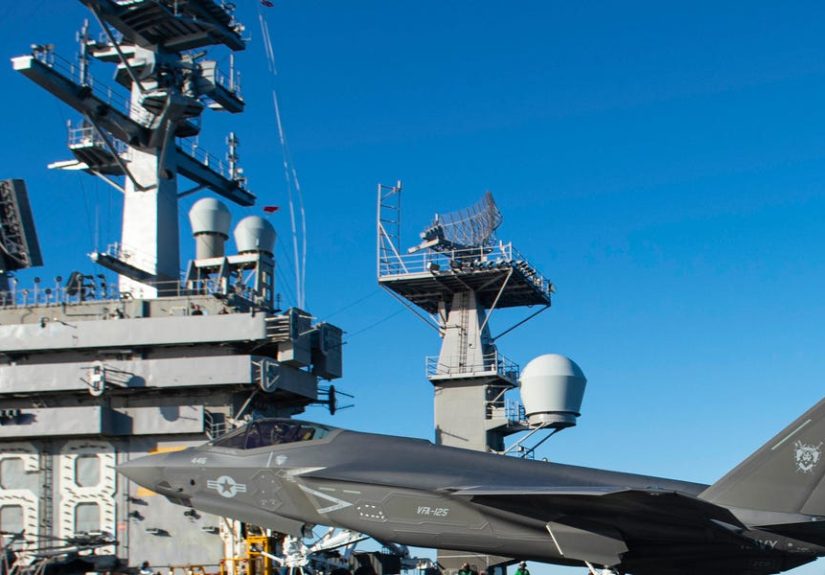
The crash happened during routine flight operations aboard the USS Carl Vinson, a Nimitz-class aircraft carrier operating in the South China Sea. The aircraft involved was an F-35C, the carrier-capable version of the Joint Strike Fighter, assigned to Carrier Air Wing 2. This variant is built for the brutal reality of carrier operations, with larger wings, reinforced landing gear, and systems designed to handle the unique demands of shipboard launches and recoveries.
Even so, carrier landings remain one of aviation’s most unforgiving tasks. Pilots are expected to bring a fast-moving jet onto a moving ship, in tight space, with almost no margin for error. It is the kind of job that makes parallel parking feel like a wellness exercise.
On that January afternoon, the pilot attempted to recover aboard the carrier and struck the ramp instead of making a proper arrested landing. The jet hit the flight deck, careened forward, spun, and went overboard into the sea. The pilot ejected and was rescued. Seven personnel were injured, including the pilot, and the impact also damaged the flight deck and an EA-18G Growler parked on deck.
The initial public facts were dramatic enough. But the deeper story emerged only after the Navy’s command investigation examined what the pilot was doing, what the aircraft was doing, and why the approach fell apart in the final seconds.
Why the Navy Blamed Pilot Error
A Fast Recovery Turned Into a Compressed, Unforgiving Setup
According to the investigation, the pilot attempted an expedited overhead recovery, often called a “Sierra Hotel” break. It is an approved and common maneuver, but it shortens the time a pilot has to configure the aircraft and complete landing checks. In this case, that mattered a lot, because the pilot had never performed that maneuver before.
The pilot entered the break slightly faster than normal and used a heavy 7G pull to slow the aircraft. That combination compressed the landing pattern and reduced the time available to prepare for touchdown. The investigation found that the groove, the final straight segment before landing, lasted only about 12 seconds instead of the more typical 15 to 18 seconds. From the start of the break to the crash, the whole sequence took about 54 seconds, when a more normal pattern would have taken roughly 65 to 70 seconds.
That may not sound like a huge difference on paper. In carrier aviation, it is huge. A few missing seconds can turn a disciplined landing checklist into a race against physics.
The Critical Error: The Jet Stayed in Manual Mode
The core mistake was not simply “he came in low.” The bigger issue was how the aircraft was configured during the approach.
The Navy found that the pilot failed to complete the F-35C landing checklist by selecting Approach Power Compensation Mode and Delta Flight Path mode. Those systems are designed to reduce pilot workload during carrier recoveries. When used properly, they help manage thrust and stabilize the aircraft’s approach. Instead, the jet remained in manual mode, which meant the pilot had to control both stick and throttle while also managing lineup, glideslope, and energy state.
That is a lot to juggle in any fighter. It is especially punishing in the final seconds of a carrier landing, when everything is moving quickly and mistakes become expensive almost instantly.
The investigation concluded that the pilot believed he had configured the aircraft correctly, but he had not. As a result, the F-35C entered the groove underpowered. The aircraft developed a rapid sink rate during the in-close portion of the approach, and manual engine power was not added until about 2.6 seconds before impact. By then, the correction was too late.
There Was Also a Speedbrake Problem
The report added another detail that matters: the pilot used the speedbrake within 10 seconds of touchdown, which the F-35C flight manual lists as a prohibited maneuver during carrier recovery. That increased deceleration, caused the jet to drop below optimum approach speed more quickly, and contributed to the sink rate.
So the crash was not the result of one cinematic mistake. It was a chain. A faster-than-normal entry into the pattern. A tighter-than-normal turn. A shortened timeline. Incomplete landing checks. Manual mode instead of automated landing assist. Speedbrake use close to touchdown. A late power addition. Then impact.
That is how serious aviation mishaps often happen: not with a single giant blunder, but with several smaller errors stacking up until gravity cashes the check.
What Did Not Cause the Crash?
One of the most useful parts of the Navy investigation is what it ruled out. The pilot had adequate rest, and there was no evidence that drugs, alcohol, or medical issues played a role. The weather was not unusually bad. Winds over the deck were within normal recovery parameters. The Joint Precision Approach and Landing System remained operational. Investigators also found no material failure in the aircraft or flight gear that contributed to the mishap.
That matters because it narrows the explanation. This was not a mystery system malfunction. It was not a freak storm. It was not a defective jet suddenly deciding that carrier aviation had become optional. The aircraft and the environment were broadly within expected limits. The decisive problem was human performance under compressed, high-workload conditions.
Why the Crash Drew So Much Attention
The F-35C crash was always going to attract attention because of what the aircraft represents. The F-35C is the Navy’s stealthy carrier-based strike fighter, designed for aircraft carrier operations and packed with sensitive technology. At the time of the crash, the USS Carl Vinson deployment was especially notable because it marked the first time F-35Cs had been integrated into a carrier air wing on deployment. So this was not just any airplane splashing into the sea. It was a flagship capability doing a very public face-plant.
The location made the incident even more sensitive. The South China Sea is not just a body of water; it is a geopolitical headache with waves. The possibility that a wrecked stealth aircraft might sit on the seabed in a region watched closely by rival powers added urgency to the Navy’s recovery effort.
And then there were the leaks. Photos and video of the crash circulated online, and the Navy confirmed their authenticity. That footage gave the public a rare, jarring view of how violently a carrier landing can go wrong. It also highlighted a modern military problem that older generations barely had to think about: nearly everyone has a camera, and operational secrecy now has to compete with instant sharing.
The Recovery Operation Was a Story of Its Own
The Navy did not leave the aircraft on the bottom of the sea and hope everyone would become distracted by the next news cycle. In March 2022, the service announced that the wreckage had been recovered from a depth of about 12,400 feet.
The recovery involved Combined Task Force 75 and the Naval Sea Systems Command’s Supervisor of Salvage and Diving, working from the diving support construction vessel Picasso. A remotely operated vehicle attached rigging and lift lines to the aircraft, and the wreck was raised to the surface for transport and further investigation.
This was not a casual tow-truck job with saltwater. It was a technically demanding deep-ocean salvage operation conducted under time pressure because of the aircraft’s sensitive nature. The Navy later described the timeline as aggressive but achievable, and it was completed within a little over a month of the mishap.
That response underscored an important truth: even after the landing went catastrophically wrong, the wider naval system still worked. Rescue forces recovered the pilot. The deck crew controlled the scene. Medical teams treated the injured. Salvage teams recovered the aircraft. A damaging error did not become a strategic catastrophe.
What the Crash Changed
The investigation did more than assign blame. It also pointed toward procedural changes. At the time of the mishap, the automated landing-assistance modes were available but not mandatory. After the crash, Naval Air Forces moved toward requiring F-35C pilots to use those automated aids during carrier recoveries.
That is a significant lesson. The point of automation in advanced aircraft is not to make pilots lazy. It is to reduce workload when workload becomes dangerous. Carrier landings are exactly the kind of environment where smart automation can protect pilots from task saturation, especially when the pattern becomes compressed or unfamiliar.
The investigation also recommended clearer cues for pilots, including more obvious indications that flight-assist modes are actually engaged. That detail may sound small, but cockpit design often lives or dies on small details. In fast-moving situations, a pilot should not have to squint at the display and wonder whether the jet is helping or merely watching with concern.
Experience and Human Lessons From the Crash
If there is a 500-word lesson hidden inside this mishap, it is that military aviation is a world where experience is measured not just in flight hours, but in repetition under pressure. The pilot involved was not a careless amateur. By the Navy’s own account, he was a strong performer, well-rested, qualified, and considered one of the better junior officers in the air wing. Yet even a capable pilot can get trapped by a situation that evolves faster than his mental checklist.
That is one reason this crash resonates beyond aviation nerds and defense reporters. Almost everyone has had some version of this experience in ordinary life: doing something technically within your ability, adding a little speed, assuming you are configured correctly, and then realizing too late that one missed step has changed the whole outcome. Most people do not make that mistake in a stealth fighter over a carrier deck, which is probably for the best, but the human pattern is recognizable.
The deck crew’s experience matters too. For sailors on the flight deck, a crash is not an abstract data point in an investigation report. It is noise, heat, smoke, debris, confusion, and muscle memory. In this case, personnel were injured by flying debris, yet the crew still executed crash and fire procedures quickly and effectively. The ship was reportedly ready to receive aircraft again in a short time. That is professionalism in its most unglamorous form: no speeches, no dramatic soundtrack, just trained people doing exactly what the moment demands.
The rescue piece tells its own story. The pilot ejected, survived the impact sequence, ended up in the water, and was rapidly recovered by helicopter. That did not happen by luck alone. It happened because naval aviation bakes rescue planning into flight operations. When things go wrong at sea, the difference between a survivable incident and a fatal one is often preparation that nobody notices until it is suddenly everything.
Then there is the experience of the salvage team, which had to recover one of the Navy’s most advanced aircraft from extreme depth in a geopolitically sensitive area. Their work was the opposite of flashy. It required engineering, underwater systems, careful planning, security awareness, and patience. Yet without that effort, the story would have ended with a wreck on the seafloor and a long list of unanswered questions.
Most of all, the F-35C crash reminds us that advanced machines do not erase human limits. Fifth-generation aircraft can fuse sensors, manage data, and help pilots in astonishing ways, but they do not repeal workload, stress, or the laws of momentum. The human being in the loop still matters. Training still matters. Checklists still matter. Culture still matters. Experience still matters. That may be the least futuristic lesson possible, but it is probably the most important one.
Conclusion
The Navy’s conclusion that pilot error caused the 2022 F-35C crash in the South China Sea is accurate, but it is only the starting point. The fuller story is about how a common maneuver, attempted without prior personal experience, compressed a landing pattern and increased workload at exactly the wrong moment. It is about how missed checklist items left the jet in manual mode, how an underpowered approach developed into a rapid sink rate, and how a late power correction could not overcome the math of a carrier landing gone wrong.
It is also a story about what worked: the pilot survived, the crew responded effectively, the injured were treated, flight operations recovered, and the aircraft was salvaged from deep water. In that sense, the crash was both a warning and a case study. It showed how fragile success can be in naval aviation, but it also showed how layered training, discipline, and recovery capability can limit the damage when a bad day turns into a headline.
For readers trying to make sense of the phrase “pilot error,” the real takeaway is simple. It did not mean stupidity. It meant a very skilled job became overloaded, compressed, and unforgiving, and the aircraft reached a point where the remaining seconds were no longer enough. On a carrier deck, that is all it takes.