Table of Contents >> Show >> Hide
- What Is the Extrasoft Sofa?
- Why the Extrasoft Sofa Still Feels So Current
- Piero Lissoni’s Design Signature Is All Over It
- Materials, Construction, and What Makes It Feel Luxurious
- How the Extrasoft Sofa Changes a Room
- Is the Extrasoft Sofa Worth It?
- Styling Tips for Piero Lissoni’s Extrasoft Sofa
- The Experience of Living With the Extrasoft Sofa
- Final Thoughts
If most sofas are trying to be “the place to sit,” Piero Lissoni’s Extrasoft sofa is trying to be the entire mood of the room. It does not march in with flashy curves or dramatic flourishes. Instead, it settles in with the quiet confidence of a design piece that knows exactly what it is doing. Low, modular, plush, and unmistakably modern, the Extrasoft sofa has become one of those rare pieces of furniture that manages to look relaxed and disciplined at the same time. That is not easy. Most sofas pick a side. Extrasoft politely refuses.
Designed by Piero Lissoni for Living Divani, this modular sofa has earned its reputation through a mix of visual lightness, deep comfort, and serious adaptability. It can stretch across an expansive loft, sit elegantly in a gallery-like living room, or anchor a family space where real life happens and cushions get tested by kids, guests, pets, and the occasional dramatic flop after a long day. In other words, it is not just pretty. It is useful pretty, which is the best kind.
This article takes a closer look at why Piero Lissoni’s Extrasoft sofa continues to attract architects, design lovers, and anyone who wants a living room that feels sophisticated without feeling stiff. We will unpack its design language, construction, styling potential, and the real experience of living with a sofa that looks like a cloud got a degree in architecture.
What Is the Extrasoft Sofa?
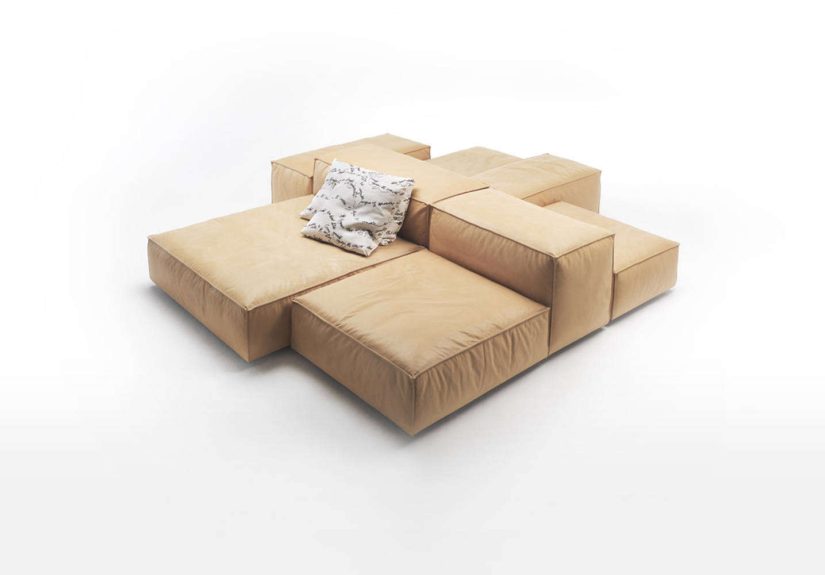
The Extrasoft sofa is a modular seating system created for Living Divani, the Italian brand long associated with refined, contemporary upholstery. At its core, Extrasoft is built around generous seating elements, armrests, and backrests that can be arranged in multiple configurations. That modular approach is part of its magic. Rather than forcing a room to obey one fixed silhouette, the sofa invites customization.
Visually, the design reads as low-slung and geometric, but not severe. That is where the “soft” in Extrasoft really earns its paycheck. The outlines are clean, yet the seating feels plush and welcoming. The result is a sofa that can look beautifully composed from across the room while still offering the kind of comfort that makes people mysteriously stop being in a hurry.
One of the most appealing details is the contrast between order and looseness. The modules can be arranged in crisp, architectural compositions, but their contours never feel rigid or uptight. There is always a slight sense of ease in the silhouette, as if the sofa is saying, “Yes, I am very well designed, but please put your feet up.”
Why the Extrasoft Sofa Still Feels So Current
Some sofas age like milk. Others age like a great leather jacket. The Extrasoft sofa belongs firmly in the second category. Even years after its debut, it still feels strikingly relevant because it anticipates how people actually want to live now: flexibly, comfortably, and with fewer hard edges in both furniture and daily life.
It understands modern floor plans
Open-concept living changed what a sofa has to do. It is no longer just something pushed against a wall while a coffee table tries its best in front of it. In many homes, the sofa now acts as a room divider, conversation hub, reading nest, movie headquarters, and occasional nap station. Extrasoft handles that job beautifully because its modular form gives it a strong presence from every angle.
It can sit in the middle of a room without looking awkward or unfinished. That matters more than ever. A sofa viewed from 360 degrees needs to look intentional from the back, side, and front. Extrasoft does.
It balances softness with structure
Many ultra-plush sofas look fantastic on day one and vaguely defeated by day ninety. The appeal of the Extrasoft sofa is that it communicates softness without sliding into visual chaos. It feels inviting, but it still maintains proportion, rhythm, and composure. That balance is one reason designers return to it again and again.
It works with minimalist and layered interiors
Some statement sofas dominate the room so aggressively that everything else has to whisper. Extrasoft is more collaborative. In a minimalist interior, it becomes the main event through shape and scale. In a richer, more layered room, it acts as a calm foundation that lets artwork, rugs, lighting, and objects do their thing. It is modern without being cold and luxurious without trying too hard to make eye contact.
Piero Lissoni’s Design Signature Is All Over It
To understand why this sofa works so well, it helps to understand Piero Lissoni’s broader design language. Lissoni is known for a modernist approach that values clarity, proportion, and restraint. His work often avoids visual noise in favor of harmony and precision. That does not mean boring. It means edited. It means every line has a reason to exist.
The Extrasoft sofa reflects that philosophy beautifully. It does not rely on gimmicks. There is no need for exaggerated curves, decorative hardware, or unnecessary drama. Instead, the appeal comes from proportion, scale, and the subtle tension between geometry and softness.
That is also why the sofa photographs so well in editorial interiors. It reads instantly. You see the generous volumes, the low profile, the modular logic, and the calm authority. It looks expensive in the way truly good design often does: not because it screams, but because it has nothing to prove.
Materials, Construction, and What Makes It Feel Luxurious
A luxury sofa should earn its status in more than one way. Good looks are lovely, but nobody wants to pay premium prices for a beautiful rectangle that feels like sitting on a diplomatic compromise. Extrasoft stands out because its comfort story is supported by thoughtful construction.
The sofa is associated with a structured internal build paired with generous padding, creating that signature mix of support and softness. Upholstery options typically include fabric and leather, which means the sofa can swing in different stylistic directions depending on the finish. In fabric, it tends to feel relaxed, tactile, and deeply lounge-worthy. In leather, it becomes sleeker and more sculptural, with a refined urban edge.
Another major advantage is the removable upholstery approach often associated with the collection. That practical detail matters more than design people sometimes admit. A sofa this large and investment-worthy should not behave like a museum relic. It should be able to survive life with some dignity intact.
The modular composition also gives buyers a level of control that fixed sofas cannot match. You can create a layout that feels compact and tailored or one that is sprawling and indulgent. Need a more social conversation setup? Done. Want a layout that leans more lounge pit than polite parlor? Also done. Extrasoft is not one sofa. It is a system with range.
How the Extrasoft Sofa Changes a Room
A sofa this substantial does not just fill space. It shapes it. The Extrasoft sofa tends to make a room feel more grounded, more generous, and more intentional. Because of its low horizontal profile, it visually widens a room rather than cluttering it. That is especially helpful in interiors where you want volume and presence without blocking sightlines.
In large rooms, it prevents the dreaded “beautiful but emotionally empty” effect. In smaller rooms, a carefully chosen configuration can make the space feel sophisticated rather than cramped. The trick is to let the sofa breathe. Extrasoft likes negative space. It enjoys a rug with enough scale, a coffee table with some sculptural confidence, and lighting that understands atmosphere.
Color plays a huge role too. In pale neutrals, the sofa feels airy and almost architectural. In charcoal, tobacco, forest green, or oxblood leather, it gets moodier and more dramatic. Either way, it retains that calm, composed identity that makes it easy to build a room around.
Is the Extrasoft Sofa Worth It?
For shoppers looking at luxury seating, this is the obvious question. The honest answer is that the Extrasoft sofa is not a casual purchase. It is the kind of piece people consider carefully, compare endlessly, and then continue thinking about because it quietly ruined lesser sofas for them.
Its value comes from several places. First, there is the design pedigree. Piero Lissoni is not just designing furniture; he is shaping modern interiors across product, architecture, and art direction. Second, there is the long-term visual relevance. Extrasoft does not feel trend-dependent. Third, there is configurability. A sofa that can adapt to different rooms and lifestyles has more staying power than one locked into a single rigid format.
It is worth it for people who want a sofa that functions as both seating and spatial architecture. It is worth it for design-minded homeowners who care about silhouette as much as comfort. And it is worth it for anyone who has ever sat on a bulky sectional and thought, “Why does this look like it came with its own zip code?”
That said, it is best suited to buyers who appreciate subtlety. If you want ornate detailing or an aggressively plush, overstuffed look, this may not be your match. The Extrasoft sofa is luxurious, but it is a disciplined luxury. Think tailored Italian coat, not sequined Vegas cape.
Styling Tips for Piero Lissoni’s Extrasoft Sofa
Pair it with sculptural tables
Because the sofa itself is broad and low, it works beautifully with coffee tables that add contrast through material or shape. Stone, smoked glass, dark wood, or metal finishes all play well here.
Use textiles strategically
Extrasoft already has volume, so you do not need to bury it under seventeen throw pillows having an identity crisis. A few well-chosen cushions and a textured throw are enough.
Let the rug be generous
A sofa with this much visual importance deserves a rug that is not afraid of commitment. Too-small rugs make even exceptional furniture look confused.
Keep the palette coherent
The sofa shines in interiors where colors feel intentional. Tonal neutrals, earthy hues, warm grays, deep greens, and rich browns all complement its refined shape.
The Experience of Living With the Extrasoft Sofa
Here is where things get interesting, because the real charm of Piero Lissoni’s Extrasoft sofa is not just how it looks in a photograph. It is how it changes the rhythm of a room once you live with it. This is not a perch-and-go kind of sofa. It is a stay-a-while sofa. A cancel-your-plans-if-the-book-is-good sofa. A “we were only going to sit for ten minutes” sofa that somehow turns into a full evening with music, snacks, and somebody explaining a documentary far too passionately.
What you notice first is the invitation. The seat height and generous modules encourage a more relaxed posture almost immediately. You do not sit on it as much as settle into it. That matters in a world full of furniture that looks nice but seems vaguely annoyed when humans use it. Extrasoft is different. It feels designed with actual bodies in mind, not just camera angles.
Then there is the social effect. Because it is modular and often configured in broad, open compositions, it changes how people interact. Guests spread out naturally. Conversations feel less formal. Someone takes the corner seat, another stretches across the longer section, and suddenly the room feels less like a presentation and more like a place to live. The sofa becomes a soft kind of architecture, quietly guiding movement without bossing anyone around.
There is also something deeply reassuring about its visual calm. On busy days, a well-designed sofa can do more than offer a place to sit. It can lower the temperature of the whole room. Extrasoft has that effect. Its low lines, broad cushions, and measured geometry create a sense of order without stiffness. It makes a space feel edited, but not precious. Refined, but not fragile.
In family life, this matters even more. A sofa needs to survive real routines: movie nights, afternoon naps, coffee balancing acts, children who think every cushion is an engineering challenge, and adults who swear they are “just resting their eyes.” Extrasoft feels equal to that role. It has enough presence to elevate a room, but enough ease to support daily use without making everyone nervous.
And for people who care about interiors on a slightly obsessive level, it offers another pleasure: flexibility. Rearranging modules, rethinking the room, or refreshing the styling around it can make the sofa feel newly discovered again. It is the rare investment piece that still leaves room for play. That is probably why so many architects and design editors keep returning to it. The sofa does not trap a room in one identity. It gives the room options.
Living with the Extrasoft sofa, then, is not only about comfort. It is about atmosphere. It is about owning a piece that makes everyday life feel a little more composed, a little more relaxed, and a lot more beautiful. Not bad for something whose official job description is technically just “sofa.”
Final Thoughts
Piero Lissoni’s Extrasoft sofa remains compelling because it solves a difficult design equation with unusual grace. It is modular but elegant, soft but controlled, luxurious but not loud. It can anchor a room without overpowering it, welcome daily life without sacrificing aesthetics, and evolve with changing interiors over time.
That combination is what separates a merely fashionable sofa from a lasting design reference. The Extrasoft sofa is not trying to win you over with trends. It is doing something smarter. It offers comfort, proportion, and flexibility in a form that still feels fresh years later. In the crowded universe of high-end seating, that is a serious achievement.
If you are drawn to contemporary furniture that feels architectural, livable, and quietly confident, Piero Lissoni’s Extrasoft sofa deserves its reputation. It is not just a place to sit. It is a case study in how great design can make softness feel sophisticated.